Bio 007: Lab Practical Final - Ecology
 Call Kai
 Learn
 Practice Test
 Spaced Repetition
 Match
 Flashcards
 Knowt Play
1/31

There's no tags or description
Looks like no tags are added yet.
32 Terms
What is ecology?
Ecology is the study of the interactions of organisms with their environment.
What does biotic mean?
Biotic means living things.
What does abiotic mean?
Abiotic means non-living things, such as water, wind, heat, minerals, etc.
What does the level of the organism (organismal ecology) study?
The level of organism studies is by asking what abiotic factors are necessary for an organism to survive.
What does the level of population (population ecology) study?
The level of population studies is when ecologists may study the health and growth of a population. A population is all individuals of the same species in a given area.
What does the level of community (community ecology) study?
The level of community studies how different species interact within a community. A community is defined as all individuals of all species in an area.
What does the level of ecosystem (ecosystem ecology) study?
The level of ecosystem studies the complex interactions of various species and abiotic factors. An ecosystem includes all individuals of all species in a given area, plus abiotic factors.
What is a landscape in ecology?
A landscape involves multiple adjacent ecosystems that may interact. For example, if a river runs through a forest, the river and the forest are each a distinct ecosystem with different species that live in them, but those ecosystems interact with each other and some species use both.
What is a biome in ecology?
A biome is defined as all ecosystems of the same type in the world. A desert is an example of a biome: there are deserts on almost every continent, and they share many features in common, but the species found in each desert are different.
What is a biosphere in ecology?
The biosphere is the set of all ecosystems on the planet.
WHat are the different levels in which ecology can be studied at?
Organism, population, community, ecosystem, landscape, biome, and biosphere.
What is a dichotomous key?
Biologists use a tool called a dichotomous key to identify unknown species with confidence. A dichotomous key is an identification guide to the species in a particular taxonomic group for a particular region. There is always two choices at each step, and the use will identify which choice applies to the given specimen, and will be directed to a new couplet.
Describe the conditions of the Costral Strand ecosystem. Make sure to add biotic and abiotic factors into the description and the ways in which plants adapt to those conditions.
This ecosystem can be found in sandy areas by the sea. Plants here must adapt to high levels of salt in their environment as well as to the unforgiving sun, as there is usually little shade to protect them.
Describe the conditions of the Coastal Salt Marsh ecosystem. Make sure to add biotic and abiotic factors into the description and the ways in which plants adapt to those conditions.
This ecosystem is found in low-lying areas near the ocean, usually where fresh water meets the ocean. Water levels fluctuate greatly with the tides. Plants here must adapt to varying levels of water (possibly being periodically submerged) as well as to the presence of salt.
Describe the conditions of the Oak Savannah ecosystem. Make sure to add biotic and abiotic factors into the description and the ways in which plants adapt to those conditions.
This ecosystem is composed of grasses interspersed with occasional valley oaks. In these areas there is usually low percipitation and often there is poor soil. Wildfires are relatively frequent. The native grasses have in many cases been outcompeted by non-native grasses and, in spring, by invasive wild mustard. Wild mustard is the only plant that is not native to California.
Describe the conditions of the Riparian Woodland ecosystem. Make sure to add biotic and abiotic factors into the description and the ways in which plants adapt to those conditions.
This ecosystem is usually found in a narrow band immediately adjacent to a freshwater source (usually a stream). The community is dominated by trees, and the shrubs present usually have flexible, more delicate leaves. Plants in this ecosystem have ample access to water, but are less likely to get enough sun, as they are frequently shaded by even larger trees around them. Therefore, these plants may have relatively large leaves so that they can absorb when sunlight does filter through. Leaves may also be flexible or comppund so that they can catch sunlight from many directions.
Describe the conditions of the Southern Live Oak Woodland ecosystem. Make sure to add biotic and abiotic factors into the description and the ways in which plants adapt to those conditions.
This ecosystem tends to be found in canyons in our area, such as Topanga and Malibu Canyons. These areas are somewhat shaded by the surrounding hills, and receive more moisture because rainwater runs down the hillsides and collects in these low-lying areas. The community is dominated by coast live oak, although a variety of other trees and shrubs may be found. As in other woodlands, the plants must adapt to limited sunlight because they are shaded by larger trees.
Describe the conditions of the Coastal Sage Scrub ecosystem. Make sure to add biotic and abiotic factors into the description and the ways in which plants adapt to those conditions.
This ecosystem can be found on hillsides at lower elevations and near the ocean. It is dominated by fragrant shrubs. It gets moisture from periodic rain as well as from coastal fogs. However, compared to many terrestrial ecosystems around the world, this ecosystem is still relatively dry and its plants have adaptations to prevent excessive evaporations and sun exposure.
Describe the conditions of the Chaparral ecosystem. Make sure to add biotic and abiotic factors into the description and the ways in which plants adapt to those conditions.
This is the quintessential Southern California terrestrial ecosystem, found on inland and higher elevation hillsides and ridges throughout our area. Species that live here are adapted to hot, dry summers; mild, wetter winters; and frequent fire. Shrubs are dominant and grow so thickly that this community is sometimes called the “elfin forest.” Plants here must adapt to the hot, dry conditions. Their adaptations must help them reduce evaporation and limit their sun exposure. Leaves may be reduced in size or be thick, tough, and waxy; they may be pubescent, wavy, or folded to reduce evaporation by wind; they may attach nearly vertically to the stem to reduce exposure of the lead at hot midday; or they may be light in color to reflect more solar radiation.

What is the name of this leaf? What ecosystem(s) can it be found in? What is the family name of this leaf?
This leaf is a California Sycamore. It can be found in the Riparian Woodland ecosystem. The family name of this leaf is Family Platanaceae. This leaf is palmately lobed like a maple leaf, with 5-7 lobes.

What is the name of this leaf? What ecosystem(s) can it be found in? What is the family name of this leaf?
This leaf is a Black cottonwood. It can be found in the Riparian Woodland ecosystem. The family name of this leaf is Family Salicaceae. This leaf is deltoid to triangular and its petioles is flattened and its leaves are not lobed.

What is the name of this leaf? What ecosystem(s) can it be found in? What is the family name of this leaf?
This leaf is a Coast Live Oak. It can be found in the Riparian Woodland ecosystem and the Southern Live Oak Woodland ecosystem. The family name of this leaf is Family Fagaceae. This leaf is shaped like an inverted cup and it has spine-teeth along the leaf margin.

What is the name of this leaf? What ecosystem(s) can it be found in? What is the family name of this leaf?
This leaf is Valley Oak. It can be found in the Oak Savannah ecosystem. The family name of this leaf is Family Fagaceae. This leaf has many lobes, similar to the shape of a christmas tree.
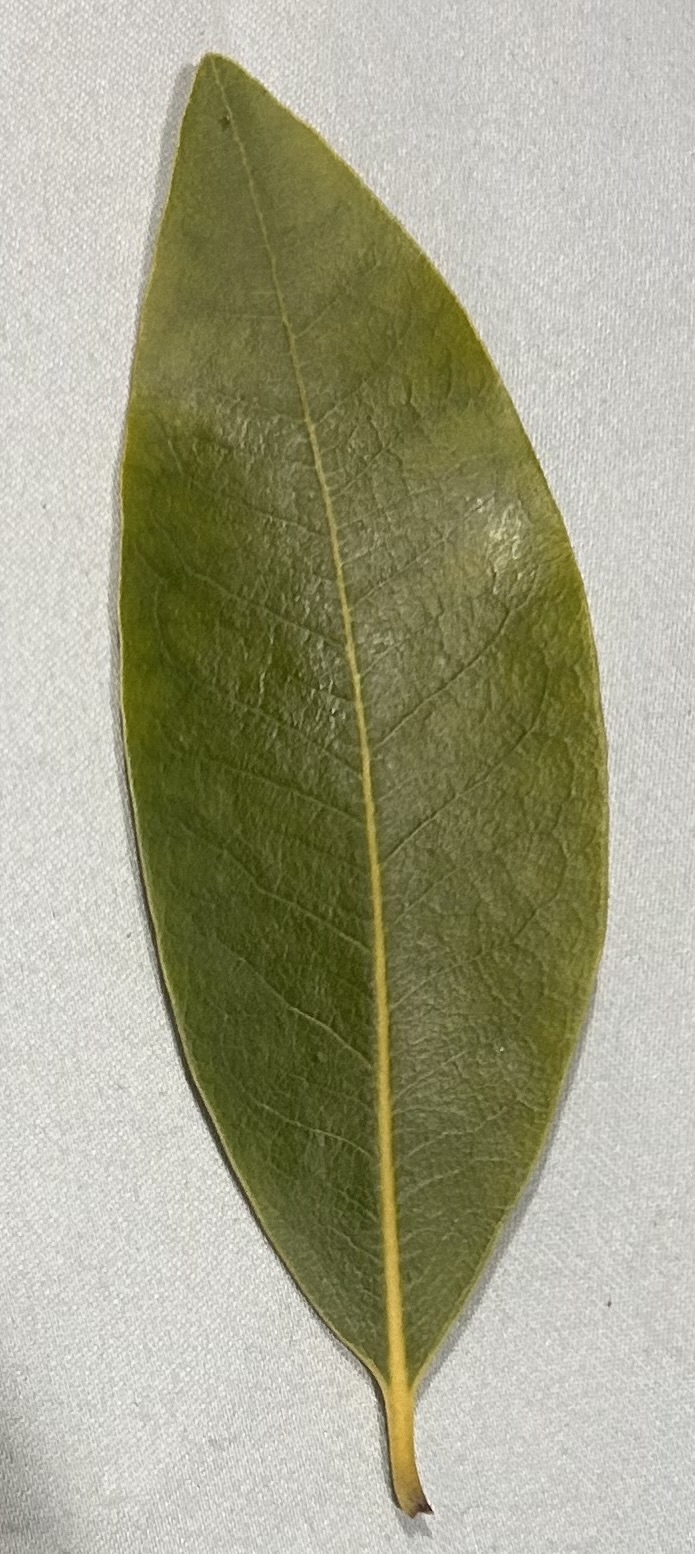
What is the name of this leaf? What ecosystem(s) can it be found in? What is the family name of this leaf?
This is leaf is California Bay (Laurel). It can be found in the Riparian Woodland ecosystem and the Southern Live Oak Woodland ecosystem. The family name of this leaf is Family Lauraceae. This leaf is very fragrant and it is pointed at boht ends. This leaf is also very smooth.

What is the name of this leaf? What ecosystem(s) can it be found in? What is the family name of this leaf?
This leaf is a Sugar Bush leaf. It can be found in the Chaparral ecosystem. The family name of this leaf is Family Anacardiaceae. This leaf has pink/red petioles and the tree of this lead also grows berries.

What is the name of this leaf? What ecosystem(s) can it be found in? What is the family name of this leaf?
The name of this leaf is Mountain Mahogany. It can be found in the Chaparral ecosystem. The family name of this leaf is Family Rosaceae. This leaf has a similar shape of a seashell and it has teeth at the top.

What is the name of this leaf? What ecosystem(s) can it be found in? What is the family name of this leaf?
The name of this leaf is Scrub Oak. It can be found in the Chaparral ecosystem. The family name of this leaf is Family Fagaceae. This leaf is very spikey and it is very thick and tough.

What is the name of this leaf? What ecosystem(s) can it be found in? What is the family name of this leaf?
The name of this leaf is Lemonade Berry. It can be found in the Coastal Sage Scrub ecosystem. The family name of this leaf is Family Anacardiaceae. This leaf is spikey and is very pointed at the top and rounded at the bottom.

What is the name of this leaf? What ecosystem(s) can it be found in? What is the family name of this leaf?
The name of this leaf is Bladder Pod. It is called Bladder Pod because the tree of this leave groups these pots that look like the shape of a bladder. It can be found in the Coastal Salt Marsh ecosystem. The family name of this leaf is Family Cleomaceae. This leaf is unique in that it has three leaflets to make up the entire leaf. This type of leaf is a compoud leaf since it is made up of multiple leafs.

What is the name of this leaf? What ecosystem(s) can it be found in? What is the family name of this leaf?
This is Wild Mustard. It can be found in the Oak Savannah Ecosystem. The family name of this leaf is Family Brassicaceae. Wild Mustard is not native to California, and is instead a very fast growing invasive species. Wild Mustard is easy to find because of the yellow flowers that grow.

What is the name of this leaf? What ecosystem(s) can it be found in? What is the family name of this leaf?
The name of this leaf is Toyon. It can be found in Coastal Sage Scrub ecosystem and in the Chaparral ecosystem and in the Southern Live Oak Woodland. The family name of this leaf is Family Rosaceae. This leaf is very elongated and it has an oval shape.

What is the name of this leaf? What ecosystem(s) can it be found in? What is the family name of this leaf?
The name of this leaf is Coffee Berry. It can be found in the Southern Live Oak Woodland ecosystem. The family name of this leaf is Family Rhamnaceae. This leaf is oval and it has very prominent veins on the back.