Chapter 11.3: Eukaryotic Transcription Is Regulated by General and Specific Transcription Factors
 Call Kai
 Learn
 Practice Test
 Spaced Repetition
 Match
 Flashcards
 Knowt Play
1/9

10 Terms
Inducibility
For a gene, the ability to be expressed only when needed; this is important in multicellular eukaryotes for cell specialization

TATA box
One of the core promoters of protein-coding genes in eukaryotes
Contains several A-T base pairs
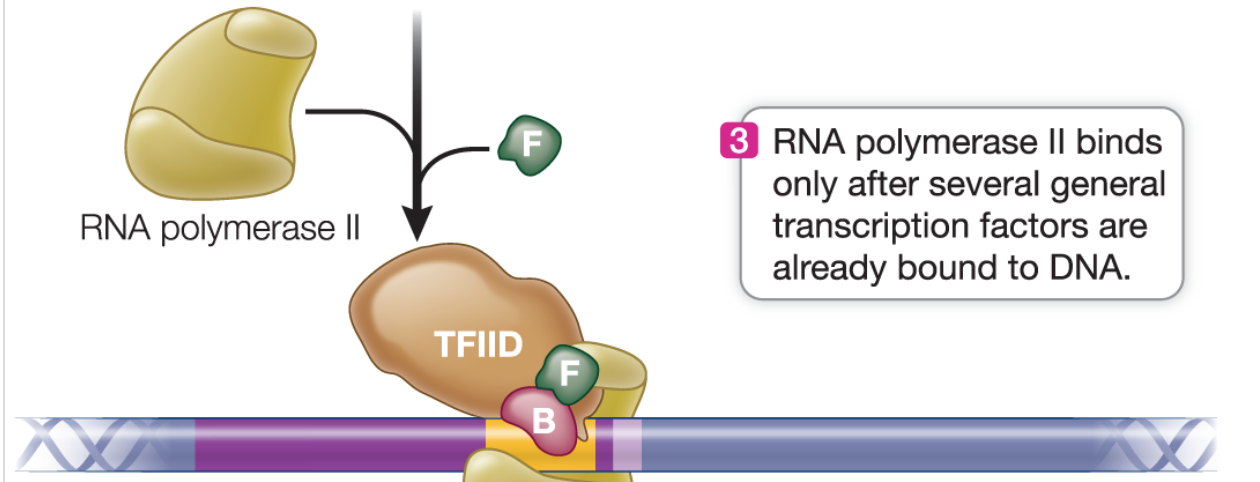
RNA polymerase II
The form of RNA polymerase present in eukaryotes, it requires several general transcription factors to bind to the promoter first

General transcription factors
Transcription factors that bind to a promoter before RNA polymerase; these can bind to several promoter classes

Basal transcription apparatus
The combination of RNA polymerase II and general transcription factors on a strand of DNA
Requires the binding of specific transcription factors on other sequences for higher rates

Mediator
A protein complex that facilitates interactions between specific transcription factors and the basal transcription apparatus
Joins the two as the DNA helix bends for proximity
Help determine how genes are regulated and produced
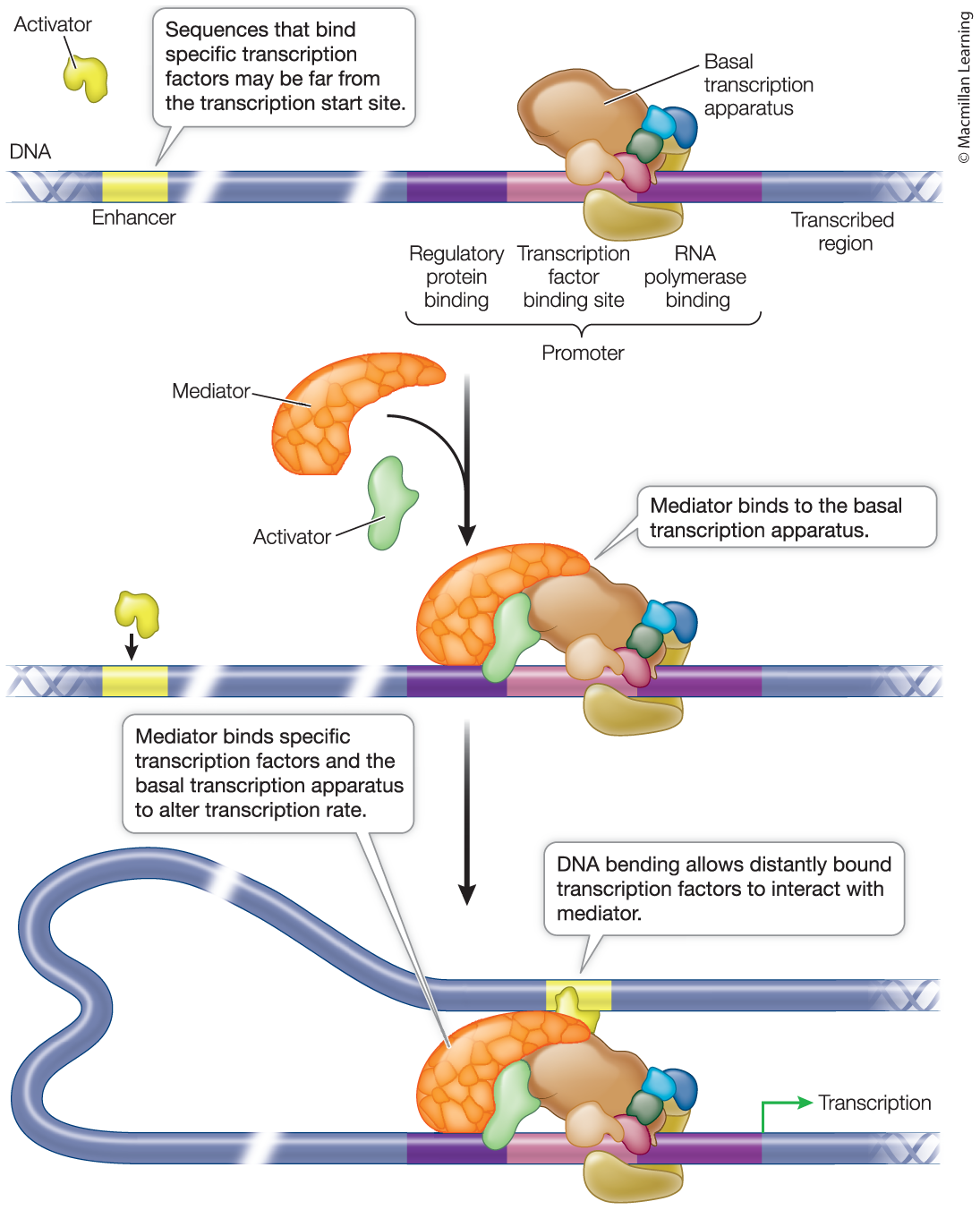
Enhancers
DNA binding sites that increase transcription and are not in the basal promoter
Silencers
DNA binding sites that decrease transcription and are not in the core promoter
Differentiation
The development of cells from a fertilized egg to adult, triggered by the varying activations of transcription factors

Human immunodeficiency virus (HIV)
The virus that causes AIDS in humans; it uses mechanisms mimicking receptor-mediated endocytosis via its enclosure in a membrane derived from its pervious host cell
Contains the enzyme reverse transcriptase, creating a DNA strand from its RNA genome which is later incorporated into the host and released in new viral particles