Types of Studies in Epidemiology: Observational Studies
 Call Kai
 Learn
 Practice Test
 Spaced Repetition
 Match
 Flashcards
 Knowt Play
1/93

There's no tags or description
Looks like no tags are added yet.
94 Terms

beta carotene (pro-vitamin A) among smokers
thought to be protective bc of antioxidants but only for non-smokers
What is purpose of health research studies? (3)
exploratory research
descriptive research
causal inference
What is exploratory research?
to explore or pilot test new ideas or new methods; to generate hypotheses
What is descriptive research?
to understand who is affected by the health condition or known risk factors, what conditions are most common, where they might be located, and when they are affected
What is causal inference?
to test hypotheses about what factors may cause the disease outcome, what interventions may prevent it, and what treatments may improve prognosis
What kind of studies are epidemiology studies?
population studies
can’t tightly control conditions for the most part
What are three different study designs for epidemiology?
observational studies
experimental studies
research synthesis studies
What are observational studies? What are examples?
analyzing the world, not really intervening or setting a specific experiment to test
What are five different types of observational studies?
case reports/case series
ecologic studies
cross sectional studies
case-control studies
cohort studies
What are experimental studies?
studies that test an intervention/new therapy/community program
What is a major example of an experimental study?
randomized control trials (RCT)
optimal design for experimental studies
different variations of RCT
What are the six different sub-types of RCTs?
individually randomized, parallel group
cross over trials
factorial trials
cluster randomized
stepped wedge trials
adaptive trials
What are research synthesis studies?
studies where you look at all of the evidence that has been published across journals and locations
you come up with an estimate of what an overall pooled effect might be in a generalized way based on all the info
used for DGA and DRIs
What are two examples of research synthesis studies?
systemic reviews
meta-analysis
What are case reports/case series studies?
case report: description of one person with illness
case series: description of many people with illness
purely descriptive studies with no comparison group

When are case reports/case series studies done?
often performed with a new illness during the initial stages of an investigation
What are the three possible goals of case reports/case series studies?
to inform clinicians or public health authorities of a new disease
to generate hypotheses about the cause of a new disease (can’t really test the hypotheses though)
clinical training purposes to inform clinicians about rare disease or uncommon presentations of (common)
What is the effectiveness of case reports/series?
considered the weakest form of evidence for disease etiology, preventive interventions, or efficacy of treatment
What are ecologic studies?
studies where we look at associations in a group level (countries, communities, schools)
only possible when there is info on the exposure and disease burden for the group of interest
ex: examining relationship b/w indices of dietary intake or nutritional status and population prevalence of disease across groups
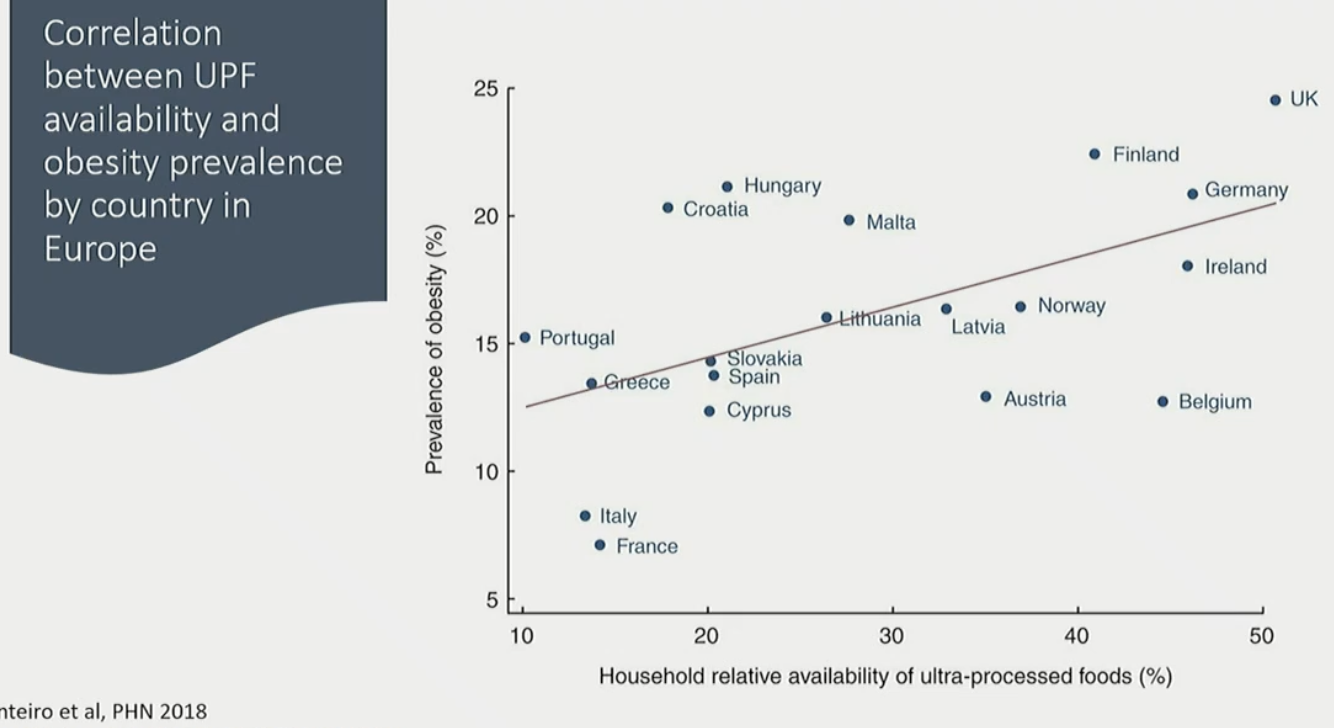
What are the two pros of ecologic study designs?
may be used when individual level data are unavailable or impractical to gather
useful for generating hypotheses
What are the four cons of ecologic study designs?
do not reflect individual level associations
ecologic fallacy
usually lack data necessary to adequately control for confounding
insufficient to establish causality
What is the ecologic fallacy?
When inferences are made about individuals based only on data about the group to which they belong to
data reported are usually the AVERAGE for the group and do not necessarily reflect the ACTUAL relationship at an individual level
What is confounding?
a factor that is associated with the exposure, potentially causally related to the outcome and not on the direct causal pathway between the exposure and the outcome

What happens when you don’t account for confounding variables within the design or analysis of a study?
may cause there to be an incorrect estimate of the association between the exposure and the outcome
In terms of ecologic studies in nutrition, where are two places where dietary data can come from?
Food Agriculture Organization (FAO) Food Balance Sheets
Nationally representative dietary surveys
What are Food Agriculture Organization (FAO) Food Balance Sheets?
datasets that present a country's national agrifood supply and utilization pattern
useful data for ecologic studies
What are three places where we can get disease outcome data for ecologic studies?
state/national cancer registries, death registries, and other vital statistics
mortality or morbidity data from global databases (WHO Data)
population surveys
What are some example confounding factors using the ecologic example of showing the correlation between UPF availability and obesity risk?
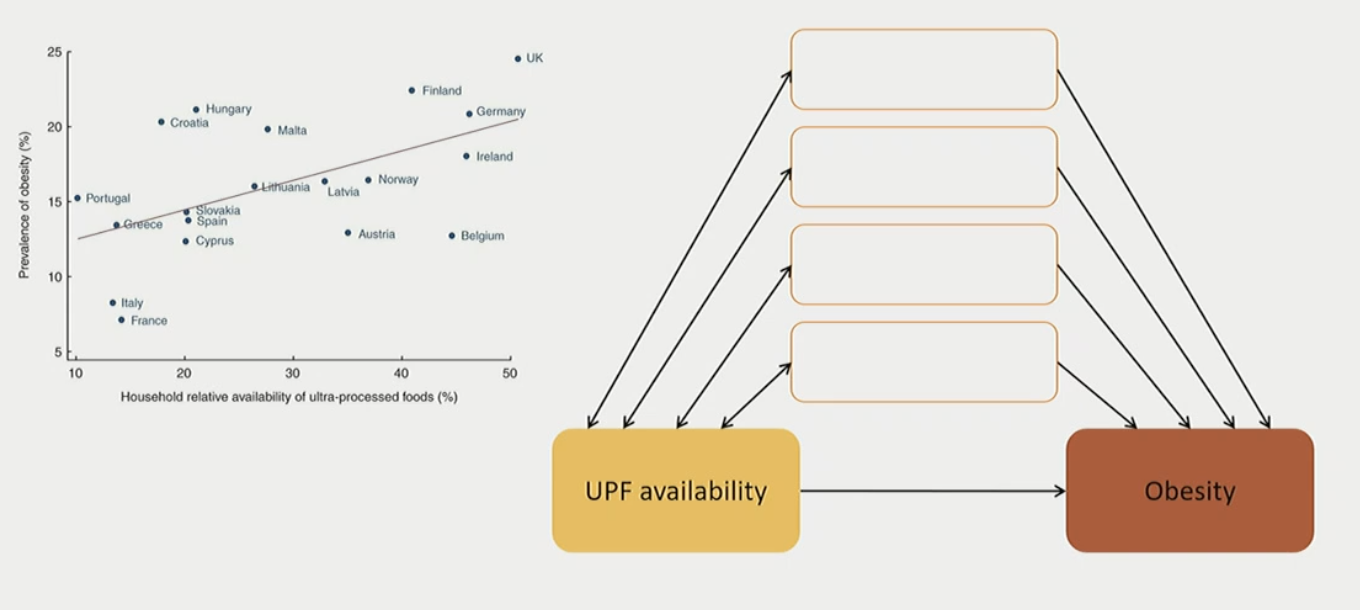
GDP
income
physical activity levels
What are cross sectional studies?
a snapshot of info of a group of people at a given moment of time (can be done multiple times, however each additional time, we get a new group of people in the pic)
collect data on a variety of exposures and disease states
exposure is showed simultaneously with disease


does not tell us RISK levels bc again its prevalence, NOT incidence
What is another word for cross sectional studies?
prevalence survey
What are three reasons why cross sectional studies are also referred to as prevalence surveys?
can determine prevalence of disease/risk factors in the population
cannot determine incidence (new cases)
cannot establish temporality (time series of events like if the exposure occurred before the disease or after)
What are five purposes of cross sectional studies?
to describe burden of disease in population
describe population characteristics in relation to disease
describe knowledge, attitudes, and practices related to disease
if repeated, can monitor trends
generate hypotheses about associations
What are five pros associated with cross sectional designs?
inexpensive and quick
do not require long follow up
can be used to describe population prevalence
if repeated, can be useful to monitor trends
can generate hypotheses about associations regarding risk factors and disease outcome
What are four cons associated with cross sectional design?
risk of cofounding
establishing temporality (don’t know which came first, disease or risk and this is bc individuals may change their habits in response to a disease diagnosis)
length based sampling bias
insufficient to establish causality
What is a common example of cross sectional surveys used in nutrition?
NHANES
national health and nutrition examination survey
What kind of sampling method does NHANES use to make sampling < 10k people nationally representative?
multi-stage cluster sampling method
Describe the multi-stage cluster sampling method
stratify all counties in the country by geography and randomly select 15 counties per year with selection probability proportional to size
within counties, randomly select geographic segments of the county
list all households and randomly select households
randomly select individuals within households
What is length-based sampling bias?
individuals who have a disease for longer are more likely to be sampled than those who have a short duration illness (bc we are sampling prevalent cases, whats present, not incidence)
What is the issue with length-based sampling bias?
can be an issue when investigating diseases with variable survival times or variable recovery times
they won’t be as likely to be captured in the prevalence survey, leaving them out
leads to biased interpretations of exposure outcome relationships as it may be more related to lengthy disease rather than disease risk

What are case control studies?
individuals with disease (cases) are compared to those without disease (controls) and history of exposure is retrospectively assessed (look backwards in time for past exposure or risk factors)
When is it desirable to use a case-control study? (6)
when trying to understand the etiology of disease
little is known about the disease
disease is rare
long latency period/long induction period (years or decades to reach disease endpoint)
all exposure data are difficult/expensive to obtain
underlying population dynamic (ex: highly mobile pop) is difficult to track over long periods of time
When we do a case control study, how do we determine what is considered a “case”?
case definition is specific, clear, and contains a consistent diagnostic criteria
need to specify
eligible population
geographic area
study period
cases can be identified through clinics, hospitals, or disease registries
must be selected independent of exposure history
Why is it preferred to also include incident cases (enroll cases as they are diagnosed) rather than just prevalent cases in case control studies?
would help to reduce length-based sampling bias
When we do a case control study, how do we determine what is considered a “control”?
controls should represent the source population that produced the cases and represent the exposure patterns in that population
enrolled independent of their exposure history
they can have other illness; they don’t have to be completely healthy
may be selected from population list from the same clinic/hospital from which cases were recruited
inappropriate control group selection can create selection bias
What are two major cons associated with case control studies?
random recall errors
recall bias
What are random recall errors?
when people have difficulty remembering events, particularly when the length of recall is long or the event was relatively routine
can cloud the researcher’s ability to detect a possible relationship between the exposure and the disease (bias towards null)
What is systematic recall bias?
individuals with disease tend to spend more time thinking about what could have possibly caused their disease (rumination bias), therefore they have their own hypothesis about what could have caused their disease and may be more likely to report that they were exposed OR less likely exposed if the possible exposure is socially undesirable
In case control studies, what should we use instead of memory recall?
try to use objective measures of exposures that don’t require memory recall
What are four pros associated with case control studies?
faster and cheaper than cohort studies
good for studying rare diseases
sample size may be smaller than for a cohort study
possible to study multiple risk factors for a given disease outcome, not limited to just one exposure
What are four cons associated with case control studies?
high risk of confounding
subject to recall bias, errors in recall, or incomplete data due to retrospective analysis
not good choice when exposure is rare
selection of appropriate controls may be difficult
What are cohort studies?
investigator selects a sample of the population, some exposed and some unexposed, follows them through time, and compares the incidence of disease in the exposed vs. the unexposed
population selection could be unrelated to their exposure OR it could be based on whether or not they were exposed to a risk factor
samples have to be large bc of how rare disease is
What are the two purposes of cohort studies?
determine etiology of disease
study the natural history of disease (prognosis)
What are two types of cohort studies?
prospective (common)

retrospective
What is the difference between prospective cohort and retrospective cohorts?
prospective cohort (more common)
identify sample of people form study population and then measure their exposure status at the time of enrollment (don’t know before hand)
follow them over time to monitor development of disease
compare incidence of disease among exposed vs unexposed
retrospective cohort
define a historical cohort whose members were at risk at the historical starting point (still don’t have the disease)
reconstruct subsequent disease occurrence and exposure history from records
compare disease incidence among exposed vs unexposed
What is the difference between a retrospective cohort and a traditional case-control study?
traditional case control study has participants enroll based on disease status, NOT exposure status (retrospective), alongside controls form the same population
will likely determine exposure history afterwards through participant recall, records, or stored specimens
compare likelihood of exposure among case vs. controls

A

C
measured at one point in time
measured the prevalence
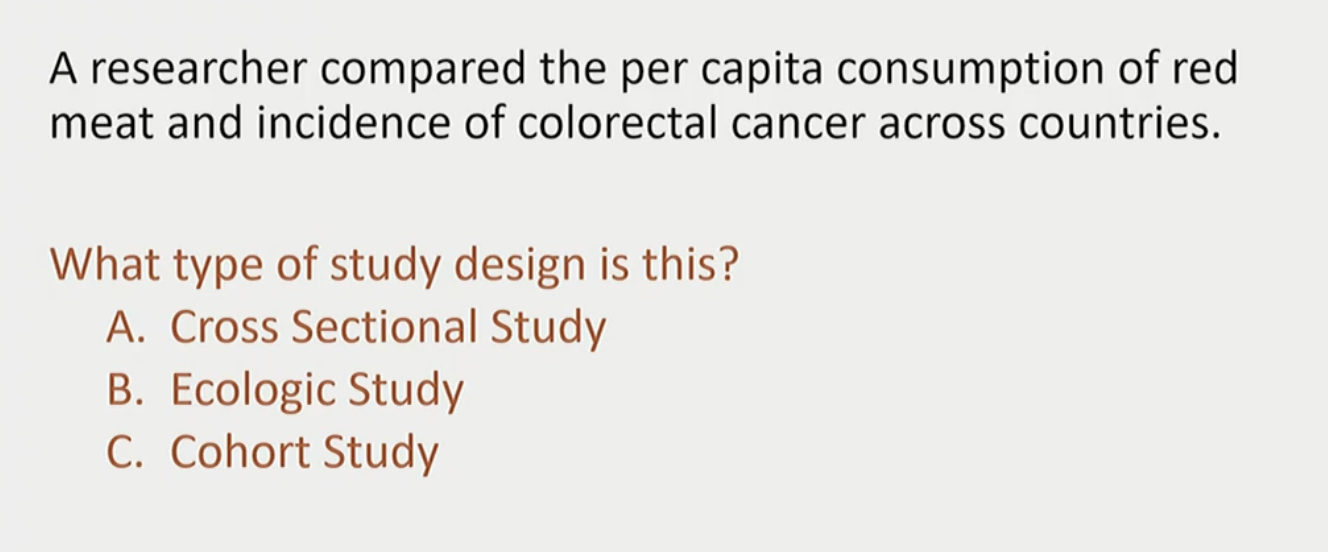
B
shows average of consumption
only country level information, not individual

C
What is something to take into account for cohort studies if the disease is rare?
if the disease is rare, then cohort studies need to be extremely large and expensive
if incidence is 37.6/100k then we would assume that we need to enroll at least 100k people
lab biomarker testing is also expensive, so imagine testing for 100k… thats expensive
What is a solution to cut down on cohort study costs (if the disease is rare)?
nest a case-control study within a cohort study
Describe how nesting a case-control study within a cohort study works.
major funding agencies (ex: NIH) fund very large cohort studies (ex: 100k or more), collect a whole variety of bio-specimen form the participants but don’t analyze the samples, they just enroll them and follow them overtime to see who developed the disease
if disease is developed then researchers identified two matched controls (based on gender and age) from the same cohort alongside the person who developed the disease
grabbed the previously taken bio-specimen from each respective participant to measure the biomarkers of the specific exposure and compare/analyze them
saves time and money in terms of which one’s to study
more modern way of doing a case-control study, just bc its a strong design
What are the benefits of nestled case control studies within a cohort study?
efficiency (save money and time analyzing)
analysis of biomarker status instead of participants recall of diet
objective, lower recall bias, lower memory errors
What are five pros of cohort studies?
can assess incidence of disease
prospectively collected info is more accurate than recalling it
allows us to assess unexpected effects of the initial exposures
useful when exposure is rare
nested case control cohort studies can improve efficiency
What are five cons associated with cohort studies?
long duration of follow up may be required
difficult to capture rare disease outcomes
large sample sizes may be required
tracing individuals over a long period of time may become difficult (high losses to follow up)
expensive
Who is James Lind?
Scottish surgeon who wrote the first known examples of a randomized trial as he did research on the study of scurvy
scurvy at the time was a big issue for sailors, and in the British Navy, scurvy killed a lot

British Navy did not believe him at first, but later on repeated the trials and realized
made lemon and lime juice a standard part of the diet for navy officers at sea
In general, what are randomized trials/experimental designs?
similar to cohort, but exposure is randomized to one group and not the other
main purpose is to evaluate opportunities for prevention or treatment of disease
strongest evidence of causality because confounding and bias are minimal
gold standard (most rigorous)

What does double-blind mean in an experimental study?
the allocation is unknown to the participant AND to the investigator
What does randomized mean in an experimental study?
the allocation is randomly assigned (computer generated random codes, drawing cards from a hat, etc.)
What does controlled mean in an experimental study?
usually the control group is offered some comparable intervention to maintain blinding and control for the “placebo effect”
minimizes confounding and bias
What does clinical trial mean in an experimental study?
term more commonly used if a medical intervention is used (can be interchangeable with community trial though)
What does community trial mean in an experimental study?
term usually used to refer to the fact that communities were randomized, not individuals BUT can also mean that the study was community based, not hospital/clinic based
What does treatment group/allocation group/intervention group mean in an experimental study?
the group that was randomized to certain intervention
What is residual confounding?
what is left over after we adjusted for confounding as best as possible
unable to adjust for things that we did not measure in observational studies
tend to have less residual confounding with randomized trial design bc they are randomly assigned intervention/exposure and the characteristics of the two groups are random (won’t have healthy user bias)
What are the pros of randomization?
randomization tends to balance measured and unmeasured prognostic characteristics (chance imbalance can remain though)
reduces risk of confounding and risk of selection bias
What is it ethical to randomize interventions?
when it is truly unknown if there are benefits or risks of the intervention (clinical equipoise: genuine uncertainty about the comparative benefits and harms of the study interventions)
Why should investigators not be involved in whether a group receives the treatment or not?
if the investigators or study staff have a preconceived idea about the likely effect of the intervention, they may wish to allocate that intervention to certain groups over others
What is selection bias?
when researchers selectively choose that certain individuals are allocated one of the treatments
What is surveillance bias?
when researchers actively monitor one group for the outcome
What is bias in the analysis?
when researchers interpret the results in such a way as to favor one of the groups
What is the placebo effect?
when subjects develop a reaction based on what they think should be the effect of the intervention
When is it ethical to use a placebo? (3)
no known effective treatment is available
when withholding an established treatment would result in, at most, only temporary discomfort
compelling methodologic reasons for the use of a placebo and participants are not at risk of excessive harm
What are the two strengths of RCTs?
considered gold standard for research study design
minimal confounding and bias if properly implemented
What are the two limitations of RCTs?
many more ethical considerations than in observational studies
expensive
What are three different types of RCTs?
cluster randomized trials
cross-over designs
factorial designs
What is a cluster randomized trial?
unit of randomization is a cluster rather than an individual
clusters can be communities, neighborhoods, schools, and classrooms

What are three major challenges with cluster randomized trials?
needs to be independence between the intervention cluster and the control cluster (community members can’t travel from one place to another)
if number of clusters is small, there may be an imbalance on population characteristics in groups (resulting in confounding)
intra-cluster correlation/design effect (need to have larger to account for it)
What is intra-cluster correlation/design effect?
idea that people within a cluster are usually more similar to each other than they are to people in other clusters
sample in each group is less diverse that what you might expect
What are the two advantages to cluster-randomized trials?
useful when intervention is impractical to deliver on an individual basis
cost efficient if resources are all directed specific areas instead of spread out
What are three disadvantages of cluster-randomized trials?
intra-cluster correlation
larger total sample sizes are usually required
possibility of imbalance between groups
What is a crossover design?
a randomized trial in which each group receives each intervention, but the order with which the interventions are delivered is randomized
each group “crosses over” to receive the other intervention during the course of the trial
How does the participant serve as their own control in crossover design?
the individual’s response to intervention A can be compared to that same individual’s response to intervention B

What are two advantages of crossover RCT designs?
subjects serve as their own control (reduces confounding)
can be used for dietary interventions if the outcome responds quickly to the intervention
What are the two limitations of crossover RCT designs?
carryover effects of the interventions (need to have a sufficient washout period)
most suitable when intervention period is short adn teh likely effects are rapid