Unit 5: American Revolution Review
 Call Kai
 Learn
 Practice Test
 Spaced Repetition
 Match
 Flashcards
 Knowt Play
1/40

There's no tags or description
Looks like no tags are added yet.
41 Terms
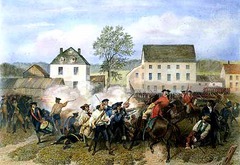
Battles of Lexington and Concord (1775)
"Shot heard round the world"; beginning of the American Revolution. No one knows who shot first.
First Continental Congress
Delegates from 12 colonies meet in Philadelphia. Declaration of Rights/Grievances is sent. Colonies prepare militias.

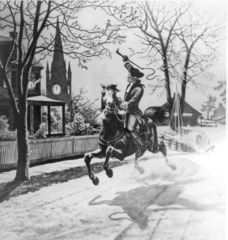
Paul Revere
Painted the "Boston Massacre". Was part of midnight ride warning that british soldiers were coming to Concord.

Samuel Prescott and William Dawes
Two men who joined Paul Revere during his midnight ride.
Battle of Bunker Hill
Major british victory after Lexington-Concord. Patriots are defeated but morale is high. Showed they can fight against british army.

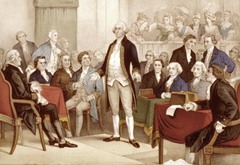
Second Continental Congress
Delegates from 13 colonies meet in Philadelphia. Sign Olive Branch Petition, create Continental Army, appoint Washington as commander-in-chief.
Southern colonies
This region was mostly populated by loyalists.

Middle colonies
This region was mostly populated by moderates, like John Dickinson, a delegate from Pennsylvania.

New England colonies
This region was where the most radical patriots lived. British tried to capture it by splitting their troops.
To win support from the south.
This was the main reason Washington (a Virginian) was chosen to lead Continental Army:

Committees of Correspondence
Organizations that spread pamphlets, articles and ideas throughout the colonies:

Thomas Paine's Common Sense (1776)
Pamphlet, written in simple language, arguing against monarchy and for independence. Convinced many to favor independence.

Declaration of Independence
Document arguing for natural rights of man, stating grievances against King, and declaring states "free and independent."

Thomas Jefferson
Virginia delegate who authored the declaration of independence. Influenced by John Locke's ideas of "natural rights."

John Adams
Boston lawyer, who defended british soldiers after boston massacre, and represented U.S. in peace talks in Paris.

Powerful navy, army, larger population, wealth.
These were the strengths of the British during the War for Independence:

Home-field advantage, motivated troops, strong leadership.
These were the strengths of the colonists during the War for Independence:

George Washington
General of Continental Army. Won battles at Trenton, Princeton, Yorktown. Led the patriots to victory against the British.
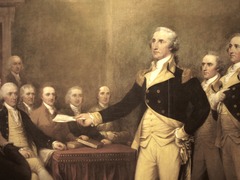
Women in the colonies
This group served as nurses, spies and even soldiers in the Continental Army.

Boston, Massachusetts
The British retreated from this city, when Henry Knox hauled cannons from Ft. Ticonderoga to Dorchester Heights:

Battle of Long Island
First major battle of the Revolution. 32,000 british vs 20,000 patriots. Washington retreats to New Jersey. Many deserted.
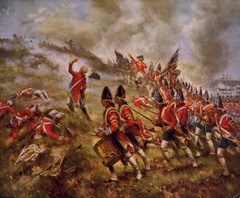
Battle of Trenton
Washington crosses the Delaware on Christmas night. Defeat 1,400 hessian mercenaries. Patriot morale high.

Battle of Princeton
Washington fools british soldiers, and escapes, by leaving 100 men to light fires and make noises. Then defeats british troops.

Battle of Saratoga
Turning point of the American Revolution. Burgoyne defeated. Convinced French to join the war.
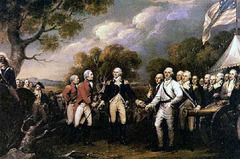
Benjamin Franklin
Ambassador of the United States in France. Made the patriot cause popular. Convinced French to support war.

Valley Forge
Winter 1777. Congress cannot tax colonies. Washington's troops lack supplies and food. 2,000 died and many deserted.

Baron Friedrich von Steuben
Prussian general who trained Washington's men at Valley Forge. Taught them the bayonet.

Siege of Yorktown
Washington, Lafayette, Rochambeau surround british troops. 14,000 vs 9,000 men. Hamilton leads attack. Cornwallis surrenders. War ends.

John Paul Jones
American naval officer. Took the fight to England. Won many victories for patriots.

Charles Cornwallis
British general. Led the southern campaign against the patriots. Plan to recruit loyalists backfires. Retreats to Yorktown.

Marquis de Lafayette
French general. Became one of Washington's closest allies. Helped to capture Yorktown.

Benedict Arnold
Hero of Ticonderoga and Saratoga. Eventually became traitor and joined the british.

Treaty of Paris
This ends the American Revolution, removes all british troops, recognizes independence of U.S.

General Rochambeau
French general who brought French naval fleet to help capture Yorktown.

John Adams, Benjamin Franklin, John Jay
Representatives of the U.S. at peace talks in France. Negotiated the Treaty of Paris.
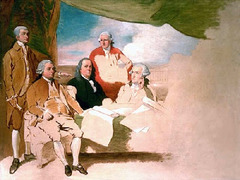
Alexander Hamilton
Young Continental Army soldier who led the attack on Yorktown.

American Crisis
Essay by Thomas Paine, encouraging the Continental Army to keep fighting.

John Locke
Philosopher who taught that people have natural rights. His ideas were added into the Declaration of Independence.

Philadelphia, Pennsylvania
The American capital was located here during the war, and the Continental Congress met here.

Olive Branch Petition
An offer of peace sent by the Second Continental Congress to King George lll

John Burgoyne
British general defeated by American forces at the Battle of Saratoga in 1777.
