final pmcol study - methyxanthines + nootropics (caffiene)
 Call Kai
 Learn
 Practice Test
 Spaced Repetition
 Match
 Flashcards
 Knowt Play
1/14

There's no tags or description
Looks like no tags are added yet.
15 Terms
how are new chemicals identified + characterized for pharmacological activity
extraction + purification + prediction + characterization
what series of experiments should psychoactive chemicals pass?
animal behavior + physiological measures + biochemical assays
primary actives are methylxanthines:
purine(rgic) → base nucleus ஃ only base nucleus
metabolism → caffeine → theophylline + theobromine + paraxanthine
additional chemical + sources (idk if this is testable or not)
Additional chemicals and sources
• Chlorogenic acids- induce (phase II transferases, like GST) liver
enzymes
• Dihydrocaffeic acid- anti-inflammatory with vascular benefits
(promotes NO production)
• Kahweol and cafestol- diterpenes, increase phase II enzymes,
induce anti-stress genes, but elevate cholesterol
• Coffee and tea are the most common anti-oxidant sources
medical indication for caffeine
used for/in:
respiratory stimulation in premature infants — if baby cannot breathe ஃ caffeine makes the baby breath
2nd most commonly perscribed NCU drugs — first = antibiotics
caffiene ↑ → inhibits PDE4 ஃ PDE4 ↓ ஃ camp ↑ in rhythmogenic preBötC complex = breathing reflex
asthma → acts as a bronchodilator
migranes → reduces ↓ cranial bloodflow
fun fact (+testable) → Caffeine is the most consumed psychoactive
substance on the planet
caffeine ADME
this

methylxanthine cellular drug actions — AR + PDE
ligand activity:
nonselective adnenosine receptor (AR) antagonist
main 4 subtypes = A1 (gi), A2a (gs), A2b, A3
caffiene antagonizes ALL OF THEM → A1 + A2a inhibition = primary roles in caffeine effects
*mostly found on presynaptic neurons ஃ A1-A3 = receptors found presnyaptically ஃ impact NT release
caffeine antagonize ஃ neurons where receptor = found A1 = excitatory + ↑ NT release| ஃ A2 - inhibitory ↓ NT release
*receptors are NOT floating alone — are usually coupled up to for extensive pairs
(ie. A1 — D1, 2 x A2a—D2 (forms heterotetramer) , A1 + A2a)
pairs = formed to be inactive/at rest OR act as a signaling complex
nons. phosphodiesterase (PDE) antagonist
pretty much → PDE ↓ ஃ cAMP ↑ ↑ = relaxes smooth muscle ↴
ஃ baby can rythmically breath + peripheral vasodialation
also + ↑ heart contract :3
PDE + AR = ubiquitous ஃ found everywhere in the body
additional targets:
CA release
GABA receptors
acute effects of caffeine:
general stimulant
but like wayyyy milder compared to cocaine + amphetamines
ஃ prone to getting panic attack
physiological mechanisms:
↑ NE, Glu, DA release
longterm drinkers = ↓ the feeling of elevated heart rates + BP ஃ developed quite a tolerance
caffeine → constriction in craniel vessels ஃ can treat headaches
diuretic → <300 mg, ↑ kidney blood flow + promotes PISSING (micturition)
*also prevents water/salt reabsorption by kidney ஃ piss contains a lot of salt + water follows the salt ஃ water volume ↑ ஃ PISSING !!!
* SAME WITH CALCIUM ஃ CA2+ STAYS IN PEE + ≠ GET ABSORBED BACK INTO THE BODY ஃ ↑ OSTEOPOROSIS
heart effects = peripheral + central mechanism (PDE ↓ ஃ cAMP ↑)
peripheral (outside brain) : cAMP ↑ ↑ relaxation of smooth muscle ஃ ↑ vasodilation in smooth m. ↴
+ ↑ cAMP = ↑ HEART RATE/CNTRACT
central (in BRAIN/CEREBRAL blood vessels) = block A2a/A2b brain receptors ↑ ↑ = vasoconstricting effect (↑ NO) → treat migraines
*heart attack risk ↴
= CYP1A2 = liver enzymes to ↓ caffeine → 2 polymorphisms
1A = FAST METABOLISM ; 1F = SLOW METABOLISM
1A—1A = super fast metabolism ஃ ↓ caffeine in bloodstream ஃ ↓ dose-dependent heart symptom ஃ ↓ bp + hypotension
1A—1F = SLOWED METABOLISM ஃ ↑ caffeine ஃ ↑ risk of heart effects/ ஃ heart attack risk ஃ slow metabolizers show increased
dose-dependent risk
*caffeine → ↑ activation of calcium channels ஃ ↑ ↑ concentratiom of intracellular calcium ஃ thought to increase work capacity of mucles
reinforcing mechanism of caffeine
caffeine → NAC ஃ ↑ ↑ dopamine release
caffiene blocks presynaptic inhibitory A1 @ DA VTA neurons → NAc ஃ DA release ↑
*caffeine INHIBITS the DA INHIBIT A1 receptor (basically A1 = linked to a Gi protein ஃ A1 = inhibitory lol)
caffeine = glu ↑ @ NAc ஃ NAc = more activated ஃ stronger reinforcement
summary = caffiene → blocks activity of presynaptic A1 — Gi/o link + ↑ activity of glu → NAc

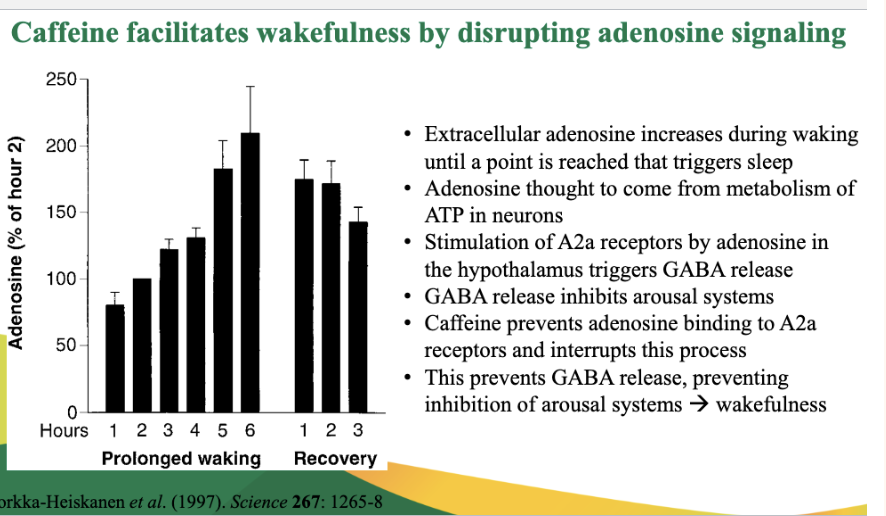
caffiene facilitates wakefulness by disrupting adenosine signaling
waking → trigger the use of energy ஃ trigger use of ATP ஃ ↑ metabolism of ATP → adenosine ↴
extracellular adenosine ↑ increases ஃ means no ATP for energy/metabolic processes to keep u AWAKE ஃ adenosine = PEAK (ATP = BASE) = TRIGGER SLEEP
additionally → caffeine → INHIBIT (excitatory A2a receptors @ hypothalamus = ↑ GABA ஃ depress arousal systems → ↑ sleep ⤴ )
ஃ ↓ GABA = NO DEPRESSED AROUSAL ஃ NO SLEEP = AWAKE
coffee intake may reduce risk of Parkinson’s
disease
↑ caffeine = ↓ parkinson disease
chronic effects ( tol, withd, dep ) + long term risk
tolerance → develop quickly (esp cardiac, respiratory, sleep)
withdrawl → ↑ headache + fatigue + irritability + thirst + ↓ energy ஃ dependence develop quick
long term risk
ostereporosis → caffeine makes nutrients (calcium) stay in piss ஃ bones ≠ absorb calcium ஃ calcium = ↓ dietary calcium absorption
caffeine ( adenosine receptor ant. ) = act as anti-depressant since it regulates NT release
caffiene → pregnancy → effects on fetus = inconclusive (pregnant women can drink coffee lol)
caffeine → nootropic? + improve memory?
nootropic = cognitive enhancers
caffeine → ↑ learning + memory ↴
ACUTE caffeine → ↑ BDNF ( ஃ ↑ LTP) + TrkB activation @ hippocampus ஃ ↑ memory
*remembering objects was better if learning while on caffeine
TYPES OF NOOTROPICS
taurine → in redbull + monster ↴
anxiolytic ஃ taurine → ↑ glycine receptor activation ஃ ↑ IPSPs (inhibitory post synaptic potentials)
L-theanine
TCM herbs → Ginkgo biloba + Panax ginseng + Bacopa monnieri (Ayurvedic herb)
nicotine, ritalin, amphetamines (adderal) + afinil family = NOOTROPICS
Modafinil, Adrafinil, Armodafinil

quiz lolz
1D - A2a receptor blockade in the hypothalamus reduces GABA release within the arousal system
2E - All of the above
3C - cognitive function