1. Skeletal Patho
 Call Kai
 Learn
Learn Practice Test
 Spaced Repetition
 Match
Match Flashcards
 Knowt Play
1/234

Earn XP
Description and Tags
Fractures, spinal & idiopathic disorders, neoplasms, hereditary & congenital disorders, inflammatory & infectious disorders
Name | Mastery | Learn | Test | Matching | Spaced | Call with Kai | Chat |
|---|
No analytics yet
Send a link to your students to track their progress
235 Terms
What are the two major causes of fractures in the skeletal system?
Traumatic and pathological
A broken bone that doesn’t penetrate the skin is called what? (Two names)
Closed/Simple fracture
A broken bone that comes through the skin is called what? (Two names)
Open/Compound Fracture
What is a complete fracture
The discontinuity of two or more fragments of a bone
What is an incomplete fracture
A fracture where the bone is not completely broken, often resulting in a crack or partial break.
What is a longitudinal fracture
A fracture that runs parallel to the long axis of the bone
What is a linear fracture (bonus points for knowing its other name)
A fracture that extends parallel to the long axis of a bone but does not displace the bone tissue (also sometimes called a hairline fracture)
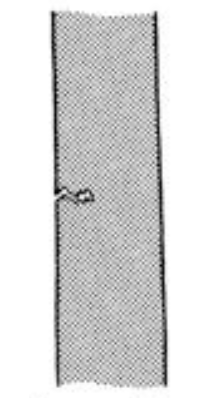
What classification of fracture is this?
Incomplete fracture
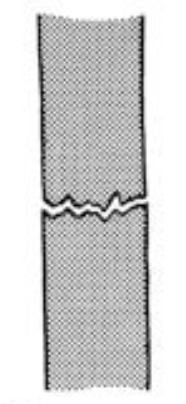
What classification of fracture is this?
Transverse fracture
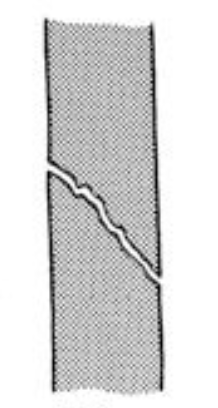
What classification of fracture is this?
Oblique fracture
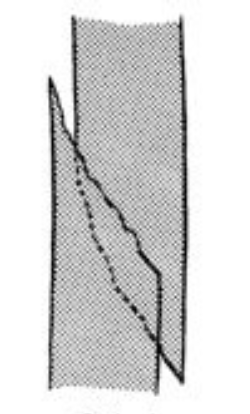
What classification of fracture is this?
Spiral fracture
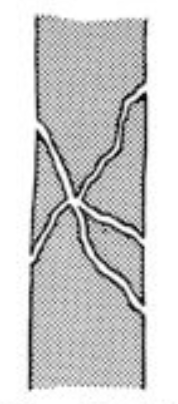
What classification of fracture is this?
Comminuted fracture
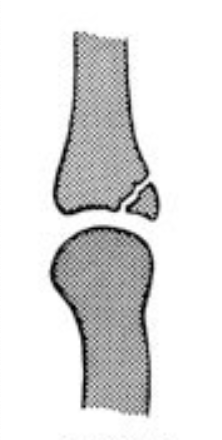
What classification of fracture is this?
Avulsion fracture
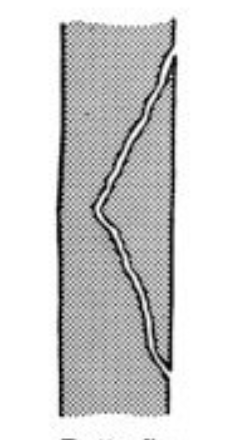
What classification of fracture is this?
Butterfly fracture
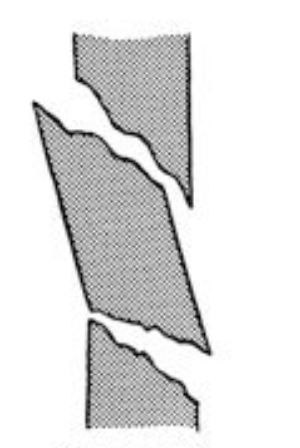
What classification of fracture is this?
Segmental fracture
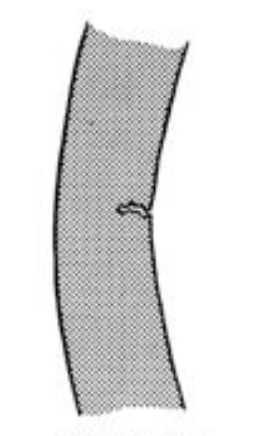
What classification of fracture is this?
Greenstick fracture
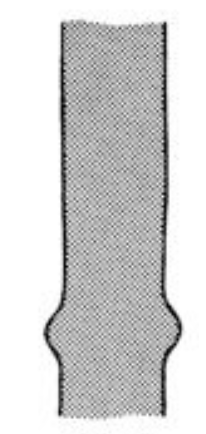
What classification of fracture is this?
Torus/buckle fracture
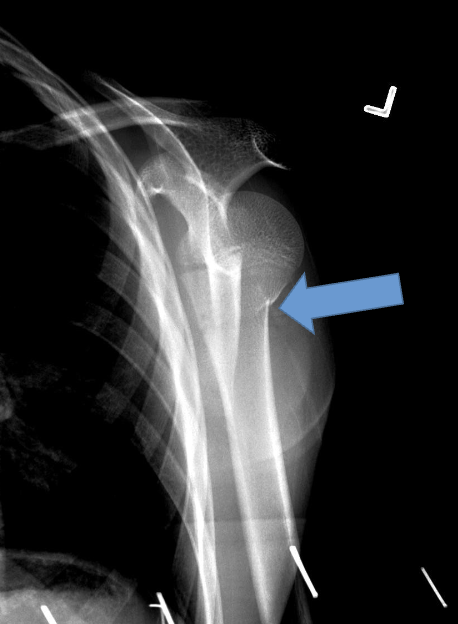
What type of fracture is this? (Bonus points for full explanation)
Transverse fracture of the surgical neck of the humerus
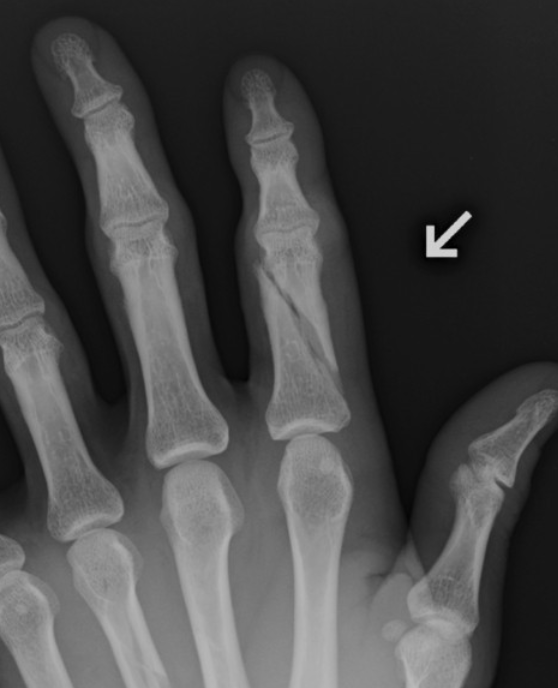
What type of fracture is this? (Bonus points for full explanation)
Oblique fracture of the proximal phalanx of the 2nd digit (L/R) hand
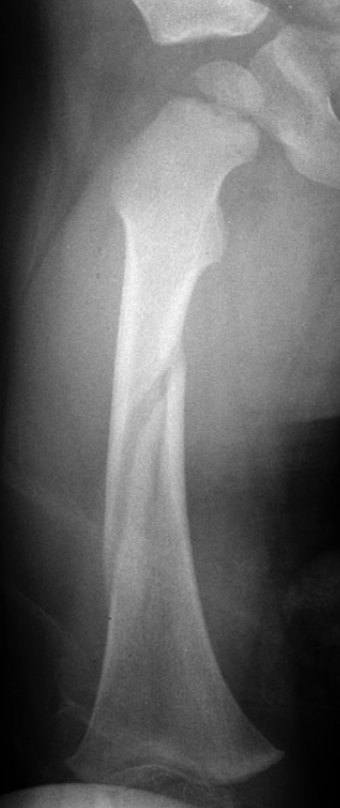
What type of fracture is this? (Bonus points for full explanation)
Spiral fracture in the femur of a child
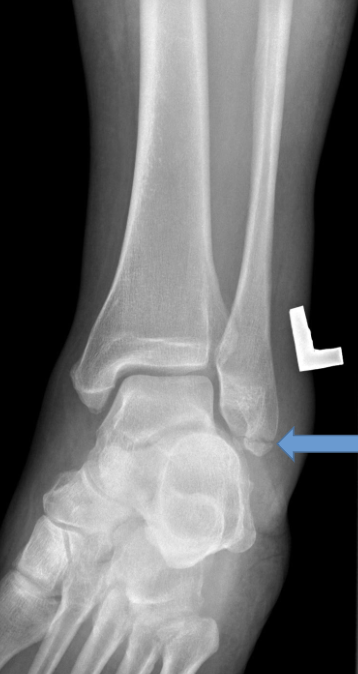
What type of fracture is this? (Bonus points for full explanation)
Avulsion fracture of the lateral malleolus of the left fibula
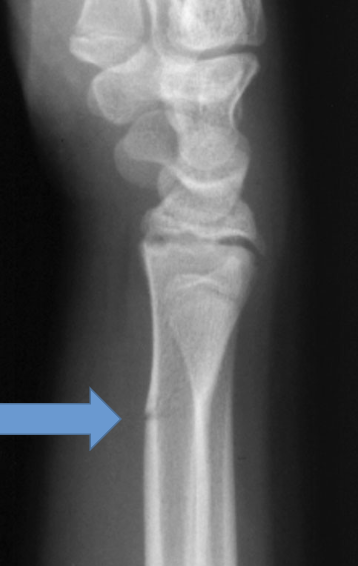
What type of fracture is this? (Bonus points for full explanation)
Greenstick fracture of the distal end of the radius
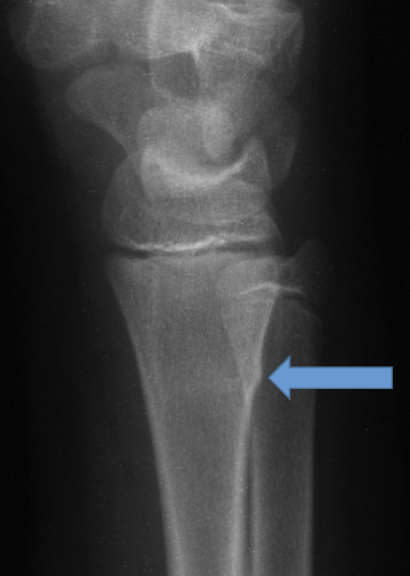
What type of fracture is this? (Bonus points for full explanation)
Torus/buckle fracture of the distal end of the radius
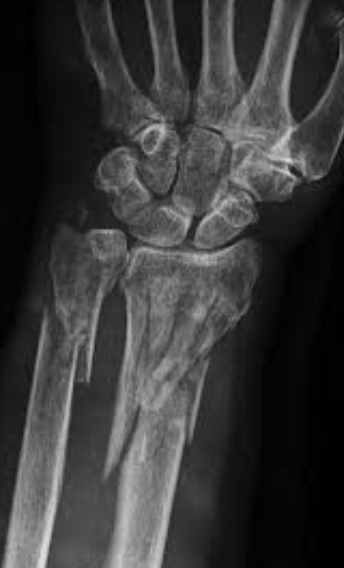
What type of fracture is this? (Bonus points for full explanation)
Comminuted fractures of the distal ends of the radius and ulna
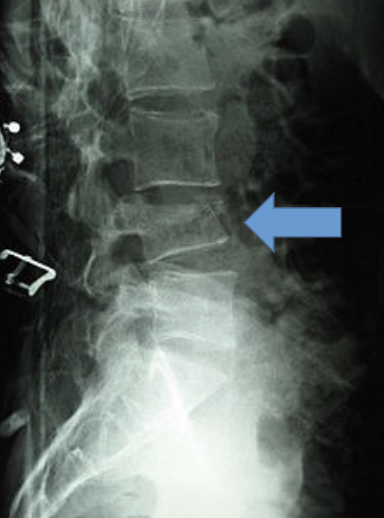
What type of fracture is this? (Bonus points for full explanation)
Compression fracture of the body of L4
What is an impacted fracture
A fracture that occurs when pressure is applied to both ends of the bone causing it to split into two fragments
What is a depressed fracture
When the bone is pushed in
(occurs in the skull or tibial plateaus)
What is an undisplaced fracture
When cracks in the bone may radiate in several directions but the bone fragments do not separate
What is a displaced fracture
Fracture in which the two ends of the broken bone are separated from each other
Describe dislocation
Full displacement of a body part - especially the temporary displacement of a bone from its normal position
Describe subluxation
Incomplete or partial dislocation
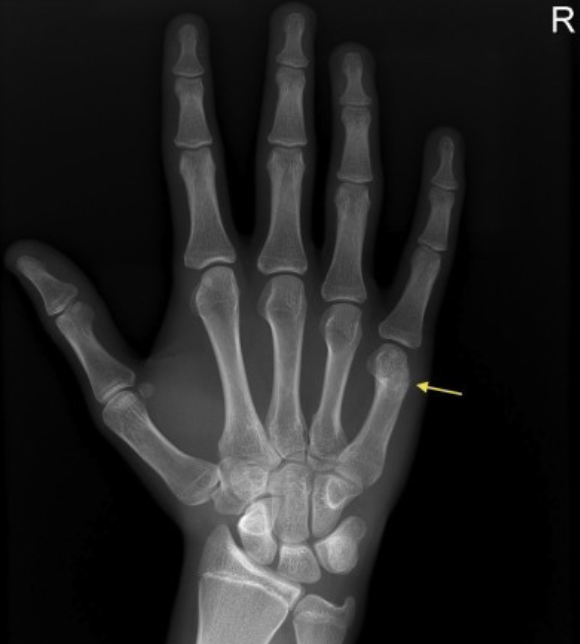
Name this fracture
Boxers fracture
What is a Boxers fracture?
Involves a transverse fracture in the neck of the 5th metacarpal causing palmar angulation of the head
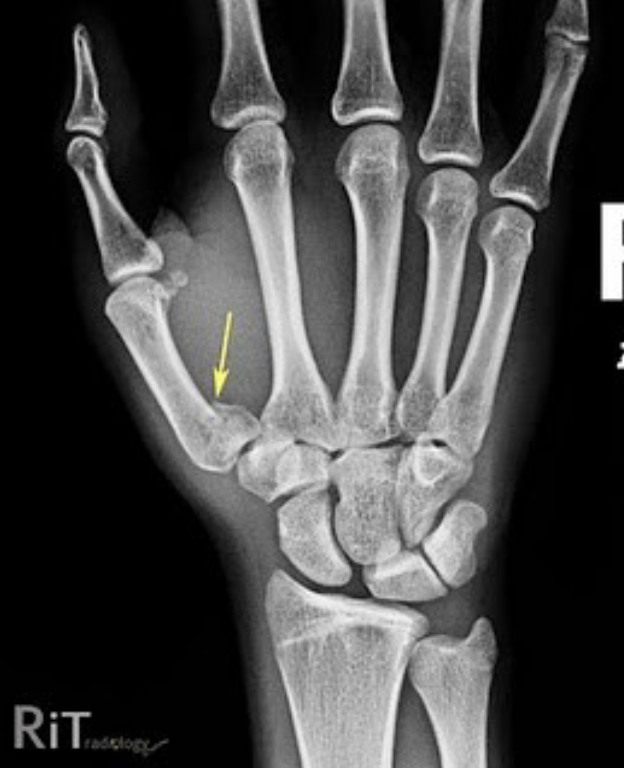
Name this fracture
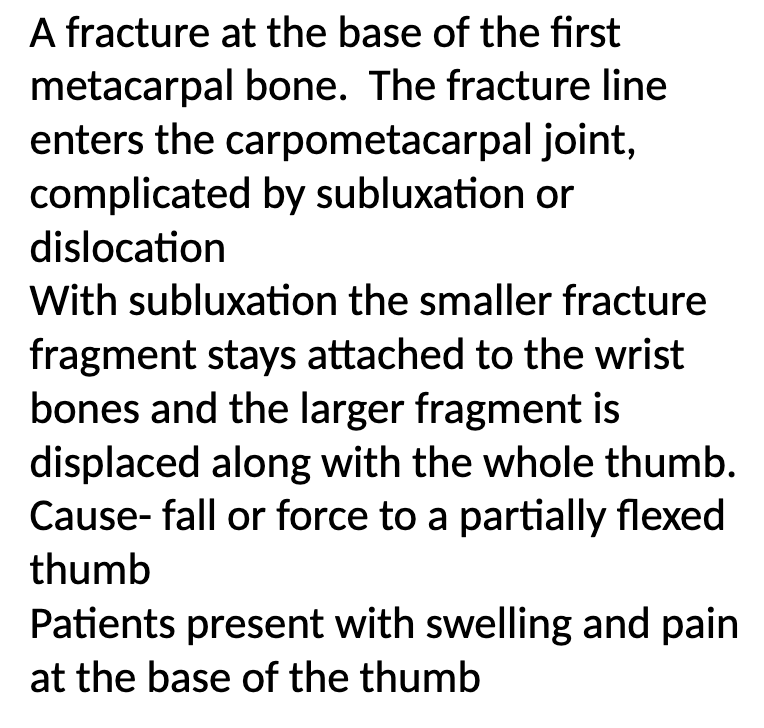
Bennett’s fracture
What is a Bennett’s fracture?
A fracture at the base of the first metacarpal bone
Name this fracture
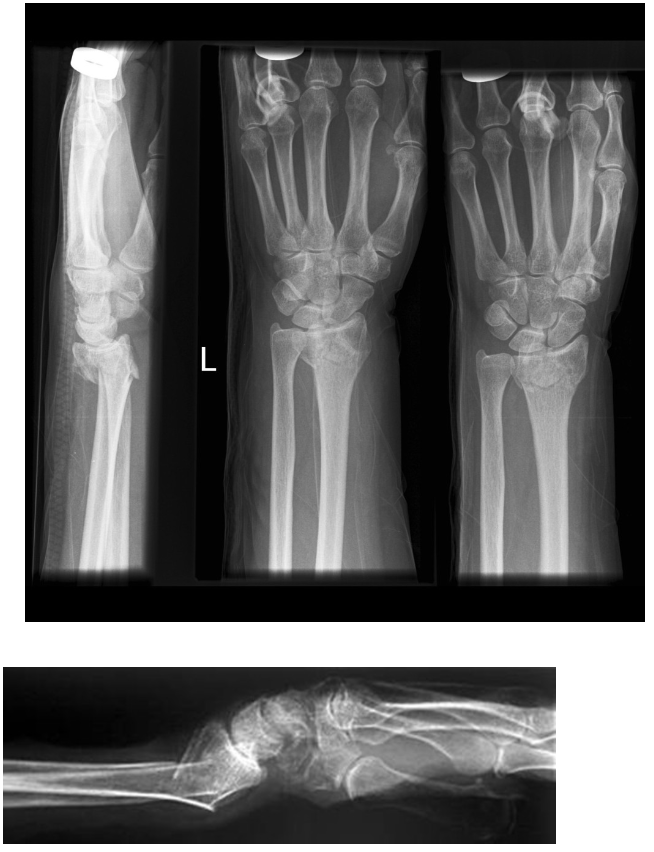
Colles’ fracture
What is a Colles’ fracture?
Fracture of the base of the distal radius (base) with the distal fragment being displaced posteriorly
Name this fracture
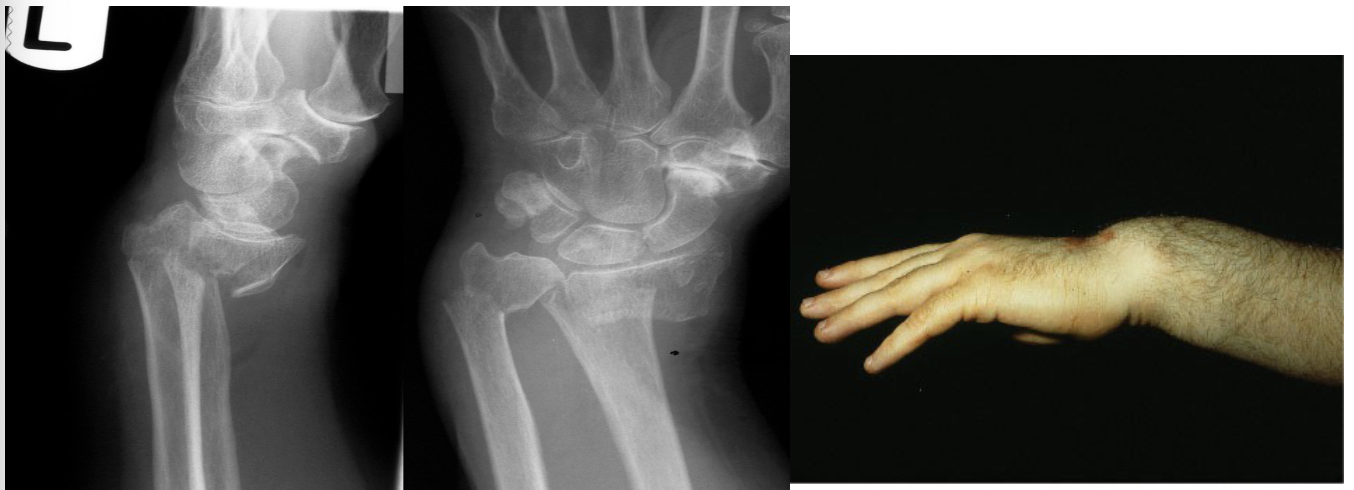
Smith’s fracture (reverse Colles’)
What is a Smith’s fracture?
Also called Reverse Colles’. Fracture of the wrist with the distal fragment of the radius (base) displaced anteriorly
Name this fracture
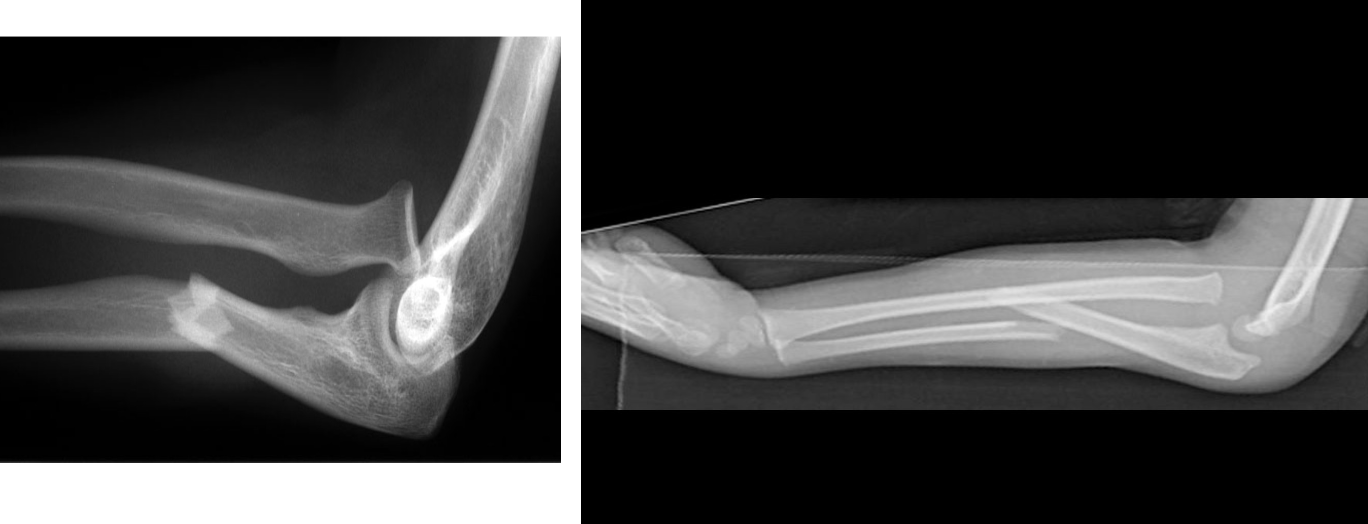
Monteggia’s fracture
What is a Monteggia’s fracture?
Fracture of the proximal half of the ulna along with dislocation of the radial head
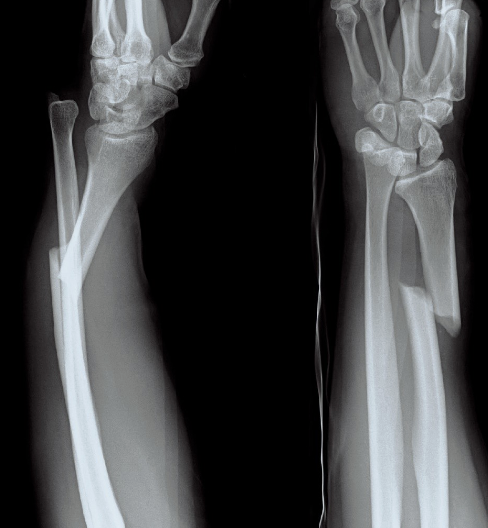
Name this fracture
Galeazzi fracture
What is a Galeazzi fracture?
Fracture of the distal third of the radius + Posterior dislocation of the ulna
Disrupting the distal radioulnar joint, with subluxation or dislocation
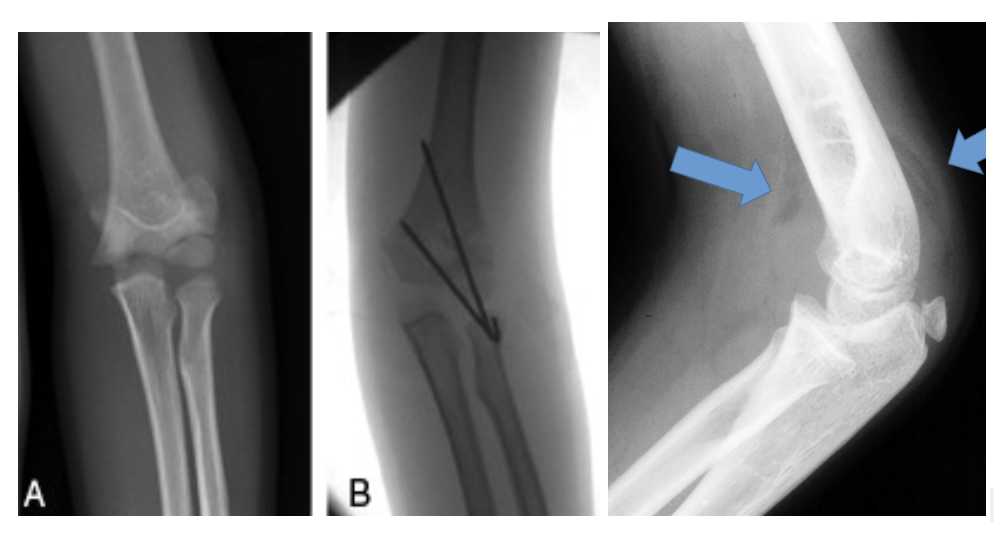
Name this fracture
Supracondylar fracture
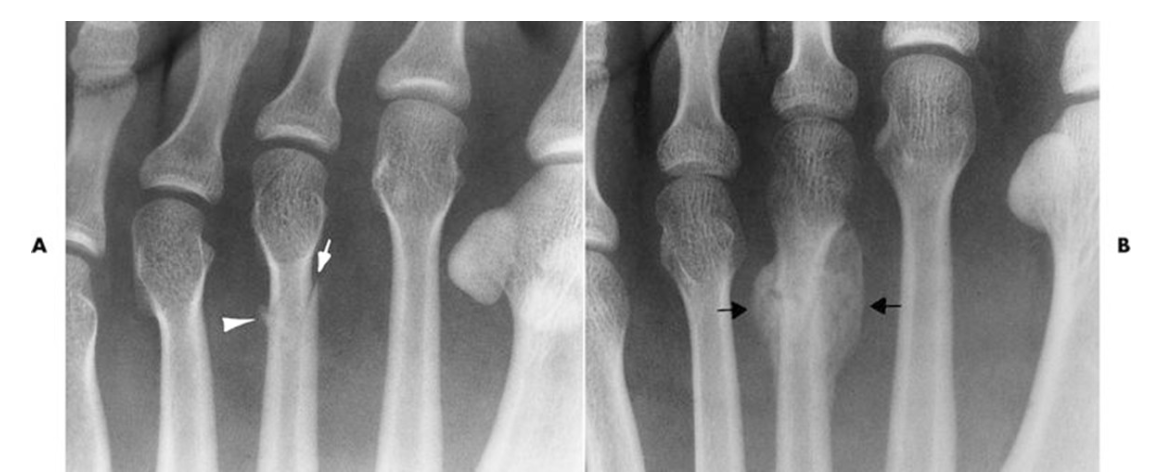
What is a stress fracture? (and what are the other names for this fracture?)
Response of the bone to repeated stresses, none of which is sufficient to cause a fracture themselves
AKA March or Fatigue fracture
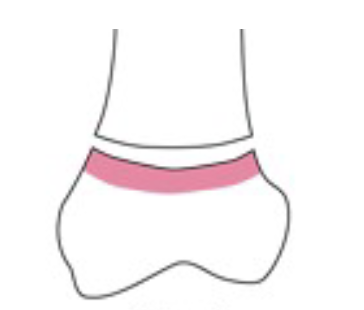
Name this fracture
Type I epiphyseal (Salter-Harris) fracture
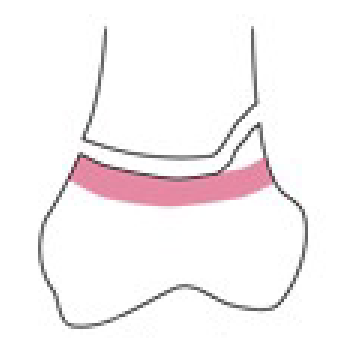
Name this fracture
Type II epiphyseal (Salter-Harris) fracture
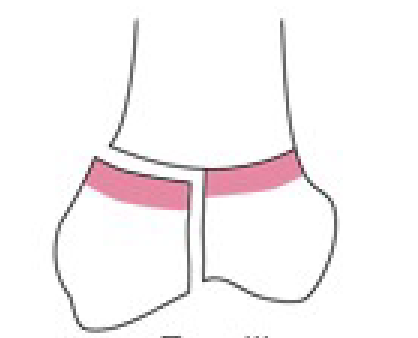
Name this fracture
Type III epiphyseal (Salter Harris) fracture
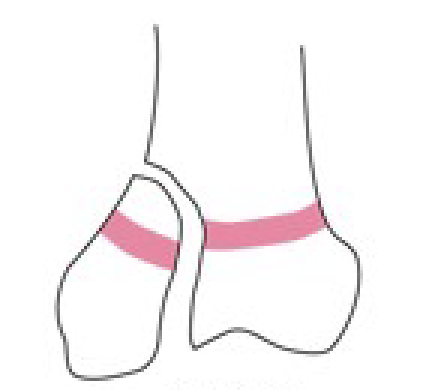
Name this fracture
Type IV epiphyseal (Salter-Harris) fracture
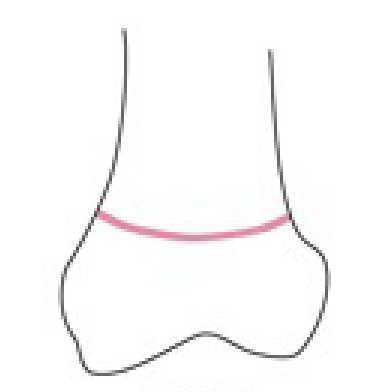
Name this fracture
Type V epiphyseal (Salter-Harris) fracture
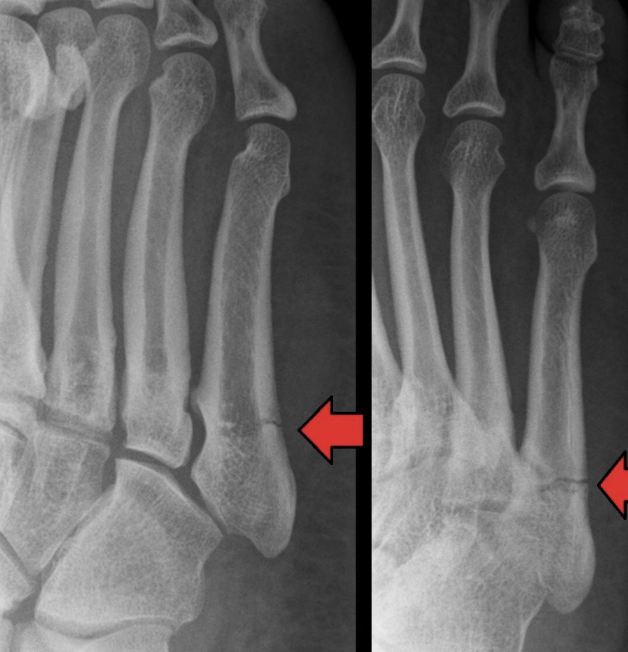
Name this fracture
Jones fracture
What is a Jones fracture?
A transverse fracture 1-3 cm distal to the tuberosity at the base of the 5th metatarsal
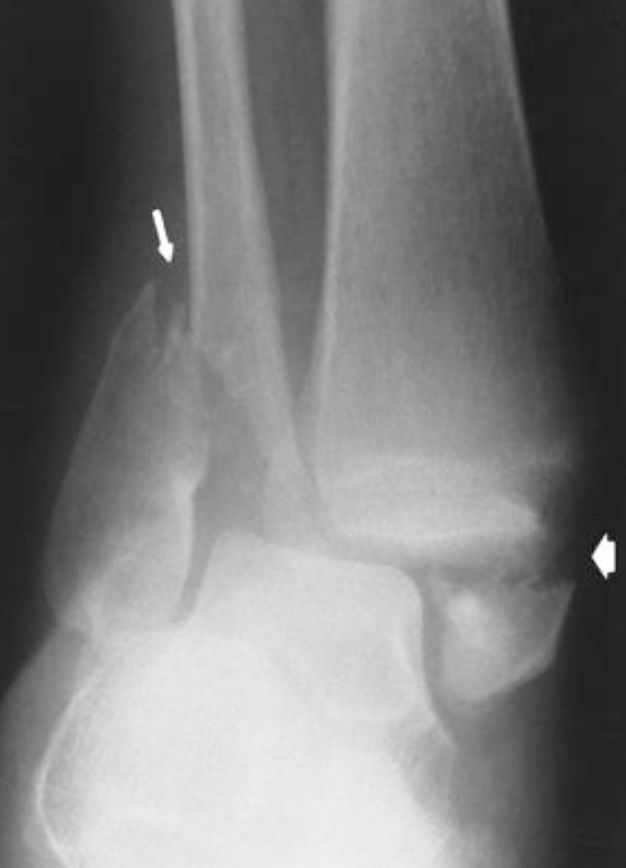
Name this fracture (has two names)
Bimalleolar / Pott’s fracture
What is a Bimalleolar fracture?
Fracture of the lower fibula and of the malleolus of the tibia, resulting in displacement of the foot
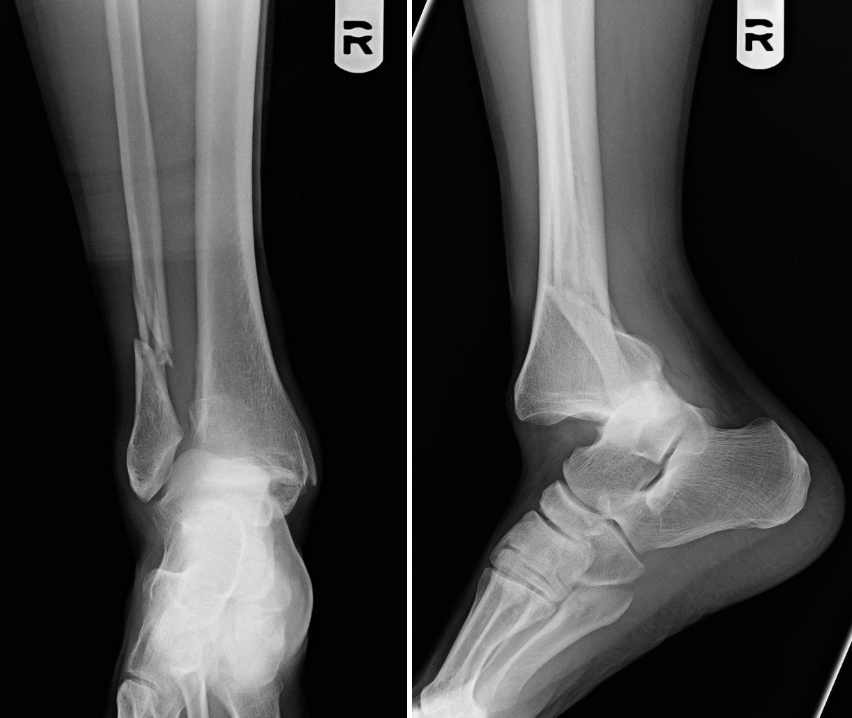
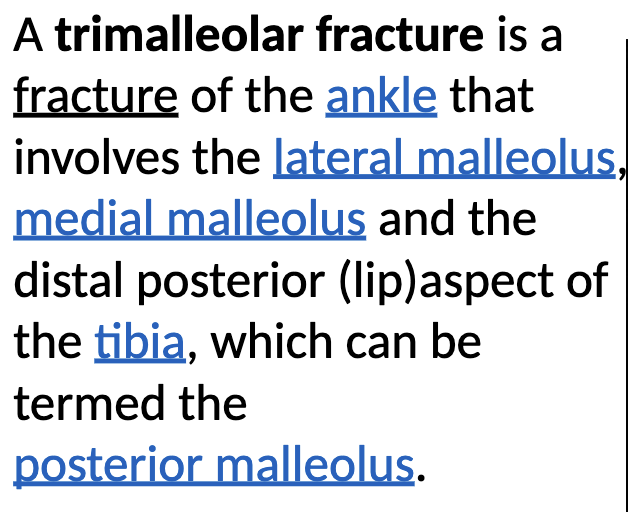
Name this fracture
Trimalleolar fracture
What is a trimalleolar fracture?
Fracture of the ankle similar to bimalleolar
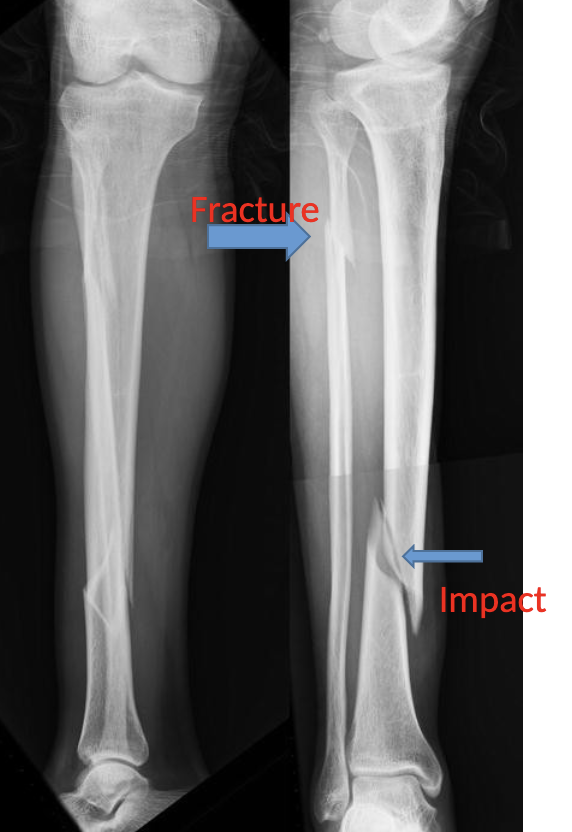
Name this fracture
Contrecoup fracture
What is a Contrecoup fracture?
A fracture in the part or region opposite that at which the blow is received
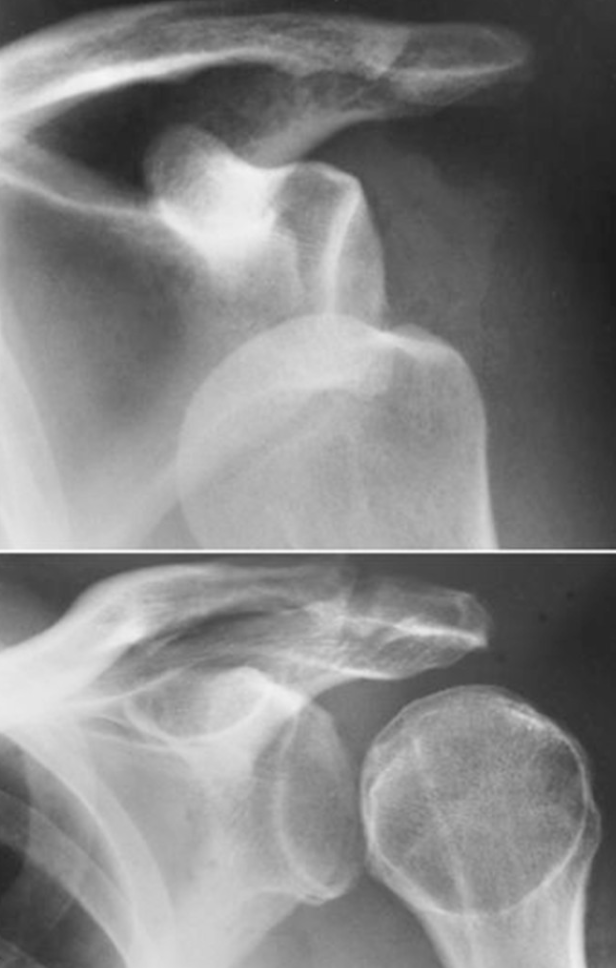
What are these pictures of?
Dislocation of the shoulder
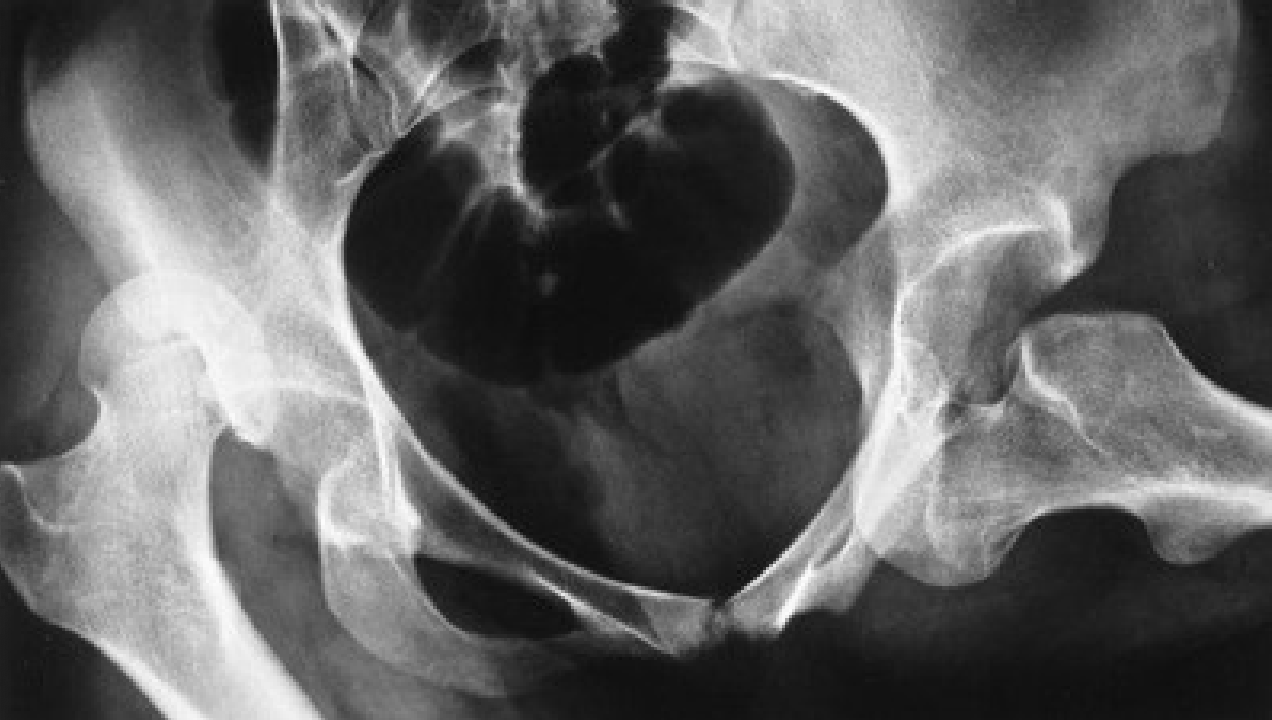
What is this a picture of? (Bonus points: which direction is more common)
Hip dislocation - Posterior dislocation is more common.
Right femur: dislocated posteriorly
Left femur: dislocated anteriorly
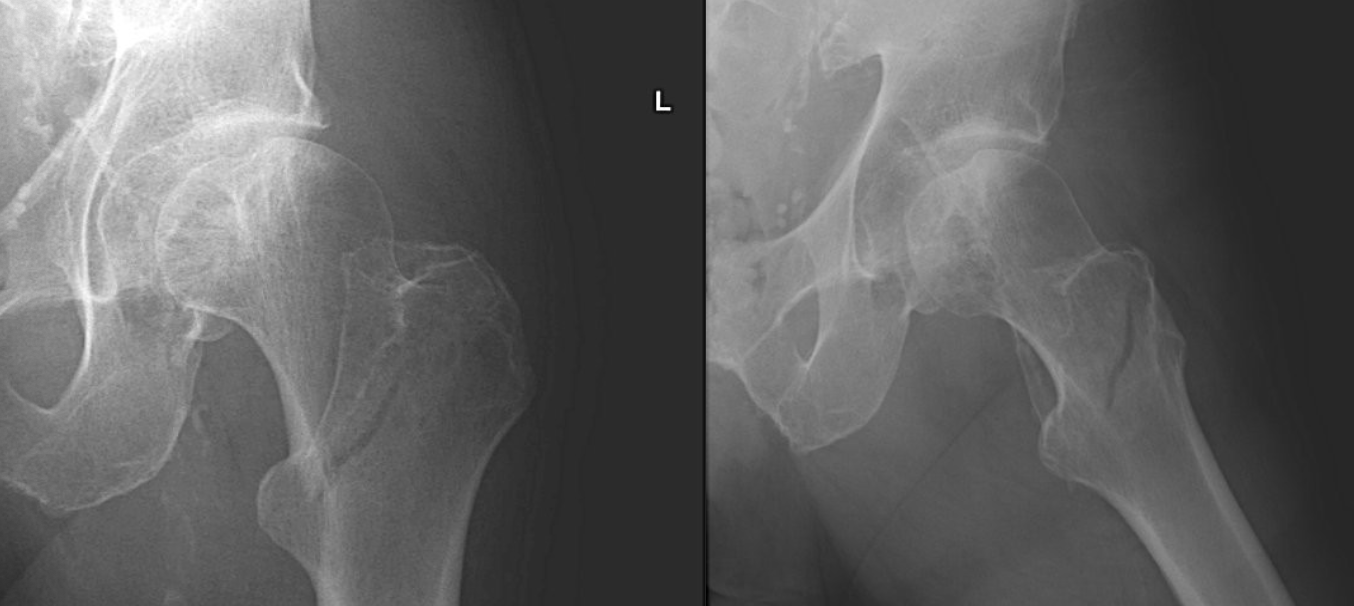
Name this fracture
Intertrochanteric fracture
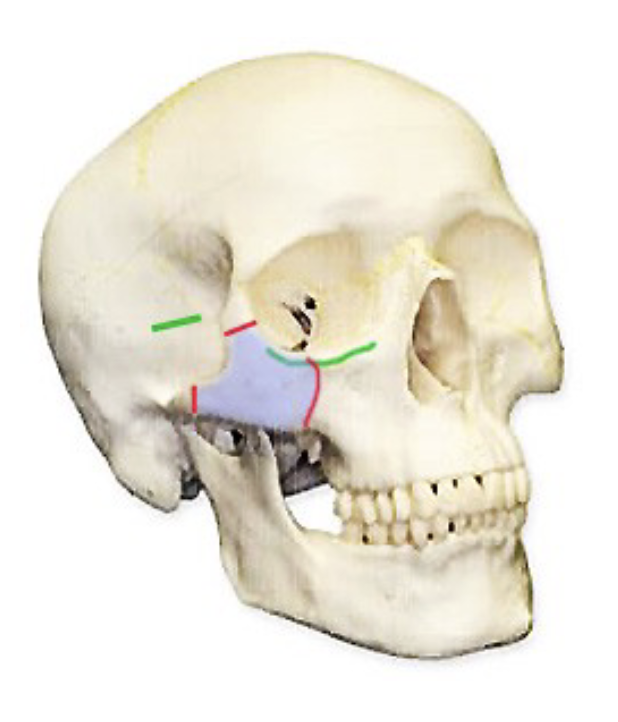
What would a fracture in this area be called?
Tripod fracture
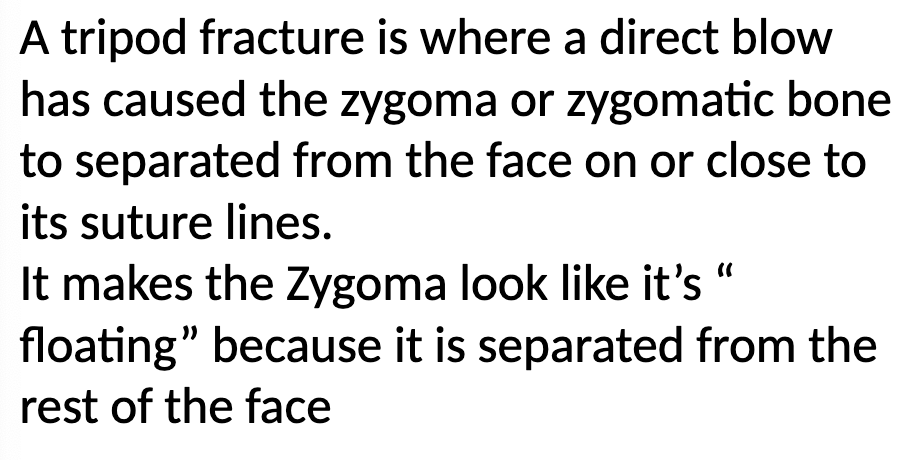
What is a tripod fracture?
Fracture caused by a direct blow to the zygoma
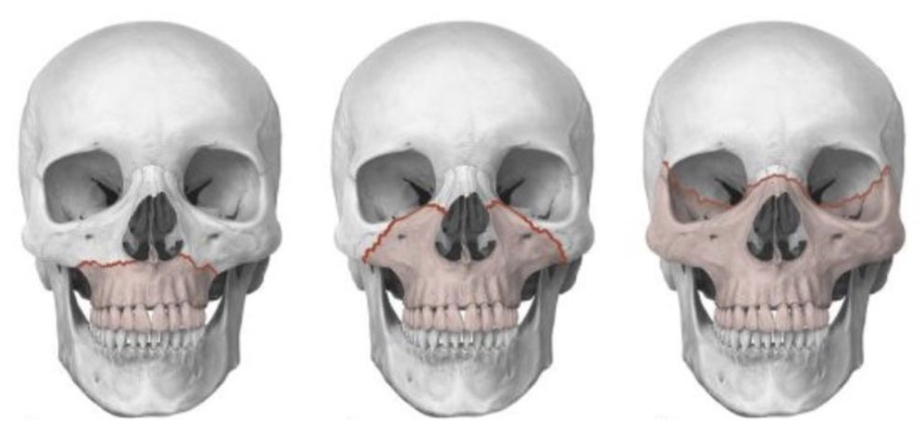
What would a fracture in this area be called?
Le Fort fracture
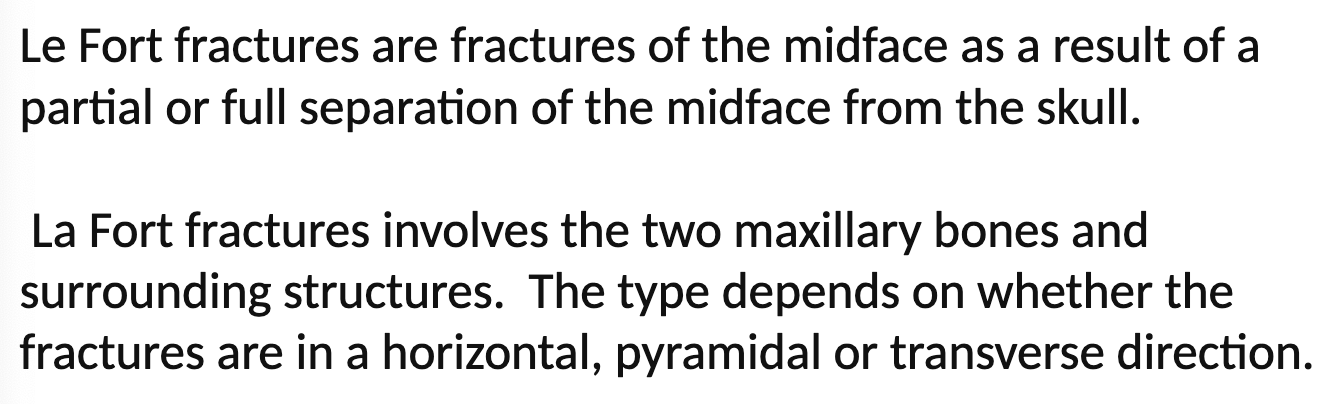
What is a Le Fort fracture?
Fracture in the midface of the skull involving the two maxillary bones
Type 1 = low (below nose)
Type 2 = middle (pyramidal)
Type 3 = high (through eyes)
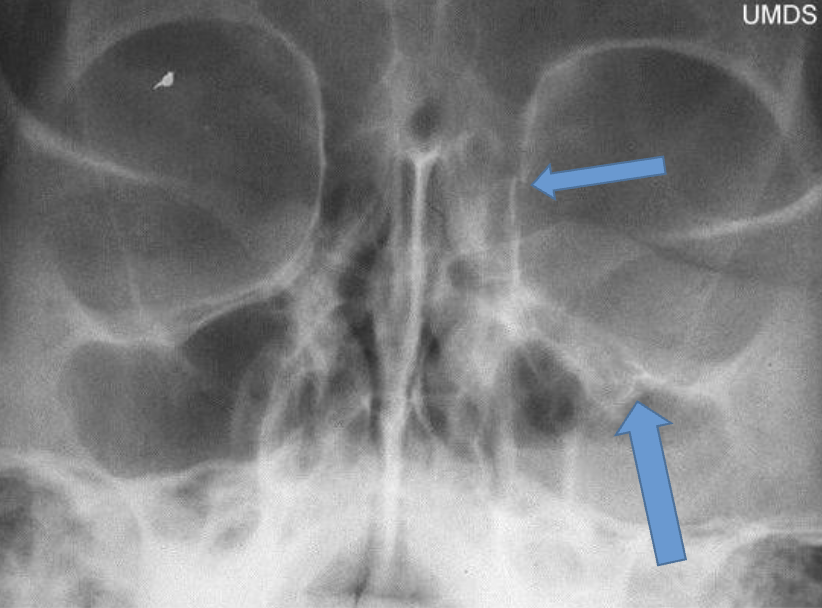
What kind of fracture is this?
Blow out fracture
What is a blow out fracture?
Caused by traumatic force. Force absorbed by the orbital rim and transmitted to the weaker medial orbital wall or floor, causing a fracture.

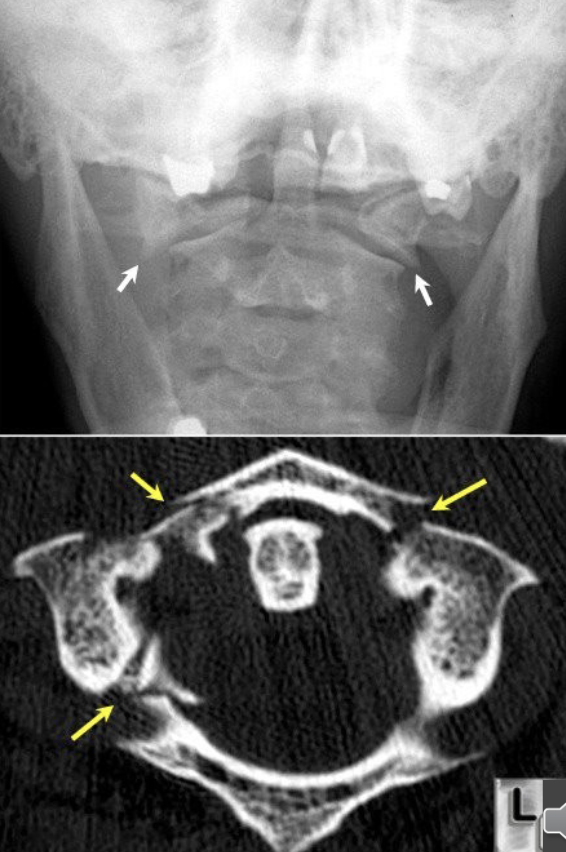
Name this fracture
Jefferson’s fracture
What is a Jefferson’s fracture?
Comminuted fracture of the anterior and posterior arches of C1 causing displacement
(from axial loading eg. diving injury head hit)
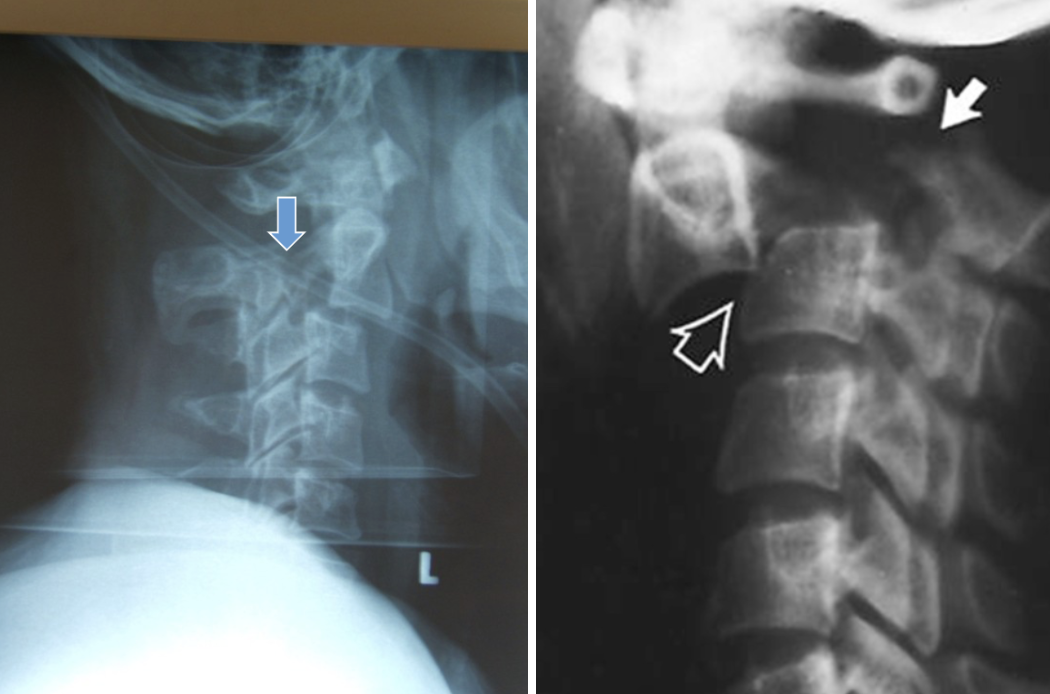
Name this fracture
Hangman fracture
What is a Hangman fracture?
Fracture in the arch of C2 around the pedicles or lateral masses
(from hyperextension imagine neck greatly extended from hanging)
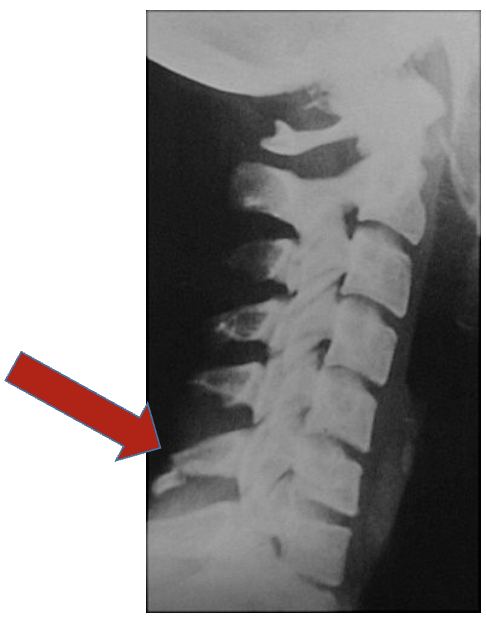
Name this fracture
Clay Shoveler’s fracture
What is a Clay Shoveler’s fracture?
An avulsion fracture of the spinous process in the lower cervical or upper thoracic spine
What are pathological fractures?
Fractures that occur in bone that has been weakened by disease
What is SNAT? (and what is its other name)
Suspected non-accidental trauma
AKA Battered-Child Syndrome
When many fractures have occurred at different times in children too young to have received them accidentally
What are the different types of ‘Post Fracture Treatment’? (2)
Closed / External reduction: non-surgical procedures
Open reduction: surgical procedures
- with internal fixation (ORIF)
- with external fixation (OREF)
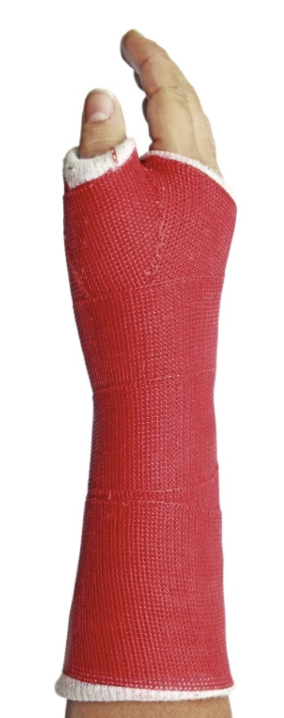
What is this an example of?
Closed reduction
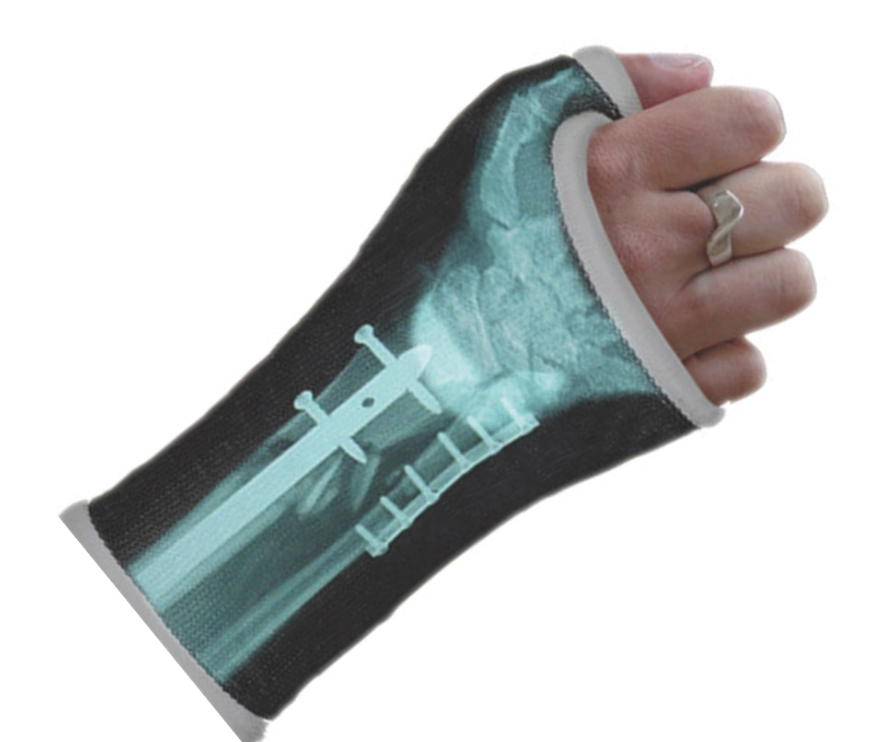
What is this an example of?
Open reduction - internal fixation (ORIF)
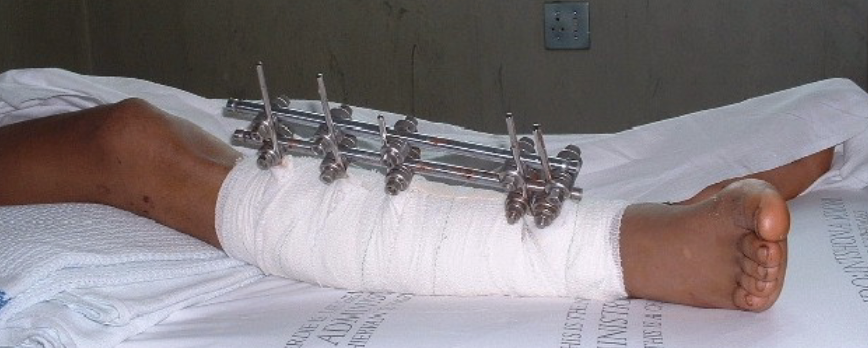
What is this an example of?
Open reduction - external fixation (OREF)
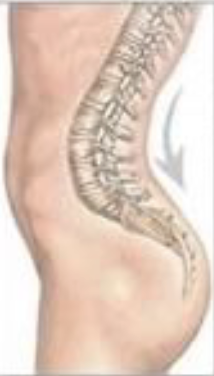
Name this pathology
Lordosis
What is lordosis?
The abnormal increase in the normal lordotic (anterior) curvature of the lumbar spine
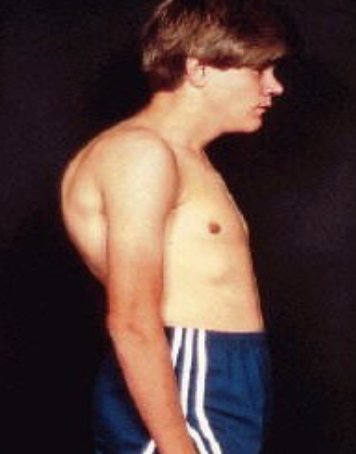
Name this pathology
Kyphosis
What is kyphosis?
Excessive curving of the spine (40-45 degrees) resulting in a hunchback appearance.
- Can occur at any age
- Often associated with osteoporosis
- May be mild to severe and may affect the lungs, nerves, and other tissues and organs causing pain and other problems
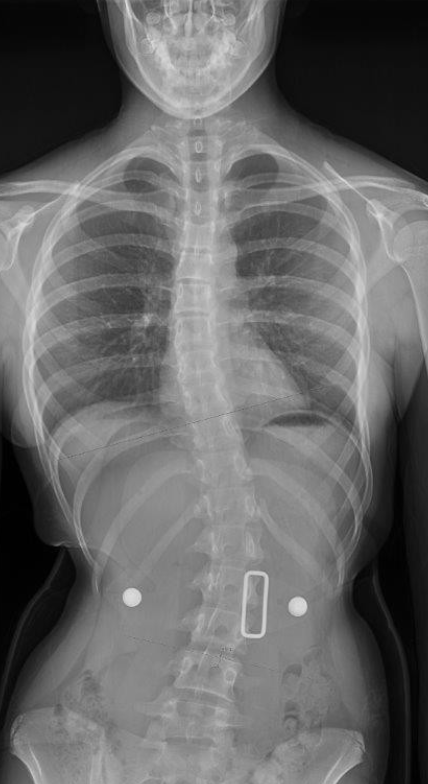
Name this pathology
Scoliosis
What is scoliosis?
Abnormal lateral curvature of the spine
- Most commonly idiopathic
- Other common causes:
functional (caused by another body part ie. longer leg)
neuromuscular
degenerative
- RA: usually taken in a PA showing S curve of the spine from side to side
- < 20° = normal
- 25-40° = brace Tx
- > 40-50° = serious; surgery
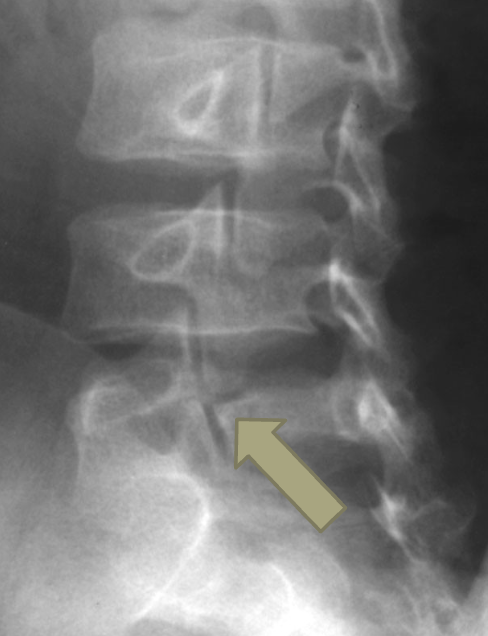
Name this pathology
Spondylolysis (this specific example is congenital)
What is spondylolysis?
Cleft or erosion in the pars interarticularis
- usually a result of developmental or congenital anomaly (clear lines)
- can also result from repetitive hyperextension or rotation in adolescent athletes as a crack or erosion (usually bilateral and involves L5)
- RA: oblique L-spine shows defect in pars without displacement
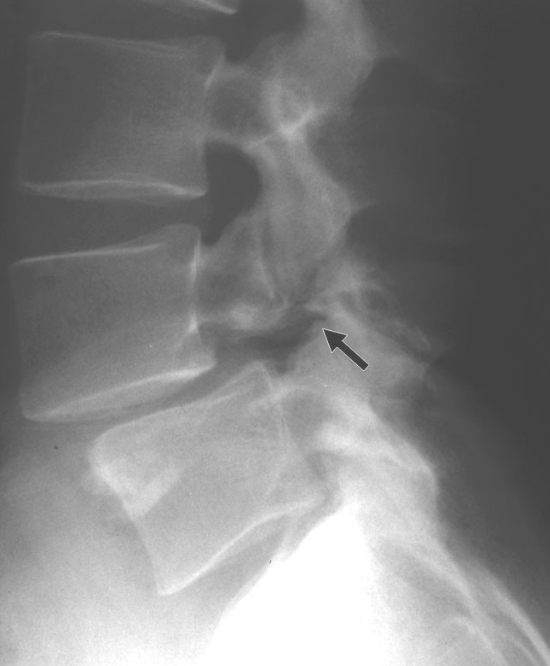
Name this pathology
Spondylolisthesis
What is spondylolisthesis?
Anterior subluxation of the vertebral body
- RA: lateral L-spine shows the displacement
- common at L5/S1 junction (but can be elsewhere in lower L-spine)
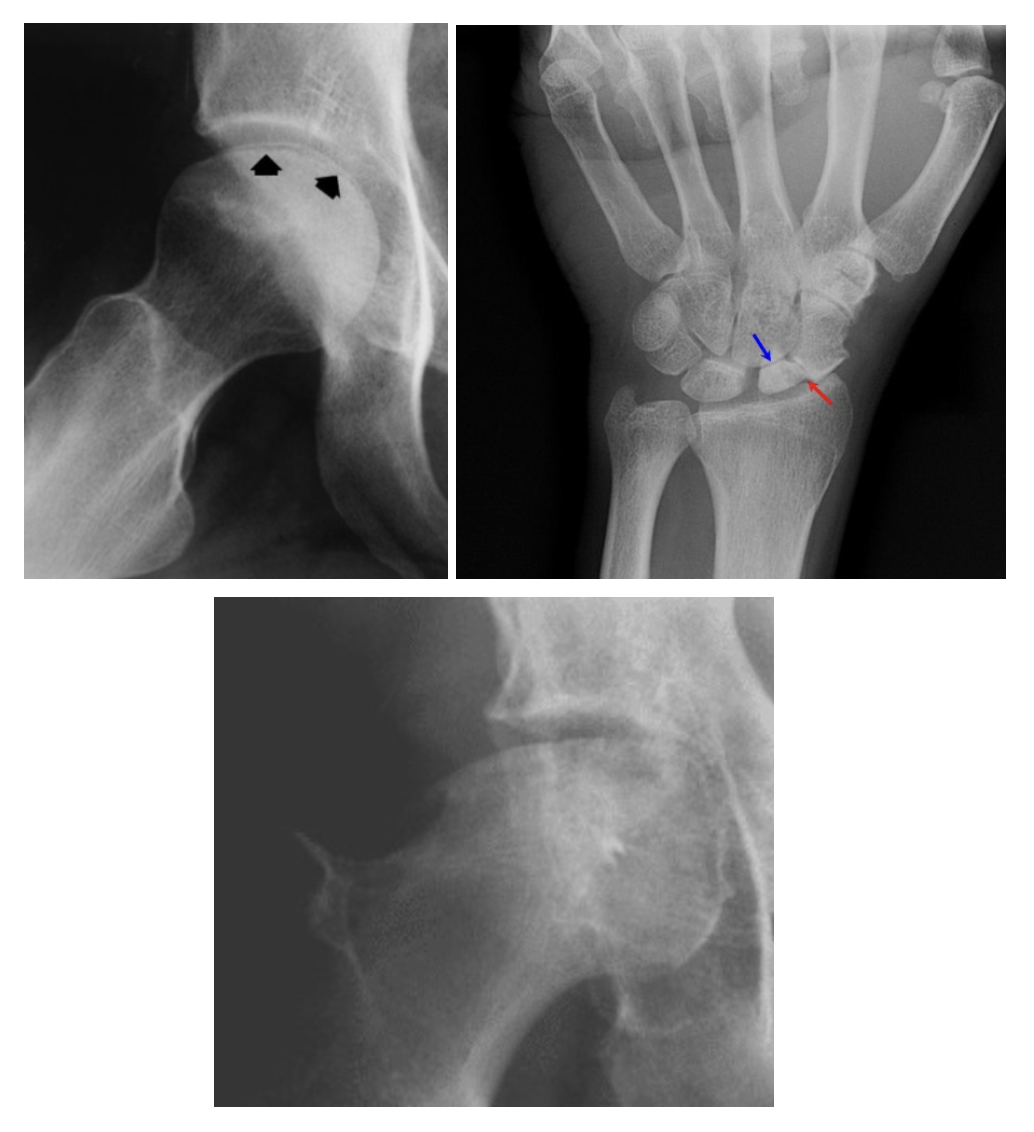
Name this pathology (has 4 names)
Aseptic necrosis
- ischemic necrosis
- avascular necrosis (AVN)
- osteonecrosis
What is aseptic necrosis?
Bone death caused by poor blood supply
- most common in the hip and shoulder but can affect other large joints
- is idiopathic unless PT has: trauma, thrombosis, long term steroid use, sickle cell disease, chronic alcoholism, radiation therapy
- RA: crescent sign (early stages), multiple lytic and sclerotic areas, flat femoral head
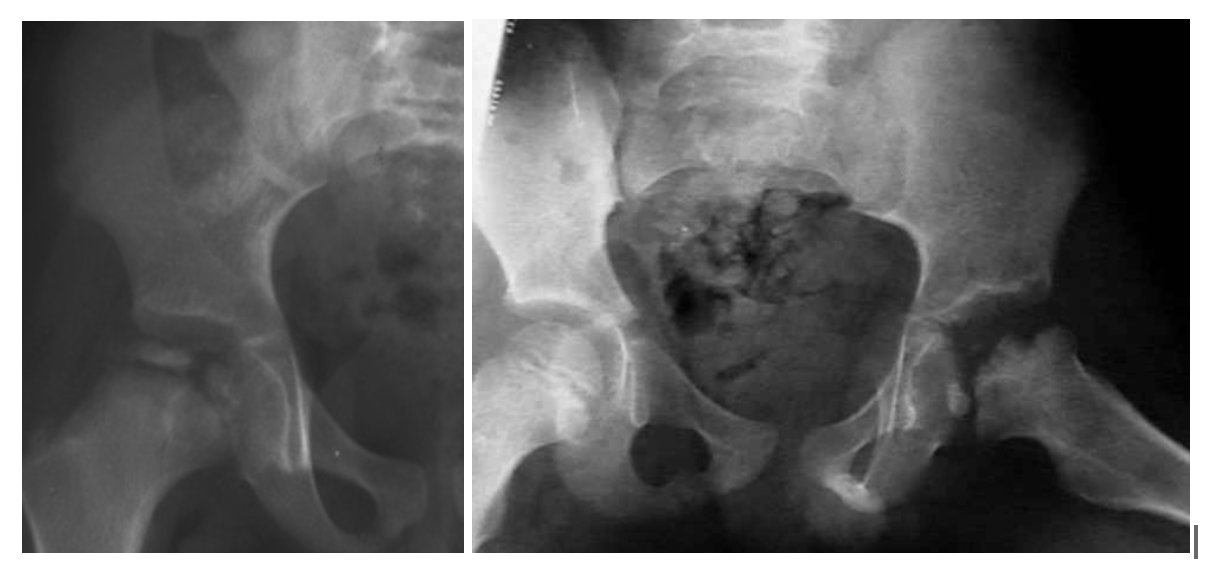
Name this pathology
Legg-Calve-Perthe’s Disease
What is Legg-Calve-Perthe’s disease?
Idiopathic aseptic/avascular necrosis of the femoral head causing it to collapse and become flat
- usually takes place before adolescence (commonly between 3-10)
- affects 4x more boys than girls
- blood supply can return over several months healing the head but it will no longer be round (can take over 2-3 years to heal)
- RA: misshapen femoral head with lytic/sclerotic areas
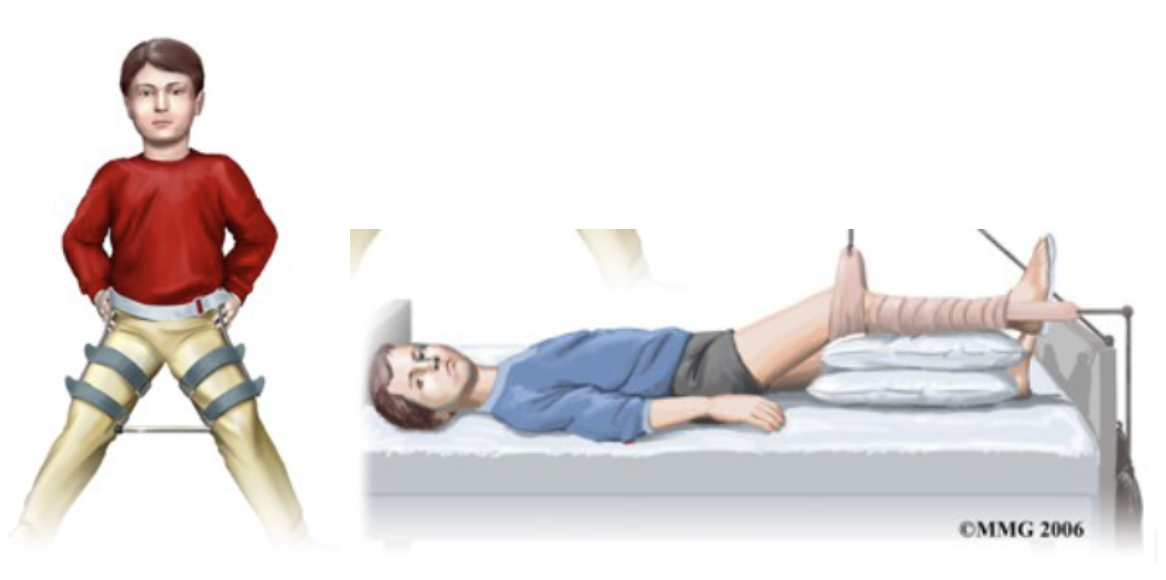
What is this an example of?
Treatment for severe Legg-Calve-Perthe’s disease
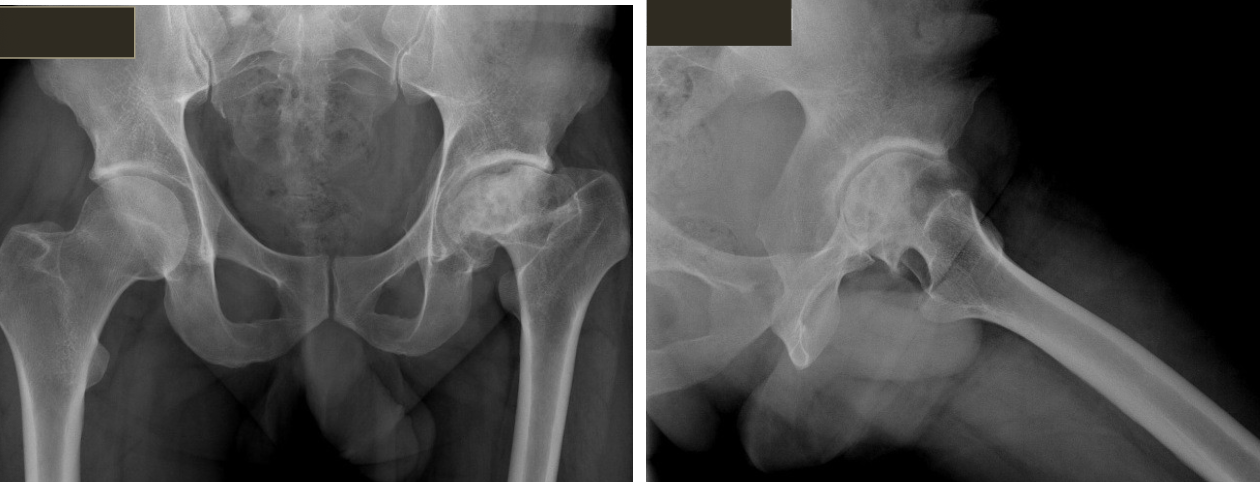
What is this an example of?
Untreated Legg-Calve-Perthe’s disease
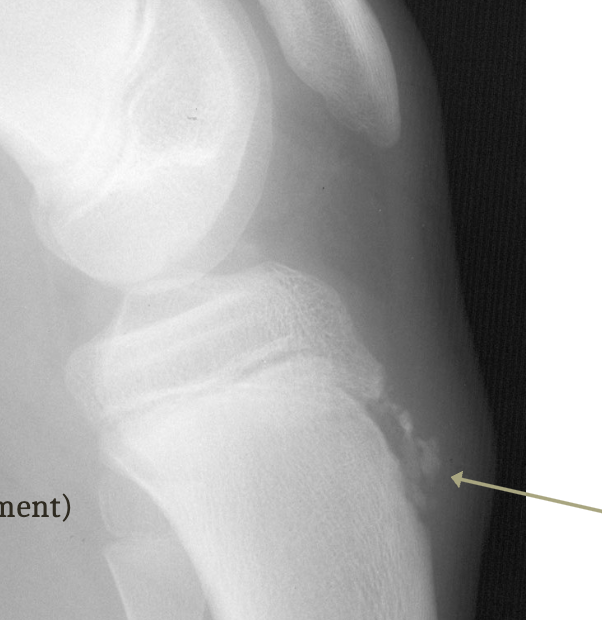
Name this pathology
Osgood Schlatter’s
What is Osgood Schlatter’s?
Inflamed tibial tuberosity due to excessive pulling force from the patellar tendon (ligament)
- Overuse injury in growing adolescents from sports (more prominent in boys 10-15)
- If child doesn’t play sports, can be caused by them growing fast
- RA: elevation of tibial tuberosity (may be fragmented), soft tissue swelling
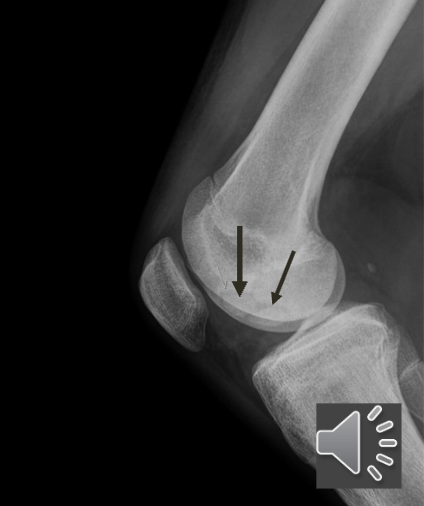
Name this pathology
Osteochondritis dissecans
What is Osteochondritis dissecans?
Joint condition where a piece of cartilage, and a thin layer of the bone beneath it, comes loose from the end of a bone
- Caused by reduced blood supply (particularly in young men after an injury to a joint)
- Most common in the knee but can happen in any joint
- RA: bone chips by the joint
- Can increase risk of developing osteoarthritis in affected joint
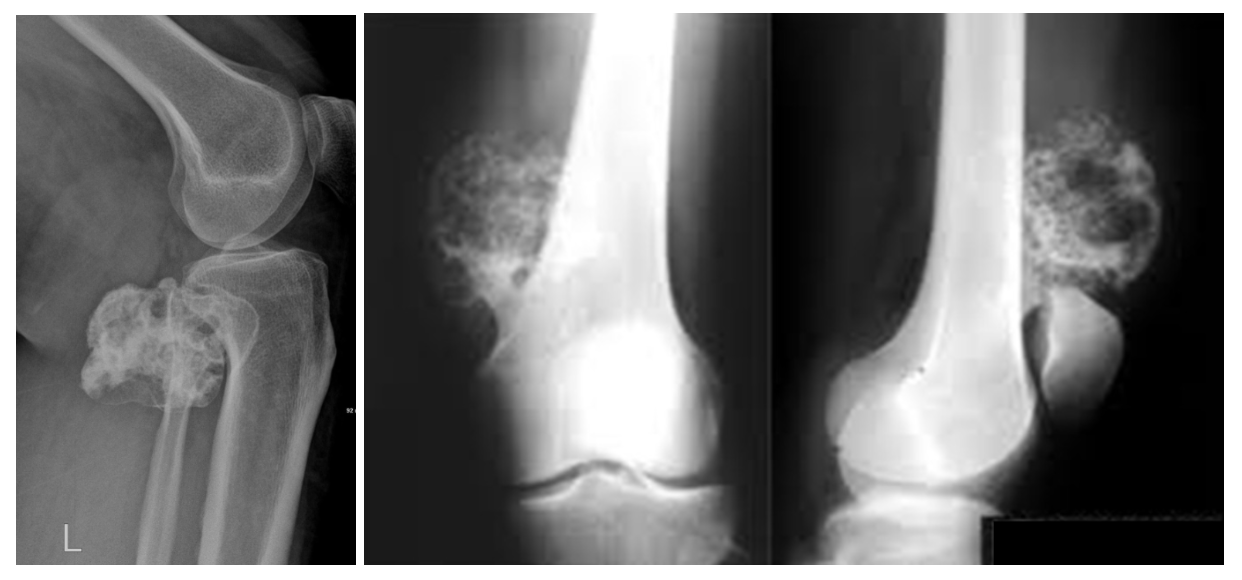
Name this pathology (+ its other name)
Osteochondroma / Exostosis