CDIS 290: Anatomy and Physiology of the Speech, Language, and Hearing Systems
 Note
 Call Kai
 Learn
 Practice Test
 Spaced Repetition
 Match
 Flashcards
 Knowt Play
1/30

There's no tags or description
Looks like no tags are added yet.
Name | Mastery | Learn | Test | Matching | Spaced | Call with Kai | Chat |
|---|
No analytics yet
Send a link to your students to track their progress
31 Terms
larynx
primary organ of voice production
vocal folds
two bands of tissue that are positioned opposite each other in larynx; when not speaking they open so you can breath
trachea
wide flexible tube connecting larynx to bronchi of your lungs
glottis
opening between vocal folds, opens during breathing and narrows during voice production
cochlea
fluid-filled snail-like structure that contains the Corti and tiny hair cells that translate vibrations into electrical impulses carried to the brain by sensory nerves
Corti
organ for hearing
anatomy
study of body structures
physiology
study of functions of body structures
auditory mechanism
outer ear, middle ear, inner ear, and auditory nervous system
outer ear
structures: auricle/pinna, external auditory meatus/ear canal, tympanic membrane/eardrum; function: carries sound into ear canal
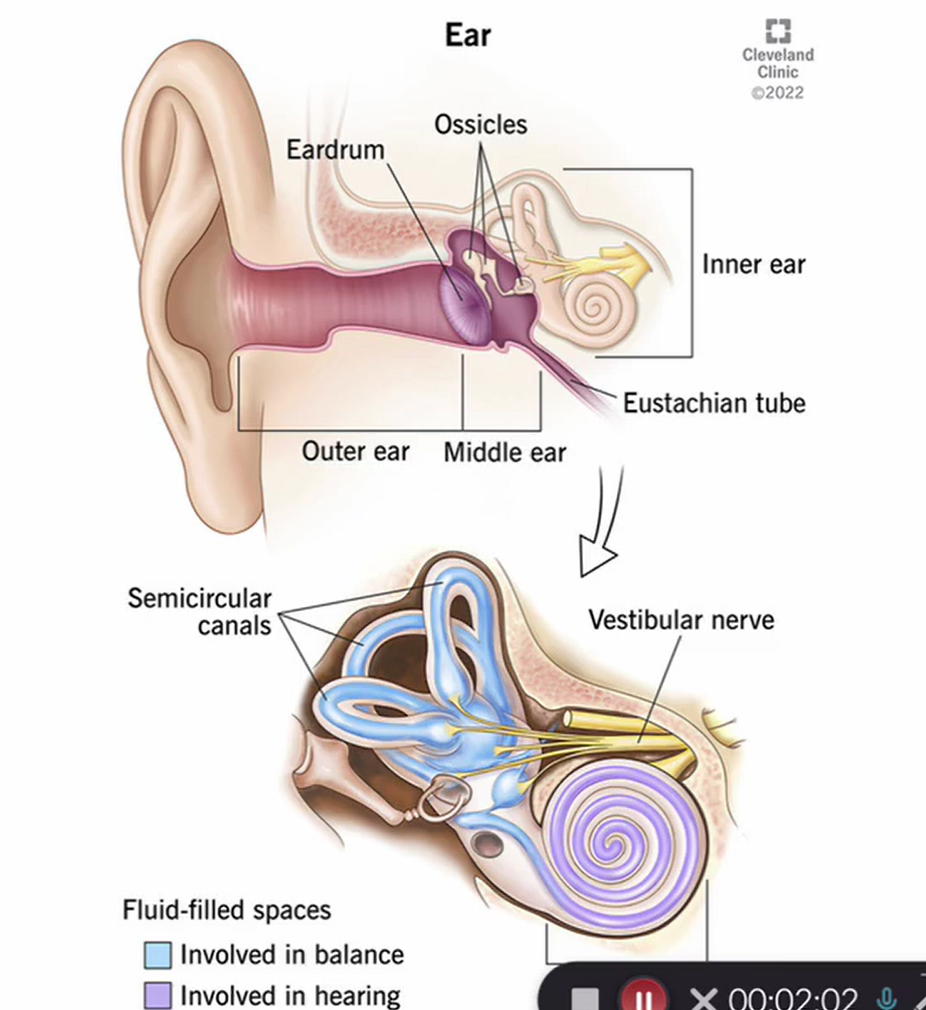
middle ear
structures: tympanic membrane/eardrum, ossicles (3 bones: malleus, incus, stapes), eustachian tubes; function: transports sound to inner ear

inner ear
structures: cochlea, semicircular canals; functions: transmits signals to auditory nerve and balance

auditory nervous system
structures: auditory nerve, brainstem, temporal lobe; function: transports neural impulses from cochlea to brain, where impulses are deciphered

how hearing works
The pinna collects sound waves and carries the sound waves into the ear canal to the eardrum
The eardrum vibrates, causing the ossicles to vibrate
The ossicles transport sound (vibrations) to the inner ear to the cochlea
The tiny hair cells in the cochlea vibrate and transmit signals to the auditory nerve
The auditory nerve transports neural impulses from the cochlea to the brain, where impulses are deciphered as sound
Communication disorders caused by auditory disruptions
deafness and hard of hearing
structures of the respiratory system
nose, nasal cavity, mouth, oral cavity, sinus, larynx, pharynx, trachea, lungs (bronchi, alveoli), diaphragm, rib cage

expiration
5 muscles, exhaling, below diaphragm

inspiration
5 muscles, inhaling, above diaphragm

functions of respiratory system
Primary function: supplies oxygen to the body, removes carbon dioxide from the body, creates air pressure under vocal folds necessary for speech production; secondary function: protects the body from germs and irritants, warms and adds moisture to air
resting tidal breathing
life-sustaining breathing, rate and depth depend on oxygen and carbon dioxide, expiration and inspiration cycle 1:1
speech breathing
forceful and rapid, inspiration is shorter than expiration, contraction of muscles prevents air from exiting lungs rapidly
lifespan of respiratory system
structures of the respiratory system increase in size with age, maximum lung capacity is reached in early adulthood, respiratory function is less efficient at 70-80 years, respiratory function is impacted by health, exercise, and smoking
communication disorders caused by respiratory disruptions
voice, motor speech, fluency, swallowing
structures of the laryngeal system
part of the respiratory system, voice box, 3 parts (upper: supraglottic, middle: glottis (vocal folds housed), lower: subglottic), hyoid bone, cartilages, muscles

functions for laryngeal system
generates sounds for speech, allows air to move from the pharynx to the trachea, breathing, talking, and other vocalizations
lifespan of laryngeal system
infancy: small larynx, short vocal folds (4-6mm), larynx begins to fold; toddler/preschool: hyoid ossifies; school age: vocal folds (8-9mm), larynx in final position (10-20 years); puberty: vocal fold length stops increasing, 12-25mm, shorter=higher pitch vs longer=deeper voice; adulthood: vocal fold length 21-29mm; advancing age: cartilages ossify, vocal folds become stiff and rigid, pitch decreases or increases
communication disorders caused by laryngeal disruptions
voice, motor speech, fluency, swallowing
structures of the artculatory/resonating system
nostrils, nasal cavity, pharynx, velum, uvula, hard palate, aveolar ridge, lips, tongue, oral cavity, vocal folds

functions of the articulatory/resonating system
production and shaping of speech sounds
communication disorders caused by articulatory/resonating disruptions
articulation, voice, motor, fluency, swallowing
speech mechanism
auditory, respiratory, laryngeal, and articulatory/resonating systems