Pre-Calc Test 2 Info
 Call Kai
 Learn
 Practice Test
 Spaced Repetition
 Match
 Flashcards
 Knowt Play
1/29

Earn XP
Description and Tags
30 Terms
Cubic Function
f(x)=x³

Rational Function
f(x)=1/x

Quadratic Function
f(x)=x²

Exponential Growth Function
f(x)=2x

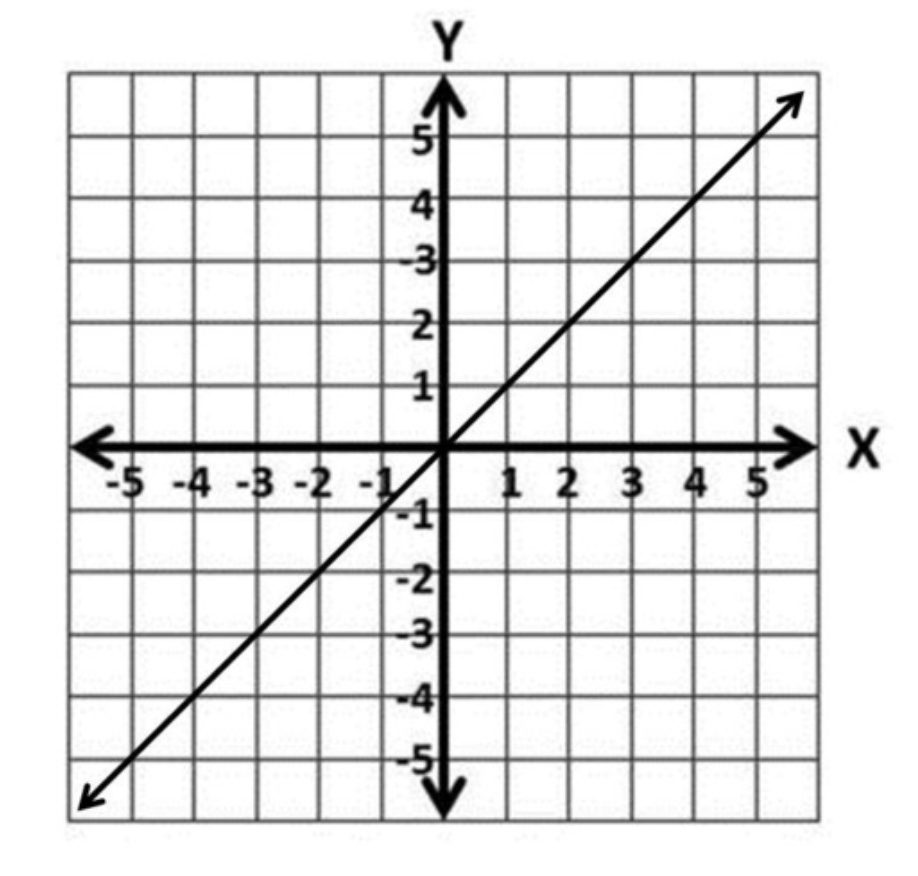
Linear Function
f(x)=x
Logarithmic Function
f(x)=log(x)

Absolute Value Function
f(x)=|x|

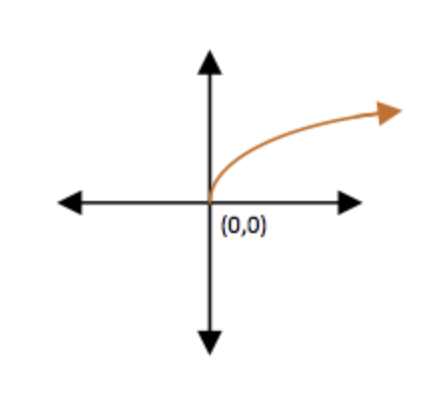
Square Root Function
f(x)=squrt x
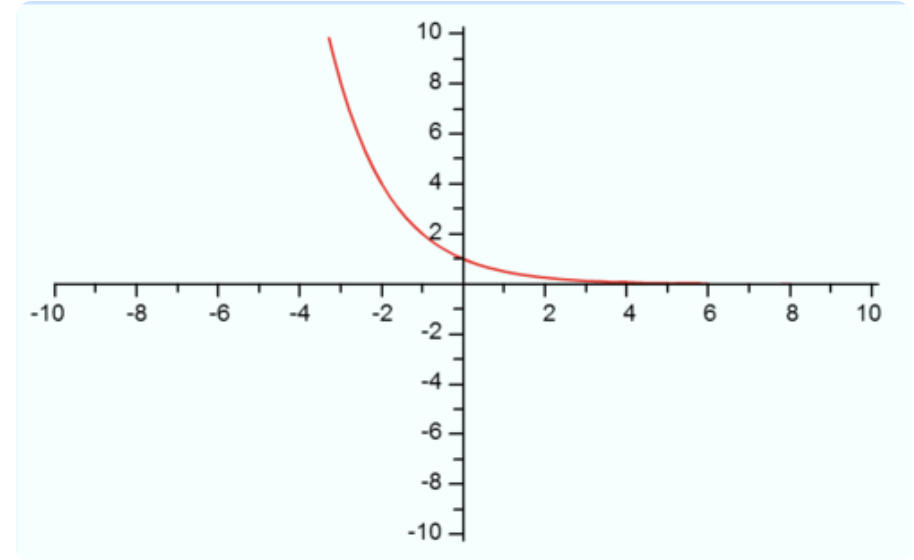
Exponential Decay Function
f(x)=1/2x
Key Features of Logarithmic Functions
Will always have vertical asymptotes that affect the domain of the function.
Key Features of Rational Functions
Often have vertical and horizontal asymptotes that will affect the domain & range of the function.
Key Features of Exponential Functions
Will always have horizontal asymptotes that affect the range of the function.
Average Rate of Change (ARC
y2-y1 / x2 -x1 = f(x2)-f(x1)/x2-x1
Difference Quotient
f(x+h)-f(x) / h. h can’t equal 0
Horizontal Shifts
f(x+h)
f(x-h)
+h=inside moves left
-h=insidemoves right
Vertical Shift
f(x)+k
f(x)-k
+k= outside moves up
-k=outside moves down
Reflects
f(-x)
-f(x)
Multiplying inputs by -1 will reflect over the Y-AXIS
Multiplying outputs by -1 will reflect over the X-AXIS
Vertical Stretch/Shrink
c*f(x)
Multiplying outputs by c >1 is a VERTICAL STRETCH BY A FACTOR OF C
Multiplying outputs by 0<c<1 is a HORIZONTAL STRETCH BY A FACTOR OF 1/C
Horizontal Stretch/Shrink
f(c*x)
Multiplying inputs by c>1 is a HORIZONTAL SHRINK BY A FACTOR OF 1/C
Multiplying inputs by 0<c<1 is a HORIZONTAL STRETCH BY A FACTOR OF 1/C
Function Opperations: ADDITION
(f+g)(x)= f(x)+g(x)
Function Opperations: SUBTRACTION
(f-g)(x)= f(x)-g(x)
Function Opperations: MULTIPLICATION
(fg)(x)=f(x)*g(x)
Function Opperations: DIVISON
(f/g)(x)= f(x)/g(x)
Function Composition
(f o g)(x)= f(g(x))
Vertex Form
(h,k)
f(x)=a(x-h)2+k
Standard Form of Quadratic Functions
y=ax2+bx+c
ax2=quadratic term
bx=linear term
c=constant term
Finding vertex from standard form
find x-coordinate with h=-b/2a
Plug h value found back into the function to find the K
“a” value in vertex form is the same as the “a” value in standard form
Quadratic Formula
x= b+- squrt b2-4ac /2a
Discriminant
b2-4ac
IF:
b2-4ac >0, then there are 2 real x intercepts
b2-4ac = 0, then there is 1 real x intercept
b2-4ac<0, there are NO real x intercepts
Parabola Opening
a<o Parabola opens downward
a>0 Parabola opens upward