Thoracic Girdle and Forelimb
 Call Kai
 Learn
 Practice Test
 Spaced Repetition
 Match
 Flashcards
 Knowt Play
1/69

There's no tags or description
Looks like no tags are added yet.
70 Terms
Lateral Scapula
•Goal: positioning the scapula dorsal to the thoracic vertebral column
•Lateral recumbency with the affected limb against the tabletop
•Pull unaffected limb ventrally and caudally; hold in place
•Grab the affected leg below the elbow and extend the joint so it cannot flex. Then push the limb dorsally until the spinous processes can be seen bulging. Hold in place.

Dorsally at the cranial border of the scapula
Lateral Scapula Measurement
Center of scapula
Lateral Scapula Beam Center
caudal border of scapula
Lateral Scapula Caudal
shoulder joint
Lateral Scapula Cranial
No more than 1 inch on either side of the scapula, LDVS
Lateral Scapula Dorsal/Ventral
Caudocranial Scapula
•Patient in dorsal recumbency in V-trough
•Maintain head in alignment with spine (if spine appears superimposed over scapula, tilt the head slightly lateral from affected limb)
•Extend forelimbs cranially; especially affected limb

Shoulder joint
Caudocranial Scapula Measurement
Center of scapula
Caudocranial Scapula Beam Center
shoulder joint
Caudocranial Scapula Cranial
caudal border of the scapula
Caudocranial Scapula Caudal
No more than 1 inch on either side, CdCrLS
Caudocranial Scapula Lateral
Lateral Shoulder Joint
•Patient in Rt or Le lateral recumbency
•Affected limb on tabletop
•Extend affected limb ventrally and cranially
•Extend unaffected limb caudally and dorsally
•Gently extend neck dorsally

•Measure at the shoulder joint from the tabletop to the point of the unaffected shoulder
•Do not include the unaffected limb in the measurement
Lateral Shoulder Joint Measurement
Shoulder joint
Lateral Shoulder Joint Beam Center
distal 1/3 of the scapula
Lateral Shoulder Joint Dorsal
proximal 1/3 of the humerus
Lateral Shoulder Joint Ventral
1 inch on either side of the limb, LCrCdSJ
Lateral Shoulder Joint Cranial/Caudal
Caudocranial Shoulder Joint
•Patient in dorsal recumbency in V-trough
•Extend forelimbs cranially
•Reflect head laterally towards unaffected limb

Shoulder joint
Caudocranial Shoulder Joint Measurement
Shoulder joint
Caudocranial Shoulder Joint Beam Center
distal 1/3 of the scapula
Caudocranial Shoulder Joint Caudal
proximal 1/3 of the humerus
Caudocranial Shoulder Joint Cranial
1 inch on either side of the limb, LCdCrSJ
Caudocranial Shoulder Joint Lateral
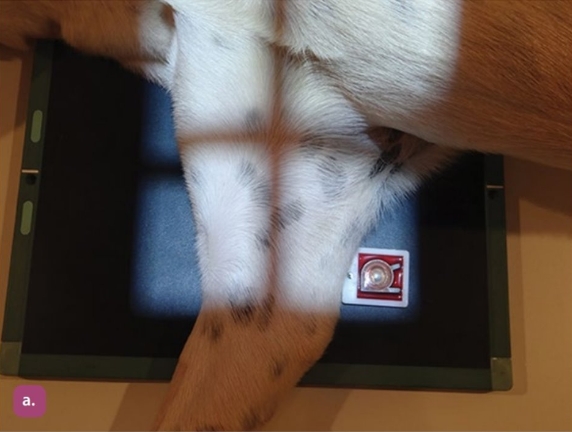
Lateral Humerus
•Patient in Rt or Le lateral recumbency with the affected limb down
•Deflect head and neck laterally
•Extend unaffected limb caudally
•Extend affected limb downward and cranially
Just proximal to the midshaft of the humerus
Lateral Humerus Measurement
Midshaft of the humerus
Lateral Humerus Beam Center
proximal to the shoulder joint
Lateral Humerus Dorsal
distal to the elbow
Lateral Humerus Ventral
1 inch on either side of limb LCrCdH
Lateral Humerus Cranial/Caudal
Caudocranial Humerus
•Patient in dorsal recumbency in a V-trough
•Extend front legs cranially and tape legs together to keep limbs aligned and parallel to the tabletop
•Head and neck parallel to limb

From tabletop to top of midshaft of humerus
Caudocranial Humerus Measurement
Same as lateral humerus
Caudocranial Humerus Beam Center
proximal to the shoulder joint
Caudocranial Humerus Caudal
distal to the elbow
Caudocranial Humerus Cranial
1 inch on either side of limb LCdCrH
Caudocranial Humerus Lateral
Lateral Elbow
•Lateral recumbency with affected limb on the tabletop
•Extend affected limb ventrally and cranially
•Extend unaffected limb caudodorsally
•Head moved dorsally
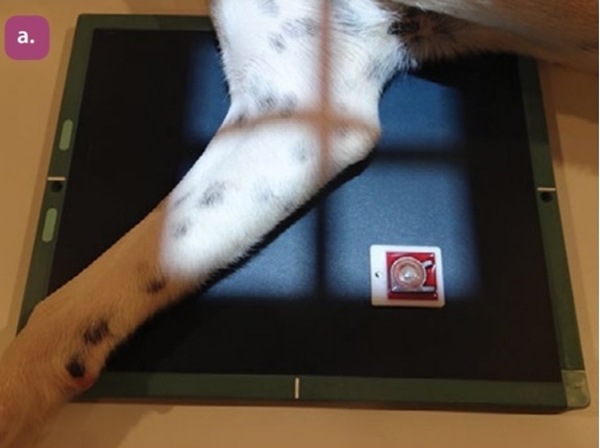
Thickest portion: near the distal humerus
Lateral Elbow Measurement
Elbow joint
Lateral Elbow Beam Center
distal 1/3 of humerus
Lateral Elbow Dorsal
proximal 1/3 of radius/ulna
Lateral Elbow Ventral
1 inch on either side of limb LCrCdE
Lateral Elbow Cranial/Caudal
Craniocaudal Elbow
•Patient in ventral recumbency
•Forelimbs extended cranially
•Head deflected lateral away from affected limb

Thickest portion: near the distal humerus
Craniocaudal Elbow Measurement
Elbow joint
Craniocaudal Elbow Beam Center
proximal 1/3 of radius/ulna
Craniocaudal Elbow Cranial
distal 1/3 of humerus
Craniocaudal Elbow Caudal
1 inch on either side of the limb LCrCdE
Craniocaudal Elbow Lateral
Lateral Radius/Ulna
•Rt or Le lateral recumbency with affected limb down
•Extend unaffected limb caudodorsally
•Use rope, roll gauze, or tape to keep limb extended

•Midshaft of radius and ulna
Lateral Radius/Ulna Measurement and Beam Center
distal to the carpus
Lateral Radius/Ulna Cranial
Proximal to the elbow
Lateral Radius/Ulna Caudal
1 inch on either side of the limb LDVRaUl
Lateral Radius/Ulna Dorsal/Ventral
Craniocaudal Radius/Ulna
•Patient in ventral recumbency
•Forelimbs extended cranially
•Head deflected lateral away from affected limb
•Use rope, roll gauze, or tape to keep limb extended

•Midshaft of radius and ulna
Craniocaudal Radius/Ulna Measurement and Beam Center
distal to the carpus
Craniocaudal Radius/Ulna Cranial
Proximal to the elbow
Craniocaudal Radius/Ulna Caudal
1 inch on either side of the limb LCrCdRaUl
Craniocaudal Radius/Ulna Lateral
Lateral Foot
•This view includes the carpus, metacarpals, phalanges
•Rt or Le lateral recumbency with affected limb on the tabletop
•Extend affected limb cranially
•Foam wedge under elbow to maintain limb parallel to tabletop
•Use rope, roll gauze, or tape to keep limb extended
•For Phalanges: Tape around medial toe and extend caudally; tape around lateral toe and extend cranially

Thickest part of the foot
Lateral Foot Measurement
Middle of the foot
Lateral Foot Beam Center
Distal to the phalange
Lateral Foot Cranial
Proximal to the carpus
Lateral Foot Caudal
1” on either side of the limb LDVF
Lateral Foot Dorsal/Ventral
Dorsopalmar Foot
•Patient in ventral recumbency
•Forelimbs extended cranially
•Head deflected laterally away from affected limb
•Slightly abduct the elbow on the affected limb to maintain alignment of carpus
•Use rope, roll gauze, or tape to keep limb extended
• For Phalanges: Tape around medial toe and extend medially; tape around lateral toe and extend laterally

Thickest portion of the foot
Dorsopalmar Foot Measurement
Middle of the foot
Dorsopalmar Foot Beam Center
Distal to the phalanges
Dorsopalmar Foot Cranial
Proximal to the carpus
Dorsopalmar Foot Caudal
1” on either side LDPaF
Dorsopalmar Foot Lateral