bio mst: Part1: diversity and adaptations for life 4,5,6,7,8,9,10,11,12 plus week 1
 Call Kai
 Learn
 Practice Test
 Spaced Repetition
 Match
 Flashcards
 Knowt Play
1/88

Earn XP
Description and Tags
i hate bio, bio hate me
89 Terms
biodiversity contains (3)
genetic diversity, species diversity, ecosystem diversity
why care about biodiversity
depend on ecosystems for survival
ecosystem services (provisioning, regulating, supporting, cultural services)
caring country
what genetic diversity contains
allelic diversity, heterozygosity, nucleotide diversity
species diversity contains
species richness and species evenness
What mathematical form does Species Diversity use and equation
shannon index: large H=greater diversity
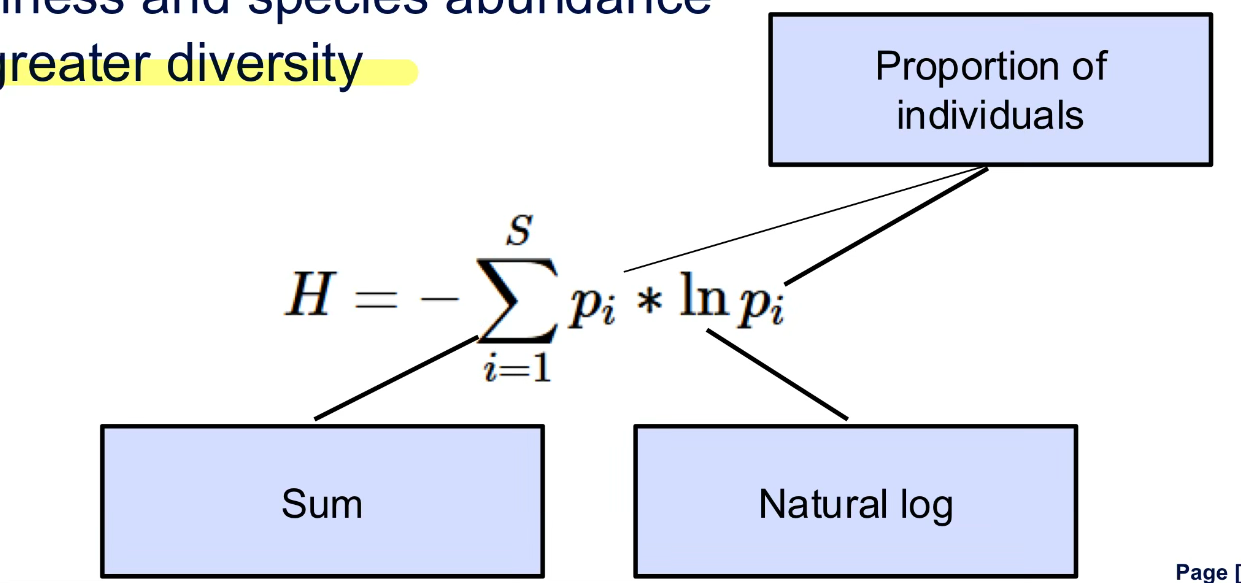
what this equation name and what it accounts for
Shannon index;
species evenness and species aboundance
why measure biodiversity (4)
Establish baselines and detect changes and trends
Understand how we can maintain diversity (conservation and sustainable use)
Predict the adaptability and long-term survival of populations/species/ecosystems
Advance our understanding of what leads to biodiversity
factors that increase/decrease biodiversity
Changes to species richness
‒ Increase (Immigration, Speciation)
‒ Decrease (Local extinction, Emigration)
Temperature and water availability > productivity and energy
‒ Latitude as a proxy?
‒ How does local effects alter the pattern?
Temperature and water availability can affect primary productivity and the amount of energy entering food webs. Latitude may act as a broad proxy because conditions are often warmer and wetter nearer the equator, but local effects such as elevation, barriers to dispersal and habitat structure can modify the global pattern.
classification of the diversity of life
grouping of organisms based on similarity & evolutionary relationships
historically based on (Morphology, development, paleontology古生物学, phenotypic variation and behaviour)

what’s the red, yellow, blue groups refers to, what it includes
red: paraphyletic group, common ancestor but not all its descendants
yellow: polyphyletic group, no common ancestor
blue: monophyletic group, includes common ancestor and all its descendants
the defination of Species
a group of organisms that can mate with one another to produce fertile offspring
the people develop nomenclature
Carl Linnaeus
nomenclature from big to small
domain, kingdom, phylum, class, order, family, genus, species
nutritional vulnerability
if an essential nutrient is absent or insufficient
autotrophs
obtain the raw materials they need from abiotic sources and synthesise their own organic compounds
heterotrophs
obtain nutrients by consuming other organisms or material produced by other organisms
can plants develop heterotrophic adaptation?
some classified as autotrophs can still use heterotrophic strategy
certain plants are parasitic can obtain nutrients directly from vasclar tissues of host plants
carnivorous plants capture animals and release digestive enxymes to break them done
what does specialist and generalist mean
specialist—> relying heavily on a restricted food source
generalist—> relying on a board range of food source
what are categories of animals based on differ food source
herbivore
carnivore
omnivore
ways fungi use to enhance digestion
Hyphae grow over food: + SA for digestion and direct absorption
fungal exudate: digestive enzyme
three types of fungi
decomposers—> from dead
parasites—> from alive
mutualists—> live together
fungi obtain organic nutrients
hetero
what is the nutrient digestion classification of fungi and animal
fungi: absorptive nutrient animal: ingestive digestion
Steps of ingestive digestion
ingestion
digestion: mechanical, chemical and microbial breakdown
absorption
egestion
what does organisms with incomplete digestive systems have
gastrovascular cavities
3 parts of digestive systems
foregut
midgut
hindgut
what is the 2 fermenters
foregut fermenters: harbour microbs in specialized stomach chambers
hindgut fermenters: rely on microbes in caecum and large intestine
the chemical structure for mouth stomach and small intestine
mouth: sliva, salivary amylase, lingual lipase
Stomach: HCl pepsin gastric lipase
small intestine: pancreatic amylase and lipase, trypsin
does intestine contain mechanical and chemical and microbial digestion?

what is osmosis
the movement of water molecules across a selectively permeable membrane from high water potential to low water potential
excretion
removal of waste products (may be liquids, gases or solids)
explain excretion & secretion & elimination/egestion
excretion: removal of waste products (may be liquids, gases or solids)
secretion: moverment of material that has a specific task after leaving the cell or organism
elimination/egestion: removal of unabsorbed food
definition of osmoregulator
organism which actively maintain an internal osmolarity(managing internal ionic composition regulates water-osmoregulation) that different from environment
definition of osmoconformer
allow the osmolarity of their body fluids to vary approximately within the surrounding environment
highly dependent on consistency of environment
organisms type of osmoregulator
all terrestrial, freshwater and most marine organisms
difference between fish’s water balance strategy living in hypertonic environment and hypotonic environment
hypo: drink little water; take up ion by grills; absorb water through skin; excretes dilute urine
hyper:drink lot; excretion ion by grills; loses water by skin; excrete concentrated urine
on land, what determines whetehr salts must be conserved or excreted
nutritional intake
what strategies deserts species used to prevent water loss
nocturnal activity and CAM photosynthesis
aestivation
thick keratinised or waxy cuticle, with a high lipid content
efficient kidneys— long loops of Henle
reduced exchange point
water storage
for excreting nitrogenous waste
what is the correct sequence
ammonia—> urea—> Uric acid—>guanine
for excreting nitrogenous waste sequence (initial to final)
the cost to produce (increase/decrease)
water required to excrete (increase/decrease)
toxicity (increase/decrease)
in de de
nitrogenous excretion in animal groups:
aquatic invertebrate and most bony fish
mammals, most amphibians, sharks and rays
birds, insects, on-avian reptiles
spiders and scorpions
ammonotelic
ureotelic
uricotelic
guanotelic
what excretory system use
filtration, secretion and reabsorption
Malpighian tubules use what transport strategy
active transport
what therapies use if kidney failure
dialysis
for fish, what excrete the majority of nitrogenous waste
gills
what species can produce urine which is more concentrated than the blood
birds and mammals
what is the 3 functions of nephron
filtration: bowman’s capsule and renal tubule
Reabsorption and secretion: peritubular capillaries
excretion
what in kidney permits production of very concentrated urine
loop of Henle
how N excrete in plants
nitrogen recycling
shedding
guttation
the unit and equation of metabolic rate
J/hr
C6H12O6 + 6O2—> 6CO2 + 6H2O
energy + heat
what effect metabolic rate
exerting large effects:
physical activity & environment temperature
body size
exerting smaller effects
digestion, reproductive state, time of day, oxygen avaliability & salinity range
metabolic rate increases proportionally with increasing body size
• MR increases with increasing body size, but it is not proportional
• Suggests increasing efficiency with size
equation of body weight and metabolic rate
does small mammals have higher weight-specific BMRs than big ones?
yes

what Rubner’s surface area law emply
Larger animals have a lower SA:V ratio
what strategies to achieve temperature homeostasis
acclimation/adaptation
thermoregulation
temperature niche draw
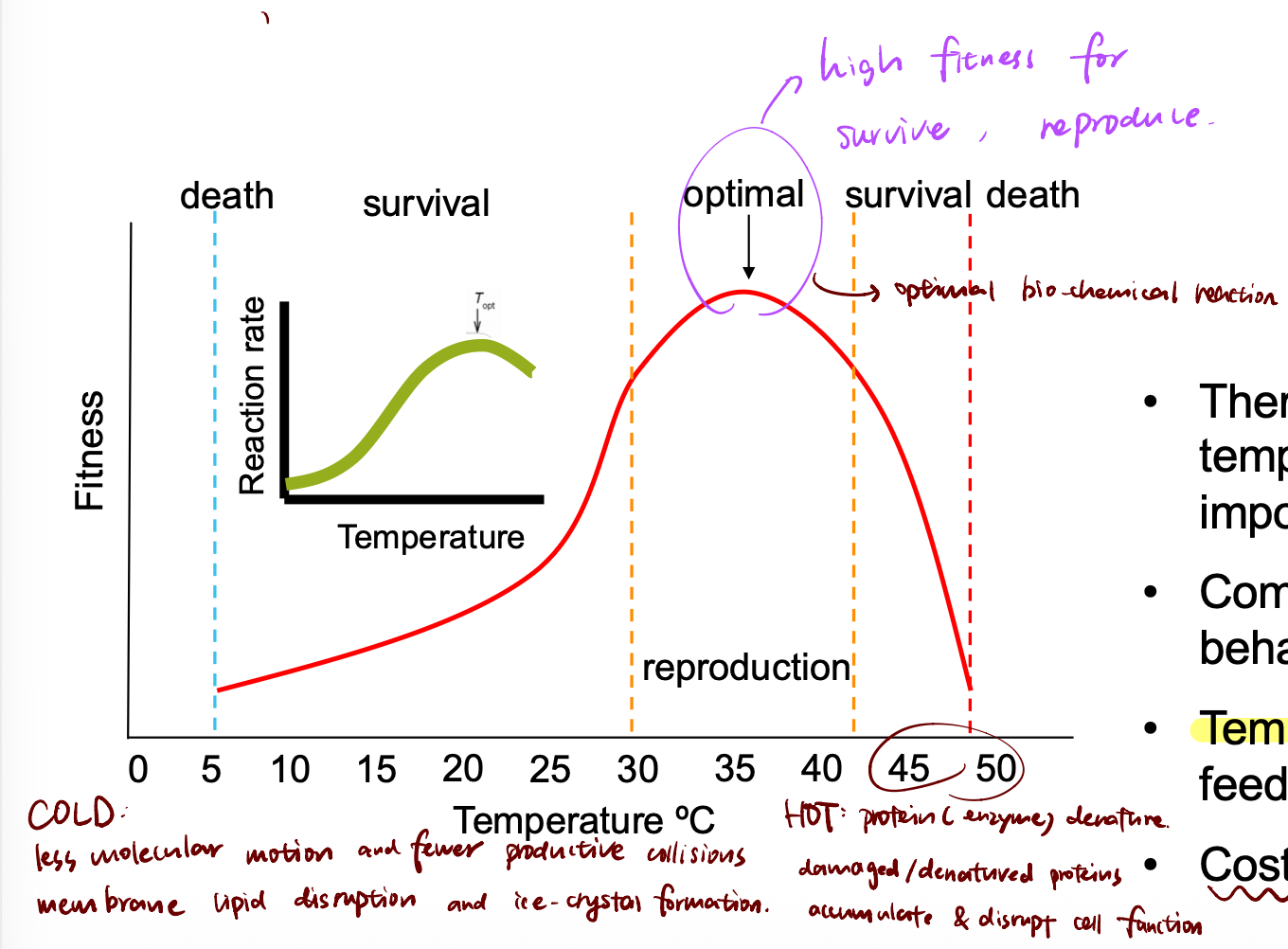
endotherm and ectotherm
Endotherm - body heat from internal sources
Ectotherm - body heat from external sources
hemeotherm and heterotherm
Homeotherm - body temperature stable
Heterotherm - body temperature fluctuates
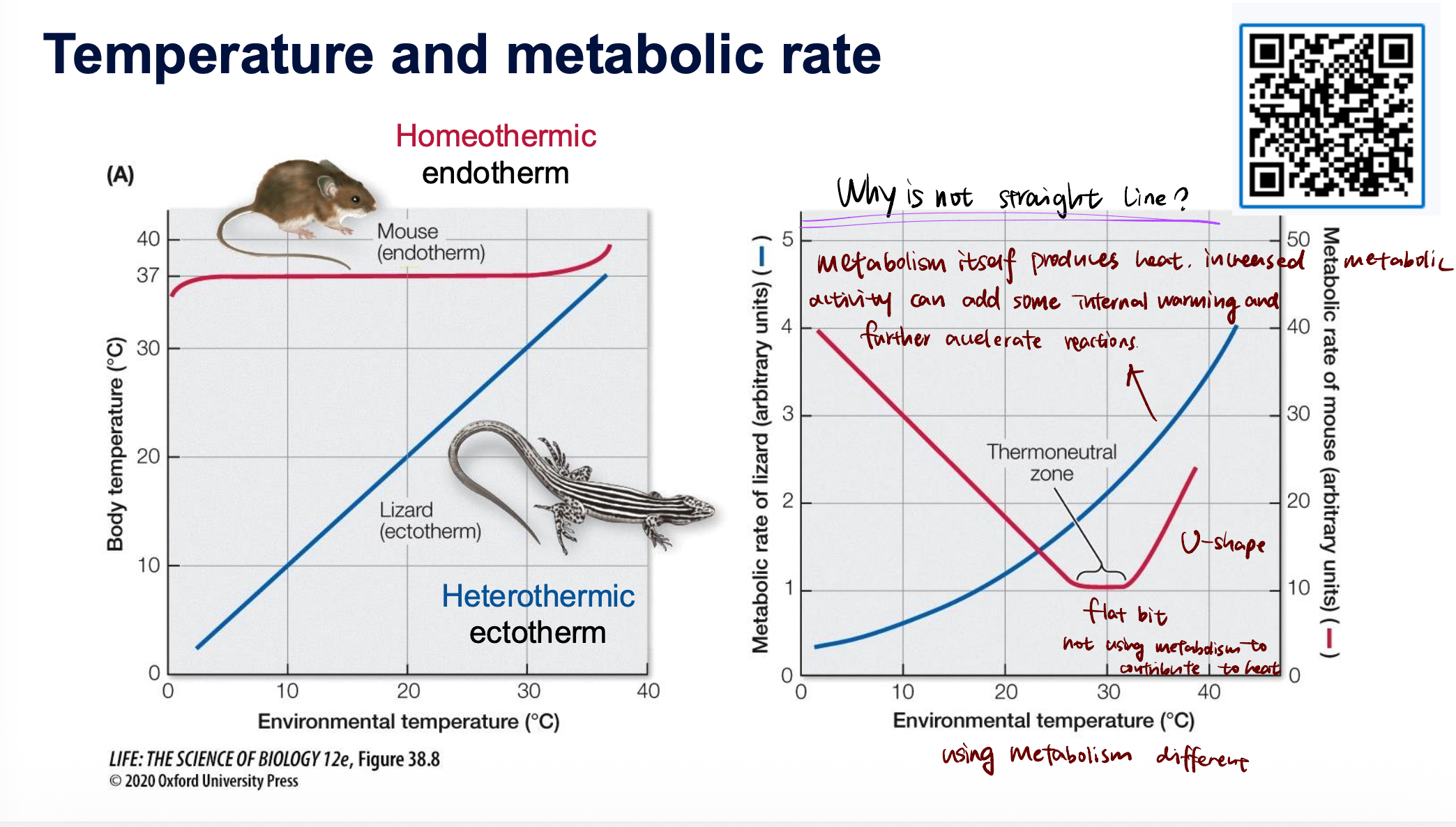
graph of hemeothermic endotherm & heterothermic ectotherm
for temperature vs environmental temperature
and Metabolic rate vs environmental temperature
match
transfer of heat away from a surface when a liquid changes to a gas
transfer of heat through moving medium
movement of energy as electromagnetic waves
transfer of heat through direct physical contact
evaporation conduction convection radiation
evaporation convection radiation conduction
responding method of animals to changes in temperature
behaviroural
physiological
hemeothermic endotherm & heterothermic ectotherm
responding to changes in temperature
hemeo: physiological > behavioural
hetero: behavioural > physiological
method preventing heat loss and increase heat production/gain
in cold
Insulation: alters thermal conductance
—> feathers, fur, setae, fat/blubber
Reduce whole body exposure to cold
• Posture—>Reduce SA/extremities; Reduce air/skin interface; Piloerection
• Huddling/grouping
Regional heterothermy
vasoconstriction; countercurrent exchange
increase heat production/gain
behaviour
increase MR-endo
thermogenesis
Shivering thermogenesis/ non-shivering tehrmogenesis
method increase heat loss/ avoiding heating in hot
behaviour
posture
minimise activity
vasodilation
respiratory evaporation
methods for plants to face hot
evaporation
orientation
reflective surfaces
hibernation and daily torpor
Hibernation
• Reduced MR and body temperature over
prolonged winter/cold periods
• Daily torpor
• Reduced MR and body temperature for ≤ 24hrs
Countercurrent exchange
maintains partial pressure gradients during the exchange
gas exchange structure in animals
external gills
internal gills
lungs (mammal
tracheae (insect
Fick’s law
Rate of diffusion
=
Surface Area × Partial Pressure Gradient × Diffusion Coefficient/ Diffusion Distance
which one is better respiratory medium
water or air
air
costs and benefits for endothermy
• Immediate activity – ready to go!
• Can expand thermal niche to exploit colder environments
• Physiologically maintaining a temperature has many energetic costs
Increased maintenance costs & oxidative stress
Increased food and water needs
Increased activity and risk of predation
acclimation
Temperature change over longer periods e.g.
seasonal/latitude
• Physiological adjustment take place to enable
compensation of performance at different
temperature (cold/warm)
which species get continuous O2 delivery
bird
Dissolved O2 in blood plasma combines reversibly with?
Dissolved O2 in blood plasma combines reversibly with haemoglobin (Hb) – colour change
Haemoglobin (Hb): main vertebrate respiratory pigment Fe2+
Haemocyanin: Cephalopod and crab respiratory pigment
is copper Cu2+
Uni or multicellular fungi perform gas exchange across their
cell walls
pathogens
bacteria, fungi, viruses, parasites
bacteria don’t have immune system
All organisms have an immune system
innate defences 3
1. External non-specific (innate) defences – physical
cuticles and skin
scales, fur and feathers
thorns and hairs
membrane and lids
mucus and secretions
protecting airways
2. Internal non-specific (innate) defences - cellular
cellular response (phagocytes; natural killer (NK) cells; mast cells; complement protein
recognise non-self : Microbe associated molecular patterns (MAMPs) or pathogen associated molecular patterns (PAMPs)
3. Specific acquired immunity (SAI)
vertebrates only
recognise self: Major histocompatibility complex (MHC) proteins
recognise non-self: B cell- surface antigen; T cells- single-specific MHC-antigen complex
secretion for physical defences contain
Secretions can contain lysozymes (enzymes) and defensins (peptides)
cascades innate immune responses

cell-meditated response
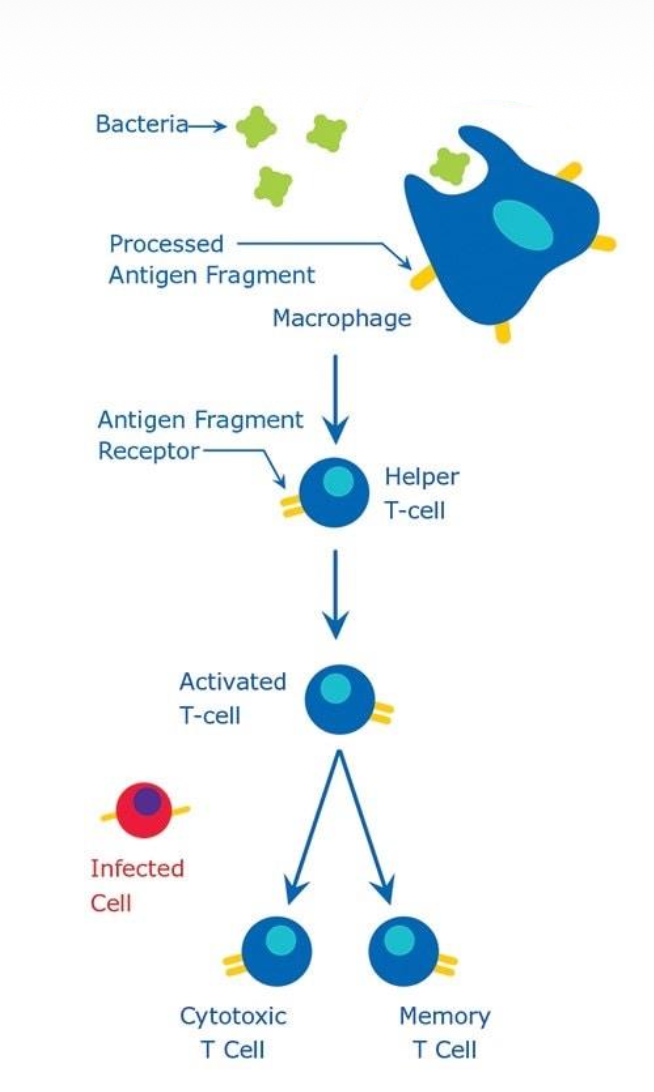
humoral immunity
