4 Renal Disease
 Call Kai
 Learn
 Practice Test
 Spaced Repetition
 Match
 Flashcards
 Knowt Play
1/70

There's no tags or description
Looks like no tags are added yet.
71 Terms
Compare the Essential and HTN crisis.

What is Essential Hypertension defined as?
HTN requiring immediate tx when:
SBP ≥140 mm Hg
DBP ≥90 mm Hg
How common is hypertensive crisis?
1% to 2%
What % of HTN is idiopathy?
90% - HTN is 1er
10% - HTN is altering function of organs related to BP (e.g. kidney/heart)
What is Hypertensive urgency?
BP greater than 180/120 mmHg WITHOUT acute end-organ damage
What is hypertensive emergency?
BP greater than 180/120 mmHg WITH acute end-organ damage, such as:
Renal damage
Brain damage
Heart damage
What is the classification of High BP?
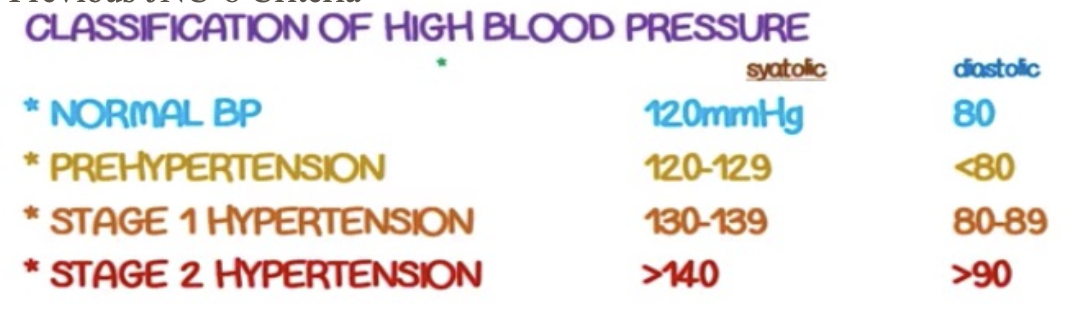
How does BP exhibit seasonal variation?
↑ temp = ↓ BP
↓ temp = ↑ BP
What is the new term “ELEVATED” BP mean?

SBP = 120-130
DBP = no elevation
How does renal arteriolosclerosis contribute to worsening hypertension?
Renal arteriolosclerosis causes narrowing of the renal blood vessel lumen
Kidneys interpret the reduced blood flow as ↓BP
Kidneys release renin, activating the RAAS pathway →
This causes ↑BP even though BP is already elevated
The cycle repeats, causing progressively worsening HTN
List 3 major Renal Changes that occur in HTN. What do these changes do?
Glomerulosclerosis
Tubular atrophy
Scarring (benign nephrosclerosis)
→ these destroy individual nephrons one by one
when enough nephrons are non-functional through ischemia, the pt slowly develops progressive chronic renal failure (benign hypertensive nephroscerlosis)

What effect does HTN have on the heart?
HTN induced arteriolosclerosis ↑ peripheral resistance → ↑ workload of left side of heart → LVH
if workload becomes greater, LHF can occur → pulmonary complications → affect right side of heart

What does Acute pulmonary edema occur due to?
occurs due to HTN causing LVF → right sided hypertrophy & failure

What do changes in coronary arteries (pro- atherogenic) lead to?
MI
What are the Aortic Complications in HTN?
Cystic medial necrosis → aortic dissection
atherosclerotic plaques in the aorta can ulcerate with consequent aneurysm formation or embolization of atheromatous material
What is the triple A?
Abdominal
Aortic
Aneurysm
Why might someone with aortic issue have a CC of “back pain”?
aorta is retroperitoneal
What are the Brain Complications in HTN?
System HTN = risk factor for stroke and transient ischemic attacks caused by extracranial atherosclerosis
also risk factor for Alzheimers in later life
1er hemorrhage may occur into the cerebral hemispheres, brainstem or cerebellum due to rupture of microaneurysms
Congenital aneurysms of the Circle of Willis → rupture → subarachnoid hemorrhage

What is the role of the RAAS in essential hypertension?
circulating RAS is not considered the main direct cause of ↑ BP in essential HTN
many hypertensive patients have low renin and Ang 2 levels
esp older and Black pt
drugs directly blocking renin aren’t effective in many of these patients
ACE inhibitors and Ang II receptor blockers (ARBs) are effective in treating HTN

What are the characteristics of young hypertensive patients related to sympathetic activity?
↑ circulating catecholamines
↑ HR
↑ vascular reactivity to NE
How does sympathetic stimulation of the kidneys increase BP?
β-adrenergic stimulation of the kidneys ↑ renin secretion, activating RAAS pathway and ↑BP
How do psychological and repetitive stress increase blood pressure chronically?
Cortical inhibition of depressor reflexes
Direct stimulation of sympathetic centers
List what ↑ SNS activity lead to.
Arteriolar and venous vasoconstriction
Stimulates Renin release from the kidney
↑ CO
Catcholamine and mineralocorticoid release
Pre-hypertensives have an elevated resting pulse rate
How can Na+ retention lead to ↑BP?
↓ Filtration SA due to a congenital or acquired deficiency in the # or functions of nephrons
↑ Renin secretion due to afferent arteriolar narrowing in some nephrons (“Nephron Heterogeneity”)
Acquired inhibitor of Na+ pump
↓ responsiveness to atrial natriuretic hormone
What’s responsible for the ↑ vascular resistance of HTN in the absence of arteriolosclerosis?
↑ intracellular Na+ in vascular smooth muscle
this leads to ↑Ca2+ → ↑ resting tone of the vascular smooth muscle by 50% → ↑ vascular resistance
What is the main salt active steroid?
Aldosterone
Where is aldosterone made? What controls it?
Synthesized in the zona glomerulosa of adrenal cortex
Controlled by Ang 2
↑ Na+ reabsorption → K+ excretion by the distal nephron
What is endothelin?
→ powerful, vascular, endothelial vasoconstrictor
may produce a salt sensitive ↑ BP
activates local RAAS
What is Nitric Oxide (NO)?
→ Endothelial derived relaxant factor produced by arterial and venous endothelium
causes vasodilatation
What is Atrial natriuretic peptide?
→ hormone secreted from the atria in response to ↑ BV
↑ Na+ & H2O from the kidney
defect → fluid retention & HTN
List 3 major mechanisms of essential HTN.
↑ CO (from ↓ PR) via adrenergic hyperactivity or altered Ca2+ homeostasis
↑ PR (but normal CO) due to ↑ vasoreactivity/arteriolosclerosis
↑ Salt and water retention → ↑ Blood volume
What lifestyle changes help reduce blood pressure in essential hypertension?
Low-sodium diet
High-vegetable diet
Regular exercise
Weight loss
List 4 physiological mechanisms through which HTN treatments lower BP.
↓ Fluid volume - excrete excess Na+ and the H2O that follows it
↓ PR - inhibit ACE-mediated and SNS vasoconstriction
↓ HR - inhibit SNS stimulation of the heart
↓ SV - ↓ SNS stimulation of ventricular contraction (negative inotropic effect)
What is the 1er apporach to meds for tx HTN?
A – ACE inhibitors and ARBs
✅ kidney disease
✅ diabetics
✅ CHF
✅ post-MI
✅ white + young ppl
B – β-blockers
✅ CHF
✅ post-MI
✅ white + young ppl
C – Ca2+ channel blockers
✅ African Americans + elderly
D – Diuretics
✅ African Americans + elderly
How do thiazide diuretics lower blood pressure?
Block Na⁺/Cl⁻ symporter in the DCT
↓ Na+ and Cl- reabsorption
↓ Water reabsorption → ↑ fluid loss
↓ Blood volume → ↓ Cardiac output → ↓ BP
What electrolyte changes can thiazide diuretics cause?
↓ K⁺: ↑ K+ loss → hypokalemia risk
↑ Ca²⁺: ↑ Ca2+ reabsorption in DCT → risk of hypercalcemia
Who should thiazide diuretics be avoided or used cautiously in?
Hypercalcemia
Kidney stones
Gout
List and describe 3 ways to ↓ Peripheral Resistance.
Inhibit ACE-induced vasoconstriction
ACE inhibitors
ARBs
↓ Renin production
Inhibit sympathetic stimulated vasoconstriction
α-blockers
Direct Vasodilators
List and describe 2 ways to ↓ HR/SV.
Inhibit sympathetic inputs that would ↑ HR
B- blockers - decreases HR & SV
Inhibit heart contractility and vascular smooth muscle contraction
Ca2+ channel blockers
Who are Beta-blockers contraindicated in?
Bradycardia (e.g. heart block) conditions
Breathing problems (e.g. COPD)
How does injury to the glomerular basement membrane and podocytes affect kidney function?
Glomerular Basement Membrane (GBM)
made of type 4 collagen + other matrix proteins
attacked by antibodies in certain types of glomerulonephritis
Genetic abnormalities in proteins → hereditary nephritis
Podocytes (visceral epithelial cells)
make up glomerular filtration barrier
injury damages the filtration barrier → allow proteins to leak into the urinary space → proteinuria
What are acute glomerular response to injury?
hypercellularity with proliferation of mesangial and/or endothelial cells
leukocyte influx
formation of crescents in severe injuries
What are chronic glomerular response to injury?
BM thickening
hyalinosis
sclerosis
What causes pyelonephritis, and how can bacteria reach the kidneys?

Ascending infection: reflux of infected urine from a UTI (bladder) back toward the kidneys
Bloodstream spread: Bacteria travel through the blood to infect the kidneys
Note: 3 antireflux mechanisms (pseudovalves) b/w the kidney and bladder help prevent backward flow of urine

What is the main sx of painful urination?
Urethritis
List the 3 main causes of Urethritis.
E. coli - bacteria transferred from stool
can produce cystitis and pyelonephritis
Neisseria gonorrhoeae - sexually transmitted (causes gonorrhea) confined to urethra
Chlamydia trachomatis - sexually transmitted (causes chlamydia) confined to urethra
What is Reiters Syndrome?
Arthritis
“Sterile” urethritis
Conjunctivitis/anterior uveitis
What does sterile urethiris mean?
→ urine sample you ordered was put onto nutrient agar and nothing grew out (not gonorrhea or E-coli)
chlamydia WON’T grow on standard agar
it’s an obligate intracellular parasite so it must be grown on any of these treated with cycloheximide: McCoy, HEp-2, HeLa, or buffalo green monkey cells
List 6 common mechanisms by which medications cause nephrotoxicity (kidney injury).
Altered intraglomerular hemodynamics
Tubular cell toxicity
Inflammation
Crystal nephropathy
Rhabdomyolysis
Thrombotic microangiopathy
What is the Normal GFR?
120 mL/ min - kidney autoregulates intraglomerular pressure by modulating the afferent and efferent arterial tone to preserve GFR and urine output
In patients with volume depletion, renal perfusion depends on circulating __________ to _____________, allowing more blood flow through the glomerulus.
In patients with volume depletion, renal perfusion depends on circulating prostaglandins to vasodilate the afferent arterioles, allowing more blood flow through the glomerulus.
What is Intraglomerular pressure sustained by?
via Ang 2 mediated vasoconstriction of the efferent arteriole
What drugs can interfere with the kidneys' ability to autoregulate glomerular pressure and ↓ GFR?
Drugs with:
antiprostaglandin activity (NSAIDs)
anti-Ang-II activity (ACE inhibitors, ARBs)
How can drugs cause tubular cell toxicity?
interfering with tubular transport
impairing mit function
↑ oxidative stress
forming free radicals
What is Glomerulonephritis?
→ inflammatory condition caused primarily by immune mechanisms
associated with proteinuria
causes by gold therapy, IFN-a, lithium, NSAIDs
What is Acute interstitial nephritis caused by?
→ results from an allergic response to a suspected drug
develops in an idiosyncratic, non–dose-dependent fashion
What is Crystal nephropathy?
→ Renal impairment that results from the use of drugs that produce crystals that are insoluble in human urine
crystals precipitate in the DCT lumen → obstruct urine flow
likelihood of developing crystal precipitation depends on [drug] in the urine & urinary pH
At risk: volume depletion & underlying renal insufficiency
What are commonly prescribed drugs associated with production of crystals?
antibiotics
antivirals
methotrexate
What is Rhabdomyolysis?
→ syndrome where skeletal muscle injury
myocyte lysis releases intracellular contents (myoglobin and creatine kinase) into plasma
Myoglobin - induces renal injury 2er to direct toxicity, tubular obstruction, and GFR alterations
weakness, myalgia & tea-colored urine
Causes: Statins, drug abuse, alcohol
50% subsequently develop acute renal failure
What is Thrombotic microangiopathy?
→ organ damage is caused by platelet thrombi in the microcirculation
caused by renal injury 2er to drug-induced thrombotic microangiopathy (e.g., immune-mediated reaction or direct endothelial toxicity)
What is Tubular interstitial nephritis and Uveitis Syndrome (TINU)?
Demographics: young females, 15 years
Sx:
Renal: Fever, malaise, fatigue, flank pain
Ocular: Acute anterior uveitis (eye inflammation)
Risk factors: Certain HLA genetic variants (HLA-DQA1 and DRB1) and meds (antibiotics & NSAIDs)
Prognosis:
Nephritis usually resolves before uveitis
Nephritis rarely recurs
Uveitis recurs in approximately 40% of cases
Diagnostic markers:
↑ urinary β2-microglobulin (β2M)
↑ urinary protein
↑ serum creatinine
What is Creatinine?
→ waste product of creatine metabolism
produced muscle when creatine is metabolized to generate energy so it’s produced constantly.
directly filtered through the kidneys (shows how efficient kidneys are)
What is Cystatin-C?
→ made by ALL nucleated cells
may replace creatinine
What is BUN?
→ measure of renal health
normal range is 1.8-7.1 mmol/L or 6–20 mg/dL
List the main causes of ↑ BUN.
High protein diet
↓ GFR (suggests renal failure)
↓ BV
Congestive HF
Gastrointestinal hemorrhage
What is Proteinuria a sign of? What is it commonly caused by?
renal capillary endothelial damage
commonly caused by diabetes
How do creatinine and BUN reflect kidney function, and why are both measured?
Creatinine
Produced by muscle breakdown of creatine at a relatively constant rate
Filtered by the glomerulus
A small amount is also secreted by the renal tubules
slightly overestimates GFR
↓ GFR → ↓ creatinine clearance → ↑ blood creatinine
BUN (Blood Urea Nitrogen)
Urea is produced in the liver from protein (amino acid) breakdown
Filtered by the glomerulus
Unlike creatinine, some urea is reabsorbed by the kidneys
BUN-to-creatinine ratio helps distinguish causes of kidney dysfunction:
Prerenal: ↓ blood volume/perfusion (e.g., dehydration)
Renal: Intrinsic kidney damage
Define Azotemia.
→ increases in nitrogen-containing compounds (urea, creatinine)
related to insufficient or dysfunctional filtering of blood by the kidneys
What are the 3 types of azotemia, their causes?
Prerenal Azotemia
Caused by decreased blood flow/perfusion to the kidneys (e.g., dehydration)
No intrinsic kidney damage initially
BUN:Creatinine ratio is typically greater than 20:1
Renal (Intrinsic) Azotemia
Caused by damage to the kidney tissue (renal parenchyma)
e.g., Renal failure, glomerulonephritis, acute tubular necrosis
Decreased GFR → increased BUN and creatinine
BUN:Creatinine ratio is typically less than 15:1
Postrenal Azotemia
Caused by obstruction of urine flow below the kidneys
Causes:
Kidney or bladder stones
Enlarged prostate (BPH)
Tumors compressing the ureters
Congenital abnormalities or pregnancy
Urine backs up into the kidneys → hydronephrosis
No initial intrinsic kidney disease
What is the BUN:Cr postrenal azotemia initially?
>15
How does prolonged urinary obstruction affect BUN and creatinine levels in postrenal azotemia?
Initially:
Urine backs up → ↑ tubular pressure
↑ urea reabsorption → ↑ BUN relative to creatinine
↑ BUN:Cr ratio
With prolonged obstruction:
Tubular epithelial damage develops
↓ Kidney function
↓ BUN:Cr ratio (resembles intrinsic renal azotemia)