Upper GI
 Call Kai
 Learn
Learn Practice Test
 Spaced Repetition
 Match
Match Flashcards
 Knowt Play
1/294

There's no tags or description
Looks like no tags are added yet.
Name | Mastery | Learn | Test | Matching | Spaced | Call with Kai | Chat |
|---|
No analytics yet
Send a link to your students to track their progress
295 Terms
UPPER GI SYSTEM BASICS
upper GI consist of what parts?
mouth, pharynx, larynx, and stomach
lower GI tract consist of
large intestines and small intestines
accessory GI organs consist of
liver, gallbladder, pancreas
Contraction and motility are regulated through the GI tract’s
pacemaker cells called the interstitial cells of Cajal
what two types of neurons regulate contraction of smooth muscle motility and secretory functions
Nonpeptides and peptidases

functions of saliva? (7)
Moistening and lubricating food to facilitate swallowing
Initiating digestion of carbohydrate
Antibacterial protection with lysozyme, lactoferrin, and glycoprotein as well as rinsing away food
Enhancing taste by providing interacting with taste buds
Serving as a buffer, and protects the teeth from dental caries
Oral hygiene by dissolving food, dead cells etc
Allowing free movement of the lips and tongue.
oral cavity functions in feeding
Contains the food during drinking and chewing and provides for initial mastication before swallowing
pharynx functions in feeding
Funnels food into the esophagus and allows food and air to share space, the pharynx is a space common to both functions
larynx functions in feeding
Valve to the trachea that closes during swallowing
trachea functions in feeding
Allows air to flow into bronchi and lungs
esophagus functions in feeding
Carries food from the pharynx, through the diaphragm, and into the stomach
it is collapsed at rest and distends as food passes through it
the esophagus has was 2 sphincters?
pharyngoesophageal sphincter
Lower esophageal sphincter (LES)
esophagus movement
peristalsis

4 layers of the digestive tract
mucosa
submucosa
muscularis externa
serosa
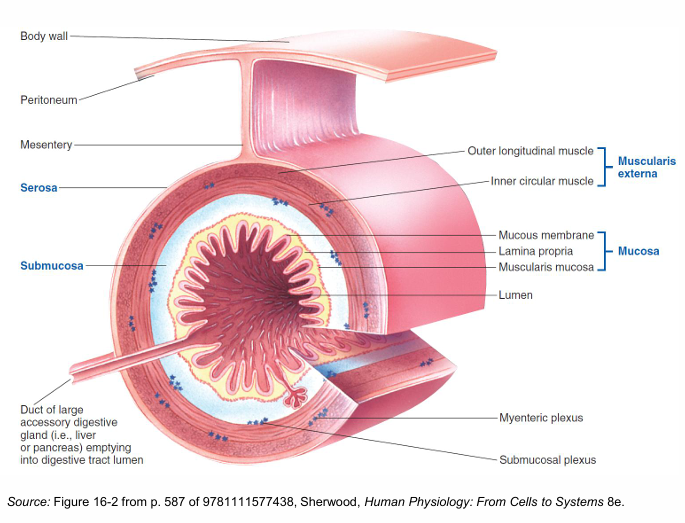
what are the 4 stages of swallowing
preparatory phase
oral transit phase
pharyngeal phase
esophageal phase
what is the preparatory phase of swallowing
After food is chewed and mixed with saliva into a sticky ball called a bolus
what is the oral-transit phase of swallowing
The bolus is moved from the front of the oral cavity to the back where swallowing is then initiated
what is the pharyngeal phase of swallowing
The pressure of the bolus on the pharynx stimulates nerve impulses to the swallowing center—> swallowing center stimulates coordination of swallowing muscles
when is swallowing voluntary? involuntary?
initiation of swallowing is voluntary but thereafter swallowing is under autonomic control
what is the esophageal phase of swallowing
the bolus moves through the lower esophageal sphincter into the stomach (involuntary)
the LES is closed when?
always, except when swallowing
what is the function of the LES
serves as a barrier to protect the esophageal mucosa from the stomach contents
how does the LES work (2)
based on pressure and neuropeptides
how does pressure modulate LES
Atmospheric pressure is greater in the esophagus than in the stomach under normal conditions
This positive pressure assists in preventing stomach contents from refluxing back into the esophagus (push it closed)
what are the 2 major neuropeptides responsible for allowing LES to relax?
Nitric oxide and VIP
what is the major neuropeptide involved in keeping LES closed?
acetylcholine
what are the functions of the gastric motility (4)
Filling the stomach, storage, mixing, and emptying into the small intestine
gastric secretions are done via
gastric juice
what cells within gastric glands product secretions?
Mucous cells, chief cells, parietal cells, and enterochromaffin (ECL) cells
what are the 3 phases of gastric secretion release?
cephalic, gastric, intestinal
cephalic phase of gastric secretion?
before food enters stomach (triggered via sight, smell, taste of food); starts gastric secretions
gastric phase of gastric secretion?
once food enters stomach; most gastric secretions occur
intestinal phase of gastric secretion?
when chyme enters the duodenum; inhibits gastric secretions
which hormones promote gastric motility and secretion of gastric juices?
acetylcholine, gastrin, histamine, ghrelin
which hormones inhibit gastric motility and secretion of gastric juices?
somatostatin, secretin, CCK, incretins, VIP
what gastric cells release
HCL
intrinsic factor
mucous
gastrin
pepsinogen
histamine
somatostatin
parietal cells
parietal cells
mucous cells
G cells
chief cells
enterochromaffin-like cells
somatostatin
gastric digestion occurs via (2)
mechanical
chemical
absorption in the stomach
limited except for alcohol
infants and digestion: stomach capacity within 1 year
increases from 20ml-200ml
infants and digestion: acidity of stomach
lower at birth
infants and digestion: protein digestion
Pepsin activity lower for first 3 months; decreased trypsin activation
infants and digestion: lipid digestion
breast milk contains lipases
lingual and gastric lipase active
infants and digestion: carb digestion
disaccharidases reach adult levels at 20-32 weeks
pancreatic amylase low until 6 months of age
infants and digestion: lactase
adult levels at birth
older adults experiences what oral cavity physiological changes (2)
dental status
decreased saliva production
older adults experiences what esophageal physiological changes (2)
decreased UES
weaker peristalsis
older adults experiences what gastric physiological changes (2)
gastric atrophy
decreased secretions of pepsinogen, HCL, mucus
physical examination of oral cavity can access what issues (8)
Micronutrient deficiencies
Dehydration
Oral-motor defects
Cranial Nerve Evaluation
Cheilosis
xerostomia
pale tissues
bleeding gums
missing teeth
ORAL DISEASES
oral diseases involve problems that interfere with what related to nutrition?
adequate oral intake and can lead to nutritional deficits
what are the most common oral diseases (3)
caries, gingivitis, periodontal disease
what oral diseases/conditions do we cover?(9)
dental caries
gingivitis
stomatitis
glossitis
cheilosis
xerostomia
dysgeusia
ageusia
jaw fractures
dental caries have highest prevalence amongst
those living in poverty
what conditions are associated with dental caries (6)
Inadequate saliva production
Tobacco use
Alcohol use disorder
Diabetes Mellitus
Bulimia eating disorders
“Baby bottle” tooth decay
DENTAL CARIES
dental caries is what
tooth decay
what are the main causes of dental caries (4)
MAIN: Streptococcus mutans bacteria
Structure of the tooth
Immunologic response to bacteria
Composition of saliva in the mouth
plaque and calculus of the teeth is associated with (5)
frequency of eating
stickiness of foods
composition of saliva
presence of buffers
overall oral hygiene
how can one prevent tooth decay (4)
fluoridation of water supply
topical fluoride and sealants
proper dental hygiene
nutrition choices (avoidance of sugar sweetened beverages)
oral hygiene =
preventative care
what diseases/conditions are linked to oral health problems
diabetes, osteoporosis, HIV/AIDS, Alzheimer’s disease, etc.
what are the components of good oral hygiene (4)
Brushing: twice a day for 2 minutes
Use fluoridated toothpaste and soft brush; 45 degree angle
Interdental cleaning (such as flossing): once daily.
Brush your tongue
Visit a dentist regularly.
how does dental caries occur? (process)
enamel crystal —> acid production due to fermentation of CHO in mouth by cariogenic bacteria —> pH decreases —> demineralization of tooth enamel —> partially dissolved enamel crystal —> carious tooth

is demineralization reversible?
yes
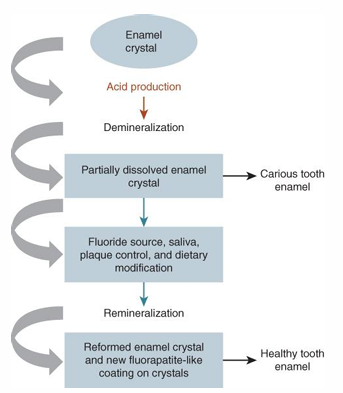
how can demineralization be reversed? (4)
if progress is halted via fluoride treatment, saliva (phosphorus and calcium content), plaque control, and dietary modification

when is tooth decay not reversible
once bacteria invade the tooth

why do nutrition deficits affect oral cavity?
oral tissue turnover occurs every 3-7 days
quick turnover means what in terms of nutrition signs
Earliest clinical manifestations of nutrition or other health disorders are often first visible in the oral cavity
Deficiencies of water-soluble vitamins, protein, and iron are more readily visible in the oral cavity
what is associated with hypomineralization and enamel hypoplasia (nutritionally)?
vitamin A, D and malnutrition
what is associated with salivary gland atrophy (nutrionally)
vita A deficiency and malnutrition
what dietary factors are associated with increased risk of tooth caries? (5)
Sugar-sweetened liquids
Sticky foods, such as candies
Slowly dissolving candies
Sugary, starchy snacks, such as cookies, cakes, etc.
Simple sugars, such as sucrose, honey, and molasses
what dietary factors are associated with decreased risk for dental caries? (5)
Sugar-free chewing gum (xylitol), mints, and candies
Fresh fruits and vegetables
High-quality protein foods
Whole-grain, low-sugar breads, and cereals
Non-cariogenic foods at the end of a meal (cheese, nuts, whole grains)
what eating patterns are associated with increased risk for caries (3)
Frequent and prolonged intake of foods rich in simple sugar
Eating sticky, retentive foods alone
Sipping sugar-sweetened beverages for prolonged periods
what eating patterns are associated with decreased risk of dental caries? (3)
Space frequency of food and beverage intake at least 2 hours apart
Select fresh, whole, unprocessed food to stimulate salivary output
Chew sugarless gum for a brief period immediately after a meal or snack
GINGIVITIS/PERIODONTITIS
what is gingivitis?
inflammation of the gums
what health issues are affected by gingivitis and stomatitis? (5)
Cardiovascular disease
Stroke
Endocarditis (inflammation of the heart’s inner lining)
Pneumonia
Premature birth and low birth weight
XEROSTOMIA
what is xerostomia?
decreased production of saliva from salivary glands (dry mouth)
what are the possible causes of xerostomia (5)
Side effects of medication
Disease
Radiation therapy
Chemotherapy
Nerve damage

what are the nutritional interventions for xerostomia (5- food wise)
Try tart foods to stimulate saliva.
Sip on liquids or suck on ice chips throughout the day.
Avoid caffeine, alcohol, and tobacco products.
Try drinking through a straw.
Add extra sauces and gravies to foods.
what are the interventions for xerostomia (2- not food)
Try using a cool mist humidifier at bedtime
Rinse mouth frequently with mild saline solution.
STOMATITIS
what is stomatitis
is a broad medical term used to describe inflammation of the mucous membranes inside the mouth.
This painful swelling can affect any part of the oral cavity—including the lips, cheeks, gums, tongue, or floor and roof of the mouth—and often presents as redness, swelling, or open ulcers.
what is key for stomatitis
prevention
how can stomatitis be prevented (3)
maintain good oral hygiene
Clean your teeth and mouth every 4 hours and at bedtime
Use frequent mouth rinses and avoid alcohol-based products.
what are the nutritional interventions for stomatitis (6)
adjust textures and temps as tolerated (extremes of very hot or cold are often not tolerated)
avoid carbonated beverages
avoid caffeine, alcohol, tobacco products
avoid other irritants (acidic, spicy, etc)
try glutamine supplementation (optimal dose of 10g 3x a day)
consider EN support if unable to maintain nutritional status orally
what are non-nutrition (medical) interventions for stomatitis (2)
Treat oral lesions pharmacologically as appropriate (antifungal medications if needed).
Consider using oral topical agents and anesthetics, such as viscous lidocaine and institution-specific mouth rinses
GLOSSITIS AND CHEILOSIS
define glossitis
redness, swelling and pain of the tongue
cheilosis is what?
fissuring and scaling at the corners of the mouth
glossitis and stomatitis may be associated with what deficiencies (6)
riboflavin, folate, niacin, pyridoxine, B12 or iron
DYSGEUSIA AND AGESUSIA
what is dysgeusia?
Condition of altered or impaired sense of taste
what is ageusia?
Inability to taste or “mouth blindness”
what are the possible etiologies (causes) of dysgeusia and ageusia? (9)
Closely tied to sense of smell
chemotherapy/radiation
Diseases of tongue and palate can interfere with normal function of taste buds
nervous system diseases
traumatic brain injury
Reduced saliva production
Medications
pregnancy
micronutrient deficiencies such as zinc or B12
what are some possible nutrition diagnoses
Inadequate oral, fluid, and protein-energy intake
Biting, chewing, and swallowing difficulty
Unintended weight loss
what are the nutrition interventions for impaired taste? (5)
Avoidance of foods with not tolerated with appropriate substitutions for adequacy
Add tart, spicy foods may enhance flavor
Oral Hygiene
Adequate water intake
Avoidance of metal utensils
impaired taste should be monitored and evaluated via (3)
observation, kilocalorie count, or a food diary