Clinical Skills - Year 1
 Call Kai
 Learn
 Practice Test
 Spaced Repetition
 Match
 Flashcards
 Knowt Play
1/235

There's no tags or description
Looks like no tags are added yet.
236 Terms
How to Pass Surgical Instruments
passed sharp end away from receiver and positioned in the surgeon’s hand ready to use
What are the three scalpel grips
pencil, fingertip, palm
How to put on scalpel blade
Grasp back side of the blade using needle holders, hold scalpel away from face and pointed down, don’t apply blade with fingers
Fingertip scapel hold is useful for
long straight incisions
Pencil scalpel blade grips is useful for
short and precise cuts
Palm scalpel grip is useful for
most power but is the least precise (tough tissue)
Press cutting is used for
stab incisions into hollow organs
Tripod grip of needle holders provides
max control, best for precise
The palm grip of needle drives is used for
application with speed and power
Hold the needle ___ of the distance from the needle tip
3/4
Introduce the needle at ____ to the incision
90 degrees
Removal of needle from tissue is optimally performed with
needle holders
Tripod grip for scissors allows for
max movement and control of scissors
Two hand tie is best for
precision but slower
One hand tie is best for
speed
Cattle Working Systems
Halters, squeeze chutes, head lock gates, tilt tables, ropes
Understanding Horse Language
ears, lips, nostrils, teeth/tongue movement, head and body position, tail position and movement
Equine interaction tools and techniques
halter and lead rope, hand distraction/hand twitch, mechanical twitch, stanchions/stocks, chemical support
Muzles are used to
not stop the patient from biting but to minizme damage and control the animal
What gauge needle do you generally use for large/medium animals
20g
What gauge do you generally need for smaller patients
22g
Lavender top - Additive
EDTA
Green top- Additive
Heparin
Blue top - Additive
Citrate
Red Top - Tests
Chem, serology, vit e, most endocrinology
Tiger top - Tests
can relplace red top for most chem and serologies, avoid with some endocrine/chem
Lavender top - Tests
EDTA Plasma - ACTH Endogenous/ Actch and insulin
EDTA Whole Blood - Hemogram, lead, selenium, knott’s heartworm, PCR tests
Green top - Tests
Heprinized Plasma - most chems, toxicology (cu, fe, nitrate/ite, zinc)
Heprain whole blood - Knott’s heartworm, toxiciolgy
Blue Top - Tests
Most comparative coagulation tests
Blood Culture Vials
first in order of draw,
Additives : Media to encourage growth of microbes + anticoagulant
Centrifugation: No
Blue Top - order/centrifugation
second in order of draw
Centrifugation: Yes if you want citrate plasma
Red Top Tube - order/centrifugation
Third in order of draw
Centrifugation: Yes after clot has fully fromed
What test can you not use red tops for
Endogenous ACTH/ACTH stimulation tests/insulin
Tiger top - order/centrifugation
third in order of draw
Centrifugation: Yes, after clot has fully formed
Green top - order/centrifugation
Fourth in order of draw
Centriguation: Yes if you want heparinized plasms
Purple top - order/centrifugation
Fifth in order of draw
Centrifugation: yes if you want plasma
Gray top tube
Sixth in order of draw
Used for: CBC, insulin, endogenous ACTH, ACTH stim test, heartworm, PCRs, lead/selenium
Centrifugation: Yes if you want plasma
Used for: Plasma glucose and lactic acid
Coccygeal Venipuncture
stand behidn teh cow and slightly to one side of the tail, hold the tail approximately a 3rd of the way from the base and with your non-dominant hand raise the tail vertically until it is horizontal to the ground, locate the groove lying in the ventral midline of the tail, midway along the body of a coccygeal vertebra, with you dominant hand insert the needle perpendicualy to the surface of the skin slwoly to a depth of a few milimetters (you may hit bone), back the need out very slowly about 1 mm and pull back on plunger, get blood and reove needle from tail
Equine Jugular Veinpuncture
stand on the side of the horse you plan to use, with you non-dominant hand distend the jugular vein by compressing the proximal third of the neck (You should be able to visualize the vein now), with your dominant hand, match the angle of the vein with your syringe and needle, insert the needle completly into the vein and pull back on plunger
Recumency for canine jugular
seated, standing or dorsal recumbency
Recumbency of Feline Jugular
Sternal, lateral, or ventral recumbency
Canine and feline Jugular Venipuncture
occlude jugular with non dominant hand, with dominatn hand insert the needle into the vein at 45 angle and to a depth of a few mm, pul back
Cephalic Venipuncture
hold thoracic limb with non-dominant handm with dominant hand insert the needle in the vein at a 25 angle and to a depth of a few milimeters, pull back
Lateral and Medial Saphenous Veinpuncture
hold pelvic limb with non-dominant hand, with dominant hand insert the needle at 25 angle and to a depth of a few mm, pul back
Facial Sinus Venipuncture
stand on the side of the horse you plan to use, with you dominant hand insert the needle at an upwar 60 through the skin and muscle toward the base of the facial crest, the needle tip will make contact with the bone , back the needle out very slwoly 1-3 mm to enure placement of the needle and pull back

What species blood
Dog

What species blood
feline
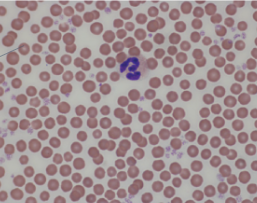
What species blood
Bovine
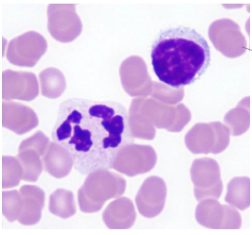
What species blood
equine

What species blood
Camelid
When to use objective x4
coat brushings and skin scrapes
When to use objective x10
parasites, urine sediment and crystals
When to use objective x40
pATHOLOGICAL SAMPLES
When to use objective x100
cytology, blood and impression smears, FNA and skin impressions
Mature bovine normal Temp
100.5-102.5
Mature bovine normal HR
40-80
mature bovine normal resp rate
10-20
Calf normal tmep
101-103
Calf nromal HR
80-120
Calf Normal Resp rate
20-40
Mature sheep normal temp
100-104
Mature sheep normal HR
70-90
Mature sheep Resp rate
20-40
lamb temp
102.5-104
Lamb hr
120-60
Lamb resp rate
20-40
Goat temp
100-104
Goat HR
70-90
Goat resp rate
20-40
Kid temp
102-104
Kid hr
120-160
Kid resp rate
20-40
Equine temp
99-101.5
Equine HR
28-42
Equine respiration
8-16
Sterile attire
no rings, jewely (except stud earings), fingernails not visible above the fingertips
Scrub shirt tucked into pants and undershirt is not showing
Cap with all hair tucked in
Tie on mask without visible gaps on either side
Shoe covers
Closed Cuff Gloving
The finger tips should be facing you with the right glove on the left and vice versa
Pick up the glove with the hand it’s sussposed to be on by pinching the glove at its mid portion and use the opposite hand to open it and over your hand
The cuff of the gwon shoudl rest against your knuckles
Surgical drapping - instrument table
Open the first layer and Move instrument pack towards yourself to reduce contamination then open the second pack
Drape is placed over the exposed side to cover ~60% of table and the instrument tray is place on top then repeat with the other
(The leading edge of the drape isn’t doubled)
Surgical Draping - Patient
1) Drape the pateints hind end and instrument table to make one continuous field between the two and place the instrument tray on the drape to stabilize it
2) Place drape on the side and towel clamp it (1/4 inch from the edge)
3) Place drape over the head and towel clamp it
4) Place last drap on last side and towel clamp it
All of these drape are folded over
Modified Miller’s w/instrumetns
Use hemostats whenever pulling underneath something
Cross twice then pull through then do 4 throws on top
How to calibrate a refractometer
Clean with a tissue and distilled water
Place one or two drops of distilled water onto the reading surface and close the lid
It should be 1.000 SPG if not than calibrate it
Normal ranges for USG dogs/cats
Dog - 1.015 - 1.060
Cat - 1.020 - 1.040
How to prepare urine for microscopic exam
1) Place 5-10ml of urine in a clean centrifuge tube
2)Centrigue for 1500 rpm for 5 mins with sediemtn at the bottom of tube
3) Remove most of the supernatant without disruption of the material in the bottom and leaving 2-3 drops of supernatant
4) Gently tap tube to reconstitute the sediemtn with the remaining urine
5) Transfer 1 drop of reconstituted sediemtn to a clean microscope slide and place a coverslip
Microscope exam of Urine
Intital scanning at low power - qunaitty of material
High poewr - cell number and morphology, Id casts adn crystals (average the number of elemetns in 10 fields)
Report average for high and low powered fields
Micro exam of urine - normal
RBCs/ WBCs - up to 5
Epithelial Cells - Low
Less than 2 per LPF hyaline cast
1 per LPF granular casts