Adult Health
 Call Kai
 Learn
 Practice Test
 Spaced Repetition
 Match
 Flashcards
 Knowt Play
1/187

There's no tags or description
Looks like no tags are added yet.
188 Terms
p - form Adult health
stress linked to
cancer
accidents
suicide
nursing assessment, diagnosis, planning and interventions aims to impact stress
preventing, identifying, and helping alleviate stress
stress definition
a perception
individualized rxn/response to stimulus when real or perceived demands exceed one’s available coping resources
assess stressors, observe coping strategies - that is what makes it lethal
physiological stress
chronic pain
birth of baby
infectious disease
starvation
emotional/psychological
diagnosis
marital problems
grieving
financial struggles
personal characteristics - be able to identify which one
resilience
attitude
sense of coherence
hardiness
optimism

General Adaptation Syndrome (GAS)
Alarm/Reaction
Stage of resistance
stage of exhaustion

Alarm/Reaction Stage (GAS)
Perception of a stressor physically or mentally
Flight or fight - sympathetic activation
salivation + GI + Immune system lowered
prioritize breathing, vitals, glucagon from liver to ^blood sugar
temporarily decreased resistance
Resistance stage (GAS)
fewer external physical signs - continued symptoms from alarm
Exhaustion stage (GAS)
gives up and stressor overcomes them
all energy for adaption has been exhaustion
Physical symptoms from alarm reaction may briefly reappear in a final effort of the body to survive.
external resources are still very beneficial
Nervous system review
Cerebral Cortex
plans solution after evaluating stressor
Limbic System
emotions; ensures survival and self-preservation
Reticular Formation
alertness (reticular activating system sends impulses to cerebral cortex) stress^ frequency of alertness impulses
Hypothalamus
regulates sympathetic and parasympathetic branch of ANS (connects nervous + endocrine)
Hypothalamic pituitary adrenal axis Adrenal cortex releases- Adrenal medulla releases -
Cortisol (stress hormone)
Epinephrine and norepinephrine
Stress effects
Coping (stress)
Maladaptive - smoking, opioids
denial/avoidance
socializing
exercise
emotion based coping - no control (percieved) over stressor, there is nothing they can do about it. look for statements
problem based coping - can do something, can find solution
prioritize problem based unless pt is explicitly distressed/“stuck”
relaxation strategies
abdominal relaxation breathing
meditation
imagery (ask them to take me there) - vs guided imagery (heres what to imagine)
music
massage - be aware of pt touch preference
Nursing assessment (stress)
assess patient’s perception of the situation + coping used
S+S
physical - vitals
behavioural - irritability impaired speech
cognitive - self reports + forgetfullness or indecision
Nursing Diagnosis (Stress)
ineffective coping
inadequate confidence in ability to cope
inadequate social support or resources
uncertainty
high degree of threat
Compromised family coping
Usually supportive primary caregiver provides insufficient, ineffective, or compromised support, comfort, assistance, or encouragement to the patient
Nursing Implementation (stress)
Identify and express stressful feelings
facilitate and enhance processes of coping and adaptation
Encourage the patient/ family to seek information related to treatment options
Chronic Illness
persists over extended periods of time
rarely cured or eliminated
slow onset
longer onset
exacerbations and remissions
phases: crisis, chronic, terminal
terms (chronic illness)
Acute - fast onset, explicit symptome
Chronic -
exacerbation - worsening (flareup)
remission - symptoms are not as present
sign - objective you see it
symptom - pt tells you
comorbidity - (2+) additional diagnosis underlying, not the reason for admission
multimorbidity - (5+) comorbidity
Disease - pathophysiology HCP
illness - what patient percieves
health - general state of wellbeing
#1 chronic illness in canada
Cancer
(then cardiovascular)
Risk Factors (Chronic Illness)
diet
alcohol
genetics
gender
social supports
housing
environment
education
morbidity vs mortality
amount of population effected
amount of death of affected populations

quiz

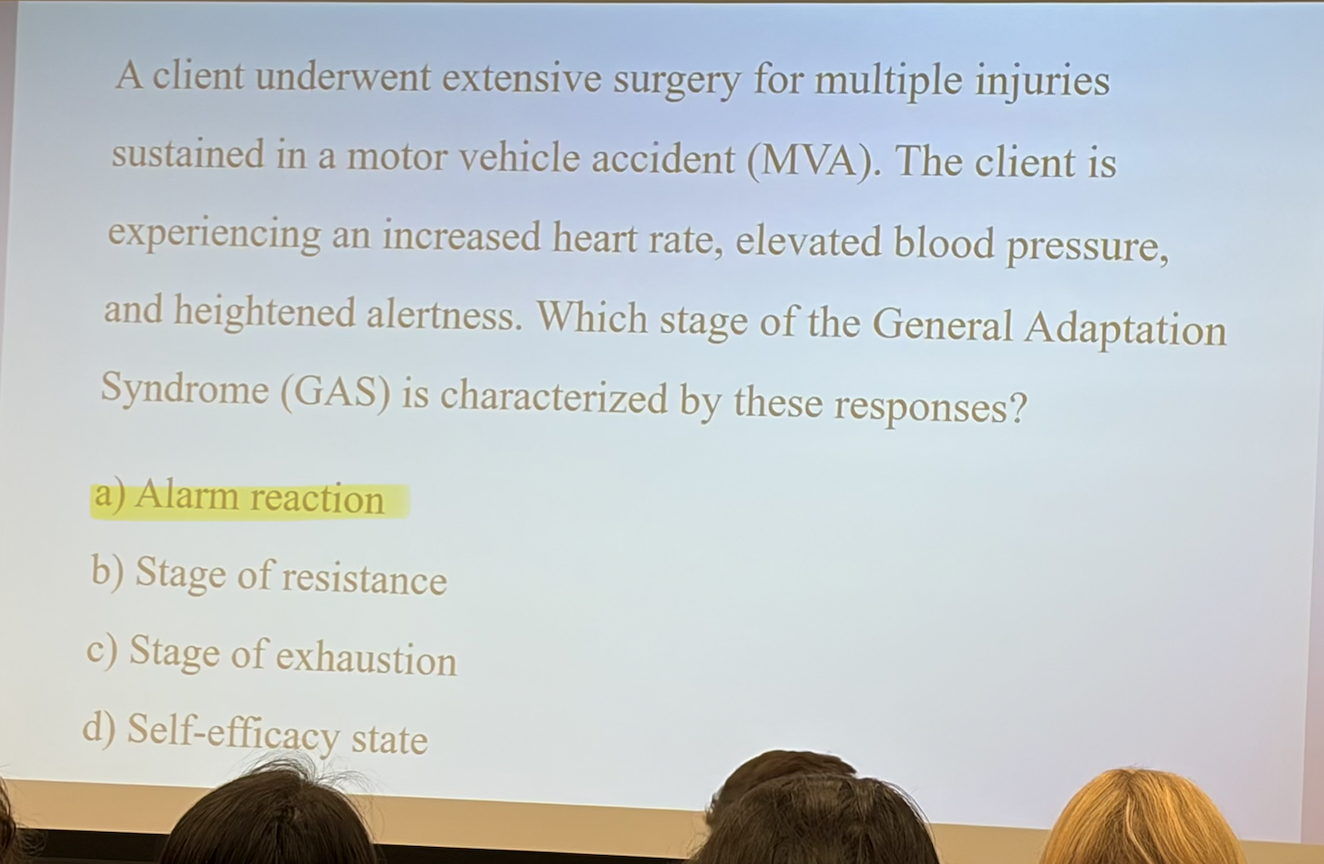
quiz on General Adaption Syndrome
chronic illness higher in indigenous population
Diabetes
Hepatitis C
Human Immunodeficiency Virus (HIV)
Heart disease
High blood pressure
healthcare management (canadian)
focus on acute episodic model of care fails to meet the needs of many patients especially those living with chronic illness (putting a bandaid over
**Self management
daily activities that individuals undertake to keep the illness under control
alleviate symptoms, strategies to maintain a lifestyle, leads to overall physical and psychological health outcomes
the more engaged in self management - better health outcomes (out of bed post opp to avoid pnemonia, DVT,
Nurse as encouragement and coaching, rather than caring entirely for them
Nurse Role
minimize forced authority, along to support them
empower patient
explore coping strategies
encourage adherence and self management

quiz
c. focus on patient self management refer to adpie
go back to nursing process (ADPIE)
Assess, diagnosis, planning, implementation, evaluation

quiz
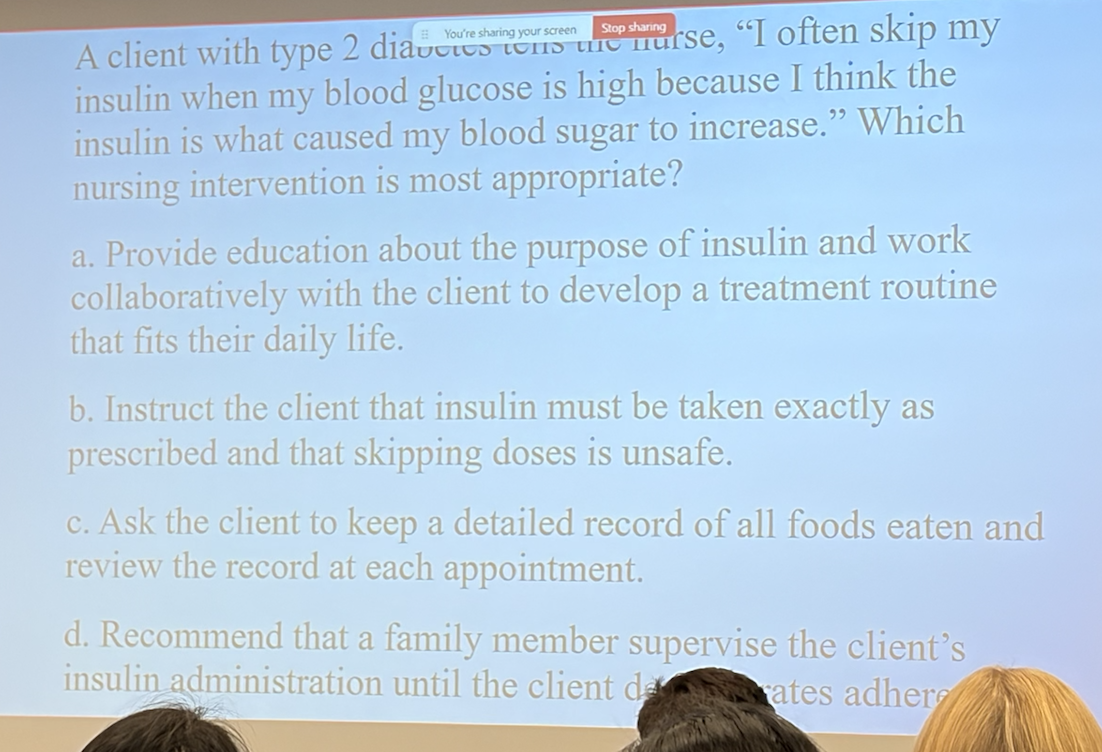
b - working with patient encourging self management
quiz
a. *nursing intervention - nurse must intervene pt is clearly not properly self managing
pain - definition
whatever and whenever the person experiencing pain says it is.
causes suffering, major reason people seek healthcare
nurses role in pain
Assess - pain, document it, communicated with other HC workers
ensure delivery
evaluate effectiveness of interventions (**reassess and document)
monitor ongoing effectiveness
provide educations to patients and their families
why pain is undertreated
Inadequate skills to assess and treat pain
misconceptions about pain
inaccurate information about addiction and other adverse effects of opiods
undertreating after previous historical overtreating
non maledicence
“lowest dose possible, for best effect, with least side effects”
describing pain
underlying pathology - nociceptive: somatic - very localized pain (skin, muscle, joint, skeletal) vs visceral - less well localized(vital organs) neuropathic: aching, throbbing, burning, tingling.
Duration - Acute (fast onset, treatable) PRN vs Chronic pain (slow onset often not fully treatable) Basal
Breakthrough pain
unexpected pain, or goes above what is expected of patient while on pain management
Basal medication - around the clock long lasting (extend/slow release) medication for chronic pain
additional PRN may be labeled FOR BREAKTHROUGH
Equianalgesic dose
equivalent pain relieving effects compared to another analgesic. note change of analgesic and route
Titration
dose adjustment is based on assessment of the analgesic effect vs adverse effects
Medication therapy mild pain
mild pain 1-3 on scale out of 10
prescribe non opioid + adjuvent (can enhance/use in addition) massage, heat, imagery, muscle reactants
Medication therapy - mild to moderate pain
4–6 on a scale of 10,
Mild but persistent despite nonopioid therapy
opiod, +non opioid + adjevent
– Use “Step 2” medications
– Mu: morphine, oxycodone,
hydromorphone, methadone
– Opioid agonists (morphine)
– Antagonists (naloxone)
– Mixed agonist-antagonists
(pentazocine, butorphanol)
should not be used because
they bind as agonists at the mu
receptor.

quiz
d

quiz
B (narcan) observing opioid depression

quiz
d
homeostasis
state of equilibrium in body, naturally retained by natural systems (negative loop system),
body fluids electrolytes are maintained within narrow limits
electrolytes
na+ 135-145
k+ 3.5 - 5.1
…
% of water in body
70-80% in infants (loss of fluids diarrhea or emesis more intense)
~60% body weight in adults
45-55% in older persons (get dehydrated faster)
sex; more fat, less fluid - women have higher fat percent
fluid compartments
Intracellular (ICF) - 28L
extracellular (ECF) - 10L; BV (intravascular), Interstitial fluid (around the cells)
plasma - 3L used for blood work and testing
INTRACELLULAR cells must be hydrated, so tissue - organs, all hydrated
electrolytes - definition
molecules dissociate into ions when placed in water, charged particles.
cations + charge anions - charge
mmol/L international standard
electrolyte composition
ICF cation: K+ anion PO43−
ECF cation Na+ anion Cl-
diffusion
move electrolytes from high to low concentration, no energy
facilitated diffusion
requires carrier molecules to accelerate diffusion
Active transport
which molecules move against concentration gradient, external energy required
loading slingshot, must keep tension-action potential (keep na in ECF k in ICF) so they can release and create muscular contraction when needed. allow membrane to maintain charge/action potential
osmosis
water is moving btwn compartments through membrane. moves from low to high solute concentration. no energy. albumin keeps fluid in intravascular space - blood vessel to maintain blood volume *if albumin leaks can pull fluid to intersticial space = swelling
osmotic pressure vs hydrostatic vs oncotic
amount of pressure required to stop osmotic flow of water
osmotic = pull → drop of osmotic pressure = excess fluid in tissue
hydrostatic = push → drop of hydrostatic pressure = excess fluid in vessel
high pressure in body, lowers by time it got to capillary, losing hydrostatic pressure. osmotic pulls fluid out of tissue and in vessel to not lose to much fluid
oncotic - force of proteins pulling on fluid to maintain
same for venous more osmotic, hydrostatic maintaining some in tissue

tonicity of water
comparison to intravascular space
isotonic - same composition of intravascular space (ex normal saline) ex. 0.9% sodium, lactated ringers, d5(sugar).
hypertonic - higher concentration of solute, to have water shift out of cells ex. pt with cerebral edema 3% sodium (give carefully)
hypotonic - lower concentration of solute, to have water shift into cells ex. dehydrated pt is instructed to drink more water
crystalloid vs colloids
crystalloid clear and seethrough “crystal clear” d5, ns
colloid - bag of rbc, albumin, plasma
VFE FVD
fluid volume deficit
fluid volume deficit - cell shrink fluid back into intervascular space. skin tenting, decreased concentrated urine, faster HR low BP, mental status changes, headache, orthostatic hypotension,
fluid volume excess - peripheral edema pitting/non pitting, acieties (excess fluid in belly), hearing crackles. daily weights
1 kg weight gain = what
1 L to estimate fluid gain/loss
Fluid Spacing
First spacing - Normal distribution of fluid in ICF and ECF
Second spacing - abnormal accumulation of interstitial fluid (edema) btwn cells and bv (still available to circulatory system
Third spacing - Fluid accumulation in part of body where it is not easily exchanged with ECF, leaked into plural space or abdominal cavity, injury/trauma, cirrosis (ascites) *must be drained
anasarca
generalized edema
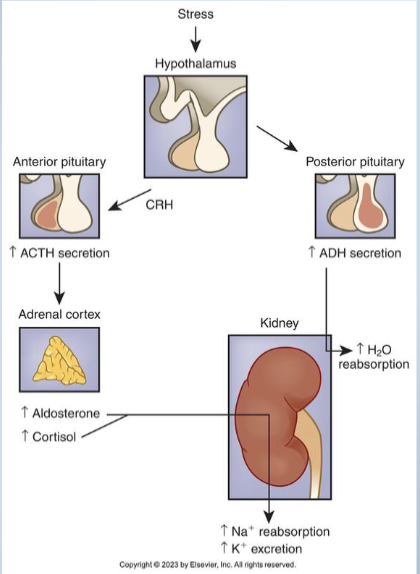
regulation of water balance
hypothalamic regulation - signal from osmoreceptors, stimulate thirst and call for release of ADH (retain fluid)
Pituitary regulation - ADH released, kidneys will reabsorb water into body
adrenal cortical regulation - retain sodium (in order to keep more water)
renal regulation - kidneys respond to ADH and Aldosterone to conserve water and sodium
cardiac regulation of fluid
ANF atrial natriuretic factor
baroreceptors will respond to pressure and constrict and dialate arteries to properly withstand
GI Fluid regulation
oral intake accounts for most water, small amounts lost in feces, signifigant fluid + electrolyte loss. diarrhea and vomiting
insensible water loss
invisable vaporization from lungs and skin for body temperature, ~900ml/day
Fluid and electrolyte imbalance common in who
pt with major illness or injury, burns(can leak albumin) + heart failure
IV fluid replacement or diuretics
hypervolemia - Fluid overload (HF, Salt intake, pitting pitting edema)
hypovolemia - Fluid loss (inadequate cardiac output)
Nursing Management
Monitor - intake and output, (water drank, feeding tube, IV) (urinal),
Daily weighs
resp changes, cardiovascular change
NEURO

defecite
orthostatic hyoptension, concentrated urine, increased thirst
High Na,
lower, meaning low bp high HR
no pressure to keep him going

fluid case study
FVE
DVT, crackles in lungs, high blood pressure, resp rate, low oxygen sat
sodium looks low (refers to concentration of water), BNP elevated (marker of HF),
capillary hydrostatic pressure: higher - more volume of fluid leading to higher pushing pressure.
sodium
imbalances typically associated with changed in osmolality (# of solutes changing)
ECF volume and controls concentration (the plasma)
nerve impulses
conc of sodium to water + nerve impulses
hypernatremia
water loss or sodium gain → more seen in FluidVolumeDefecite
(hyper osmolality)
protective mechanism - thirst signal from hypothalamus
provide fluids - iv, oral, with hypotonic saline (diuretics?0
SEVERE state of imbalance - dialysis
looks like - lethargy, agitation, seizures, coma (excess nerve impulses, lethargy is fatigue in response), muscle weakness. Impaired LOC (nerve impulse effected)
diagnosis - potential for injury, potential complication - seizure and coma leading to irreversible brain damage
Hyponatremia
water gain, loss of sodium containing fluids
hypo osmolality
restrict fluid, fluid replacement with sodium containing solution
SEVERE treatment - hypertonic saline solution (provide slowly)
looks like - confusion, nv, seizure, coma, impaired LOC
diagnosis - potential for injury
Potassium
High volume in ICF
maintenance of cardiac rhythms → wave forms will change
transmission and conduction of nerve+muscle impulses (skeletal and cardiac muscle)
sources - bananas and oranges, oral potassium meds PO (IV is dangerous)
hyperkalemia
most common in renal failure
shift from ICF to ECF (acidosis) acid buildup treated with bicarb, the potassium leaves), still in blood stream and not being cleared by kidneys
monitor with ECG to detect dysrhythmia
provide Kayexelate (potassium binder → feces) loop diuretics, dialysis,
shift - insulin (provide w glucose) or sodium bicarbonate (force K+ back into ICF)
calcium gluconate - protects heart, acts as barrier
looks like cramping leg pain, weak skeletal muscle, (life threatening arrhythmia) VFib or cardiac standstill (erratic wave form) → shockable rhythm
diagnosis - risk for injury, potential complication dysrhythmia
hypokalemia
low serum potassium caused by
Losses from kidney and GI → coming in with excessive diarrhea, n+v
magnesium deficiency = deficiency in potasium
metabolic alkalosis
KCl supplements orally or IV → general rate of infusion 10 mEq/hr (preventing hyperkalemia)
looks like - cardiac, skeletal weakness (legs), weak resp, decreased GI motility (constipation + diarrhea), decreased arteriolar blood flow
potential for injury + dysrhythmias
calcium
*inverse with phosphorus
stabilizes cell membrane (for action potential) → transmission of nerve impulses
myocardial + skeletal muscle contraction
blood clotting
skeletal/bone
Hypercalcemia
caused by hyperparathyroidism (66%)
malignancy
vit D
use loop diuretic, hydration (isotonic infusion) synthetic calcitonin,
looks like - impulse cant go out; decreased memory, confusion, disorientation, fatigue, constipation (slows everything down)
stones (kidney stones), bones (bone pain), groans (stomach pain), thrones (constipation), psych overtones (confusion, disorientation)
Hypocalcemia
low serum calcium
V PTH, acute pancreatitis, alkalosis,
oral/IV suplements, treat pain, prevent hyperventilation
exciteablility, tingling around mouth and fingers, dysphagia
positive for - trousseau or chvostec (touch side of face and eye closes) (when bp cuff is on hand will contract and curl
diagnosis - Fracture or respiratory arrest
phosphate
anion in ICF,
hyperphospate
opposite of calcium
kidney failure, renal disease, chemotherapy
looks like neuromuscular irritability and tetany
identify underlying cause, restrict foods/fluids with phosphorus, hydration, hypocalcemic correction
hypophosphatemia
looks like - CNS depression, Confusion, Muscle weakness and pain, Dysrhythmias, Cardiomyopathy
oral supplementation, ingest more phosphorus in food, IV (Na or KPO34-)
Magnesium
helper electrolyte, must correct magnesium first to allow other electrytes to do its job
majority in bone,
cardiac function
Hypermagnesemia
hypotension, facial flushing, lethargy, urinary retention, resp and cardiac arrest
limit mag in food, fluid to up urinary excretion
SEVERE - IV calcium gluconate
Hypomagnesemia
starvation, alcoholism, fluid loss for GI
what it looks like: Confusion, vertigo, seizures, Hyperactive deep tendon reflexes, Tremors
– Chvostek’s sign and Trousseau’s sign
– Cardiac dysrhythmias
IV Fluids
tonacity: why your going to use/move electrolytes
NPO: what are we trying to achieve
recap IV fluids


quiz
surgery reason
diagnosis - biopsy
cure or repair - appendectomy, etc
palliation - reducing signs and symptoms (debulk tumour pressing on nerve)
prevention - mastectomy on other non-effective breast
Cosmetic improvement
exploration - laparotomy - (explorative, can technically also diagnose) open up then use camera
types of surgery
emergency surgery - right away pressure release
elective - pt choosing to have surgery
inpatient - admitted to hospital through er/OR
ambulatory - abominable, rhinoplasty, can walk/’ambulate’ out
info abt pt before surgery
pt interview - check consult from surgery day before surgery, preop assessment can be done in person, zoom, phonecall,
pre-op assessment
protocol for medication taking; medications (like anticoagulants) around 2 weeks before, and herbal remedies. pt with pacemaker may continue to take anticoagulant up to surgery, diabetic medication can continue with does adjustment, bp medications - careful anaesthetics dont interact and make bp to high or low, typically take the morning of surgery with a sip of water. change dosing and route (subQ IV) with opiods. chronic pain hold or withdraw patch and change route. diuretics require physician guidance, avoid fluid volume deficit.
NPO instructions
discharge planning for post op. go over discharge plan multiple times to decrease complications
shower/not shower, homecare assistance, rehab, etc
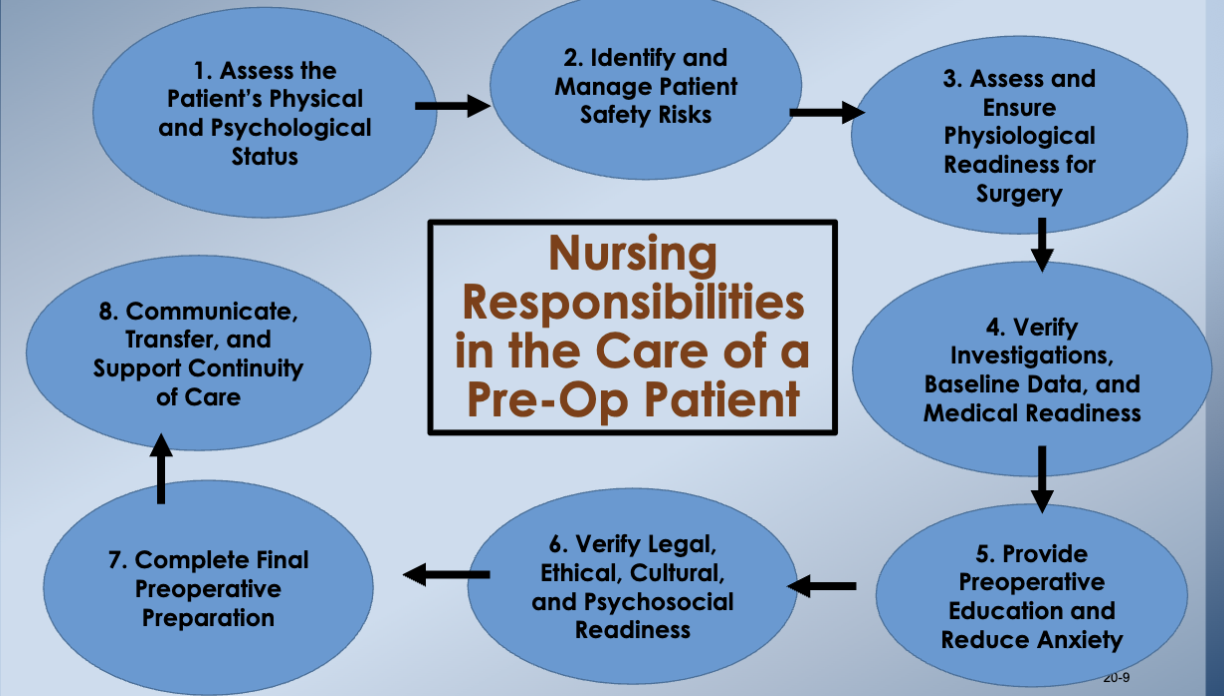
assess pt physical and psychological status
find baseline - head to toe, vitals, fluid volume status (weight, BMI), labs + diagnosis,
health history; malignant hypothermia, allergies, previous surgeries, family history, lifestyle; smoking. pack life.
psychological; assess fear for operation, child-life specialist to walk through surgery, pre op sedation
identify/manage pt risk
medication and substance use. report/contact physician if there is no order to hold or adjust a medication
allergies
specific risk factors
communicate concerns - NOT JUST DOCUMENT
ensure readiness for surgery
fluid/electrolyte strategy
diabetes - pt educated
respiratory status - ensure they can properly cough
nutritional status - proper combination of nutrition optimizes recovery
verify investigation, baseline data
OR checklist - pre-op, post-op,
get rid of metal (valubles left home), remove dentures (in advance of intubation), npo, void pre surgery, baseline vitals, support or family to talk to
provide preoperative education
education to include
sensory - “it will be loud, just focus on nurse at bedside”
process - inform what transfer will look like
procedural - explain anesthesia
teach post operative strategies
anxiety reducing - child-life specialist, medication to reassurance
Verify Legal, Ethical, Cultural, and Psychosocial Readiness
before any opiod/anestetic; informed consent (NOT a nursing task, can be a witness) most responsible provider. inform of procedure and all potential risks and outcomes.
if pt seems concerned or scared and asks for explanation, call in provider, nurse can clarify
other documentation;
cultural consideration - can blood be transfused, male/female seeing them, what does exposure look like
nurse as advocate while pt is unconcious