GEO01 CO1
0.0(0)
Studied by 0 people Call Kai
 Learn
Learn Practice Test
 Spaced Repetition
 Match
Match Flashcards
 Knowt Play
Card Sorting
1/161

Earn XP
Last updated 5:23 PM on 9/3/23
Name | Mastery | Learn | Test | Matching | Spaced | Call with Kai | Chat |
|---|
No analytics yet
Send a link to your students to track their progress
162 Terms
1
New cards
It is the study of Earth
Geology
2
New cards
It is the study of Earth’s materials
Physical Geology
3
New cards
The word geology comes from what words and which language?
geo - Earth
logos - study of
latin
logos - study of
latin
4
New cards
The study of preparation in case of natural disasters
Environmental Geology
5
New cards
An example of a volcanic eruption
1991 Mt. Pinatubo eruption
6
New cards
An example of a mudflow
1985 Armero Columbia mudflow
7
New cards
It is a type of system that is self-contained. This system permits energy but not matter.
Closed system
8
New cards
It is a type of system that allows energy and matter to flow in and out the system.
Open System
9
New cards
The gases that envelop the Earth and shallow compared to the Geosphere
Atmosphere
10
New cards
The contents of the atmosphere
78% Nitrogen
21% Oxygen
1% CO2, Argon, Helium, Ne, H, etc.
21% Oxygen
1% CO2, Argon, Helium, Ne, H, etc.
11
New cards
What are the layers of the atmosphere from lowest to highest?
Troposphere
Stratosphere
Mesosphere
Thermosphere
Stratosphere
Mesosphere
Thermosphere
12
New cards
Why is exosphere not considered as a layer?
There is no pause, meaning it has no clear stop
13
New cards
If the temperature decreases, the altitude rises
Troposphere
14
New cards
It is the lowest layer of the atmosphere
Troposphere
15
New cards
Where airplanes travel
Stratosphere
16
New cards
Where the absorption of UV rays happen
Stratosphere
17
New cards
If the altitude increases, the temperature also increases.
Stratosphere
18
New cards
The coldest region.
Mesopause
19
New cards
It is the least explored layer of the atmosphere.
Mesosphere
20
New cards
If the altitude increases, the temperature decreases
Mesosphere
21
New cards
If the altitude increases, the temperature increases due to the loss of absorption of radiation
Thermosphere
22
New cards
This is where the International Space Station (ISS) orbits the Earth
Thermosphere
23
New cards
If altitude increases, then the temperature remains constant
Pauses in the layers
24
New cards
Isothermal region, meaning the temperature does not change
Pauses in the layers
25
New cards
NASA calls this the “Blue Marble”
Hydrosphere
26
New cards
Contents of the Hydrosphere
71% Ocean
97\.5% saltwater
2\.5% freshwater
97\.5% saltwater
2\.5% freshwater
27
New cards
Contents of the Northern Hemisphere
61% water
39% land
39% land
28
New cards
Contents of the Southern Hemisphere
81% water
19% land
19% land
29
New cards
What are the 6 oceans from largest to smallest?
Pacific Ocean
Atlantic Ocean
Indian Ocean
Antarctic Ocean
Artic Ocean
Atlantic Ocean
Indian Ocean
Antarctic Ocean
Artic Ocean
30
New cards
Also called the Artic Mediterranean Sea; the smallest ocean
Artic Ocean
31
New cards
The meeting of currents near Antarctica.
Antarctic Convergence
32
New cards
What is found in the Atlantic Ocean?
Bermuda Triangle
33
New cards
It includes all life on Earth
Biosphere
34
New cards
What is the key part of the Carbon cycle?
Biosphere
35
New cards
What is the base of the food chain?
Photosynthetic Organisms
36
New cards
The process that created the Earth’s layered structure
Planetary Differentiation
37
New cards
How did the core form?
The denser material sunk to the center of the planet.
38
New cards
How did the crust form?
The less dense material floated to the top.
39
New cards
What are the layers of physical properties?
Lithosphere
Asthenosphere
Mesosphere
Outer Core
Inner Core
Asthenosphere
Mesosphere
Outer Core
Inner Core
40
New cards
What are the layers of chemical properties?
Crust
Mantle
Core
Mantle
Core
41
New cards
It is the thinnest layer of the Earth.
Crust
42
New cards
It has two distinct types: Oceanic and Continental
Crust
43
New cards
It is mostly composed of **gigantic rocks** and much **older** than the other type of crust.
Continental
44
New cards
It is mostly composed of **basaltic rocks** and much **younger** than the other type of crust.
Oceanic
45
New cards
It is the thickest layer of the Earth
Mantle
46
New cards
The boundary between the crust and mantle
Mohorovičić Doscontinuity
47
New cards
The Mohorovičić Discontinuity is named after the seismologist
Andrija Mohorovičić
48
New cards
What is the upper mantle’s composition?
peridotite that is made up of olivine
49
New cards
The core is composed of?
mostly iron and nickel
50
New cards
The core comprises _% of the Earth’s volume
16%
51
New cards
The boundary between the core and mantle
Gutenberg Discontinuity
52
New cards
The Gutenberg Discontinuity is named after __
Beno Gutenberg
53
New cards
It is the densest portion of the Earth
Core
54
New cards
This is a type of wave that passes through solid and liquid
P Wave
Primary Wave
Primary Wave
55
New cards
This is a type of wave that cannot pass through liquid
S Wave
Shear Wave
Shear Wave
56
New cards
It is relatively rigid and is known to **break due to stress** and the site of most earthquakes.
Lithosphere
57
New cards
The uppermost mantle + the crust.
Lithosphere
58
New cards
large fragments that are broken up are called
Lithospheric plates
59
New cards
“Weak” sphere
Asthenosphere
60
New cards
__ is also thought to occur in the asthenosphere
Convection
61
New cards
The lithosphere __ on top of this layer
floats
62
New cards
Because of an ____ (caused by the weight of the rock above), the mantle **gradually strengthens with depth.**
increase in pressure
63
New cards
A liquid layer due to S waves not being able to travel through this layer.
Outer Core
64
New cards
In which core can the Earth’s magnetic field generate?
Outer Core
65
New cards
The boundary between the inner and outer core is the
Lehmann Discontinuity
66
New cards
The Lehmann Discontinuity is discovered by
Inge Lehmann
67
New cards
Despite its higher temperature, the iron in the inner core is
solid
68
New cards
It enhances or dives changes
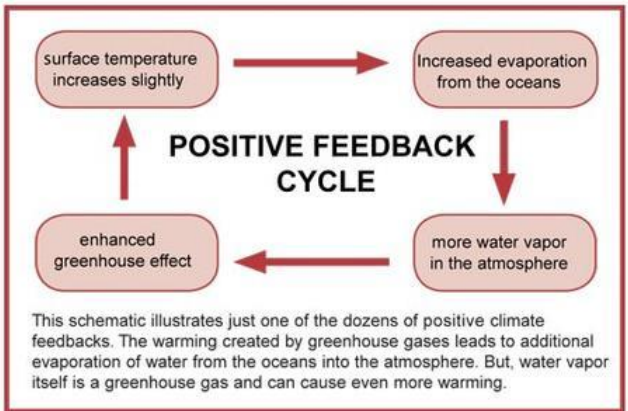
Positive feedback
69
New cards
Resists change
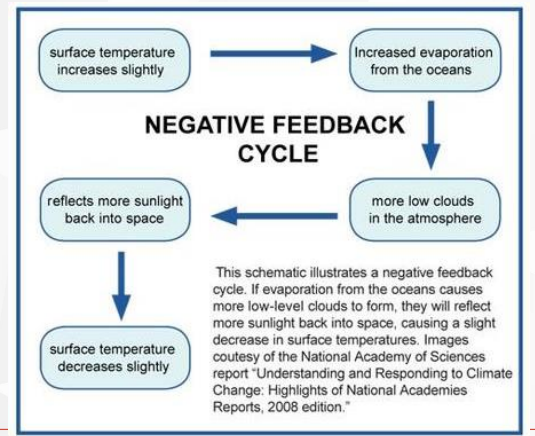
Negative Feedback
70
New cards
Stabilizes or maintains the system
Negative Feedback
71
New cards
An example of a positive feedback cycle is
\
72
New cards
An example of a negative feedback cycle is
73
New cards
A theory that all present continents once existed as a single supercontinent
Continental Drift Theory
74
New cards
He proposed that the Pangea began breaking into smaller continents, which then drifted to their positions
Alfred Lothar Wegener
75
New cards
What are the evidences of the Continental Drift
Continental Jigsaw Puzzle
Fossil Evidence
Rock Types and Geologic Structures
Ancient Climates
Fossil Evidence
Rock Types and Geologic Structures
Ancient Climates
76
New cards
Who constructed a map that pieced together the edges of the continental shelves of South America and Africa
Sir Edward Bullard
77
New cards
A freshwater reptile
Mesosaurus
78
New cards
A fossil “seed fern” identified by its tongue-shaped leaves and seeds
Glossopteris
79
New cards
A land-dwelling reptile
Lystosaurus
80
New cards
The Grand Unifying Theory of Geology
Plate Tectonic Theory
81
New cards
The Asthenosphere flows like the flow of honey due to the small amounts of melting present.
Ductile Behavior
82
New cards
Heat transfer due to the tendency of hotter materials to rise colder material to sink.
Convection
83
New cards
Two plates that are moving away from each other.
Divergent Boundaries
84
New cards
Two plates that are moving towards each other
Convergent Boundaries
85
New cards
Two plates that are sliding past each other.
Transform Fault Boundary
86
New cards
a naturally occurring inorganic, crystalline solid that has a specific chemical composition
mineral
87
New cards
smallest form of energy and matter
atoms
88
New cards
defined by its atomic number which is the number of protons in its nucleus
element
89
New cards
atoms of an element with different numbers of neutrons but the same number of protons
isotopes
90
New cards
A __ isotope can retain all their protons and neutrons through time
stable isotope
91
New cards
A __ isotope can spontaneously lose protons or neutrons over time
unstable isotope
92
New cards
groups of atoms with unequal numbers of protons and electrons
ions
93
New cards
controlled by valence electrons
bonding
94
New cards
transfer of valence electron
ionic bonding
95
New cards
sharing of valence electron
covalent bonding
96
New cards
electrons flow freely throughout metals
metallic bonding
97
New cards
a group of minerals formed from silicon and oxygen
silicate
98
New cards
Basic structure for silicate materials
isolated silicate structure
chain silicates
sheet silicates
framework silicates
chain silicates
sheet silicates
framework silicates
99
New cards
a silicate structure that has no shared oxygen
isolated tetrahedra
100
New cards
a silicate structure that has 2 shared oxygen
chain silicates