Lecture 18 - Part 1 The Role Of The Liver In The Development of Metabolic Complications
 Call Kai
 Learn
 Practice Test
 Spaced Repetition
 Match
 Flashcards
 Knowt Play
1/17

There's no tags or description
Looks like no tags are added yet.
18 Terms
How do low fat diets affect body weight?
meta analysis → individuals consuming low fat diet without decreasing total energy intake (2 months) → some weight loss
associated with improvements in parameters of metabolic health
What forms of fat are found in the diet?
triacylglycerols (TAGS) → dominant fat in diet, 90-95% of the total energy derived from dietary fat
Phospholipids → structural present in cell membrane
sterols (eg cholesterol)
other lipids (eg. fat soluble vitamins)
What is the structure of TAGS?
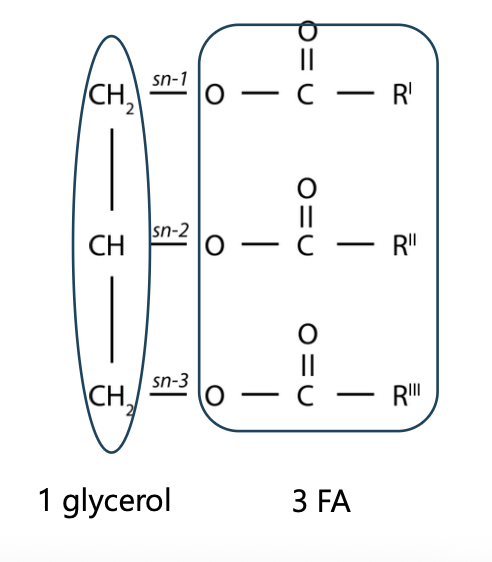
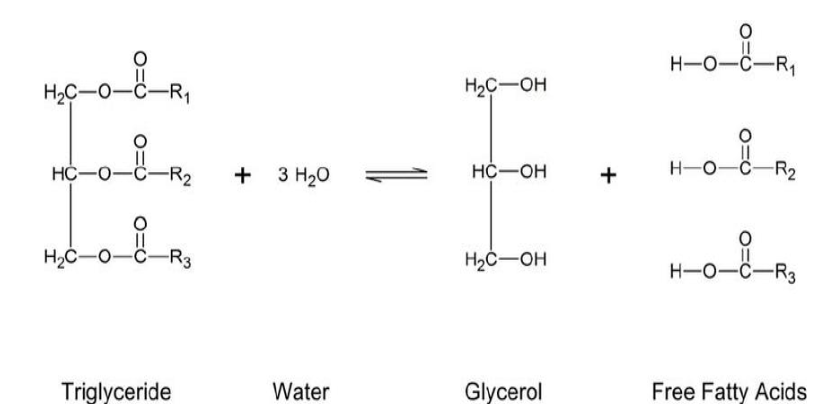
How are TAGS digested?
Mouth → lingual lipase
stomach → gastric lipase → makes 1FA + 1 DAG
Pancrease → pancreatic lipase → 2FA + 1 MAG

What are bile acids?
effective detergents which promote the solubilization and absorption of dietary lipids.
amphipathic to make it more soluble
What are primary bile acids?
made in liver and stored in the gallbladder
Cholic acid (CA)
Chenodeoxycholic acid (CDCA)
What is bile acid conjugation?
conjugated with taurine or glycine in liver to increase their hydrophilic → now called bile salts
Taurocholic acid (TCDCA)
Glycochenodeoxycholic (GCDCA)
Where are bile salts deconjugated?
deconjugated by gut bacteria along in intestinal tract → bile salt hydrolase (BSHs) hydrolysis of the amide bond
bile salts further metabolized by gut bacteria in the large intestine to form secondary bile acids → more hydrophobic to promote passive uptake in the distal intestine
Deoxycholic acid (DCA)
Lithocholic acid (LCA)

What happens to bile acids after use?
enterohepatic circulation is very efficient at recycling bile acids (95%)
5% lost in feces
Why might bacteria deconjugate bile acids?
Theory 1 (deconjugation detoxifies bile acids)
Theory 2 (deconjugation releases atoms (C, N, S) that can be used by the microbiota directly)
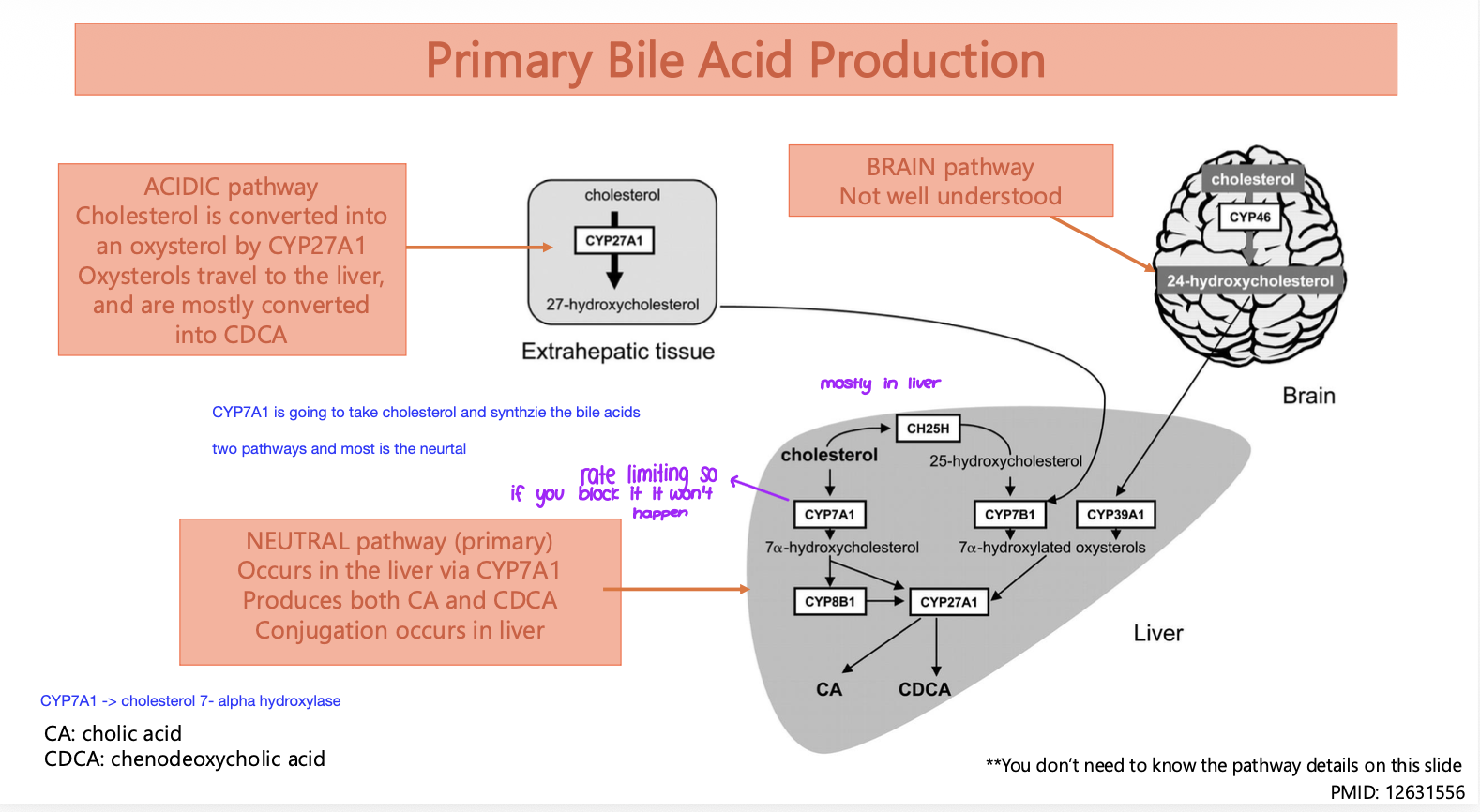
What is the neutral pathway of primary bile acid production?
Occurs in liver via CYP7A1 → rate limiting enzyme and won’t work when blocked
produced both CA and CDCA
Conjugation occurs in the liver
What is the acidic pathway?
cholesterol is converted into oxysterl by CPY27A1 in extra hepatic tissue
Oxysterols travel to the liver and are converted mostly into CDCA
What is the brain pathway of primary bile acid production?
Cholesterol converted into 24-hydroxycholesterol by CYP46
How to bile acids regulate their own production?

What are bile acid resins?
used to control blood lipids 1960s → but mechanism of action unclear
also known as bile acid sequestrates → bind bile acids in digestive tract and prevent enterohepatic circulation → hepatic FXRa not activated → neutral CYP7A1 remains active
increases conversion of hepatic cholesterol into bile acid → increased uptake of cholesterol from blood to liver → lowering total cholesterol and LDL cholesterol in blood
What happens when bile acid sequestrates given to T2D?
improved glycemic control + 13% reduction in blood glucose → precise mechanism of action unknown
FXRa-/- mouse → FXRa regulated genes involved in gluconeogenesis and hepatic glucose production
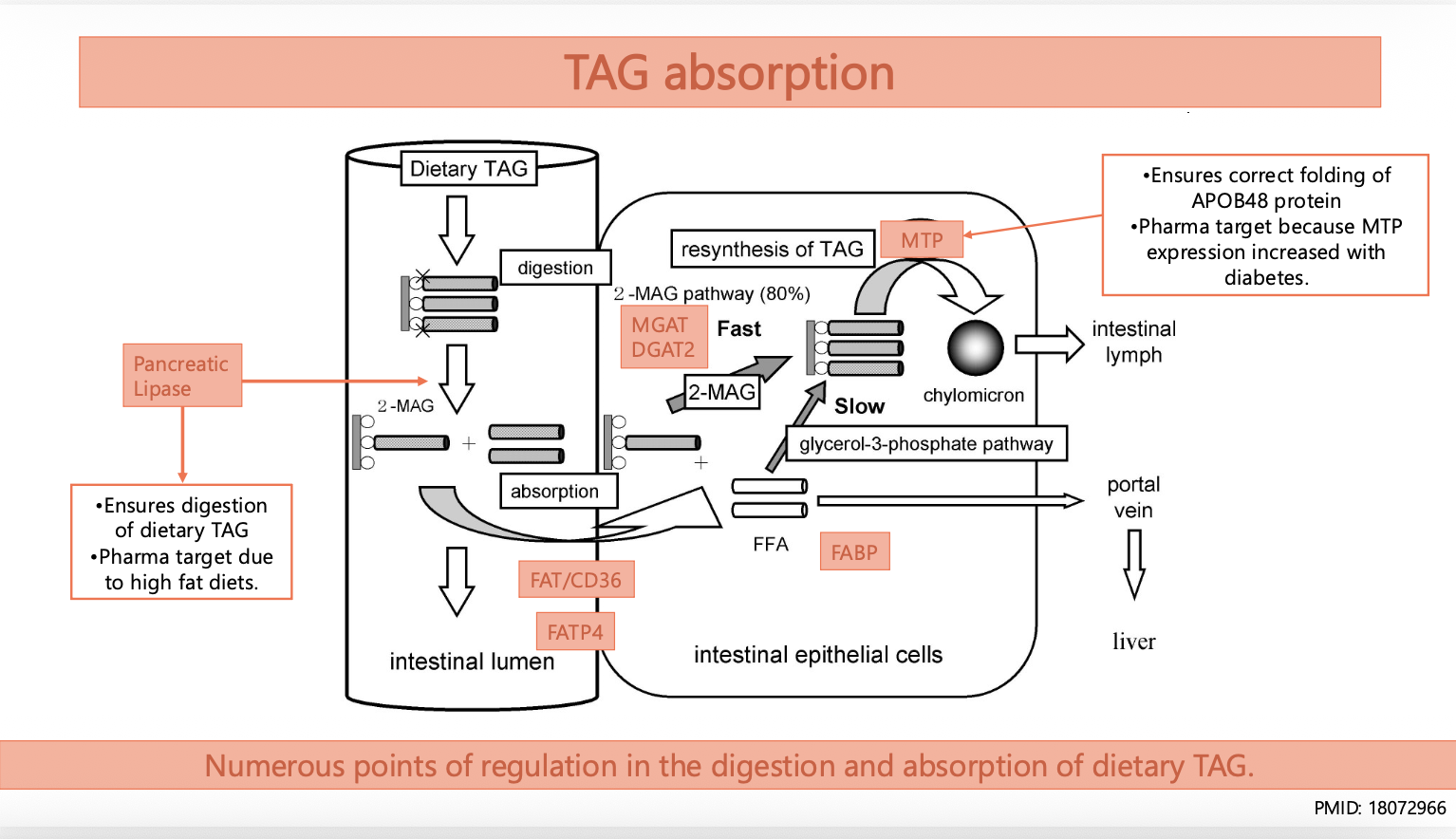
How are TAGS absorbed?
What is orlistat?
inhibitor that alters fat absorption by inhibiting both pancreatic and gastric lipases directly in digestive tract
high fat diet associated with weight gain and diabetes
patients taking orlistat → reduced TAGS uptake + consequently greater excretion of fat in faces → reduced body weight and various risk factors like total blood cholesterol levels