Metabolism and Energy Balance — Chapter 22
 Call Kai
 Learn
 Practice Test
 Spaced Repetition
 Match
 Flashcards
 Knowt Play
1/13

There's no tags or description
Looks like no tags are added yet.
14 Terms

I. Appetite and Satiety
What part of the brain controls food intake?
What are the two centers in the hypothalamus that control food intake?
How does the feeding center behave?
The hypothalamus
The feeding center and the satiety center
It is tonically active
What happens when the feeding center is destroyed?
What does the satiety center do?
What happens when the satiety center is destroyed?
Feeding stops
It inhibits the feeding center
Overeating is induced
II. Fed-State Metabolism
A. Carbohydrates
What happens to glucose during the fed state?
What are the two possible fates of glucose that stays in circulation?
About 30% is taken up by the liver, while 70% stays in circulation
It can be used for ATP production or stored

What is glycogenesis?
How can excess glucose be stored besides glycogen?
The process of storing glucose as glycogen
As triglycerides through lipogenesis

Where is glycogen stored mainly?
How much of a glucose supply does liver glycogen provide?
In the liver and skeletal muscle
About four hours of supply

B. Proteins
What are two possible fates of amino acids during the fed state?
What happens to excess amino acids during the fed state?
Protein production and fat production
They are stored as fat
C. Fats
Where are triglycerides stored?
What are two uses of cholesterol?
In the liver and adipose tissue
Steroid hormone synthesis and membrane components

III. Fasted-State Metabolism
A. Carbohydrates
What happens to glycogen during the fasted state?
What is glycogenolysis?
What is gluconeogenesis?
It is broken down through glycogenolysis
The breakdown of glycogen
The production of glucose
B. Proteins
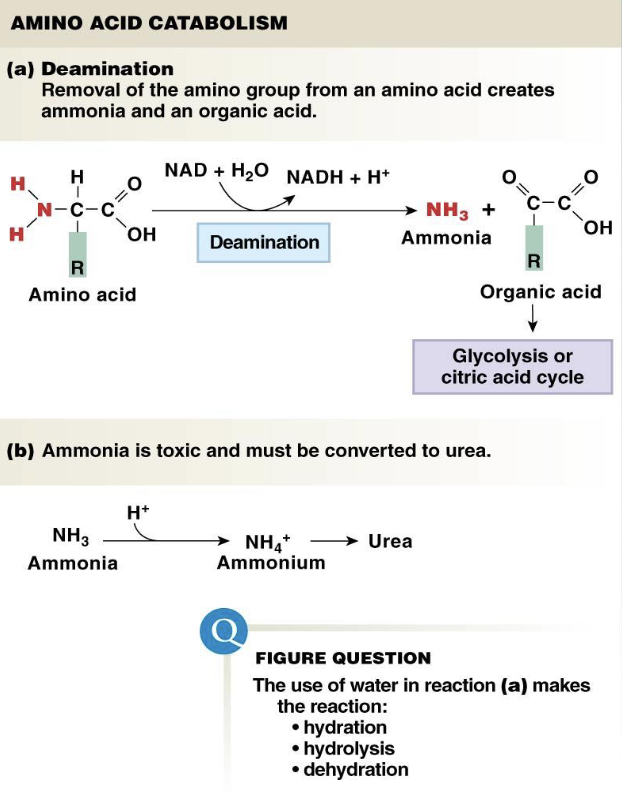
Which amino acids are used first during the fasted state?
What digests proteins during the fasted state?
What does deamination produce?
Free amino acids
Proteases digest proteins
Ammonia, which is converted to urea by the liver

What happens to deaminated amino acids during ATP production?
How can deaminated amino acids contribute to glucose production?
They enter the respiration pathway
In the liver, they enter a reverse glycolysis pathway to produce glucose

C. Fats
What is lipolysis?
Where does glycerol enter energy metabolism?
How do fatty acids enter energy metabolism?
The breakdown of triglycerides by lipases
Glycerol feeds into glycolysis
They undergo beta-oxidation before entering the Krebs cycle


IV. Control of Metabolism
A. Insulin and Glucagon
Which organ produces insulin and glucagon?
Which pancreatic cells produce insulin?
Which pancreatic cells produce glucagon?
The pancreas
Beta cells
Alpha cells

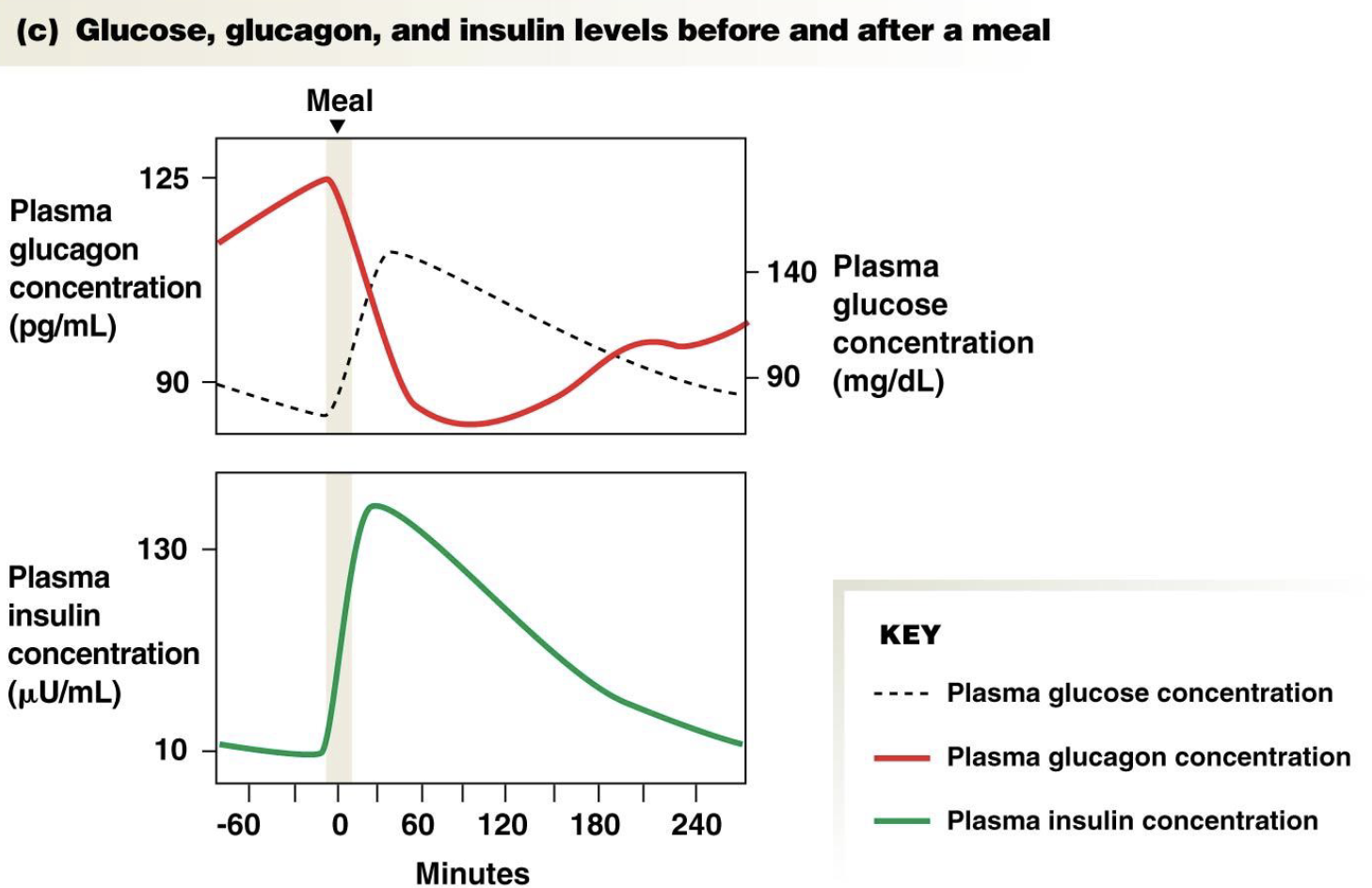
Which hormone is dominant during the fed state?
A What stimulates insulin?
What does insulin promote?
Insulin
A high glucose concentration in the blood
Glycogen synthesis and lipid synthesis
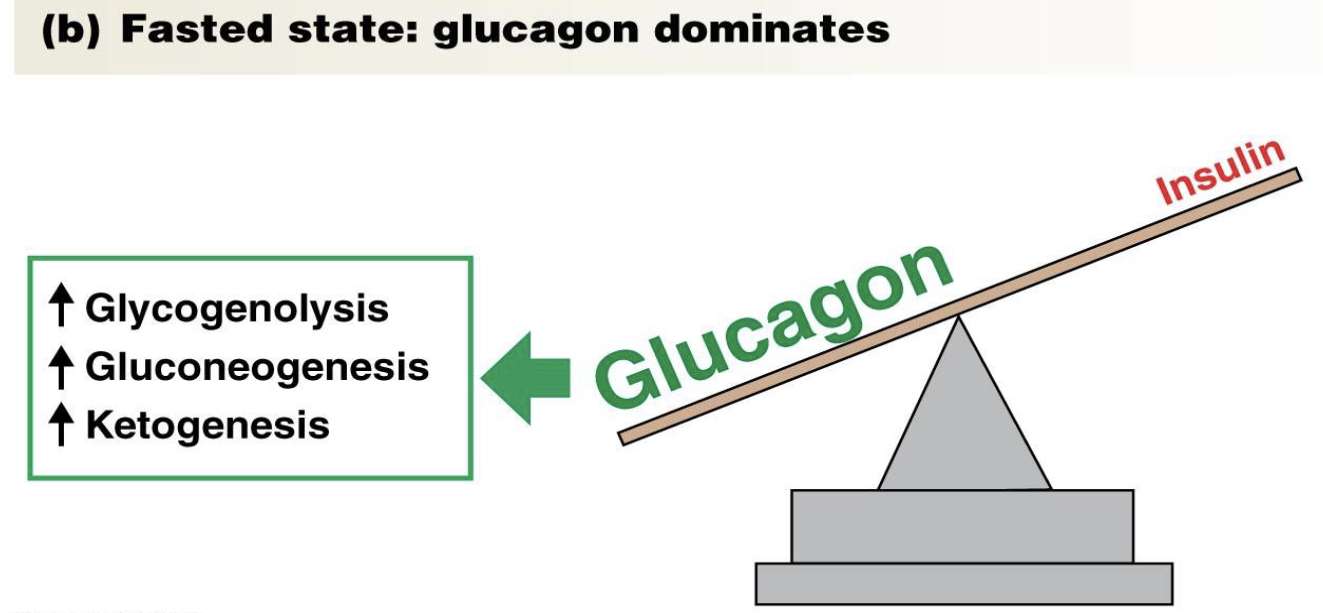
Which hormone is dominant during the fasted state?
What stimulates glucagon?
What does glucagon promote?
Glucagon
A low glucose concentration in the blood
Glycogen metabolism and glucose synthesis
