Lesson 7 - Microbial Growth + Culture
 Call Kai
 Learn
 Practice Test
 Spaced Repetition
 Match
 Flashcards
 Knowt Play
1/25

There's no tags or description
Looks like no tags are added yet.
Name | Mastery | Learn | Test | Matching | Spaced | Call with Kai | Chat |
|---|
No analytics yet
Send a link to your students to track their progress
26 Terms
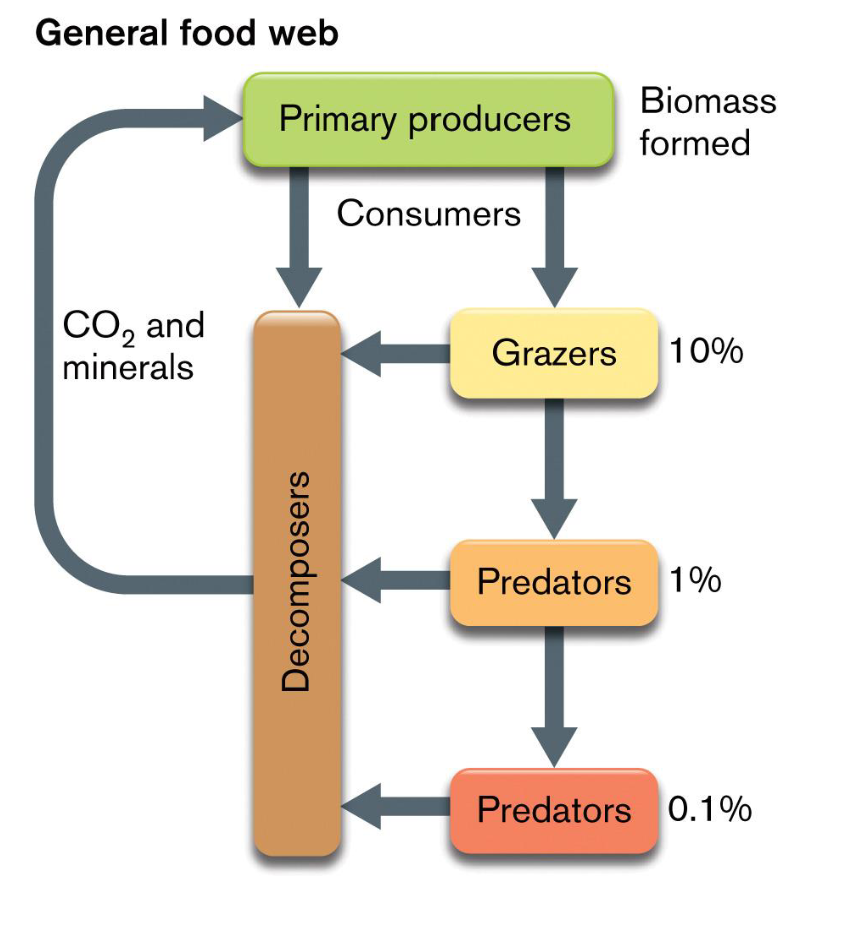
Why are microorganisms important to food webs?
Microorganisms form the hidden foundation of food webs.
Essential nutrients such as carbon are limited and must be recycled.
Microorganisms help decompose organic matter and recycle nutrients, supporting other organisms.
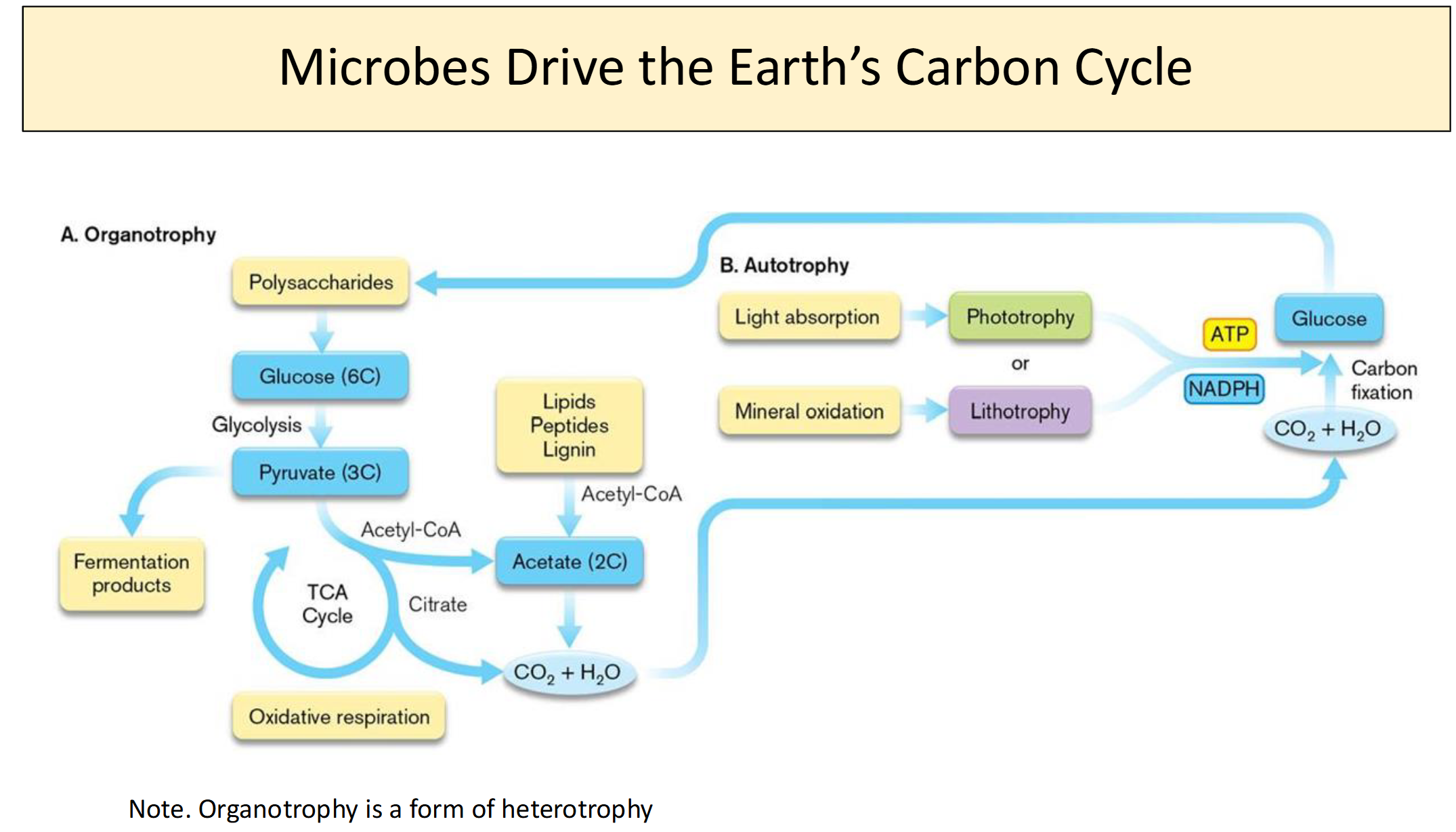
How do microorganisms contribute to the carbon cycle?
Autotrophs fix inorganic CO₂ into organic carbon.
Heterotrophs obtain carbon from organic compounds.
Decomposition and respiration help return carbon to the environment.
These processes recycle carbon through ecosystems.
What is nitrogen fixation, and what are diazotrophs?
Atmospheric N₂ makes up approximately 79% of the atmosphere but cannot be directly used by most organisms.
Bacteria play key roles in the global nitrogen cycle
Diazotrophs are microorganisms capable of nitrogen fixation.
They use nitrogenase (enzyme) to convert atmospheric N₂ into ammonia/ammonium (NH₄⁺).
Nitrogen fixation supplies biologically available nitrogen.
Only a few bacteria can fix N2 ...so all life depends on them!

What is the relationship between Rhizobium bacteria and plants?
Rhizobium species are nitrogen-fixing root endosymbionts.
They inhabit root nodules of certain plants, especially legumes.
The bacteria receive organic nutrients from the plant.
The plant receives biologically available nitrogen produced by the bacteria.

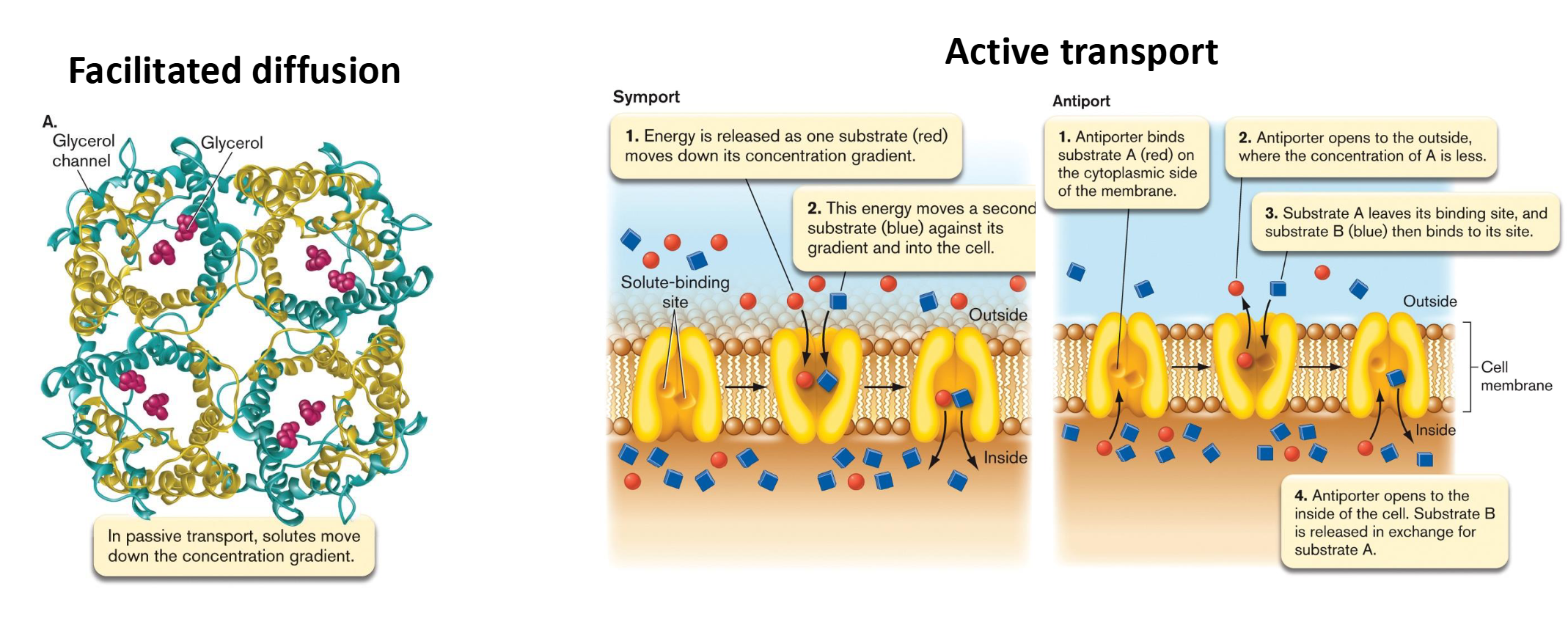
What is the difference between facilitated diffusion and active transport?
Facilitated diffusion:
Passive transport through membrane proteins.
Moves substances down their concentration gradient.
Does not require metabolic energy.
Active transport:
Uses energy to transport substances.
Can move substances against their concentration gradient.
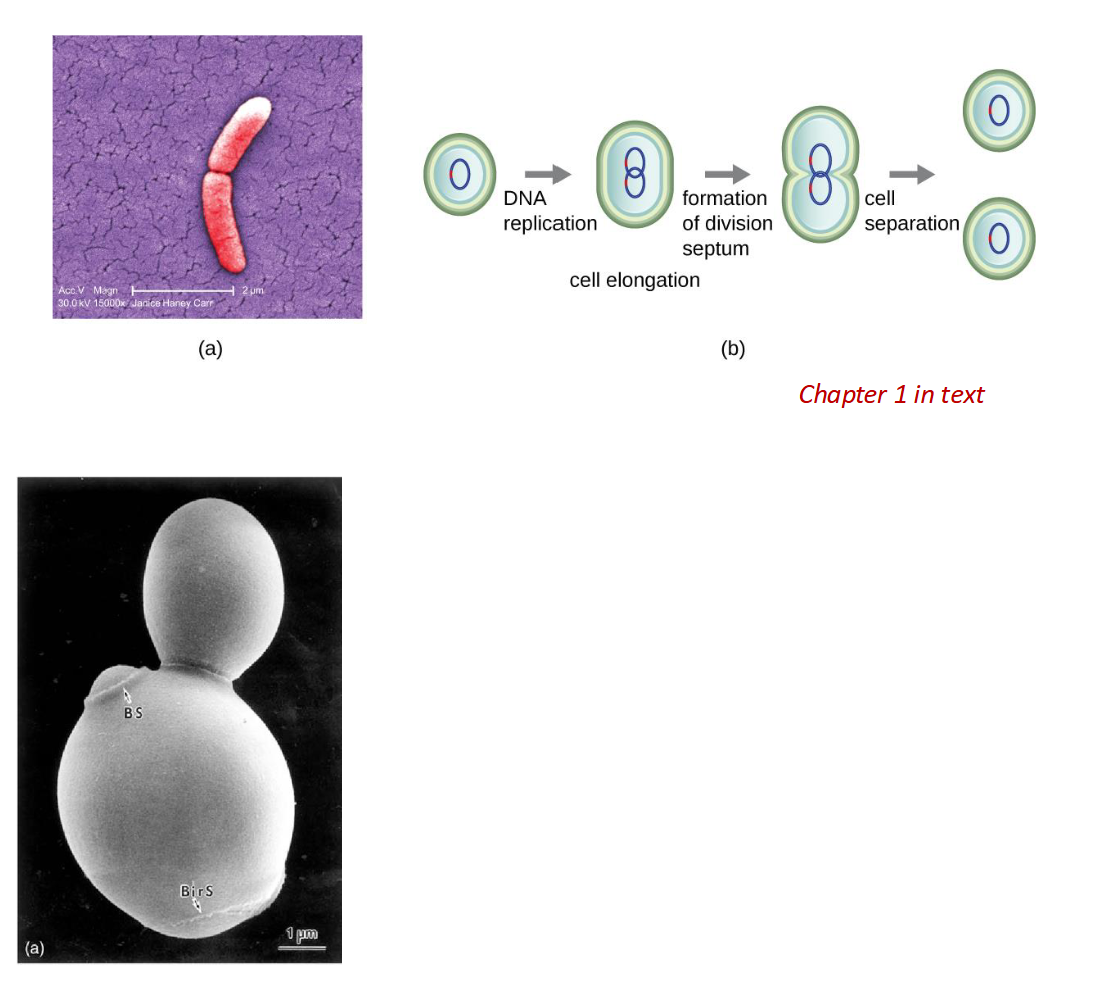
What is binary fission, and what are its main stages?
Binary fission is asexual reproduction in which a bacterial cell increases in size/cell volume and biomass then splits into two equal daughter cells.
Population doubles at each division (generation time)
Stages:
Cell growth
DNA replication
Formation of division septum
Cell separation
Some bacteria and yeasts reproduce through asymmetrical budding instead.
What is generation time, and how is bacterial population growth calculated?
Generation time (doubling time) is the time required for a bacterial population to double under favourable conditions.
In a favourable/optimal environment, with unlimited & appropriate resources and environmental conditions, bacteria divide at a constant interval
Nt = N0 × 2^n
Nt = final cell number
N0 = initial cell number
n = number of generations

What are examples of fast and slow bacterial generation times?
Clostridium perfringens: Approximately 10 minutes
Mycobacterium leprae: Approximately 14 days
Generation time varies between bacterial species.

What is the difference between liquid and solid culture media?
Liquid media (broth):
Cells grow in suspension.
Used to study pure culture growth and produce large quantities of cells or extracellular products.
Often used as a closed system (batch culture).
Solid media (agar):
Cells grow as visible colonies.
Separate bacteria in samples
Isolation of a pure culture (bacterial population grown from a single isolated ‘pure’ colony
Studying diversity in a sample, specific traits e.g., colony morphologies, physiology, growth, genetics, antibiotic production etc.

What are the five major types of microbial culture media?
Complex/rich: Nutrient-rich; exact composition poorly defined.
E.g. contain general extracts of yeast cell, plant and animal tissues
Minimal defined: Contains only essential nutrients needed for growth of a specific microbe; exact composition and concentrations known.
Enriched: Complex media to which specific factors are added; the microbe is not capable of making them but needs them to grow.
E.g., blood proteins, nucleotides, vitamins etc.
Selective: Favours growth of some microorganisms over others.
Differential: Distinguishes microorganisms based on biochemical or physiological activities.
What is the difference between selective and differential media? Give an example.
Selective media favour the growth of certain microorganisms while inhibiting others.
E.g., high or low pH, plus antimicrobials, specific nutrients
Differential media distinguish microorganisms based on biochemical or physiological differences,
E.g., contain a dye that changes in colour when bacteria produce specific byproducts; differentiate microbes based on their metabolic activities
MacConkey agar is both:
Selective for Gram-negative bacteria.
Differential for lactose fermentation: fermenters produce pink/red colonies, while non-fermenters appear colourless/white.

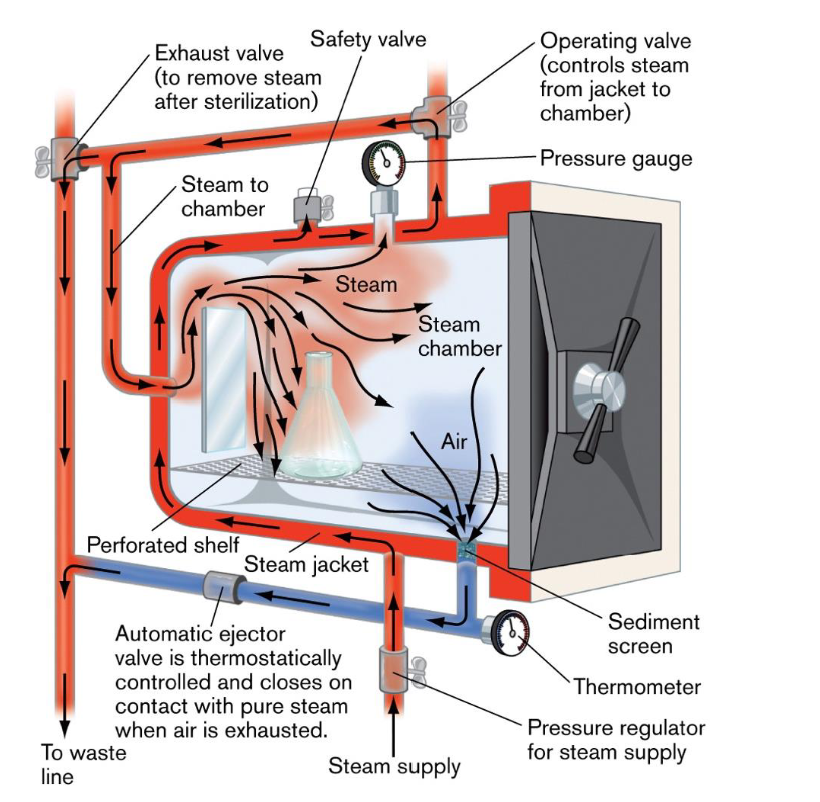
How does an autoclave sterilize culture media?
Uses high-temperature and high pressurized steam (moist heat) to kill microorganisms, including resistant spores.
Moist heat is most effective at killing microbes
Moist heat damages essential cellular components.
Sterilization effectiveness can be assessed using biological indicators containing resistant bacterial spores.
What is the difference between complex and synthetic (defined) media? Give examples
Complex media:
Contain biological extracts with incompletely known chemical compositions.
Example: Lysogeny broth (LB), containing tryptone and yeast extract.
Synthetic/defined media:
Exact chemical ingredients and concentrations are known.
Examples: M9 medium and sulfur oxidizer medium.

What are dilution streaking and spread plating used for?
To obtain well isolated single colonies which can be used to establish pure cultures or estimate the total number of bacteria in a sample
Spread plating can also estimate viable bacterial numbers.
Assumption: One cell = one colony! (not always true, some bacteria naturally live/occur in pairs or multiples and cannot be separated by these simple techniques)

How does dilution streaking isolate pure bacterial cultures?
Bacteria are progressively diluted across an agar surface.
Dilution of the sample separation a single bacterium
Separated bacteria multiply to form visible isolated colonies.
An isolated colony can be used to establish a pure culture.

What are the steps and goals of serial dilution and viable plate counting?
Set up 10-fold serial dilutions in liquid culture
A small amount (e.g. 0.1 ml) of each dilution is then plated on agar medium.
Goal:
Obtain a dilution that gives nicely separated colonies
Select plates with ~30-300 Colony Forming Units (CFU)
Calculate number of bacteria in original sample

Why is counting microorganisms important?
Government regulations: Food safety and health applications.
Quality control: Water safety, contamination, and soil health.
Research: Measuring microbial populations and studying growth.

What are the three main methods used to count or estimate microbial populations?
Direct microscopic counts using a haemocytometer.
Plate counts using dilution plating.
Optical density using a spectrophotometer.
Microbes must be suspended in liquid for these methods.
Results may be expressed as bacteria/mL or bacteria/g.

What is optical density (OD₆₀₀), and how does it relate to microbial growth?
Microbial cells in liquid suspension increases the turbidity (cloudiness) of the liquid; the higher the concentration of the cells the more turbid the suspension
Cells scatter light, reducing transmitted light measured by a spectrophotometer.
Usually measured at 600 nm (OD₆₀₀). • Higher cell concentration → greater turbidity → higher OD₆₀₀.

Describe the Microbial Growth Cycle
Growth cycle is analysed as cells density (OD600nm or cell counts) as a function of time
When grown in batch liquid culture (i.e. in a test tube or flask, in a closed system, where media and nutrients are not refreshed) there are four phases of growth:
lag, exponential/logarithmic (log), stationary, death

What occurs during the lag phase of bacterial growth?
Cells need time to sense and adjust to their environments, during lag phase, bacteria adapt themselves to growth conditions
Bacteria are maturing and not yet able to divide
Synthesis of RNA, enzymes and other molecules occurs
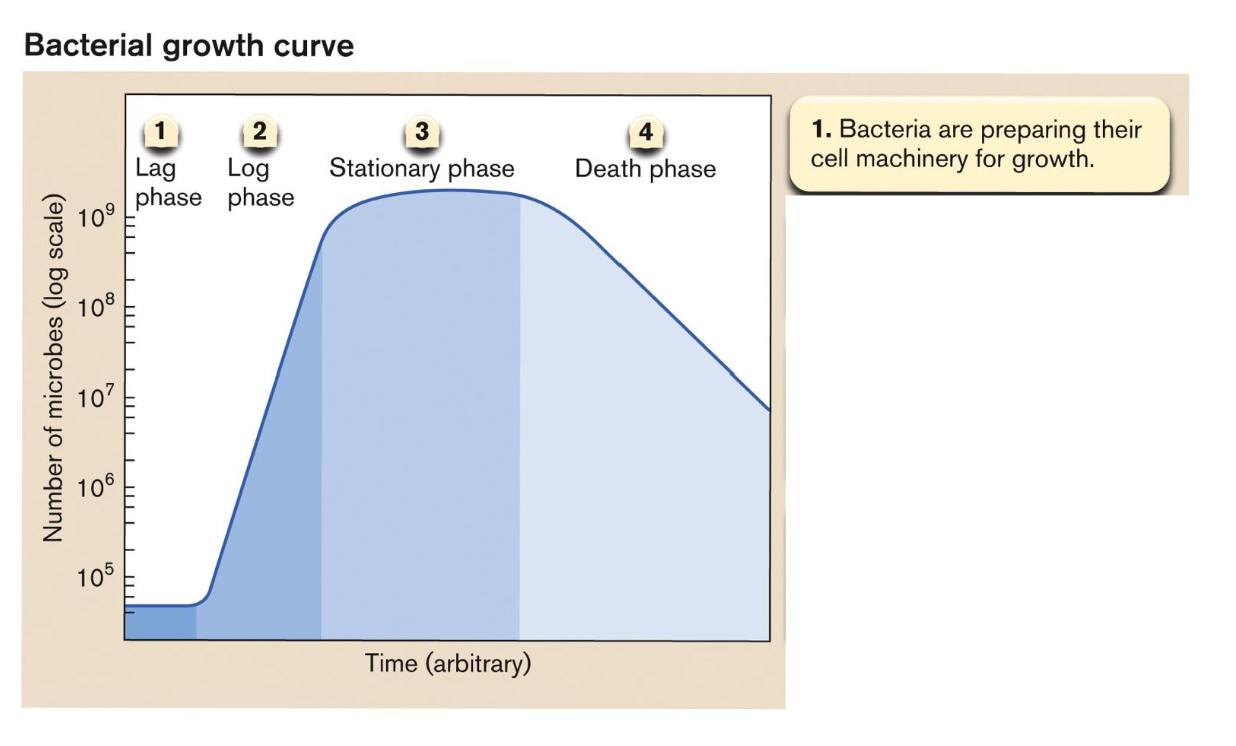
What occurs during the log/exponential phase of bacterial growth?
Characterized by cell doubling
Vegetative growth
Planktonic cells – single cells in suspension
If not limited, doubling will continue at constant (exponential) rate
Slope of (log scale) line = growth rate: number cell divisions/unit time
Rate of this growth depends upon the growth conditions
Log growth cannot continue indefinitely as medium is depleted of nutrients and enriched with wastes in batch cultures

What occurs during the stationary phase of bacterial growth?
In stationary phase overall population growth plateaus
Due to a growth-limiting factor such as the depletion of essential nutrient(s), and/or formation of an inhibitory product
The result is a horizontal linear part of the curve
What occurs during the death phase of bacterial growth?
Without any new nutrients (and/or production of toxic byproducts by dying cells), all cells will eventually die off

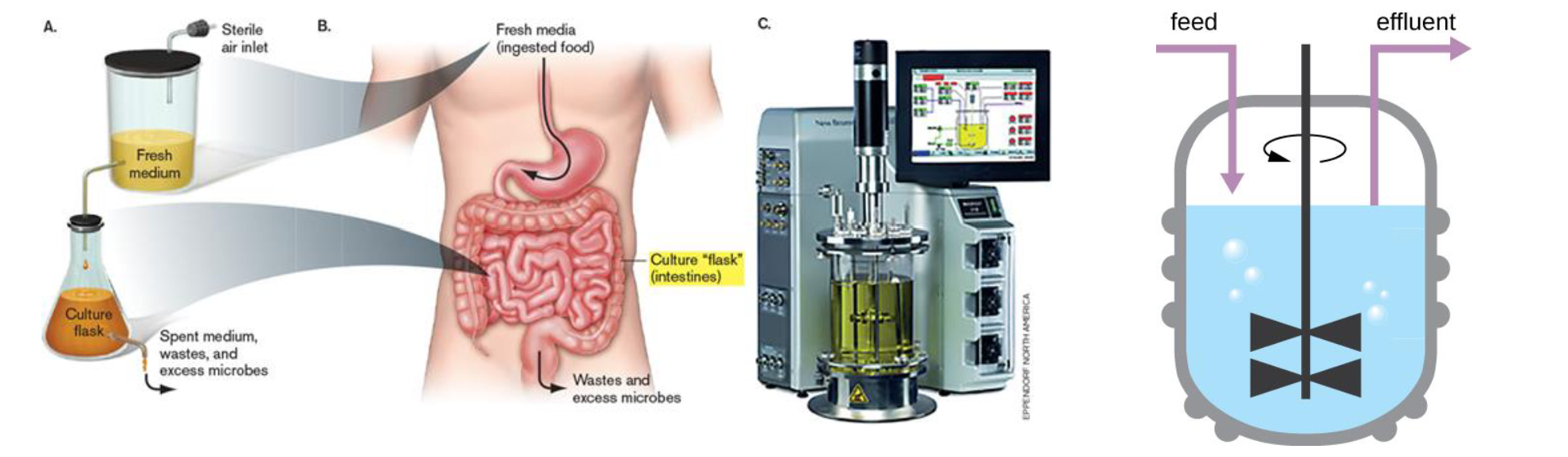
What is a chemostat, and why is it useful?
The chemostat ensures continuous logarithmic growth by constantly adding and removing equal amounts of culture medium
Chemostat allows growth and growth conditions/environment to be highly controlled
Conditions approximate that of the native environment allowing detailed study of microbes and microbial communities in more natural conditions (e.g. study of human microbiome of the human large intestines/colon)
Why are many microorganisms difficult to culture, and how does the iChip help?
85–99% of bacterial species from many environments do not grow on conventional agar plates.
Many require specific nutrients or growth factors.
The iChip helps cultivate microbes using conditions closer to their natural environment.
This technology contributed to new antibiotic discovery.
