HIAA0023 South Asian Art & Architecture Midterm
 Call Kai
 Learn
Learn Practice Test
 Spaced Repetition
 Match
Match Flashcards
 Knowt Play
1/36

There's no tags or description
Looks like no tags are added yet.
Name | Mastery | Learn | Test | Matching | Spaced | Call with Kai | Chat |
|---|
No analytics yet
Send a link to your students to track their progress
37 Terms

Bust of the “priest-king,” Mohenjodaro, Indus Valley Civilization, ca. 2600-
1900 BCE. White steatite, 6.9 in × 4.3 in.

Figure in yogic posture, Seal, Steatite. Mohenjodaro, Indus Valley
Civilization, ca. 2500-2400 BCE

Lion capital, Ashokan Pillar at Sarnath, ca. 250 BCE,
Polished Sandstone, 82 x 112 inches.

Great Stupa, Sanchi, originally built ca. 250 BCE, enlarged ca. 50-25 BCE.
Brick and Sandstone. Diameter: 120 feet, Height: 54 feet.

The Great Departure, East Gateway, Great Stupa, Sanchi, c. 50-25 BCE.
Sandstone

Yakshi beneath a mango tree,
East gateway, Great Stupa, Sanchi, ca. 50-25 BC. Sandstone

Standing Buddha within a stupa, drum slab, carved limestone, Amaravati, ca. 100-200 CE

Buddhapada (footprints of the Buddha).
[Each footprint bears a dharmachakra
(wheel of law)]. Carved limestone,
Amaravati, ca. 100-200 CE

Seated Shakyamuni
("Sage of the Shakya
clan;” the Buddha.)
with attendants,
Katra (near Mathura),
India, 1st c. CE. Red
Sandstone.

Seated Buddha, Gandhara, 1st to 3rd century CE, Grey Schist.
20.7 inches

Portrait statue of emperor Kanishka, Mathura,
2nd century CE, Red Sandstone.
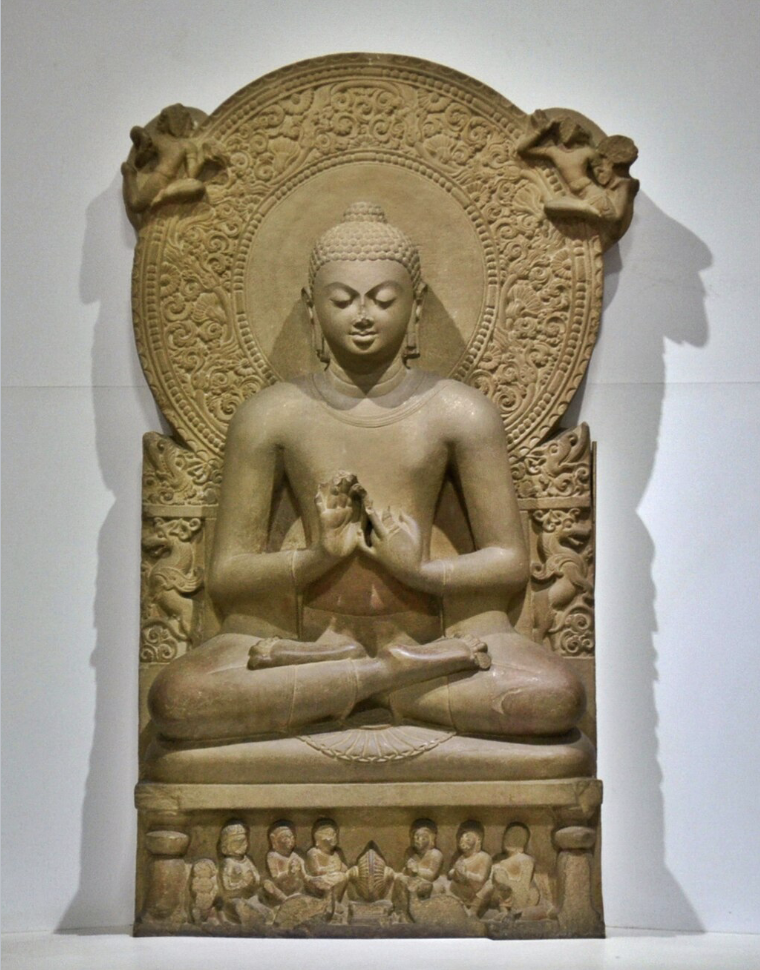
Buddha Preaching the First Sermon,
Sarnath, Gupta period, c. 465-85 CE,
Sandstone.
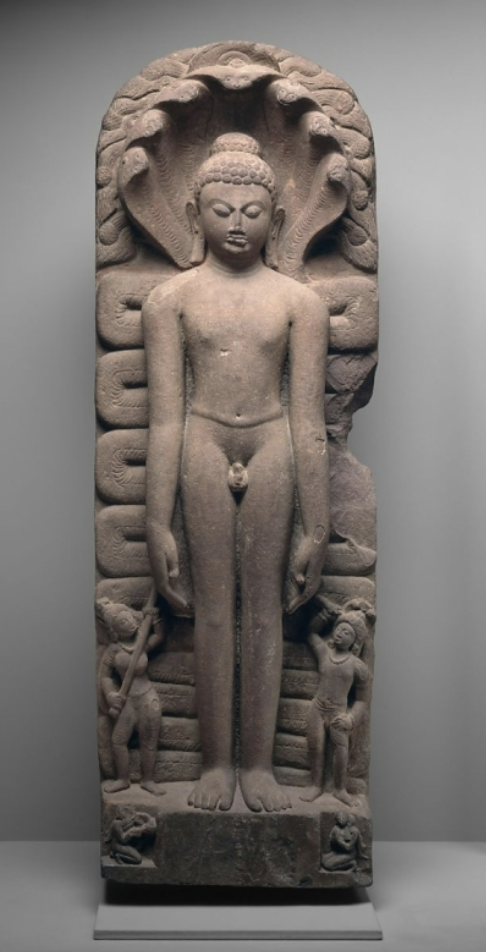
Standing Jain Tirthankara
[Parshvanatha], Gupta Period,
6th century, Sandstone

Linga with Face of
Shiva, Gupta period,
first half of the 5th
century CE, India
(Madhya Pradesh),
Sandstone.

Vishnu temple, Deogarh, Gupta period, c. 500 CE, Red Sandstone
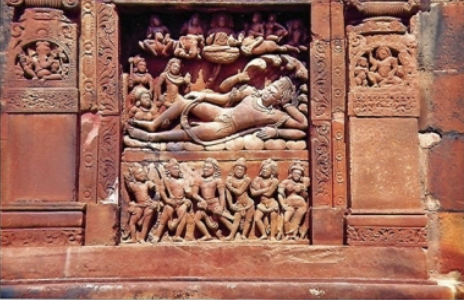
South wall | Sculptural Reliefs on the Vishnu temple, Deogarh, Gupta period, c. 500 CE, Red Sandstone

East wall | Sculptural Reliefs on the Vishnu temple, Deogarh, Gupta period, c. 500 CE, Red Sandstone

North Wall | Sculptural Reliefs on the Vishnu temple, Deogarh, Gupta period, c. 500 CE, Red Sandstone

Entrance to the chaitya hall, Bhaja, ca. 100-70 BCE,
Basalt rock and wood

Vihara (monastery), Ajanta, c. 462-500 CE, Basalt rock and paint on dry fresco

Bodhisattva Padmapani, Cave 1,
Ajanta, c. 462-500

Bodhisattva Vajrapani, Cave 1,
Ajanta, c. 462-500

Lustration Scene, Cave 1, Ajanta, c. 462-500
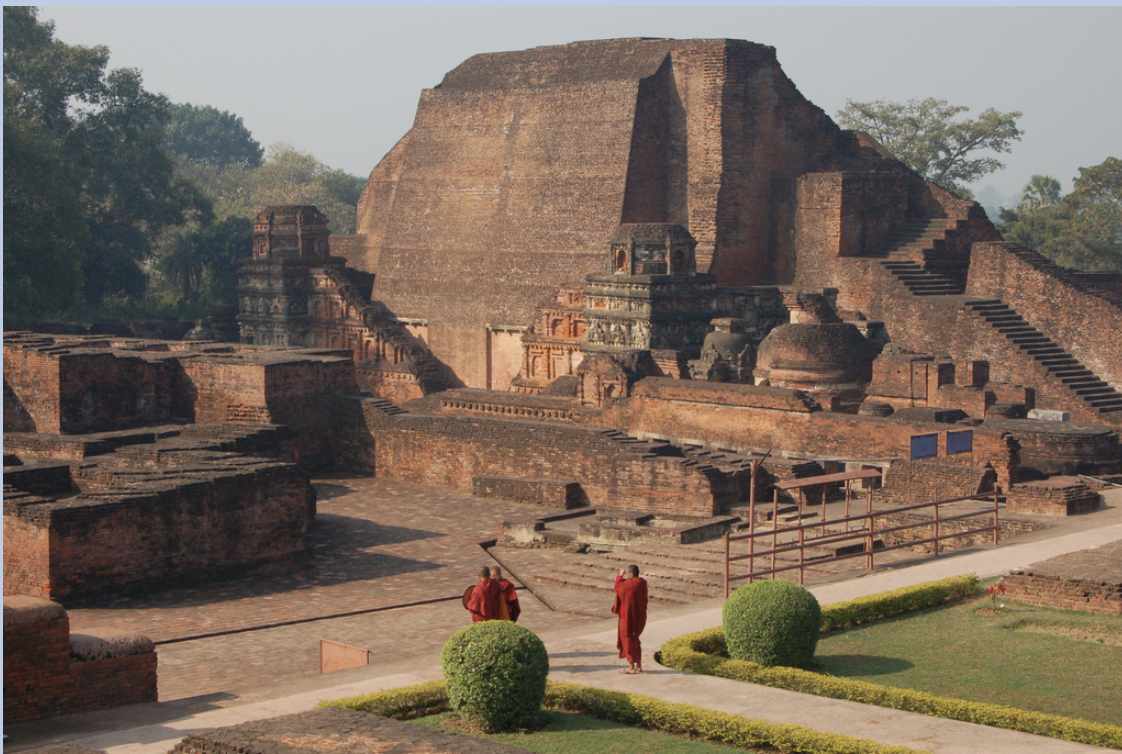
Nalanda Mahavihara [Nalanda University, Mahavihara essentially means great (maha)
monastery (vihara)], Founded near Pataliputra (present-day Patna), it ran from ca. 427 to
1197 CE.

Buddha Expounding the
Dharma, late 8th century, Sri
Lanka. Copper alloy.

(may come out w/ a picture of the lost wax process image)
Buddha Offering Protection, Gupta period, late 6th–early
7th century, India (probably Bihar). Copper alloy

[Chakrasamvara] (Chakra is
wheel, Samvara is the
name of the deity at the
center] Mandala, ca. 1100,
Nepal, Kathmandu Valley.
Paint on cloth

Borobudur, Central Java, Indonesia, early 9th century, Andesite stone

South wall, Elephanta, c. 550-575, Basalt rock.

Architectural Plan, Elephanta, c. 550-575, Basalt rock.

Shiva Dancing, Ellora, 7th century CE, Basalt rock

Kailasa Temple, Ellora, 8th century, Basalt Rock

Pancha Rathas [Pancha=Five;
Ratha=Carts], Mamallapuram, Tamil
Nadu, 7th century CE, Granite

Sculptural Relief, Mamallapuram, Tamil Nadu, 7th c. CE, Granite

Kandariha Mahadeva Temple [Main Temple at Khajuraho], 1029 CE, Khajuraho, Madhya Pradesh, Sandstone.

Relief Sculptures on the Kandariha Mahadeva Temple [the main temple at Khajuraho], 11th century CE, Khajuraho, Madhya Pradesh, Sandstone.

Shiva as Lord of Dance, Chola Period
(880-1279), Tamil Nadu. Bronze, H.
26 7/8 in Met Museum.