protostomes 1 (lophotrochozoa)
 Call Kai
 Learn
 Practice Test
 Spaced Repetition
 Match
 Flashcards
 Knowt Play
1/47

There's no tags or description
Looks like no tags are added yet.
48 Terms
What are lophotrochozoans and ecdysozoans?
Protostomes
What happens during development in protostomes?
the blastopore becomes the mouth
what do most protostomes have?
determinate cleavage
what is determinate cleavage?
the determination of what type of cell it will become is set early in development
what are the two clades protostomia is divided into?
ecdysozoa and lophotrochozoa
what does the clade lophotrochozoa include?
animals possessing either a lophophore or a trochophore larval stage

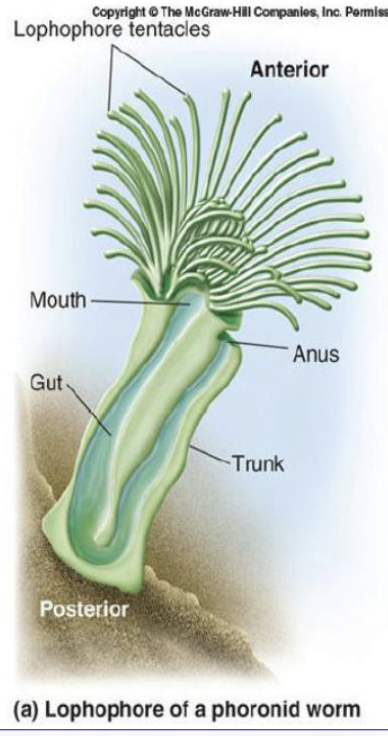
what is a lophophore?
a feeding apparatus consisting of ciliated tentacles that surround a mouth
what does the trochophore clade include?
flatworms, rotifers, lophophorates, mollusks, and annelid worms

what is this organism?
trochophore larvae (crepidula larvae)
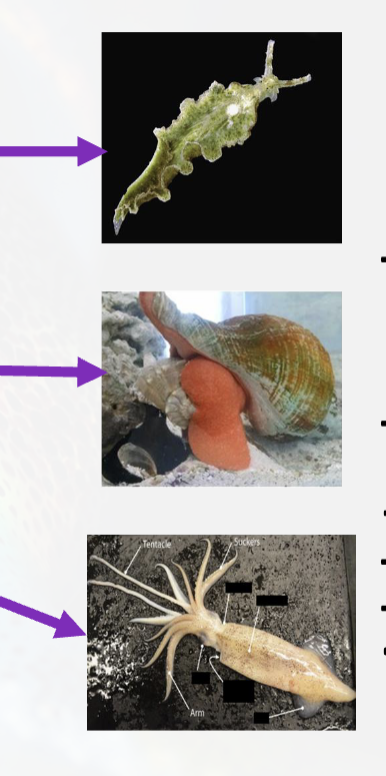
what are these organisms?
adult lophotrochozoans
what are the members of phylum platyleminthes?
flatworms
what are the characteristics of flatworms?
-bilaterally symmetrical organisms
-possess a head region w/ sense organs (cephalization)
-incomplete gastrovascular cavity (only one opening)
-basic central nervous system
-hermaphoditic
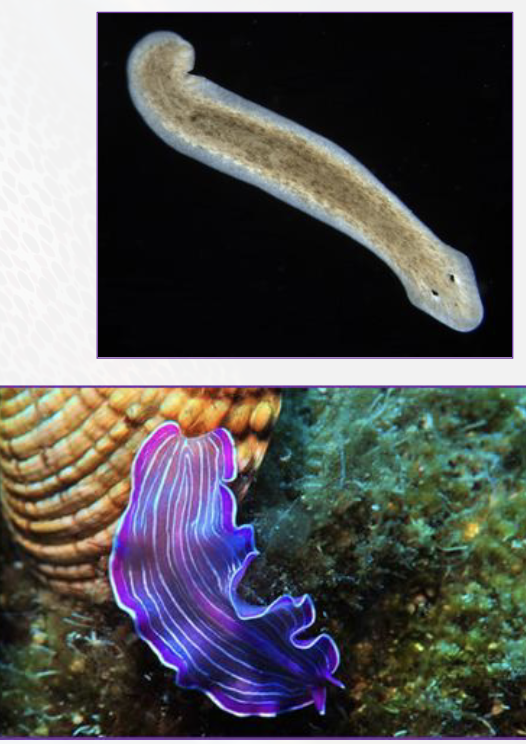
what are these organisms?
flatworms
what is a directed response to a stimulus?
taxis; a movement towards the stimulus is positive taxis while a movement away from the stimulus is negative taxis
what is a proglottid?
segment like units that make up the body of a tapeworm
what is a gravid proglottid?
an egg filled segment located at the rear end of a tapeworm
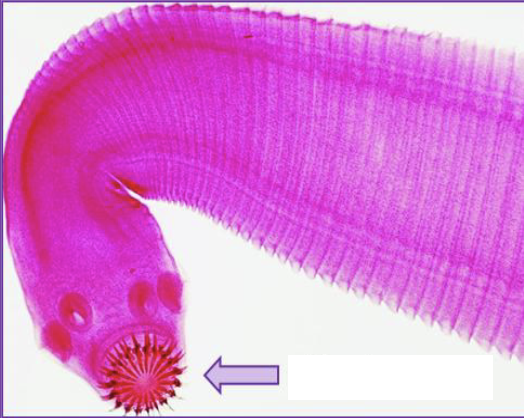
what is the arrow pointing to?
the scolex
what is the scolex?
head region
where are immature proglottids closest to?
the scolex
where are the male and female sex organs in mature proglottids?
the “middle” of the worm
where are gravid proglottids located?
at the posterior end of the worms; filled with eggs and will eventually break off so that embryos can be transferred to the host
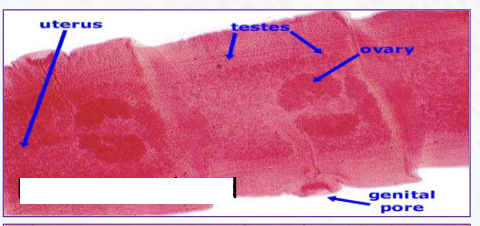
what is this?
mature proglottid
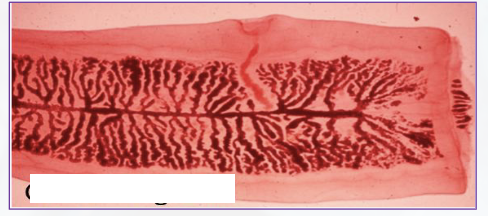
what is this?
gravid proglottid

what is this?
immature proglottid
whar is included in the phylum syndermata?
rotifers
what are characteristics of rotifers?
-corona
-mastax
-complete digestive system
what is the corona in rotifers and what are its purposes?
ciliated structue that looks like a rotating whel; it has two uses: movement and feeding
what is the mastax in rotifers?
muscular pharynx and jaws for chewing food particles

what is this?
rotifer(s)
what do phylum brachiopoda resemble?
clams; they are NOT clams because clams do NOT have a lophophore!
what are the characteristics of phylum brachiopoda?
-have true body cavity
-possess lophophores
-resemble clams
-sessile organisms
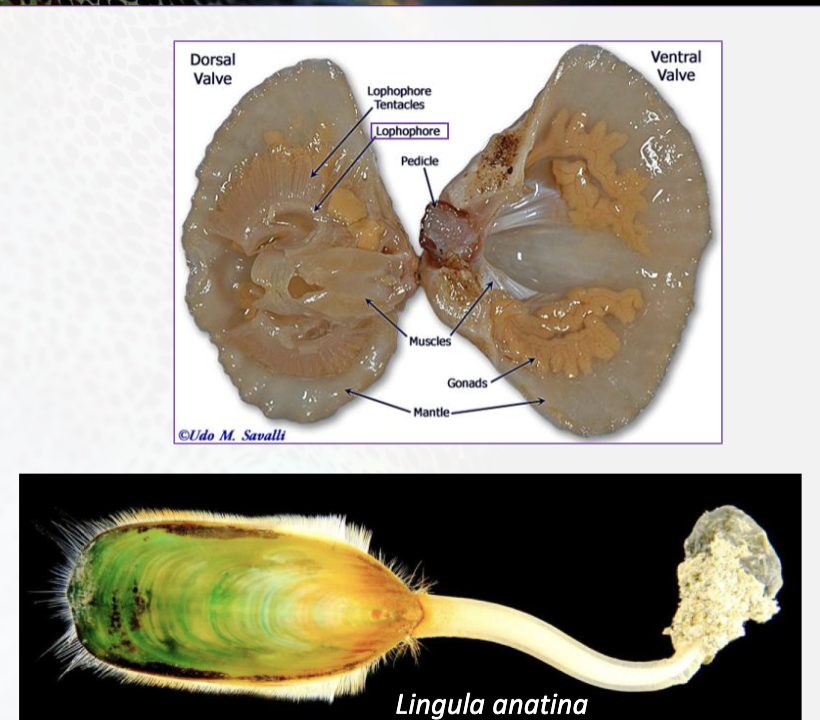
what are these?
brachiopoda
what is included in phylum annelida?
segmented worms
what are the characteristics of annelids?
characterized by a body form made of many segments
what are errantia?
free living predators (subclass of polychaete worms)
what is sedentaria
sedentary or slow-moving; includes tube worms, earthworms, and leeches
what do phylum mollusca all have in common?
-body plan in 3 main parts:
1) muscular food usually used for movement
2) visceral mass that contains most of the internal organs
3) mantle which drapes the visceral mass and secretes the shell (if one is present)
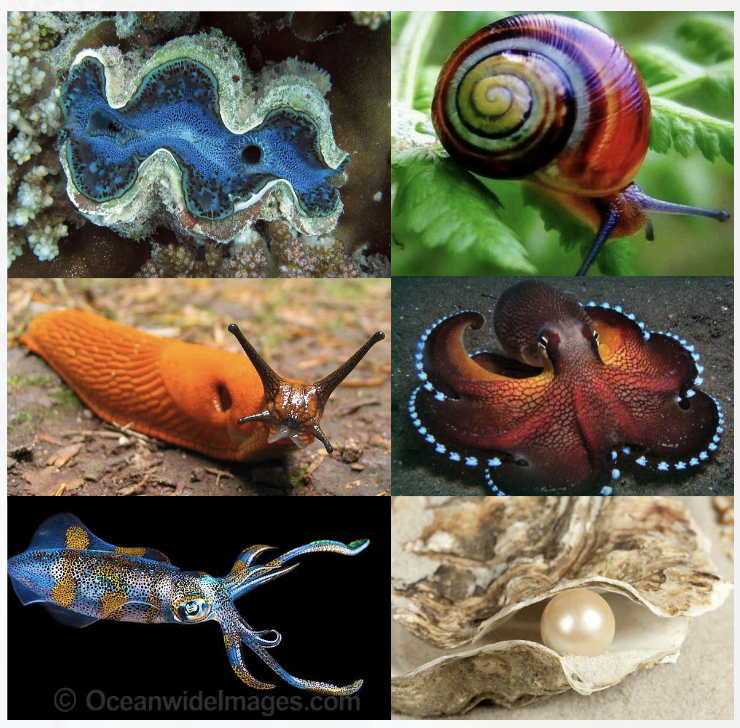
what phylum do these all belong to?
phylum mollusca
what are characteristics of polyplacophora
-chitons
-reduced head
-dispersed sensory organs
-strong foot, attaches them to rocks

what are these?
chitons (class polyplacophora)
what is included in class gastropoda?
snails and slugs
what are characteristics of gastropods?
-very diverse
-marine, freshwater and terrestrial forms
-many have shells (exhibit torsion - the twisting of organs within a cell)
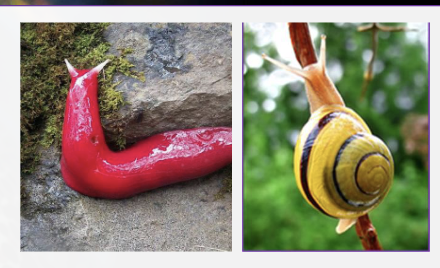
what class do these organisms belong to?
class gastropoda
what are charcteristics of class cephalopoda?
-active predators
-head surrounded by tentacles that are a modification of the foot

what class do these belong to?
class cephalopoda
what is included in class bivalvia?
clams, oysters, scallops, mussels, etc
what are characteristics of class bivalvia?
-ecologically and commercially important
-common in marine and freshwater environments
-filter the water by capturing particles from water column and ingesting sediment

what class do these belong to?
class bivalvia