Unit 1: Biological Bases for Behavior
 Call Kai
 Learn
Learn Practice Test
 Spaced Repetition
 Match
Match Flashcards
 Knowt Play
1/46

There's no tags or description
Looks like no tags are added yet.
Name | Mastery | Learn | Test | Matching | Spaced | Call with Kai | Chat |
|---|
No analytics yet
Send a link to your students to track their progress
47 Terms
Brain stem
the oldest and innermost region of the brain that connects the spinal cord to the higher brain regions and controls automatic, life-sustaining survival functions
Medulla
the base of the brainstem that automatically controls vital, life-sustaining functions such as heartbeat, breathing, blood pressure, and digestion
Reticular activation system
a diffuse network of nerve pathways running through the center of the brainstem (spanning the medulla, pons, and midbrain) that controls arousal, alertness, and wakefulness
Reward Center
a network of brain structures that regulates pleasure, motivation, reinforcement, and goal-directed behavio
Cerebellum
a structure located at the rear base of the brain (in the hindbrain) that coordinates voluntary muscle movements, posture, and balance, while also playing a role in procedural learning

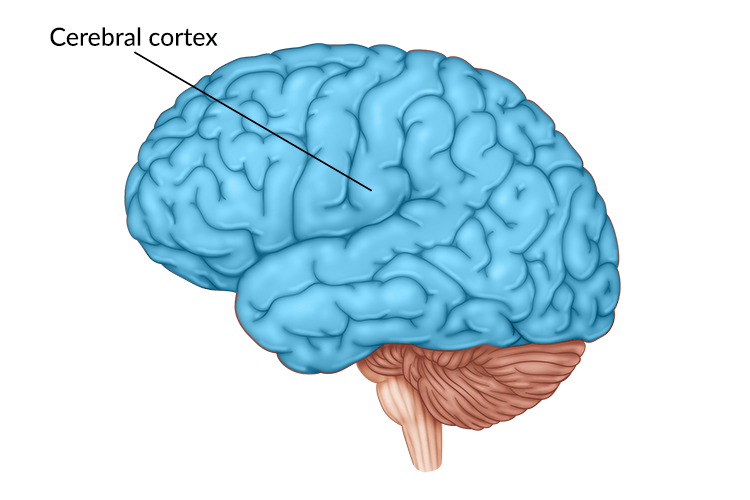
Cerebral cortex
is the outer layer of gray matter on the cerebrum, responsible for higher-level processes like thinking, language, memory, and voluntary movement
Limbic system
a complex network of neural structures located deep within the brain, beneath the cerebral cortex and above the brainstem. It plays a central role in regulating emotions, memory, and basic drives (such as hunger, thirst, and sex) necessary for survival
Thalamus
the brain's sensory switchboard or relay station, located directly on top of the brainstem in the middle of the brain

Hypothalamus
a small brain structure located just below the thalamus that maintains the body's internal balance (homeostasis) by regulating basic biological drives and controlling the endocrine system

Pituitary gland
a pea-sized structure located at the base of the brain, just beneath the hypothalamus, known as the "master gland" of the endocrine system because it releases hormones that regulate growth and control other endocrine glands

Hippocampus
a seahorse-shaped structure in the limbic system of the brain responsible for forming and consolidating new explicit (declarative) long-term memories and supporting spatial navigation

Amygdala
an almond-shaped cluster of neurons located in the limbic system within the temporal lobes of the brain. It processes emotions, triggers survival responses, and links strong feelings to memories.

corpus callosum
a thick band of neural (nerve) fibers that connects the left and right cerebral hemispheres of the brain, allowing them to communicate and share information. [1, 2]
![<p>a thick band of neural (nerve) fibers that connects the left and right cerebral hemispheres of the brain, allowing them to communicate and share information. [1, 2]</p>](https://assets.knowt.com/user-attachments/0c582f8d-6889-4022-b60a-83b34e442152.png)
Occipital lobes
rearmost region of the cerebral cortex responsible for processing visual information, including color, shape, depth, and motion

Temporal lobes
regions of the cerebral cortex located on the sides of the brain, right above the ears, that process auditory information and language comprehension
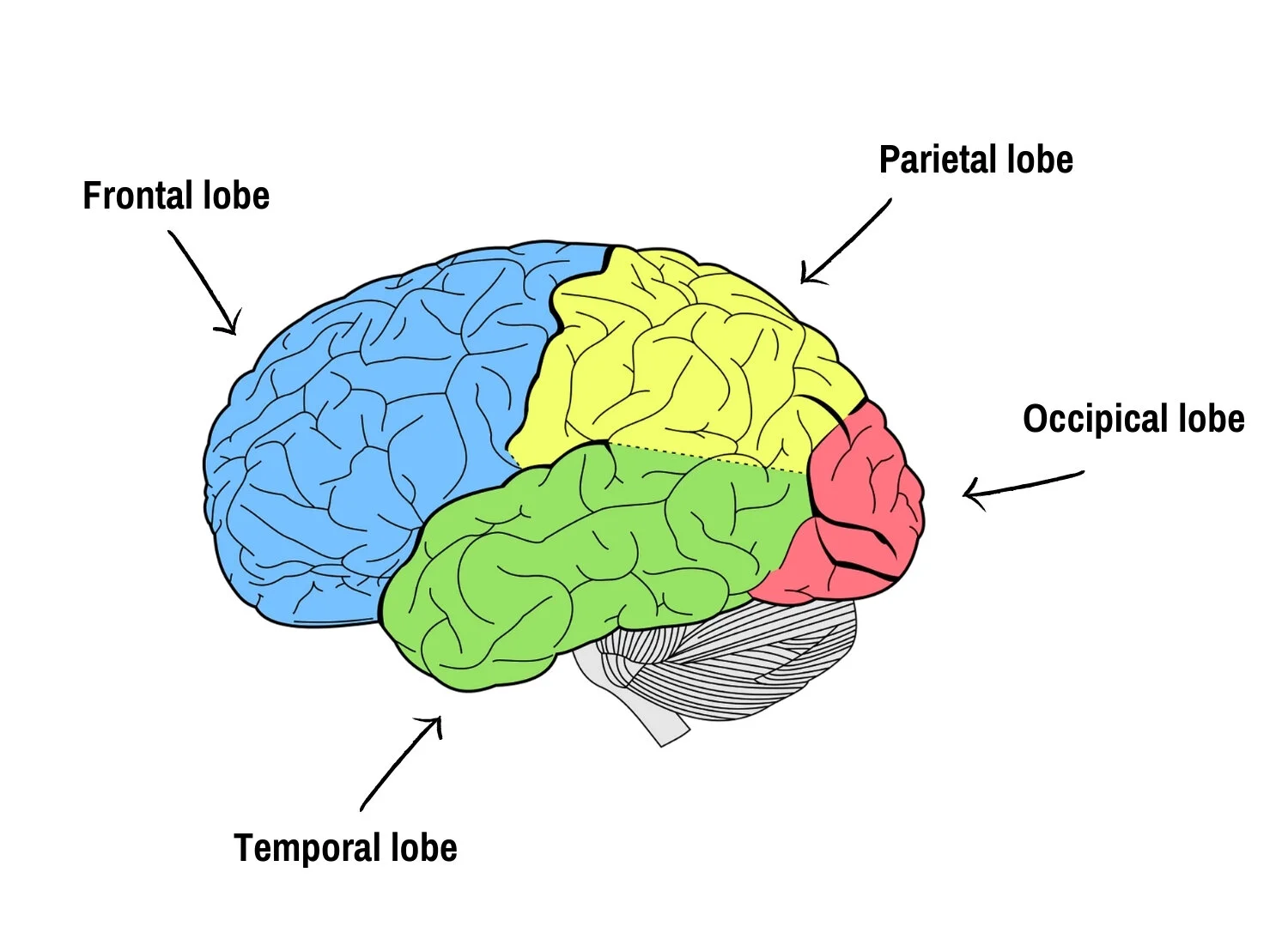
Parietal lobes
sits at the top and back of the head (behind the frontal lobe and above the temporal lobe) and processes sensory input, body position, and spatial awareness

Associaion areas
regions of the cerebral cortex that do not perform primary motor or sensory functions, instead integrating, processing, and connecting higher-level mental tasks like learning, thinking, remembering, and speaking
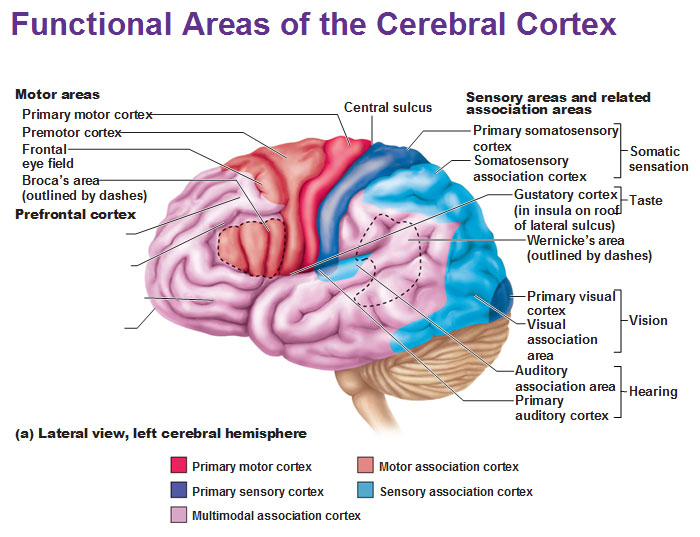
Somatosensory cortex
a strip of the cerebral cortex located at the front of the parietal lobe, just behind the central sulcus and parallel to the motor cortex. The somatosensory cortex. Itprocesses physical sensations from the body, including touch, pain, temperature, pressure, and proprioception (body position)

Frontal lobes
the region of the cerebral cortex located right behind your forehead, responsible for higher-level thinking, executive functions, and voluntary movement

Motor cortex
is a region at the rear of the frontal lobe that controls voluntary skeletal muscle movements
Split-brain research
the study of patients who have had their corpus callosum—the bundle of nerve fibers connecting the left and right brain hemispheres—severed (a procedure called a callosotomy), typically to treat severe, untreatable epilepsy
Hemispheric specialization
is the idea that the left and right hemispheres of the brain have distinct, specialized functions, even though they work together constantly
Broca's area
a critical region in the left frontal lobe of the brain responsible for speech production and language expression
Wernicke's area
the region of the brain responsible for language comprehension and understanding spoken or written words

Aphasia
an impairment of language, usually caused by left-hemisphere damage to specific brain areas responsible for speech production or comprehension
Contralateral hemispheric organization
each side of the brain (cerebral hemisphere) processes sensory input from and controls motor movements for the opposite side of the body
Plasticity
the brain's ability to change, reorganize, and form new neural pathways in response to learning, experience, or recovery from injury
EEG
a non-invasive tool used in AP Psychology to measure the electrical activity of the brain's surface
Lesioning
the naturally or experimentally caused destruction of brain tissue
consciousnesss
our subjective, moment-to-moment awareness of ourselves and our environment
Circadian rhythm
your body's internal, roughly 24-hour biological clock that regulates processes like the sleep-wake cycle, hormone release, and body temperature
Jet lag
a temporary physical and mental condition caused by a mismatch between your internal biological clock and the time zone of your new location
Shift work and how it impacts circidian rhythm
any employment schedule that falls outside the traditional daytime 9-to-5 workday, including evenings, nights, early mornings, or rotating shifts. It disrupts your circadian rhythm—the body's roughly 24-hour internal biological clock managed by the suprachiasmatic nucleus (SCN) in the hypothalamus
NREM stage 1
the brief, lightest stage of sleep that marks the transition from wakefulness to sleep
Hypnagogic sensations
lifelike, bizarre sensory experiences—such as feeling like you are falling, floating, or hearing a sudden noise—that occur as you transition from wakefulness into Stage 1 (NREM-1) sleep
NREM stage 2
a period of true sleep onset where the body deepens its rest, making up about 45% to 55% of an adult's total sleep time
Sleep spindles
brief, rapid bursts of rhythmic brain-wave activity that appear on an EEG during NREM Stage 2 sleep
REM stage sleep
a unique stage of the sleep cycle marked by fast, wake-like brain activity, rapid eye movements, and vivid dreaming
REM rebound
the tendency for your body to spend more time in—and enter more quickly into—REM (Rapid Eye Movement) sleep after you have been deprived of it
Activation-synthesis
a biological theory of dreaming stating that dreams are the cerebral cortex's attempt to make sense of random neural signals fired from the brainstem during REM sleep
Consolidation theory
sleep and dreaming help stabilize and strengthen fragile short-term memories into durable long-term memories
Memory consolidarion
the physiological and psychological process that stabilizes newly encoded, fragile information into durable, long-term memory over time.
Insomnia
a recurring sleep disorder characterized by persistent difficulty falling asleep, staying asleep, or waking up too early and being unable to return to sleep, despite having adequate opportunity to rest
Narcolepsy
neurological sleep disorder characterized by excessive daytime sleepiness and sudden, uncontrollable "sleep attacks" that often plunge a person directly into REM sleep
REM sleep behavior disorder
a parasomnia where individuals physically act out vivid, unpleasant dreams with vocal sounds and violent limb movements because the brain fails to paralyze the muscles during REM sleep
Sleep apnea
a sleep disorder characterized by temporary, repeated cessations of breathing during sleep and brief, momentary awakenings
somnabulism (sleep walking)
a parasomnia disorder where a person performs complex motor behaviors—such as walking or talking—while largely asleep and unresponsive.