PT+ 9 · Network, Wireless & Physical Attacks
 Call Kai
 Learn
 Practice Test
 Spaced Repetition
 Match
 Flashcards
 Knowt Play
1/14

There's no tags or description
Looks like no tags are added yet.
15 Terms

ARP (Address Resolution Protocol) spoofing
Sending forged replies that map the gateway's IP to your MAC so LAN traffic passes through you.

NBT-NS (NetBIOS Name Service) / LLMNR (Link-Local Multicast Name Resolution) poisoning
Technique of answering a victim's failed name-lookup broadcasts to trick it into sending NTLMv2 hashes.

WPAD (Web Proxy Auto-Discovery)
Browser setting that looks up a configuration file at startup; attackers answer that lookup to intercept web traffic.
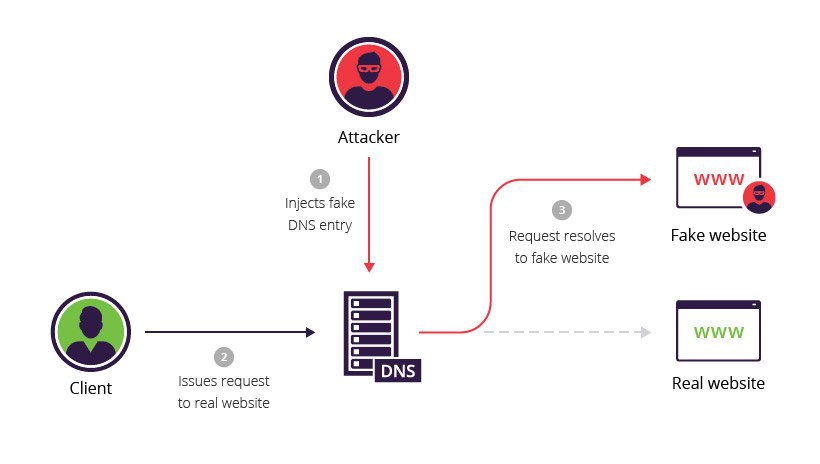
DNS (Domain Name System) cache poisoning
Inserting forged records into a resolver so everyone using it is sent to an attacker's IP.

Protocol fuzzing
Sending malformed or random packets to a service to trigger crashes that reveal bugs.

Mask attack
Cracking mode that only tries guesses fitting a known pattern, like ?u?l?l?l?d?d.

WPS (Wi-Fi Protected Setup) PIN attack
Brute-forcing a router's 8-digit push-to-join code, then recovering the Wi-Fi passphrase from it.

Bully
Tool for guessing a router's push-to-join code that also runs the offline Pixie Dust attack.

InSSIDer
Wi-Fi survey app that charts nearby networks by channel, signal strength and security type.

BSSID (Basic Service Set Identifier)
MAC address of an access point's radio, used to tell apart APs sharing one network name.

MDM (Mobile Device Management)
Company control over an entire phone, including enforcing passcodes and wiping the whole handset.

tcprelay
Forwards ports over a USB cable to an iOS device so local tools reach services on the phone.

Modbus attack
Reading or writing PLC registers over an industrial protocol that has no authentication.

Quid pro quo
Offering help or a gift, like fake IT support, in exchange for credentials or access.

MAM (Mobile Application Management)
Company control over only work apps and their data on a personal phone, wiping just those apps.