Lab Practical Slides
 Call Kai
 Learn
Learn Practice Test
 Spaced Repetition
 Match
Match Flashcards
 Knowt Play
1/131

There's no tags or description
Looks like no tags are added yet.
Name | Mastery | Learn | Test | Matching | Spaced | Call with Kai | Chat |
|---|
No analytics yet
Send a link to your students to track their progress
132 Terms
Supine position
body is laying up back flat
Prone position
body lying face down
frontal/coronal plane
divides body from front(anterior)+back(posterior)
Transverse/axial/horizontal plane
divides body into superior and inferior positions
Saggital
Left and right halves vertically
bending a joint so angle decreases on sagital/midsaggital plane
flexion

what increase angle and what plate is it from
increases the angle between two body parts//sagital/midsagittal plane

Abduction
Away from midline//. frontal/coronal plane
Adduction
towared midline// Frontal/Coronal plane
Pronation
located on the forearm palm faces the back
Supination
located on the forearm palm faces up
Inversion
tilts ankle inwards toward the body//toward midline

Eversion
Tilt ankle away from the body//outward
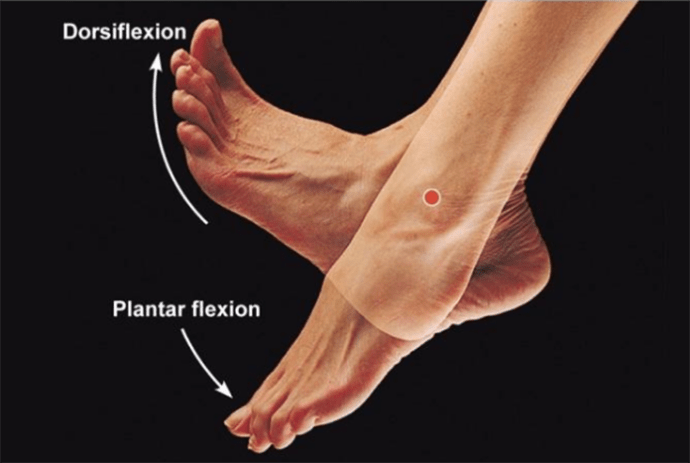
dorsiflexion
brings ankle and foot up
plantarflexion
brings the foot down

Elevation
mandible is upward/closing frontal/coronal plane
Depression
Mandible is downward/mouth opens frontal//coronal plane
Protraction
mandible forward//transverse process//shoulders forward slouch
Retraction
Mandible backward//transverse//shoulders back

Medial //internal rotation
spinning inward//transverse plane
lateral/external rotation
rotate outward
Axial skeloton
protect vital organ and CNS// vertebral column, thoracic cage, skull and head region
Appendicular Skelaton
Body can maintain a large range of morion//include upper lower limb, shoulder, pelvic girdle, arm, leg, scapula

Long bones
Humerus(upperarm), radius+ulna(lowerarm) , femur, fibula(skinnyleg), tibia(thickerbone), metacarpals, metatarsals, phalanges
Short
carpals(wrist), tarsals(ankle)
sesamoid bones
patella, protects from wear and tear
Uniaxial
Plane joint, hinge joint(knee), pivot joint between c1 and c2 vertebrae
Biaxial
condyloid joint(radiocarpal joint of wrist), saddle joint(thumb)
Pivot
Uniaxial rotation, C1-C2 vertebrae
Hinge
Uniaxial, flex and extend, elbow, knee, interphalangeal
Plane
Nonaxial gilding, intercarpal, intertarsal
condyloid
biaxial flex/extend, abduction/adduction ex radiocarpal(wrist) or metacarpophalangeal
saddle
Biaxial, deep articulation ex: carpometacarpal of thumb
Ball and socket
Multiaxial, ex:glenohumeral(shoulder), Hip
Cervical
7 spine, 1 atlas, 2 axial
Thoracic
12 spine
Lumbar
5 spine
Sacrum
5 lower spine fused
coccyx
4 fused very bottom spine
Cervical Vertebrae Model
Smallest body size, largest vertebral foramen, BIFID spinous process, transverse formamen
Thoracic Vertebrae Model
Costal facet, facet on articular process that is backward
Lumbar
Largest body size, orientation of superior articular process, and transverse process
Atlas
C1, holds the weight of the skull, has transverse foramen, occiptal condyle
Axis
C2, has dens
Occipital Condyle
Part of Atlas helps with flexion and extension and you can nod with c1 and c2
True ribs
1-7
False Ribs
8-12
Ribs 8-10 do what
Indirectly attached by Sharing costal cartilage
Floating Ribs
Ribs 11-12
Costal cartilage
attaches ribs to sternum//clear part
Sternal Angle
Rib 2 attaches there
Head articulates with
Vertebrae
Tubercle attaches with
transverse process of vertebra
Diaphragm contracts
Inspiration, flattens and moves inferiorly, increases thoracic volume, Inspiration

External intercostals
Ribs are elevated, inspiration
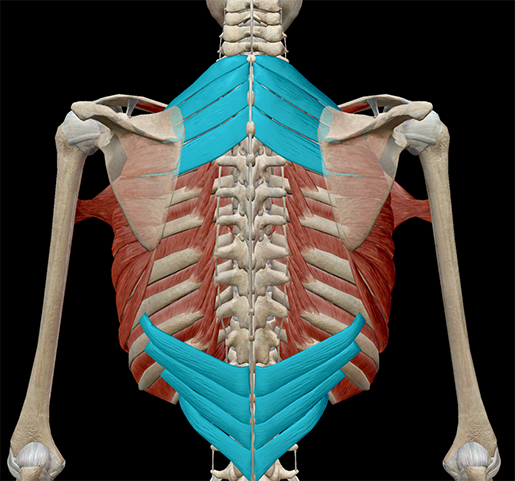
Serratus posterior superior
elevates upper ribs, inspiration

serratus anterior
can assist rib elevation when shoulder girdle is fixed/boxers muscle inspirations

Internal Intercostals
Expiration, Ribs are depressed

Serratus posterior inferior
lower ribs are depressed

Diaphragm relax
Expiration/domes superiorly,decreases thoracic volume

Cribriform plate
Olfctory Nerve CN1

Optic Canal
CN2 Optic nerve

Foramen Rotundum
CN V, Trigeminal nerve - V2 Maxillary Nerve
Foramen ovale
V3// Trigeminal Nerve CNV

Jugular Foramen
CN IX Glossopharyngeal, CNX vagus, CNXI Acessory
Hypoglossal Canal
CNXII hypoglossal/12
superior orbital fissure
Occulomotor nerve cniii 3, CNIV Trochlear nerver, CNV1 Ophthalmic nerv, Abducens nerve CNVI
Frontal lobe
Executive function, voluntary movement, planning decision making
Temporal
Hearing, language comprehension, memory, smell
Parietal
Integrates sensory information, role in spatial perception
Occipital
Visual Processing
Brainstem order
Midbrain, Pons, Medulla Oblongata
Midbrain
Regulates vision, hearing, motor control, alertness, thermoregulation
Pons
breathing rythms
Medulla Oblongata
Involutnary function of digestiber and repiratyory system, reflex like coughing sneeking and vomiting
Trigeminal Nerve
feeling in face and chewing CN V/5, V1=Opthalmic(upper eyelid,forehead,eyesurface)
V2=maxillary
V3=Mandibles
Internal acoustic meatus
CnvII Facial, CNVIII vestibulocochlear
Arbor Vitae
Tree of life from brain
pineal gland
of brain// tells body to sleep, melatonin
Foramen Magnum
CN XI acessory nerve, holds the spinal cord//big hole of brain
Thalamus
Learning and memory
Hypothalamus
Homeostasis
Cerebellum
balance, movement, motor
Corpus Callosum
Gray matter connector of two cerebral hemisphere, allows for communication for both sides
S C A L P
Skin, connective tissue, aponeurosisloose connective tissue, Periosteum
Dura mater
strongest, with subdural space with csf
Arachnoid mater
subrachnoid space
Pia mater
Cover brain surface
CN I
CN I/1 Olfactory Nerve, sensory and smell, cribiform plate
CN II
2/OPtic nerve/Sensory/Vision
CN III
3/Occulomotor, Superior Orbital fissure, motor, parasympathetic, eyeball move
CN IV
4 Trochlear nerve, Superior Orbital fissure, Motor, eyeball down
CN V
5 Trigeminal V1= opthalamic, V2=Maxillary v3=Mandibles both sensory and motor, facial sensation and chewing
CN VI
6, Abducens, Motor, Abduct eyeball
CN VII
Facial both 7, taste buds, facial expression
CN VIII
Vestibulochlear 8, sensory, internal acoustic meatus, hearing and balance
CN IX
9 Glossopharyngeal, both tase and swallow, jugular foramen,
CN X
Vagus, 10, Both, Jugular foramen, Parasympathetic Heart rate, digestion, taste
XI
11 Aceessory motor shoulder, foramen magnum