Clinical Orthopedics 222 Exam 3 Shoulder Impairments
 Call Kai
 Learn
 Practice Test
 Spaced Repetition
 Match
 Flashcards
 Knowt Play
1/130

There's no tags or description
Looks like no tags are added yet.
131 Terms

Scapular Dyskinesia
-what is it
alteration in normal motion

SICK Scapula
-what is it
S-scapular malposition
I-inferior medial border prominence
C-coracoid pain and malposition
K-dyskinesis of scapular movement
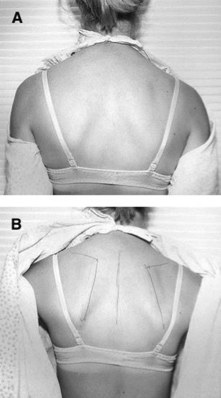
The SICK Scapula
-signs and symptoms
Scapula appears lower; protracted
Inferior medial border prominent
Tight pec minor
Pain
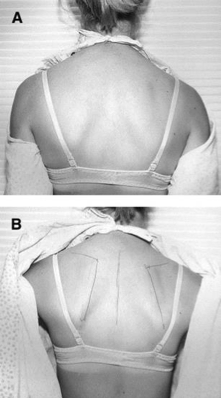
The SICK Scapula
-signs and symptoms
o pain where
Anterior shoulder
Posterosuperior scapula
Superior shoulder
Proximal lateral arm

The SICK Scapula
-signs and symptoms
o pain in anterior shoulder
could be because of coracoid attachment
The SICK Scapula
-Why would a patient complain of anterior shoulder pain if the issue was their scapula??
it’s due to compensation
Treatment for SICK scapula
Stretching
Strengthening
Treatment for SICK scapula
-stretching
o which muscles
Pectoralis minor
Posteroinferior capsule
Treatment for SICK scapula
-strengthening
o how?
Open-chain and closed-chain exercises for scapular musculature and posterior rotator cuff

Treatment for SICK scapula
-what does this exercise work
the external rotators
as well U/L Trap
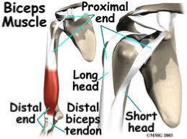
Tendonitis
-which stage is this
acute
Tendonitis
-what other stage could it be
Tendonosis (Chronic) (tendon degeneration)
Tendonitis
-what is it
Inflammation of the tendon

Tendonitis
-most common forms
(all in the greater tubercle)
Bicep’s Tendonitis
Supraspinatus Tendonitis
Rotator Cuff Tendonitis
Clinical Treatment for Tendonitis
Decrease pain and inflammation
Increase joint stability
STM
PROM
Cross Friction Message
Clinical Treatment for Tendonitis
Decrease pain and inflammation
-how so
Modalities as needed
Increase flexibility
Manual intervention
Clinical Treatment for Tendonitis
Increase joint stability
-how so
Initiate therapeutic exercise as tolerated
Joint stabilization activity (rotator cuff )

Surgical Interventions
Biceps Tenodesis
Cutting the bicep tendon then repositioning it to relieve pain or weakness
Surgical Interventions
Biceps Tenodesis
what can it involve
either what or what
Often preform with what
Can involve releasing the tendon from the labrum
Can involve relocating the tendon attachment
Arthroscopic(tiny incision) or Open(bigger opening)
Often performed with another surgical procedure of the shoulder

Subacromial Impingement
-what is it
Increased superior translation with shoulder elevation resulting in encroachment of the coracoacromial arch producing compression of the suprahumeral structures
Common Factors of impingement
Subacromial Impingement
Shape and Form of Acromion
Blood Flow to the rotator cuff
Dynamic Stabilizers
Condition of AC Joint
Positon of Arm during Activity (thumb pointed down)
Scapular Musculature Endurance
Capsular Tightness
Age
Subacromial Impingement
Surgical Interventions
Subacromial Decompression (S.A.D.)
Subacromial Impingement
Surgical Interventions
Subacromial Decompression (S.A.D.)
Arthroscopic (tiny incision surgery)
goal is to remove the cause of impingement to allow for more free movement
Subacromial Impingement
Surgical Interventions
Subacromial Decompression (S.A.D.)
what can it include
Removal of the bursa
Coracoacromial ligament resection
Anterior acromioplasty (changing the shape
Excision of outer clavicle(changing the clavicle)
Osteotomy of the glenoid or acromion
Surgical Intervention for Shoulder Pathology
Acromioplasty
Distal Clavicle resection

Surgical Intervention for Shoulder Pathology
Acromioplasty
Surgical removal of a piece of bone to allow for increased space within the joint space

Surgical Intervention for Shoulder Pathology
Acromioplasty
Distal Clavicle Resection
Removal of the end of the clavicle closest to the acromion to alleviate pain and loss of motion
Bursitis
-what is it
Inflammation of the Bursa
Bursitis
-what can happen with the synovial fluid
Synovial fluid can become infected or get irritated by movement
Bursitis
-symptoms
Localized tenderness
Warmth
Edema
Erythema(redness of the skin)
Loss of function
Treatment for Bursitis
PROM
STM
Dynamic stabilizers are…
Muscles
Static stabilizers are…
Joints, Ligaments

Posterior-Superior Glenoid Impingement (PSGI)
Common in throwing athletes
Compression of the supraspinatus and infraspinatus against the glenoid and labrum

Posterior-Superior Glenoid Impingement (PSGI)
Mechanism of Injury
Shoulder extension/abduction/external rotation

Posterior-Superior Glenoid Impingement (PSGI)
Treatment
STM, PROM (later on therex)
3 stages of impairment
Stage 1 (under 25 years of age)
Edema and hemorrhage
History of trauma or repetitive microtrauma
Pain with shoulder ABDuction over 90 degrees
Considered reversible at this stage
Typically responds to PT intervention
3 stages of impairment
Stage 2 (between 25-40 years of age )
Progressive detoriation
Fibrosis and tendonitis/tendonosis
Pain with daily activities and at night
Considered irreversible*
Supraspinatus and bicep tendon as well as subacromial bursa are fibrotic Pain with daily activities involving OH motions, at end of day
3 stages of impairment
Stage 3 (over 40 years of age)
Long history of shoulder pain
Significant muscle weakness
Osteophytes develop at acromion/ AC joint
Macrotrauma
-Tendon degeneration
-Rotator cuff tears
-Rotator cuff ruptures
3 stages of impairment
while the 3 stages of impairment may have range of age that it could happen in, what is more important
it’s mainly more so about the symptoms not the age
Rotator Cuff Repairs
2 categories
Partial thickness tear(grade 2)
Full Thickness tear(grade 3)
Rotator Cuff Repairs
Indications
Persistent pain that interferes with ADL’s
Unresponsive to conservative care
Active patients <50 yr old with an acute full thickness tear
Rotator Cuff Repairs
when treating a partial-thickness tear, what can we do
start with PROM, then eventually do strengthening
Rotator Cuff Repairs
When treating a Full thickness tear, what can we do
there’s not much we can do
Rotator Cuff Repairs
conservative care is how long
4-6 months

Open Rotator Cuff Repairs
-what is it
Vertical incision made over anterior shoulder
-Deltoid is divided allowing access to rotator cuff and subacromial space

Open Rotator Cuff Repairs
-how is it done
Anterior/inferior acromioplasty is performed
Humeral head is roughened
Holes are drilled for sutures
Sutures in place attaching tendon to bone

Arthroscopic Rotator Cuff Repairs
-what are some advantages to this
Smaller incisions
GH joint inspection
Treatment of intra-articular lesions
Avoidance of deltoid attachment
Less soft tissue dissection
Less pain
Post Surgical Care
-what happens
Period of immobilization
Gentle range of motion
-Glenohumeral
-scapulothoracic
Strengthening as per MD protocol
Manual intervention
Post Surgical Care
-general standards
Improvement in ROM noted for approx.
6 months
Return to strength in 12 months
Post Surgical Care
what is the limiting factor of healing for either procedure
the tendon to bone repair performed Immobilized for 3-8 weeks, potentially in an abduction sling
Glenohumeral Instability
-what is it
Generalized capsular laxity (umbrella diagnosis)
-“slipping” or “popping out” with activity or positions
Glenohumeral Instability
-what does this lead to
chronic subluxation/dislocation
-Anterior (Most Common)
o elbow flexion, abduction,ER
-Posterior
-Inferior
Glenohumeral Instability
-what is the primary complaint
pain
-possible instability complaints
Anterior Instability
-what is it
Most common direction of instability (FOOSH)
-Repetition towards anterior apprehension position
o External rotation and horizontal abduction
Anterior Instability
-what does the patient complain of
Pain with overhead movement
Impingement like symptoms
-Positions of abduction and external rotation
Other Directional Instability
posterior instability
-% of dislocations
-what position
FOOSH
>2% of dislocations
forward flexed, adducted
Other Directional Instability
posterior instability
Hyperabduction or inferior force (carrying heavy object)
Other Directional Instability
Multidirectional instability
GH instability in more than one direction
AMBRI
Other Directional Instability
Multidirectional instability
-who treats this
the PT
Other Directional Instability
Multidirectional instability
-what keeps it in place
the acromion process of the scapula
Other Directional Instability
Multidirectional instability
what does AMBRI stand for
atraumatic
multidirectional
bilateral
rehabilitation (first attempt)
inferior capsule tightening
Other Directional Instability
Multidirectional instability
treatment?
Mainly, physical therapy is first
Surgery is a last resort because the success rate is low
Shoulder Dislocations
-what is it
-what gender gets it more
Shoulder is the most commonly dislocated joint in the body
Men more often than women*

Shoulder Dislocations
-Anterior
(more common, thought females are more hypermobile)
shoulder ABDuction, extension, and external rotation

Shoulder Dislocations
-posterior
shoulder ABDuction, flexion, and internal rotation
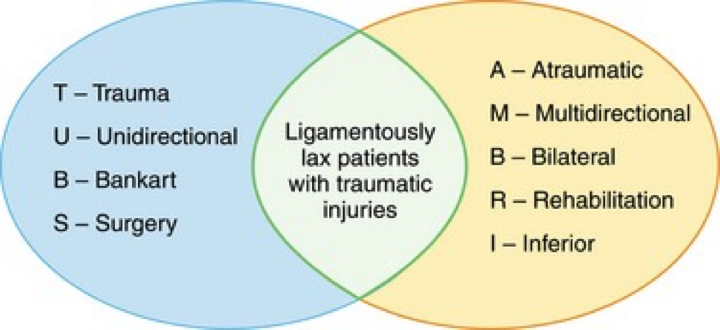
TUBS
-what direction
-symptoms?
-what treatment is first
-anterior since is most common
-(bankart)associated symptoms
-surgery is the first approach

AMBRI
-what is the difference compared to TUBS
conservative first approach; then capsulorrhaphy when they tighten the capsule

GH Joint Instability Treatment
Conservative treatment ?
Dynamic strengthening (rotator cuff, serratus anterior, trapezius, deltoid )
Stability activities
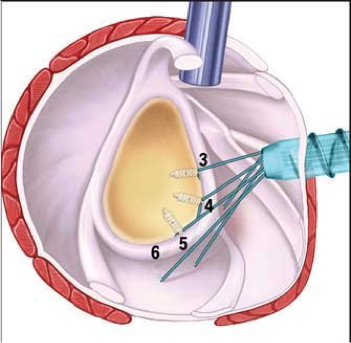
GH Joint Instability Treatment
Surgical intervention?
last resort! (The success rates are low and typically will experience reloosening of capsule and more dislocations, subluxations )
“Capsulorrhaphy”
Tightens the inferior capsule
Tightens the rotator interval

Labral tears
SLAP Lesions(Superior Labrum Anterior to Posterior)
-causes?
Repetitive overhead movements
FOOSH injury (fall out on stretched handO
Sudden deceleration/traction forces
MVA (car accident)
Chronic ant/post instability
Labral tears
SLAP Lesions
type 1
Fraying and degeneration of superior labrum
Can not horizontally ABD or ER with forearm pronation without pain
Labral tears
SLAP Lesions
type 2
Pathologic detachment of the labrum and biceps tendon anchor
Loss of stabilizing effect of labrum and biceps
Labral tears
SLAP Lesions
type 3
Vertical tear of the labrum
Remaining portions of labrum and biceps are intact
Labral tears
SLAP Lesions
type 4
Extension of tear into the biceps tendon
Portion of labrum and biceps tendon displaced into GH joint
what is the range of a SLAP Lesion tear
11-1
what is the range of a Bankart lesion
2-6 o clock

Bankart Lesion
-what is it
Avulsion of the anterior inferior labrum from the glenoid rim

Bankart Lesion
-requires what
Requires surgical stabilization
“TUBS”
Traumatic
Unidirectional instability
Bankart lesion requiring
Surgery

Hills-Sachs Lesion
-what is it
Compression fracture on the posterior humeral head at the site where the humeral head impacted the inferior glenoid rim
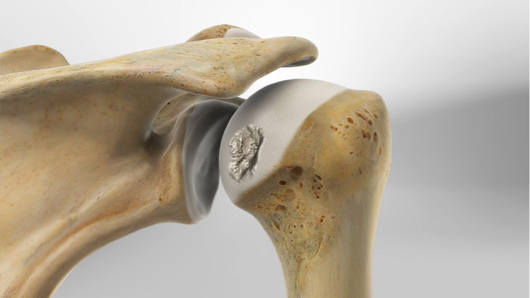
Hills-Sachs Lesion
-what 2 parts are it
part labrum tear
part fracture

Hills-Sachs Lesion
-Treatment?
can’t do much, just let it heal on its own
Labral Tears -treatment
-what is treated first
Conservative treatment is attempted first
Labral Tears -treatment
after conservative treatment is attempted first
-what comes next
Avoidance of provocative position
Gentle ROM/ submaximal isometric exercises
Scapular stability exercises
Closed chain exercises (used to give feedback
Improve scapulohumeral rhythm
Open chain activities (used for moving more)
Surgical Interventions for Labral Tears
-who is this mainly for
For persons who remain symptomatic following conservative therapy
For persons whose instability is so gross that conservative therapy is not appropriate
Surgical Interventions for Labral Tears
-what are the types
Bankart Repair
Capsulorrhaphy
SLAP Repair
Adhesive Capsulitis (Frozen Shoulder)
-what demographic is this most common in
Most common in women between 40 and 60 years old
Adhesive Capsulitis (Frozen Shoulder)
-what is it
“stuck” shoulder , inflammation of capsule
Adhesive Capsulitis (Frozen Shoulder)
-often what
Insidious Onset
-sudden/came out of nowhere
Adhesive Capsulitis (Frozen Shoulder)
-what could possible cause this
trauma
-immobilization
Diabetes
Thyroid disease (hypo and hyper)
Adhesive Capsulitis (Frozen Shoulder)
-symptoms include?
Decreased Shoulder ROM
Pain
Capsular Inflammation
Fibrous Synovial adhesions
Reduction of joint cavity
Capsular pattern of the shoulder
what is most limited?
External rotation then Abduction then Internal rotation
Sometimes flexion is involved with Abduction
what is the most difficult Rehab
Shoulder rehab that is post op or no op is the most difficult

Adhesive Capsulitis (Frozen Shoulder)
-primary?
Progressive and painful loss of ROM
Adhesive Capsulitis (Frozen Shoulder)
-Secondary?
Trauma or immobilization
How to treat Adhesive capsulitis (Frozen Shoulder)
Current literature is inconclusive as to the best way to treat it
Stages of Progression of Adhesive Capsulitis (Shoulder Frozen )
1.Freezing
Intense pain at rest
Capsular pattern loss of motion
Painful inflammation
10-36 weeks
Stages of Progression of Adhesive Capsulitis (Shoulder Frozen )
2.Frozen
Pain with movement
Loss of ROM in ALL planes
weakness
4-12 months
Stages of Progression of Adhesive Capsulitis (Shoulder Frozen )
3.Thawing
Slow, steady recovery of ROM
-doing PROM but it does not go past available ROM
-Doing a lot of stretching and mobility work
Adhesive Capsulitis (Shoulder Frozen )
-what does this impact
everyday function of the patient that has this