Intro to Art History Unit 1
 Call Kai
 Learn
 Practice Test
 Spaced Repetition
 Match
 Flashcards
 Knowt Play
1/32

There's no tags or description
Looks like no tags are added yet.
33 Terms

Key work (region, name of work, time period)
Paleolithic, Woman of Willendorf, c. 25,000 BCE

Key work (region, name of work, time period)
Paleolithic, Bears, Chauvet, France, c. 30,000 BCE

Key work (region, name of work, time period)
Paleolithic, Wounded Man and Bull, Lascaux, France, c. 15,000 BCE

Key work (region, name of work, time period)
Egyptian, King Menkaura and Queen, c. 2400 BCE
Caption/tombstone info
Who/where, when, what, how (medium)
Formal analysis
Describe elements of analysis:
Lines
Shape: organic or geometric
Vale (light/dark)
texture
space
color
composition: symmetric or chaotic
Prehistory
Paleolithic (40,000 BCE)
Neolithic (10,000 BCE)
Idealization
portray bodily ideals of a specific culture
Egypt
Created by and for elites
Funerary monuments
Greek Art + time period (divided in 2)
Foundation of art in the West
Archaic (700-480 BCE)
Classical (480-323 BCE)
Humanism
Idea that humans are supreme and have the ability to make their own decision (not entirely spiritual powers controlling)
Contraposto
Advancement in art where Greek Statues have more of a relaxed, naturalistic stance

Key work (region, name of work, time period)
Greek, Kouros, 6th century BCE

Key work (region, name of work, time period)
Greek, Polykleitos, Doryphoros, c. 440 BCE.jpg
Kuro/Kore
male/female ideals found outside many buildings
Polykleitos
Artist who used mathematical portions to express ideal human form
Hellenistic period
More interest in emotion


Doric order
Sturdy, “masculine” Greek building

Ionic Order
Fancier, “feminine” Greek building

Corinthian order
plant/vegetation shown on building

Key work (region, name of work, time period)
Greek, The Parthenon, Athens, 5th century, BCE

Key work (region, name of work, time period)
Greek, Lapith and Centaur, The Parthenon, 5th century, BCE

Key work (region, name of work, time period)
Greek, Frieze, The Parthenon, 5th century BCE.jpg
Parthenon meaning and structure
Temple to Athena
Location: on Acropolis (center of Athens)
Positioning: have to walk around Parthenon to get to entrance (forces you to take it in)/more for looking at from the outside
Contains doric (outside) and ionic (inside), representing harmony and balance
3 types of parthenon decoration
Low-relief: carving is half popping out on the frieze, shows humans, portraying a continuous narrative of the people honoring Athena
High-relief: carving is more released from block on the metope, shows half gods, portraying Greek battles
Full sculptures representing gods on the top of the building

Key work (region, name of work, time period)
Roman, Aulus Metellus, 2nd or 1st century BCE

Key work (region, name of work, time period)
Roman, Augustus of Primaporta, 1st century CE

Key work (region, name of work, time period)
Roman, The Pantheon, 2nd century CE
cultural ownership
Cultures can reuse/create new meanings to existing artistic traditions
Round arch
Roman architectural feature allowing for large structures
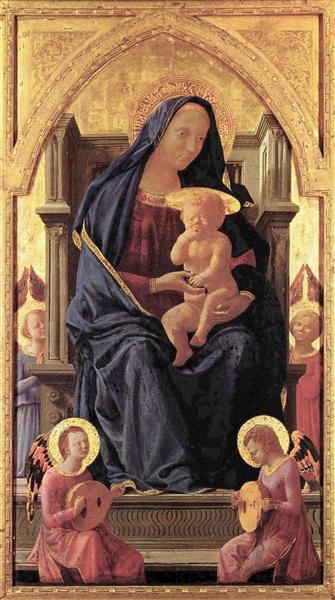
Key work
Masaccio, Madonna and Child, 1426

key work
Donatello, David, c. 1440

Key work
French, Amiens Cathedral, France, 1220–1270