Week 7 - social and group living
 Call Kai
 Learn
 Practice Test
 Spaced Repetition
 Match
 Flashcards
 Knowt Play
1/45

There's no tags or description
Looks like no tags are added yet.
46 Terms
Social behaviour and its purpose
occurs whenever animals interact with one another.
it enables animals to form relationships, coordinate activities, and function in groups.
shapes how animals interact, survive, reproduce, and adapt to their social environment.
Social behaviours examples
Competition between crows for food
Grooming or licking between a cow and her calf
Play between dogs
Courtship and mating behaviours
3 key question of social behaviour
Why live in groups? What benefits and costs does group living bring?
How do animals communicate? How do they exchange information and influence one another’s behaviour?
How did social behaviour evolve? What evolutionary processes explain social interactions?
Benefits of animals living in group
Reduced predation risk: Group members may dilute individual risk and benefit from collective defence.
Protection of young: Adults can cooperate to deter predators and protect vulnerable offspring.
Early detection of danger: More individuals scanning for predators allows others to spend more time feeding.
Improved foraging: Groups can locate patchy food sources and cooperatively capture prey (e.g., wolves hunting moose).
Social learning: Individuals learn about food and potential dangers by observing others (e.g., chicks learning from older hens).
Costs and trade-offs of group living
Food competition: Individuals must share limited resources.
Scrounging: Some individuals exploit food others find rather than finding it themselves (e.g., bald eagles stealing or sharing food).
Increased visibility: Larger groups may be easier for predators to detect.
Unequal benefits: Group members may experience different levels of protection depending on their position and vulnerability.
Strategy depends on context: The benefits of finding food versus scrounging depend partly on how many individuals use each strategy
What does group living balance
Group living balances the benefits of safety, cooperation, and learning against the costs of competition and resource sharing.
Communication occurs when
a signal from one animal influences the behaviour of another
Animals communicate through four main modalities:
Auditory: Vocalizations (e.g., a calf calling for its mother).
Chemical/olfactory: Scents signal territory and reproductive status; dogs have highly sensitive olfaction.
Visual: Colouration, antlers, posture, and body movements convey identity, condition, or social status.
Tactile: Physical contact, including grooming, nuzzling, and suckling.
Types of signals
Chemical signals can persist after the signaler leaves.
Visual signals: Body movements are flexible, while features such as plumage can convey relatively stable information.
Auditory and tactile signals help coordinate immediate social interactions.
Communication and coordination: nursing in pigs
Piglets signal hunger: They gather around the sow’s udder and nuzzle the teats.
Sow responds: She lies on her side, exposes her teats, and begins rhythmic grunting.
Milk let-down: Sufficient teat massage stimulates oxytocin release from the pituitary gland, triggering milk ejection.
Vocal communication: The sow increases her grunting rate when milk let-down occurs.
Piglets respond: They reduce nuzzling and begin suckling in anticipation of milk.
Nursing involves coordinated tactile, hormonal, and auditory signals between the sow and her piglets. If stimulation is insufficient, milk let-down may not occur.
Costs and benefits of communication between animals
Communication has costs and benefits that depend on the situation and potential audience.
Benefits: Attracting parental care, coordinating activities, and communicating reproductive status.
Potential costs: Signals may attract predators or reveal vulnerability.
For example, dependent young may benefit from calling when distressed, whereas an injured adult may benefit from remaining quiet.
How does natural selection shape social behaviour?
Social behaviours can be classified by their effects on the actor and recipient:
Mutualistic (+/+): Both individuals benefit—example: Fish schooling to reduce predation risk.
Selfish (+/−): The actor benefits while the recipient incurs a cost; example: Vultures competing for food at a carcass.
Altruistic (−/+): The actor experiences a cost while the recipient benefits; example: Worker bees helping raise the queen’s offspring.
Natural selection favours behaviours that increase genetic representation in future generations, even when the individual performing the behaviour does not reproduce
Altruism
A behaviour that benefits another individual but costs the individual performing it.
Two ways altruistic behaviour can evolve
Kin Selection
Reciprocal altruism
Altruistic behaviour can evolve when helping relatives promotes the transmission of shared genes to future generations
Kin selection
Helping relatives can increase the spread of shared genes, even if the helper has reduced reproductive success.
Hamilton’s rule: 𝑟𝐵 > 𝐶
𝑟= genetic relatedness
𝐵= reproductive benefit to the recipient
𝐶= reproductive cost to the helper
Example: Worker honeybees help the queen raise offspring instead of reproducing themselves.
Reciprocal altruism
An individual helps another at a cost, with the possibility of receiving help in return later.
Key conditions:
Individuals interact repeatedly over time.
Individuals can recognize one another.
Cheaters can be identified and avoided or punished.
Example: Vampire bats may share regurgitated blood with other bats that have shared food with them previously.
Reciprocal altruism can evolve among non-relatives when the potential for future benefits outweighs the immediate cost of helping
Group selection; altruistic behaviour?
Group selection: Selection can favour groups whose members collectively perform well, under appropriate conditions.
Selecting individuals only for high productivity may inadvertently favour aggression and competition.
Selecting breeding groups based on their average productivity can favour animals that perform well socially.
Conditions in nature are limited but can be arranged in domestic animals
Example: Group-level selection in laying hens produced groups with high productivity and relatively low aggression
Group selection application to animal management
Breeding and management strategies should consider both individual performance and how animals function within groups.
Understanding natural selection helps explain social cooperation and informs strategies for improving group productivity and welfare.
Competition occurs when
animals seek limited resources such as food, space, or mates
Scramble competition:
Resources are widely distributed, so individuals compete indirectly by finding and consuming them efficiently.
Example: Sows foraging for worms across a ploughed field
Contest competition/resource defence
Resources are concentrated, making it worthwhile to exclude competitors.
Example: Sows competing for access to a single feeder
Competition depends on how resources are distributed across ______
Competition depends on how resources are distributed across space and time
Contest outcomes and dominance: What determines who wins?
Resource-holding potential: Competitive ability based on factors such as body size and strength.
Resource ownership: Residents may have advantages over intruders, including familiarity with the area.
Resource need: Hungry animals may challenge satiated competitors.
Relative ability: Animals with similar resource-holding potential may engage in longer, more serious fights.
Example: Mixing unfamiliar pigs can cause fighting and injuries.
Dominance relationships effect on competition and example
Dominance relationships can establish priority of access to resources and reduce repeated fighting.
The chicken pecking order is a classic example.
However, social relationships are often more complex than a single linear hierarchy.
For example, in cattle, priority at food resources may not predict which animals lead the herd.
Competition and dominance depend on:
resource availability
individual characteristics
complexity of social relationships
Mate choice factors
Reproductive investment influences mate choice
The sex investing more time and energy in offspring generally tends to be more selective.
In many mammals, females invest heavily in pregnancy and lactation, while males can potentially reproduce with multiple females.
Male displays and colourful plumage may attract females but can also increase predation risk
4 main mating systems:
Monogamy: One male and one female form a mating pair.
Polygyny: One male mates with multiple females.
Polyandry: One female mates with multiple males.
Promiscuity: Individuals mate with multiple partners without exclusive pair bonds.
Mating systems in domestic animals
Domestic species commonly show polygynous or promiscuous mating systems
Example: Wolves generally form monogamous pairs, whereas domestic dogs commonly show promiscuous mating.
Domestication has reduced seasonal breeding in many species, allowing reproduction throughout much of the year.
How males gain mating opportunities
Resource-defence polygyny: Males defend resources important to females, such as food or nesting sites.
Example: Male red-winged blackbirds with high-quality nesting territories may attract multiple females.
Female or harem defence: Males compete to control access to groups of females.
Example: Red deer stags compete with other males for harems.
What shapes mating systems and reproductive behaviour
mate choice
reproductive investment
resource availability
competition
Parental behaviour helps ensure offspring survival through:
Providing a safe location for birth and development
Supplying nutrients
Protecting young from harm
Parental strategies vary with offspring number, size, mobility, and developmental needs.
Parenting strategies in pigs vs sheep

Maternal recognition and bonding in sows
Piglets remain together in a protected nest.
Mothers may take a day or more to distinguish their own piglets from others.
Fostering day-old piglets between litters is relatively easy.
Maternal recognition and bonding in ewes
Licking exposes the ewe to her lamb’s individual odour.
Lambs hear their mother's voice before birth and can recognize her calls soon after birth.
Mutual recognition helps maintain the ewe–lamb bond within the flock.
Fostering is more difficult because ewes may reject unfamiliar lambs based on odour and appearance.
Motivation for parental behaviour
Parental care is strongly motivated because it directly affects reproductive success.
Hormonal changes before birth stimulate maternal behaviour.
What parental behaviours are sows motivated to do
Increased restlessness and activity before farrowing.
Strong motivation to build a nest, even when confined.
Protective responses toward intruders.
Respond to piglets’ separation calls by searching for them
What parental behaviours are ewes motivated to do
Strong attraction to newborn lambs before giving birth.
May attempt to steal newborn lambs from other ewes.
This attraction changes after their own lamb is born.
Offspring signals and parental investment
Parent–offspring interactions are two-way, not simply parents caring for passive young.
Offspring use signals to solicit parental care:
Distress calls when separated
Begging calls and hunger signals to obtain food
Offspring signals and parental investment in pied flycatchers
Lars von Haartman exposed parent birds to begging calls from both their own brood and a hidden second brood.
Parents increased the rate at which they brought food to the nest.
Demonstrates how offspring signals can influence parental investment.

Parent–offspring conflict and weaning
Parents must balance investment in current offspring with their ability to reproduce successfully in the future.
Offspring generally benefit from receiving more care, even when this reduces the parent's future reproductive- success.
This conflict can lead to weaning conflict, when parents begin resisting nursing or food-begging attempts.
Parent-offspring conflict and weaning in sows
When sows can move away from piglets, they gradually reduce nursing frequency.
Piglets are encouraged to consume more solid food.
When sows and litters remain together continuously, nursing may remain frequent.
This can increase lactation demands and contribute to greater loss of the sow's body condition

What is play and why does it matter?
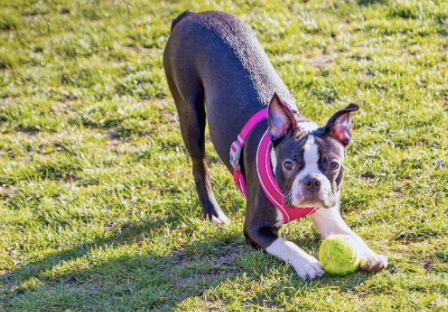
Social play involves interactions that resemble functional behaviours such as fighting or hunting, without necessarily serving their usual purpose.
Animals may use specific signals to initiate or maintain play.
Example: Dogs use a play bow to signal playful intent and reduce the risk of misinterpreting play-fighting as aggression.
Possible benefits of play:
Practice for adult behaviours.
Development of social skills and relationships.
Improved physical coordination and environmental exploration.
Preparation for future challenges.
Why is social experience important for normal development
Harlow’s rhesus macaque studies demonstrated that social isolation was associated with abnormal behaviour; opportunities for peer play improved social development.
Play may develop physical skills needed to cope with challenging situations, such as maintaining balance on slippery surfaces.
Play can involve self-handicapping, where animals adopt awkward movements or positions that make play
more challenging.
Farm animal example: Group-reared dairy calves engage in play and may become more dominant when mixed with individually reared calves.
Domestication may conflict with evolved behaviours. Some potential mismatches impacted social behaviour include:
Imprinting: Chicks may lack opportunities for normal parental attachment.
Weaning: Abrupt separation may disrupt gradual maternal withdrawal.
Mate choice: Restricted mating opportunities may affect reproductive behaviour.
Group housing: Large groups of unrelated animals may disrupt social relationships
Implications of social behaviour for animal welfare and management
Understand species-specific needs: Consider natural social structures, communication, reproduction, and parental care.
Adapt housing and management: Provide opportunities for appropriate social interactions and behavioural expression.
Reduce welfare problems: Identify mismatches between evolved behaviour and captive conditions.
Support human–animal interactions: Better understanding of social behaviour can improve handling, safety, and animal care.
Future research: Determine how rearing conditions and group composition influence behaviour, welfare, and productivity