Opioid Use Disorder (OUD) (L34)
 Call Kai
 Learn
 Practice Test
 Spaced Repetition
 Match
 Flashcards
 Knowt Play
1/44

There's no tags or description
Looks like no tags are added yet.
45 Terms
Opioid categories
Natural (called ___________): morphine and codeine
opiates
Opioid categories
_________: morphine and codeine
natural
Opioid categories
Natural (called opiates): _________ and ____________
morphine and codeine
Opioid categories
Semisynthetic: _________, __________, __________, and ___________
hydrocodone, oxycodone, hydromorphone, buprenorphine
Opioid categories
_____________: hydrocodone, oxycodone, hydromorphone, and buprenorphine
semisynthetic
Opioid categories
Synthetic: __________, ________, meperidine, and _________
fentanyl, methadone, tramadol
Opioid categories
____________: fentanyl, methadone, meperidine, and tramadol
synthetic
factors in opioid risk
__________: amount needed to produce a specific effect
potency
factors in opioid risk
overdose risk: depends on the dose delivered, _______, ___________, and other substances taken
route, tolerance
taking an OUD history
exposure: what did you _________ to take? how did you take it? when was your last use?
expect (what they intended to take is likely different from what they actually took)
taking an OUD history
exposure: what did you expect to take? how did you take it? when was your last use?
pattern over time and impact and priorities (these are part of the ________ criteria)
DSM-5
DSM-5-TR Criteria for OUD takes in to account the last ________
12 months
DSM-5-TR Criteria for OUD takes in to account the last 2 months
at least ___ criteria in 12 months with clinically significant impairment or distress
2
DSM-5-TR Criteria for OUD takes in to account the last 2 months
>2 criteria in 12 months with clinically significant impairment or distress
exclude __________ and/or _________ when opioid use is solely under appropriate medical supervision and clinically indicated
tolerance, withdrawal
tolerance: a given dose produces less of an effect after repeated exposure
physical dependance: ______________ leads to withdrawal when decreased exposure to opioids or receptor is blocked
neuroadaptation
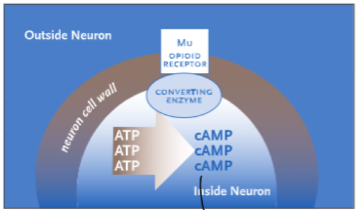
baseline: normal production of _____________ (made from cAMP)
noradrenalin (normal activity of the converting enzyme)

1. Baseline: ___________ production of noradrenalin (made from cAMP)
normal (normal activity of the converting enzyme)
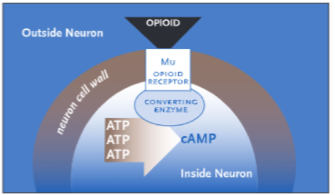
1. Baseline: normal production of noradrenalin (from cAMP)
2. Acute opioid inhibition leads to __________ activity of the converting enzyme
decreased (inhibition)

1. Baseline: normal production of noradrenalin (from cAMP)
2. Acute opioid inhibition of converting enzyme: abnormally __________ production of noradrenalin
low (less ATP converted to cAMP= less adrenalin produced)

1. Baseline: normal production of noradrenalin (from cAMP)
2. ________ opioid inhibition of converting enzyme: abnormally low production of noradrenalin
acute (less ATP converted to cAMP= less adrenalin produced)
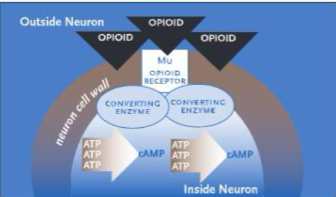
1. Baseline: normal production of noradrenalin (from cAMP)
2. Acute opioid inhibition of converting enzyme: abnormally low production of noradrenalin
3. Chronic opioid inhibition leads to __________ activity of the converting enzyme
increased (body compensates!)
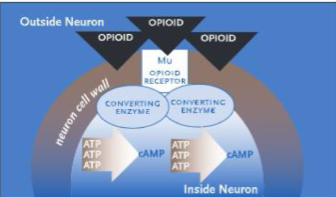
1. Baseline: normal production of noradrenalin (from cAMP)
2. Acute opioid inhibition of converting enzyme: abnormally low production of noradrenalin
3. Chronic opioid inhibition leads to increased activity of the converting enzyme: ___________ production of noradrenalin
normal (body compensates and gets back to baseline)

1. Baseline: normal production of noradrenalin (from cAMP)
2. Acute opioid inhibition of converting enzyme: abnormally low production of noradrenalin
3. Chronic opioid inhibition leads to increased activity of the converting enzyme: normal production of noradrenalin (technically we are ______producing cAMP) (it’s only normal since opioids are also present)
over

1. Baseline: normal production of noradrenalin (from cAMP)
2. Acute opioid inhibition of converting enzyme: abnormally low production of noradrenalin
3. Chronic opioid inhibition leads to increased activity of the converting enzyme: normal production of noradrenalin (technically we are overproducing cAMP)
4. Discontinuing opioids leads to __________ cAMP
increased

1. Baseline: normal production of noradrenalin (from cAMP)
2. Acute opioid inhibition of converting enzyme: abnormally low production of noradrenalin
3. Chronic opioid inhibition leads to increased activity of the converting enzyme: normal production of noradrenalin (technically we are overproducing cAMP)
4. Discontinuing opioids leads to increased cAMP due to ___________ inhibition of converting enzyme
loss (decreased)

1. Baseline: normal production of noradrenalin (from cAMP)
2. Acute opioid inhibition of converting enzyme: abnormally low production of noradrenalin
3. Chronic opioid inhibition leads to increased activity of the converting enzyme: normal production of noradrenalin (technically we are overproducing cAMP)
4. Discontinuing opioids leads to loss of inhibition of converting enzyme: _______ production of noradrenalin
high (wayyyy too high → that’s why you get the crazy high energy-like SEs in withdrawal)
opioid intoxication
mental status: drowsy, slowed responses, or inability to wake up
pupils: _________
small (pinpoint)
opioid intoxication
mental status: drowsy, slowed responses, or inability to wake up
pupils: small or pinpoint
breathing: _________
slow (irregular, shallow, absent, snoring)
Naloxone is a ________ opioid antagonist
full
Naloxone is a FULL opioid __________
antagonist
Naloxone is a FULL opioid antagonist (meaning it completely turns the receptor off)
it has _______ affinity for the mu receptor
high (it can knock-off and displace any other opioids off the site)
Naloxone is a FULL opioid antagonist (meaning it completely turns the receptor off)
it has high _________ for the mu receptor
affinity (it can knock-off and displace any other opioids off the site)
Naloxone is a FULL opioid antagonist (meaning it completely turns the receptor off)
it has _________ affinity for the mu receptor, but has a _________ half-life
high, short (it can knock-off and displace any other opioids off the site… but if other opioids are still in the system after ~1hr, the receptor is open once again since naloxone ran out)
______________ is a FULL opioid antagonist (meaning it completely turns the receptor off)
it has high affinity for the mu receptor, but has a short half-life
naloxone
Naloxone is a FULL opioid antagonist (meaning it completely turns the receptor off)
it has high affinity for the mu receptor, but has a small _________
half-life (it can knock-off and displace any other opioids off the site… but if other opioids are still in the system after ~1hr, the receptor is open once again since naloxone ran out)
Naloxone is a FULL opioid antagonist (meaning it completely turns the receptor off)
it has high affinity for the mu receptor, but has a short half-life
immediate response to suspected OD: watch breathing! repeat naloxone every ___________ and stay until help arrives
2-3 minutes
opioid withdrawal symptoms
pupils: _________
mydriasis (dilated)
opioid withdrawal symptoms
pupils: mydriasis (dilated= opposite of OD)
sweating, goosebumps, __________ pain/cramps, muscle cramps, vomiting, excessive urination and _________
abdominal, diarrhea
opioid withdrawal symptoms
autonomic findings: resting pulse, sweating, pupil size, gooseflesh, GI upset (N/V/D)
secretions and yawning: runny nose or tearing
motor and affect: ___________
pain: bone or joint ahces
restlessness (tremor, anxiety)
the ___________ scale assesses how severe a patient’s opioid withdrawal symptoms are
COWS (Clinical Opiate Withdrawal Scale)
COWS assesses how severe a patient’s opioid withdrawal symptoms are
benefits: ___________ assessment and communication; tracks withdrawal over time, and supporting timing decisions alongside exam and local protocol
standardizes
COWS assesses how severe a patient’s opioid withdrawal symptoms are: benefits and limitation
True or False: it can track withdrawal symptoms over time
True (this is a benefit)
COWS assesses how severe a patient’s opioid withdrawal symptoms are
limitations: some items rely on self-report or examiner __________; other illnesses and medications can change the score; it is a snapshot that can miss evolving withdrawal
judgment
COWS assesses how severe a patient’s opioid withdrawal symptoms are: benefits and limitation
True or False: some items of the scale rely on self-report or examiner judgment
True (this is a limitation)
COWS assesses how severe a patient’s opioid withdrawal symptoms are: benefits and limitation
True or False: other illnesses and medications cannot change the score
False (they CAN influence the score!! this is a limitation)