Cardiovascular System Pathologies: Hypertension, CAD, Heart Failure & Aneurysms
 Call Kai
 Learn
 Practice Test
 Spaced Repetition
 Match
 Flashcards
 Knowt Play
1/19

There's no tags or description
Looks like no tags are added yet.
Name | Mastery | Learn | Test | Matching | Spaced | Call with Kai | Chat |
|---|
No analytics yet
Send a link to your students to track their progress
20 Terms
What are the four main acquired vascular diseases?
Hypertensive heart disease, coronary artery disease, myocardial infarction, and congestive heart failure.
What is the most common condition affecting the heart and blood vessels?
Hypertension (high blood pressure).
What percentage of hypertension cases are classified as primary hypertension?
90 to 95%.
What is secondary hypertension?
Hypertension with an identifiable underlying cause, such as renal outflow obstruction or endocrine issues.
What are the conditions caused by long-standing high blood pressure?
Narrowing of systemic blood vessels, congestive heart failure, stroke, and kidney disease.
What is coronary artery disease?
The narrowing of the lumen of one or more coronary arteries, often caused by atherosclerosis.

What are the predisposing factors to coronary artery disease?
Hypertension, obesity, smoking, high-cholesterol diet, and lack of exercise.
What is angina pectoris?
Temporary chest pain caused by temporary oxygen deprivation to the heart muscle due to coronary artery disease.
What is a myocardial infarction (MI)?
Total occlusion of a coronary artery leading to death of muscle cells due to lack of blood supply.
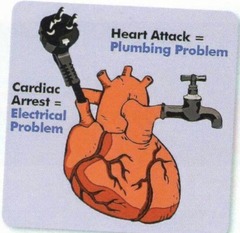
What is cardiac arrest?
The cessation of an effective heartbeat.
What is heart block?
An arrhythmia caused by blocked electrical pathways between the atria and ventricles, commonly at the atrioventricular node.
What is congestive heart failure (CHF)?
The inability of the heart to propel blood at a sufficient rate and volume to supply tissues adequately.

What are the causes of congestive heart failure?
Coronary artery disease, high blood pressure, previous heart attack, cardiac abnormality, and obstructive processes.
What is pulmonary edema?
Abnormal accumulation of fluid in the extravascular pulmonary tissues, commonly due to left-sided heart failure.

What is an aneurysm?
Localized dilation of an artery, most commonly the aorta, which can lead to life-threatening rupture.
What defines an abdominal aortic aneurysm (AAA)?
A focal dilation of the abdominal aorta measuring 50% greater than the proximal normal segment or >3 cm in diameter.
What is aortic dissection?
A disruption of the intima of the aorta, allowing blood to enter the wall and separate its layers, leading to severe pain and potential death.

What are the imaging studies that can identify aortic aneurysms and dissections?
CT, MRI, and transesophageal echocardiogram.
What is aortic stenosis?
Narrowing of the exit from the left ventricle, which may be at the valve or above/below it, leading to increased workload on the left ventricle.
What are the causes of aortic stenosis?
Congenital bicuspid aortic valve, rheumatic fever, and age-related hardening of the valve.