CBE 160 Quiz 2
 Call Kai
 Learn
 Practice Test
 Spaced Repetition
 Match
 Flashcards
 Knowt Play
1/18

There's no tags or description
Looks like no tags are added yet.
19 Terms
Where is hydrogen bonding involved in biomolecular interactions?
C-G and A-T pairs
alpha and beta sheets
water molecules in the cell
henderson-hasselbalch equation
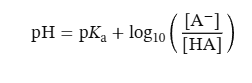
Using henderson-hasselbalch equation to find if it is negatively or positively charged
Find the log of the ratio of concentrations at a specific pka, then compare the ratio sizes
What four categories are amino acids classified as
positively charged(basic)
negatively charged (acidic)
polar (neutral hydrophilic)
nonpolar (hydrophobic)
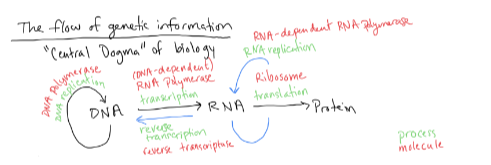
Draw out the central dogma and the necessary processes and molecules
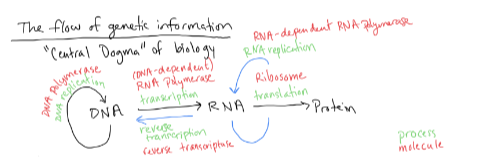
Sketch the central dogma with the mutations
Which strand gets copied for transcription?
The template strand
Which way is the template strand read?
From 3’ to 5’ direction
Which direction is the strand after transcription
5’ to 3’
After translation what is the N-terminus and C-terminus
N-terminus is the 5’ end of mRNA and C-terminus is 3’ end but NOT the STOP codon
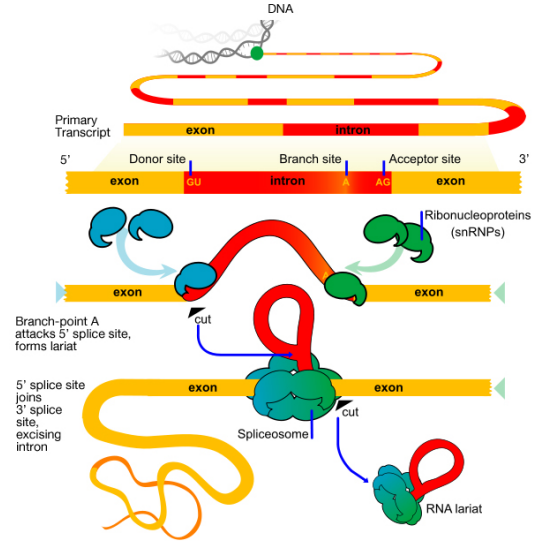
What part of RNA processing is in eukaryotes but not in prokaryotes
Splicing. Eukaryotes have exons that code for proteins stopped by introns that are non-coding which prokaryotes only have the sequence of the entire protein
Draw out the RNA splicing
What is a silent mutation?
One that changes the mRNA code but the protein stays the same due to redundancy
Does DNA or RNA contain uracil instead of thymine
RNA
Does DNA or RNA directly form a double-stranded structure
DNA
What sequence does the origin of replication have?
A-T is frequent in the origin of replication
What is a primer? Why is it important?
Primer is a sequence around 10 nucleotides of RNA and lets the DNA polymerase attach at the 3’ end of DNA to start synthesizing a new DNA. It is needed for the DNA polymerase to attach and start replication

What is a hydrolysis reaction?
Where a water molecule is consumed to break apart
Where are condensation reactions taking place?
Amino acids are joined by condensation peptide bonds
Sugars are linked together to form polysaccharides
Nucleotides are joined to form phosphodiester bond