Lab midterm practice
 Call Kai
 Learn
Learn Practice Test
 Spaced Repetition
 Match
Match Flashcards
 Knowt Play
1/70

There's no tags or description
Looks like no tags are added yet.
Name | Mastery | Learn | Test | Matching | Spaced | Call with Kai | Chat |
|---|
No analytics yet
Send a link to your students to track their progress
71 Terms

What organism is this?
Elodea

What organism is this a picture of?
E Coli
What variable is plotted on the X-axis
Independent
What variable is plotted on the Y-axis
Dependent
What graph type should be used for continuous data?
Line
What graph type should be used for discrete data?
Bar
Where is the title of a table placed?
Above table
Where is the title of a graph placed?
Below figure and numbered
Part 1 of cell theory
The cell is the basic unit of life
Part 2 of cell theory
All living things contain one or more cells
Part 3 of cell theory
All cells come from pre-existing cells and share a common origin
All cells have what structures in common?
-Plasma membrane
-DNA
-Ribosomes
-Cytoplasm

What is this cell?
Potato

What is this cell?
Avocado
What stains were used to stain lipid inclusions?
Sudan IV
What stains were used to stain starch granules?
IKI

This organelle contains ___
Starch (amyloplast/chloroplasts)

This organelle contains ___
Lipids
What color should a starch containing organelle be when stained with IKI?
Dark blue, variant of blue
What color should a lipid containing organelle be when stained with Sudan IV?
Red, orange, brown, etc.
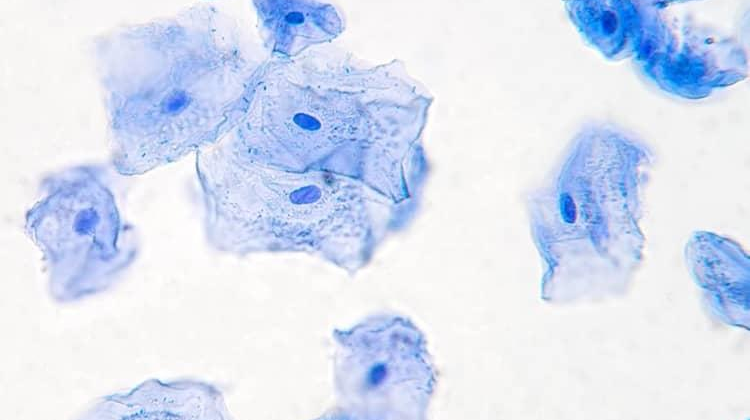
What type of cell is this? What part is the nucleus?
Cheek cell, dark blue spot in the middle of the cell
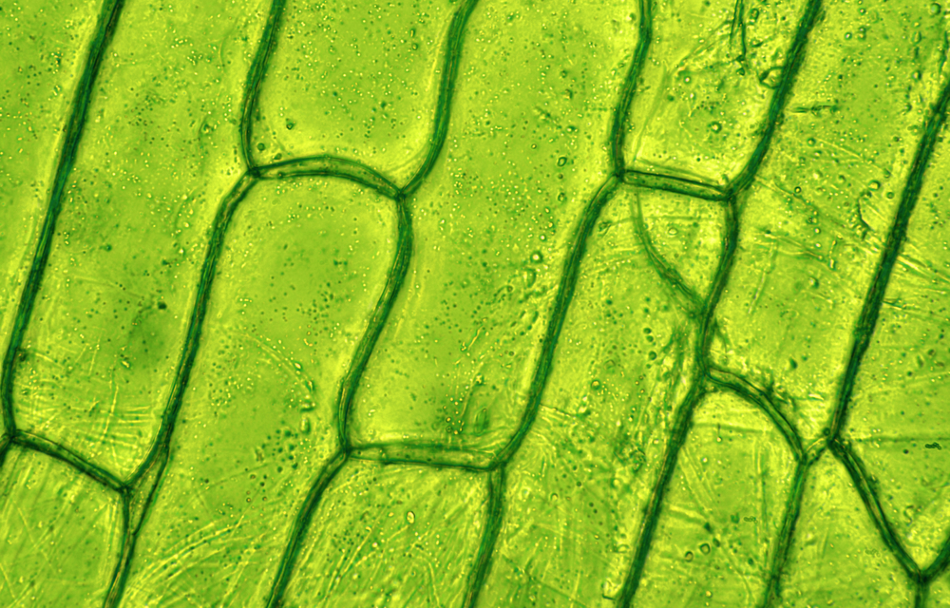
What is shown here?
Plant cell wall

What is shown here?
Chloroplast
What are four main types of organic molecules?
-Carbohydrates
-Lipids
-Proteins
-Nucleic acids
Carbohydrates and most lipids contain only…
Carbon, hydrogen, oxygen
Proteins and nucleic acids can contain…
Nitrogen, phosphorous
What is used to test for glucose? How do you determine a positive result?
Benedicts Solution. There is glucose present if Benedicts Solution is added, and the substance turns another color like green/orange brown. If no glucose is detected, the color remains its initial blue.
What is used to test for starch? How do you determine a positive result?
IKI. If the solution turns blue, there is starch present. If it remains red, orange, yellow…
What is used to test for proteins? How do you determine a positive result?
Buret reagent. If proteins are present, the solution will turn from clear blue to violet.
What are used to test for lipids? How would you determine the result to be positive?
Sudan IV. If the powder dissolves and stains the solution a deep reddish color, then a lipid is present. If the powder clumps, no lipids are present.
What determines solubility?
Polarity, molecular structure, charge, and in some cases temperature.
What substances are more soluble in water? Give an example
Polar molecules. Sugar dissolving in water.
How is pH determined?
By the concentration of hydrogen ions and hydroxyl ions
If a solution has a pH of 4, what is the concentration of H+ and OH-?
H+ = 10^-4
OH- = 10^-10
If a solution has an OH- concentration of 10-13, what is the pH of this solution?
pH = 1
Identify the phenomena illustrated in the carmine powder experiement
The carmine powder demonstrates Brownian movement, as the particles moved in a zigzag motion
Identify the phenomena illustrated in the dialysis tubing experiment
The diffusion and osmosis of water across a selectively permeable membrane
Describe the dialysis tubing experiment. Explain the results. What molecules were able to pass through the pores of the dialysis tubing? How was it determined?
What happens to a plant cell if placed in a hypertonic solution?
Membrane pulls away from cell wall and becomes plasmolyzed
What happens when elodea cells are placed into hypertonic solutions?
Water moves out of the cell via osmosis. Plasmolysis ensues.
What type of organic molecules is an enzyme?
Catalyst
Why are they sensitive to temperature and pH?
Changes in temperature and pH can alter the shapes of their active sites, which alters their ability to bind with substrates. They can become denatured and no longer function at an efficient rate, if at all.
What would be the correct name of the enzyme that catalyzes the oxidation of lactose?
Lactose oxidase
How do you determine the optimum condition for an enzyme?
Test and observe how the enzymes behave when exposed changes in temp/ph
What is the substrate associated with catalase?
Hydrogen peroxide
How is catalase enzyme activity detected?
Bubbling from H2O2
What substrate is associated with catechol oxidase?
Benzoquinone
How is catechol oxidase enzyme activity detected?
Visual color change, such as turning brown in color
What was the effect of PTU on catechol oxidase activity?
Inhibits reactions
What substrate is associated with bromelain?
Proteins
How is bromelain detected?
Putting it with proteins such as gelatin and observing if it breaks down the protein or not
Dialysis tubing experiment
Made of cellulose fibers formed into a hollow tube. The pores allow for small solutes to pass through the tubing, but the larger solutes cannot.hW
What was able to pass through the dialysis tube? How was this determined?
-Glucose, water, IKI solution
-By observing the colors in the bags and in the beakers after a period of time
Explain role of polarity and molecular weight on movement of substances through a membrane
Heavier molecules diffuse slower, and affinity (charge) may also affect movement via attraction to the matrix.
Can sucrose molecules pass through dialysis bags?
No, they are too large to pass
What was the effects of higher sucrose concentrations on the weight of the bags?
Increase in weight due to osmosis moving water into the dialysis bag to dilute the sugar. Less water outside of bag at end of experiment
What was the effects of lower sucrose concentrations on the weight of the bags?
Less weight gained, water was higher outside of bag
What carbohydrates show optimal gas production? Why?
The glucose showed the most optimal gas production because glycolysis rapidly breaks down glucose (which has 6 carbons). Most of the tubes containing the glucose and yeast mixture lost their corks towards the end of the experiment because the buildup of all the CO2
How did exercise affect the time needed for the solution to change color? Explain why the color change occurred (How does BTB work?)
Exercising and then blowing into the straw made the solution change colors quicker than when we all blew into it at a resting heart rate. The BTB changes color when rising amounts of CO2 are added. Exercising results in higher CO2 emissions being expelled from the body.
What can you conclude about the effect of exercise on the amount of carbon dioxide that is present in your exhaled breath? Why is this so?
We inhale O2 and exhale CO2, so during exercise, the body needs to take in more O2 alongside needing more energy to function. When the body generates more energy, it subsequently releases more CO2 because it’s a waste product of aerobic respiration.
What can you conclude about the effect of exercise on breathing rate? Why is this so?
Exercise increases breathing rate because more oxygen must be taken in during strenuous physical activity.
What can you conclude about the effect of exercise on heart rate? Why is this so? What do your muscles need during exercise that the blood brings?
Heart rate increases because it needs to pump more blood to the heart so it can receive the oxygen it needs to continue aerobic respiration.
Which step of aerobic respiration are we examining? In other words, during which step is the most CO2produced?
The citric acid cycle
What is used to test seed viability?
Tetrazolium
What color is tetrazolium when oxidized?
Clear
What color is tetrazolium when reduced?
Red
When tetrazolium is applied to seeds, what color will they turn if they are germinating (alive)?
Pink/red
When tetrazolium is applied to seeds, what color will they turn if they are dead?
It remains clear
What kernels were viable? Raw or boiled?
Raw
What part of the seed shows the highest respiration?
The embryo
In the fermentation of yeast experiment, what gas fills the tubes?
CO2