Bio Lab Final
 Call Kai
 Learn
 Practice Test
 Spaced Repetition
 Match
 Flashcards
 Knowt Play
1/67

There's no tags or description
Looks like no tags are added yet.
68 Terms
how do you measure the length, volume, weight, and temp of something
length= meter (m)
volume= liter (L)
mass= gram (g)
temperature= Celsius
what is the metric system from largest to smallest
Grams, Liters, Meters →deci→centi→milli

what type of microscope is this
monocular compound light
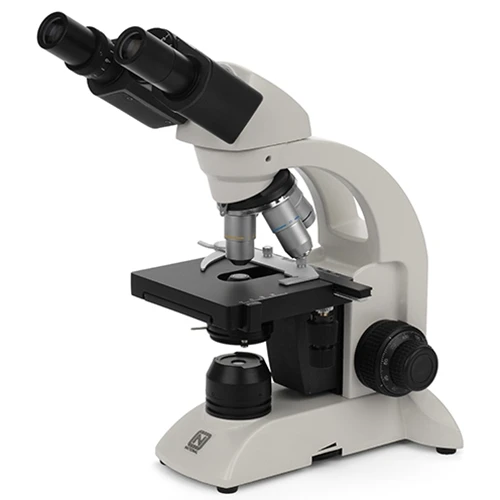
what type of microscope is this
binocular compound light

what type of microscope is this
stereoscope (dissecting microscope)
what is the difference between a compound microscope and a stereoscope
Compound: views small specimens at higher magnification
Stereoscope: views larger objects with a three-dimensional appearance
what is the difference between plant and animal cells
plant: cell wall, chloroplast, large vacuole
animal: no cell wall or chloroplast
what is the function of the mitochondria
produces ATP through cellular respiration
what is the difference between a prokaryotic and Eukaryotic cell
prokaryotic cells LACK a nucleus, Eukaryotic cells HAVE a nucleus
P: domain bacteria and Archaea, E: domain Eukarya
what is a peptide bond
a bond that connects amino acids to form proteins
what is Diffusion
movement of molecules from a higher to lower concentration, NO ENERY required
what is Osmosis
diffusion of WATER from a higher to lower concentration
what is a Hyper, Hypo, and Isotonic solution
Hyper: Water exits, SKRINKs ; Hypo: gains water, SWELLS ; Iso: equal concentration
what is plasmolysis
cytoplasm of a plant cell shrinks away from the cell wall due to the loss of water
what is turgor pressure
when a hypotonic plant cell in water, it swells and creates pressure

what is the function of the enzyme and the substrate
biological catalysts that speed up chemical reactions by lowering the activation energy required for the reaction to occur
2H2O2→2H2O+O2
hydrogen peroxide→ water + oxygen gas
The chemical equation for catalase and hydrogen peroxide
6CO2+6H2O+Light Energy→C6H12O6+6O2
the chemical equation for photosynthesis
where does photosynthesis take place
chloroplasts
what is the calvin cycle
process that uses carbon dioxide ATP and NADPH to build carbohydrates

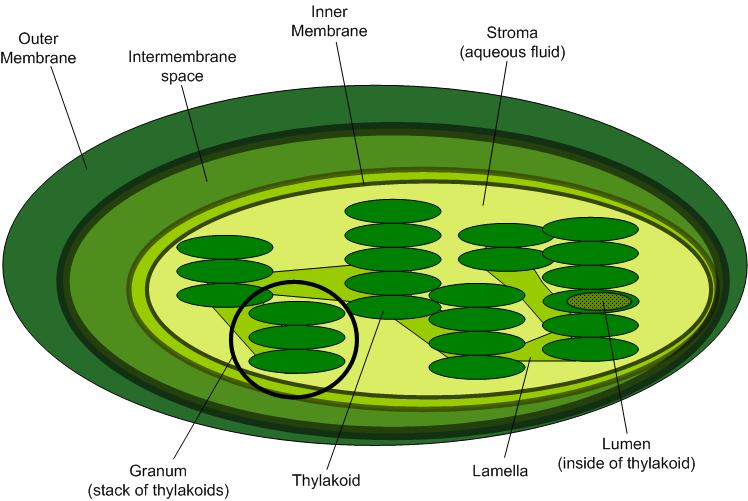
Label the parts of the chloroplast
A. Protective covering B. Flattened sacs C. fluid around the sacs D. stacks of sacs
A. outer membrane B. Thylakoid C. Stroma D. Grana
what does the Biuret test detect
proteins, a positive will turn violet
what does Benedict’s test detect
reducing sugars, positive can turn green, yellow, orange, or red
what does iodine protect
starch, a positive test turns blue-black
what does the lipid emulsion test detect
fats, a positive will produce a cloudy appearance
what is hydrolysis
breaks molecules apart by adding water
What is the granum
its a stack of thylakoids where light energy is converted into chemical energy
what is PS 1 and PS 2
PS 2 acts first in the electron pathway and helps split water
PS 1 helps produce NADPH
what is the purpose of paper chromatography
separates photosynthetic pigments
what light produces a higher rate of photosynthesis
white light
what is the difference between aerobic and anaerobic respiration
aerobic: uses oxygen
anaerobic: without oxygen
what is fermentation
an anaerobic process that allows glycolysis to continue by regenerating NAD+
where does glycolysis occur
cytoplasm
what happens during glycolysis
glucose is broken down in pyruvate, producing a small amount of ATP
where does the Kerbs Cycle occur
mitochondrial matrix
what does the electron transport chain do
transfers electrons and helps create a proton gradient used to produce ATP
what is chemiosmosis
movement of hydrogen ions through ATP synthase to help make ATP
what is the difference between a monosaccharide and a disaccharide
mono: one sugar
di: two joined together
what is mitosis and the four phases
cell division that produces two genetically similar daughter cells
prophase, metaphase, anaphase, telophase
what is cytokinesis
division of the cytoplasm
what is meiosis
two cells divisions that produce haploid cells with half the original chromosome number
what is spermatogenesis
production of sperm cells
what is oogenesis
production of egg cells
what are Sertoli cells
cells that support and nourish developing sperm cells
what is Mendel’s Law of segregation
alleles separate during gamete formation, so each gamete receives one allele
what is Mendel’s Law of independent assortment
different gene pairs assort independently during gamete formation when unlinked
what is the difference between a monohybrid and dihybrid cross
mono: genetic cross involving one trait
di: genetic cross involving two traits
what is the difference between homozygous and heterozygous
homo: two identical allele (BB or bb)
hetero: two different alleles, (Bb)
what is a genotype and phenotype
geno: genetic makeup
pheno: physical makeup
what is a karyotype
an organized picture of an individuals chromosomes
what causes down syndrome
an extra copy of chromosome 21
what is non-disjunction
when chromosomes fail to separate properly during cell division
what is turner syndrome
a condition involving only one X chromosome
what is Klinefelter’s syndrome
a condition involving XXY chromosomes (47, XXY)
what is Jacob’s syndrome
a condition involving XYY chromosomes (47, XYY)
what is Triple X syndrome
condition involving XXX chromosomes (47, XXX)
what is autosomal dominant inheritance
a trait can appear when an individual has just one dominant allele on an autosome
what is an autosomal recessive inheritance
a trait that requires two recessive alleles to be expressed
what is the X-linked inheritance
inheritance of a gene located on the X chromosome
what is a nucleotide
the building blocks of DNA consist of a sugar, phosphate, and nitrogenous base
what are the four base pairings on DNA
Adenine (A) - Thymine (T)
Cytosine (C) - Guanine (G)
what is transcription
the DNA sequence of a gene is copied into mRNA
what is translation
using mRNA instructions to build a protein
What is mRNA
messenger RNA that carries genetic instructions to the ribosome
what is tRNA
transfer RNA that brings amino acids to the ribosome
what is a codon
a three base sequence on mRNA that codes for amino acid or stop signal
what is an anticodon
three base sequence on tRNA that pairs with a mRNA codon
what is the difference between DNA and RNA
DNA: deoxyribonucleic acid, double-stranded
RNA: ribose, single-stranded, uracil