Lecture 7: Genetic Therapies
 Call Kai
 Learn
 Practice Test
 Spaced Repetition
 Match
 Flashcards
 Knowt Play
1/40

There's no tags or description
Looks like no tags are added yet.
Name | Mastery | Learn | Test | Matching | Spaced | Call with Kai | Chat |
|---|
No analytics yet
Send a link to your students to track their progress
41 Terms

What are Genomic therapies? what is required for it to be successful?
Nucleic acid base therapies
• These are therapies that allow/promote delivery of genetic material into a patient’s cell
Requires core knowledge of clinical and laboratory principles of medical genetics to be successful
********What are the 3 types of Genomic therapies?
Gene therapy: Delivering a DNA sequence into the nucleus, may or may not integrate
Genome editing: Deliver a DNA sequence into the nucleus and edit the host’s DNA sequence or integrate the new DNA sequence into a specified location
RNA based therapy: Delivering a RNA sequence into the cell. Does not integrate.
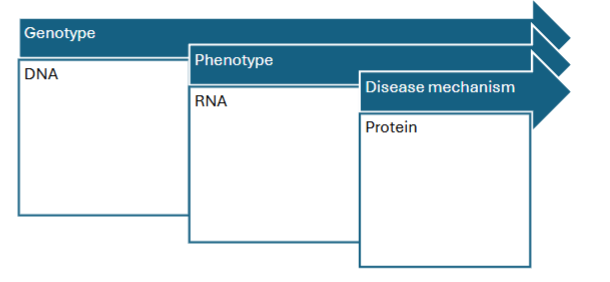
*****What are questions to ask when determining Genome therapies?
3 categories

*****What is the Basic flow of Gene therapy?
what is the processes of determining what type of gene therapy?

*****What are the 3 possible Purposes of the chosen therapy?

****What is the purpose of the chosen therapy dictated by?
Genotype + mechanism of disease
*****What are the 2 types of Gene therapy delivery: aka Location that the therapy administered on?
TARGET organ/ local = /within a target organ
SYSTEMIC = into the blood stream
*******Compare + Contrast TARGETED vs. SYSTEMIC delivery of Therapies
pros + cons
SYSTEMIC: Achieve broad coverage and expression
cons: Therapy may NOT get to target organ + HIGHER RISK OF SIDE EFFECTS
TARGETED: Deliver directly into desired organ + decreases risk of unintentional side effects
Cons: Could be Challenging to ACCESS to DESIRED ORGAN + If the disease has a multisystem, the full disease spectrum will not bey addressed by the new therapy ( aka. if gene is too targeted it won’t be affective enough)
*****What are 3 barriers that systematic delivery of gene therapy may not cross?
Blood brain barrier
Blood RETINAL barrier
BONE + CONNECTIVE TISSUE barrier
******What are 4 modes of Administration of therapies?
Intravenous = to the blood (systemic)
Intrathecal (brain)
Intracerebral (brain)
Intra-muscular
*****Gene therapy delivery: what are the 2 types of VECTORS
packages used to deliver the load
VIRUSES: they know hot to get into a human cell, often they are ATTENUATED or modified so they don’t cause viral illnesses
NON-VIRAL
******What are the 2 common type of VIRAL VECTORS?
AAV (Adeno-associated virus)
Lentivirus
********How to Choose a VECTOR = 4 things to keep in mind
Package capacity: vectors have limited capacity, some genes = too large; RNA can be much smaller
Genome integration + Duration of expression:
Target specificity
Safety
*****How does INTEGRATION relate to DURATION of gene therapy expression?
Integration = LONGER expression (long life in host)
NON-integration - limited time for expression
*****INTEGRATION carries the RISK of what?
Insertional mutagenesis
depending on where it integrates, not 100% sure where it integrates
********Compare + contrast the 2 types of VIRAL vectors
AAV + Lentivirus
What type of gene transfer
Immunogenicity?
SIZE OF CASSETTE?
Where does gene delivery occur to?
INTEGRATION? duration?
AAV
AAV vectors are an ideal delivery tool for IN VIVO gene transfer.
The wild-type AAV is a single stranded DNA genome.
Similar to Wild-type AAV, recombinant AAVs are nonpathogenic and weakly immunogenic.
AAV vectors can deliver a therapeutic transgene cassette up to 5 kb into the target cell.
Gene delivery occurs to the target nucleus leading to production of a functional protein.
The majority of AAV vector genomes do not integrate into the host genome = short expression
LENTIVIRUS
Most common use has been for EX-VIVO therapy
Type of retrovirus and thus lentiviral DNA INTEGRATES into the genome = long term
Integration is usually in a non-random manner
Can transduce postmitotic and quiescent cells (where as some retroviruses require active cell division for successful infection)
Lentivirus vectors have a larger capacity, ~9 kb
Immune response is relatively weak (same as AAV)
Both are low immunogenic but does not mean no immune response
*********NON-VIRAL VECTORS
Similarities + differences with VIRAL vectors
Similarities: also need the same characteristics
Protecting genetic material
Transport into cell
Unpacking of the vector and efficacy
DIFFERENCES:
These are polymers, lipids, inorganic particles etc.
LOWER TOXICITY esp. immunogenicity (advantage of circumventing detection by immune system)
*****What is a CON of NON-VIRAL vectors compared to viral?
However, may lack in gene transfer efficiency, gene expression duration and may have their own safety concerns
Lack millions of years of evolution that selected for the ability to get into host cells
*****What is the most common/popular form of NON-VIRAL vectors?
Lipid nano particles
******Methodology: Compare EX VIVO + IN VIVO
How do the processes differ?
PROS + CONS of both
What type of Viral vector?
WHICH IS MORE POPULAR AND WHY?
EX VIVO: Retroviruses (or lentiviruses) are used because they allow integration of the target gene into the genome
Patients' cells are collected -> cultured -> modified with gene therapy (OUTSIDE THE BODY) -> transplanted back to the patient
PRO: Still needs a vector to get the target gene into the patient’s cells but has much less immune response as patient’s own cells are used
CON: specific to a patient + Low accessibility. Patient needs to go to a specialized center. Also, its like a modified transplant procedure thus a lot more invasive
IN VIVO: AAV used
Cells are not extracted and modified “outside of the body”. Target gene is delivered into the target cells (in the body) through local or systemic delivery
This is a MORE POPULAR method as the medication is not patient specific and medication comes to the patient = MORE ACCESSIBLE
This also needs a vector
Give an EXAMPLE of a condition where EX-VIVO is used vs. IN VIVO
EX VIVO: Gene therapy for B-thalassemia
IN VIVO: Approved gene therapy for Leber Congenital Amaurosis due to RPE65 leading to vision loss, via an AAV vector

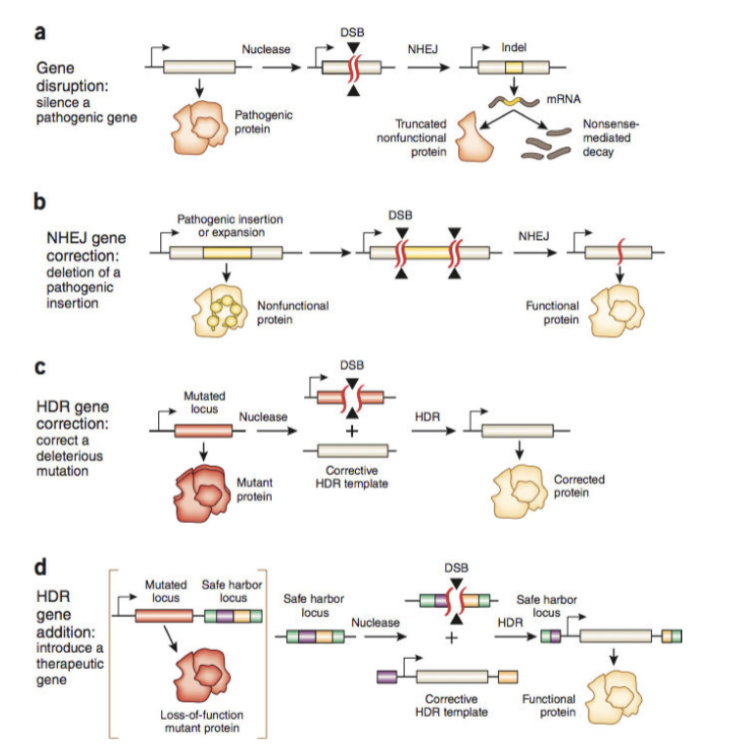
*****GENOME EDITIONG: Possible applications?
Removal or correction of a defective gene within the genome
Gene disruption: Silence a pathogenic gene
NHEJ gene correction: Deletion of pathogenic insert
HDR gene correction: Correct a deleterious mutation
Insert a corrective gene into a “safe” genomic loci
HDR gene addition: Introduce a therapeutic gene
Target a foreign DNA (example: viral genomes)
Are there any APPROVED GENE EDITING THERAPIES?
No approved therapies yet but lots in pipeline
****What is CAR-T
What is the process (is it done EX or IN vivo?)
What is the gene used for the therapy?
How does it work?
What is the target of the therapy?
A promising therapy for cancer
The package (gene) encodes a CAR (chimeric antigen receptor)
Done EX VIVO and T cells are targeted.
These transduced T-cells are transferred back in the patient
These T-cells recognize cancer cells through the cancer specific antigen and would lead to cancer cell death

*****RNA based therapies: Use of RNA molecules offers many different possibilities especially because what?
It does not integrate into the genome
Offers a smaller “pay load” (more options of vectors)
May generate a limited immune response (sort of depends on how it is delivered) - again more vector possibilities
*****What are 2 EXAMPLES of RNA based therapies?
ANTISENSE OLIGONUCLEOTIDES (ASO)
mRNA
Already have experienced this with covid vacc.
******what are ASO (Antisense Oligonucleotides)
what do they do?
What is needed to be understood for ASO to be successful?
Short, synthetic, single (or double) stranded oligonucleotides
Function: Binds a specific RNA sequence of the gene of interest
The mechanism of disease has to be understood to design an ASO approach for a successful therapy
*****What are 2 possible outcomes of ASO after binding gene of interest?
give an example of each
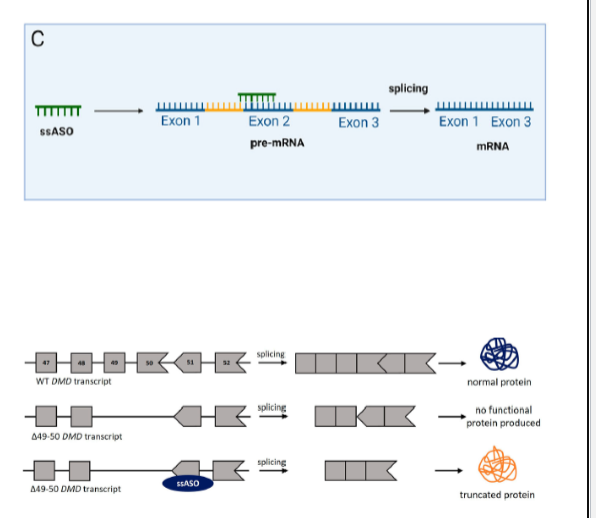
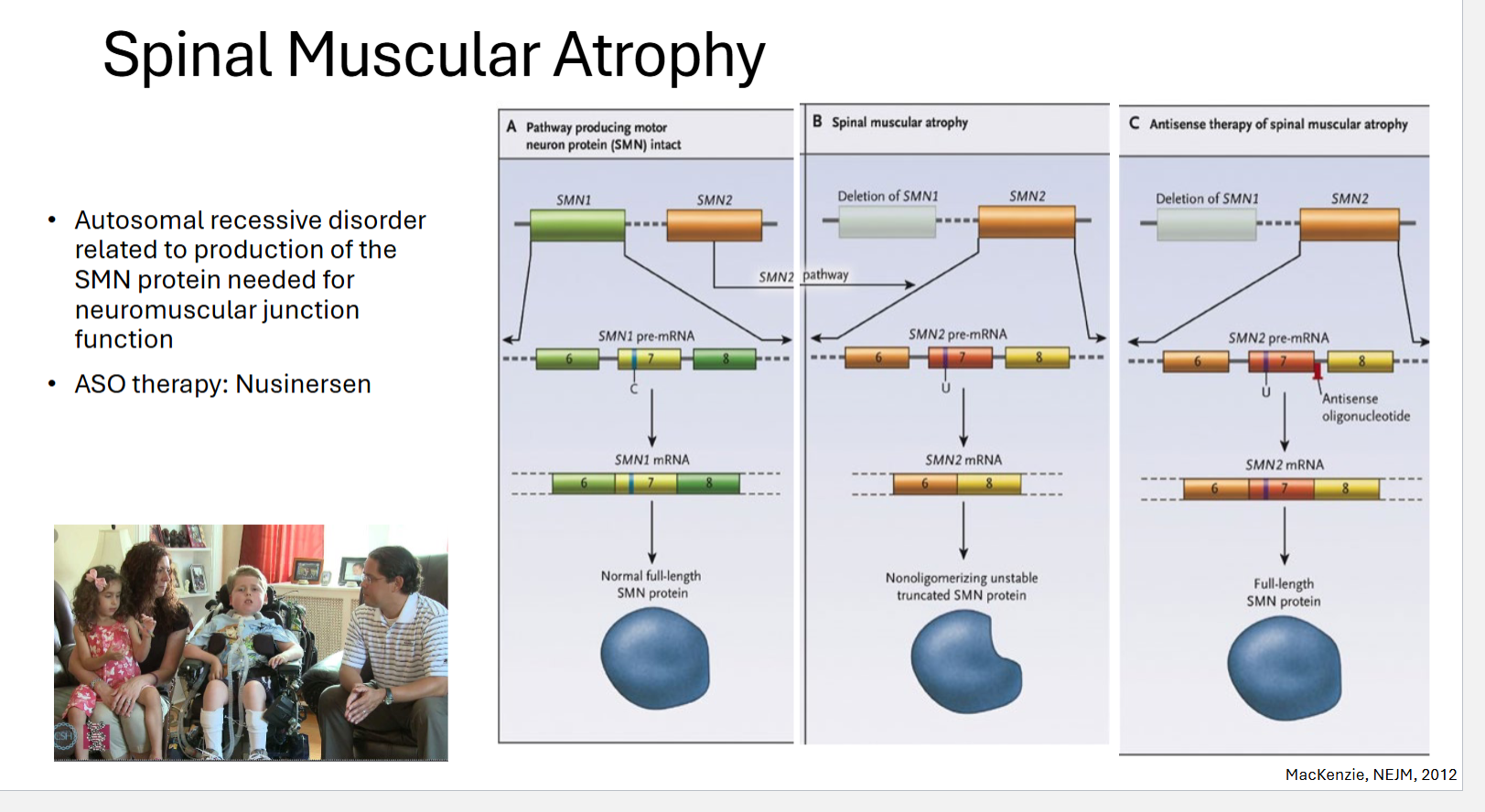
Modulation of splicing
Goal could be to restore protein function. In this scenario, the issue would be that low protein expression (or null) leads to symptoms of the disease
example: spinal muscular atrophy
RNA knockdown
Goal could be to limit the expression of a protein. In this scenario, expression of the protein is considered toxic and leads to the disease. Genetic mechanism may be a gain of function (GOF) variant
Example: homozygous familial hypercholesterolemia due to PCSK9 variants
*****What are the different types of ASO
2 categories
3 total types
Knock down
Gapmer ASO
siRNA
Splice switching ASO
******GAPMER + siRNA ASO
what is the outcome/ purpose these ASOs?
What must we know in relation to the outcome of using these types of ASO? why?
Used to down regulate or knock down a transcript BOTH LEAD TO mRNA DEGREDATION
Determine if the pathogenic variant leads to a gain of function of a protein
Must know the downstream effects of downregulation
• Do low protein levels alter the physiologic state of the cell?
• Functional studies, examples of biallelic LoF variants in the same gene
• Example: homozygous familial hypercholesterolemia due to PCSK9 variants

*****Are GAIN OF FUNCTION pathogenic variants typically Auto Dom or Auto recessive disorder?
AUTO DOM
auto recessive = typically Loss of function
******Splice site ASO
what are the 2 outcome/ purpose these ASOs?
Create splice site modulation
Leading to disruption or restoration of READING FRAME
Increase protein levels for LoF variants
Decrease protein levels for toxic GoF variants
4 Hurdles for gene therapy to become widely used
Providing curative/disease modifying treatment for conditions that do not have treatment options
Mostly for monogenic disorders
But some therapies for acquired diseases (cancer) are also a possibility
Rare disease populations are small, and accessibility is an issue
Gene therapy in Korea and patient is in Canada
Cost
500K to 2.1 million per treatment
WONT SURVIVE MARKET: Glybera (for lipoprotein lipase deficiency): $1 million. Was withdrawn from the market in 2017 due to high price and low demand
Cost and accessibility can significantly reduce the future clinical implementation of these exciting therapies
3 key concerns for the Safety
Integration into the genome: With random integration, risks of activating or disrupting nearby genes. This will lead to unintended side effects like cancer, death etc
Genome editing could be inaccurate or occur at more than one intended site
Immune response: Humans are meant to create an immune response against a virus thus this will either destroy the gene within the virus vector (if patient has been previously exposed to AAV) or will mount an immune response next time, eliminating the possibility of a “second” treatmen
***What are 3 possible SOLUTIONS to random integration
Solutions: combination of techniques
• Site specific integration with genome editing
• Allows insertion of curative gene into a “safe” genomic loci
• RNA based technologies
How is genome therapy EFFECTIVENESS ensured?
Measured via clinical trials
• Phase 1/2/3
4 Medical Genetics contribution in genetic therapies

Medical Geneticists role in Genetic Therapy development
Preclinical
Clinical trial
LTFU
