Biochem Exam 3 Quiz 2 - Nitrogen Catabolism
 Call Kai
 Learn
 Practice Test
 Spaced Repetition
 Match
 Flashcards
 Knowt Play
1/42

There's no tags or description
Looks like no tags are added yet.
43 Terms
Nitrogen Metabolism Big Picture

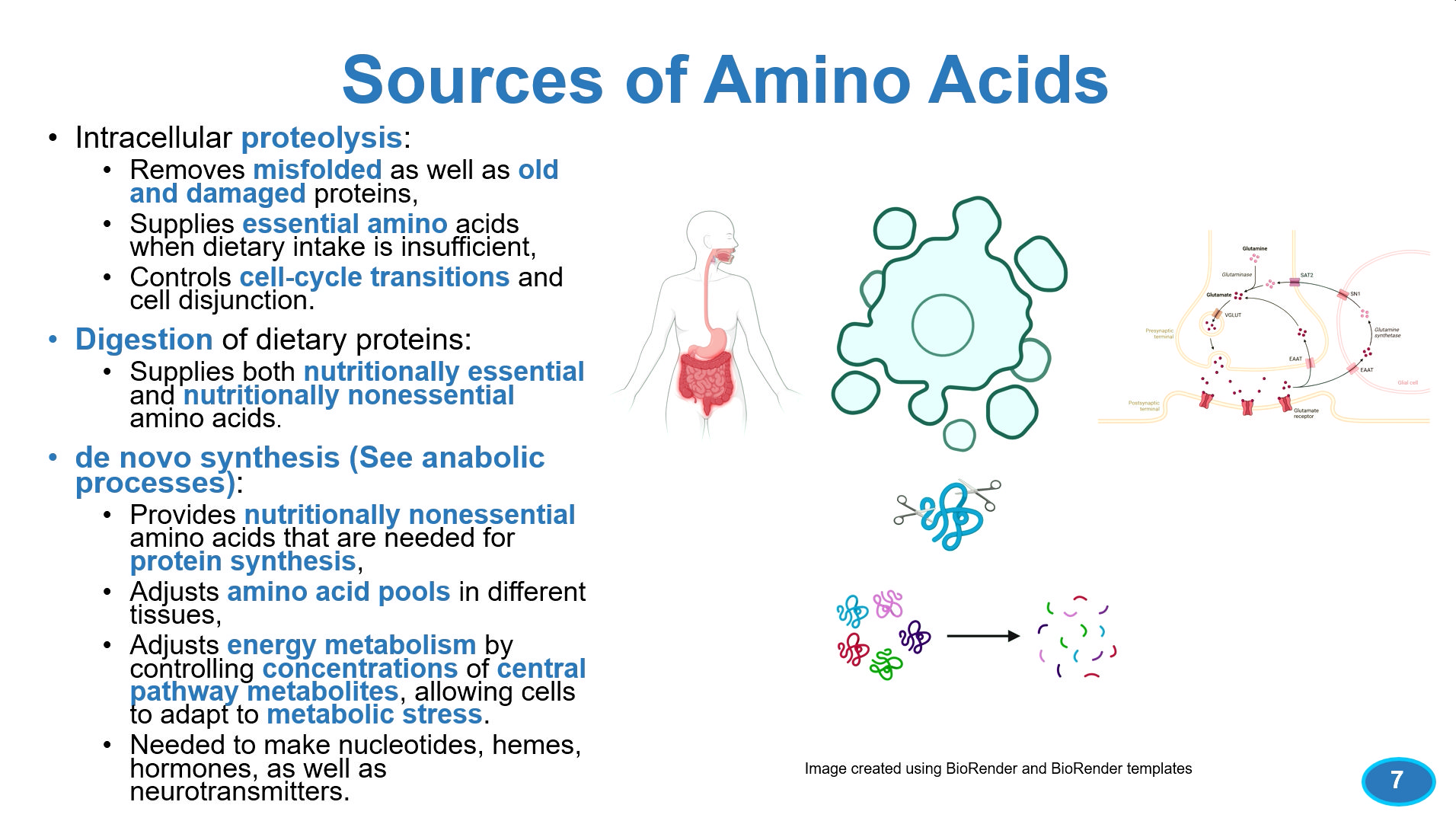
Sources of Amino Acids
Intracellular proteolysis: Misfolded proteins and stuff
Digestion of Dietary Proteins
De novo synthesis
Essential Amino Acids
Trp, Val, Phe, Met, Thr, Leu, His, Iso, Lys

Intracellular protein turnover
Degradation of our own proteins
Regulated by tightly controlled processses to maintain protein homeostasis (Proteostasis)
Ensure that functional proteins are maintained at correct concentrations
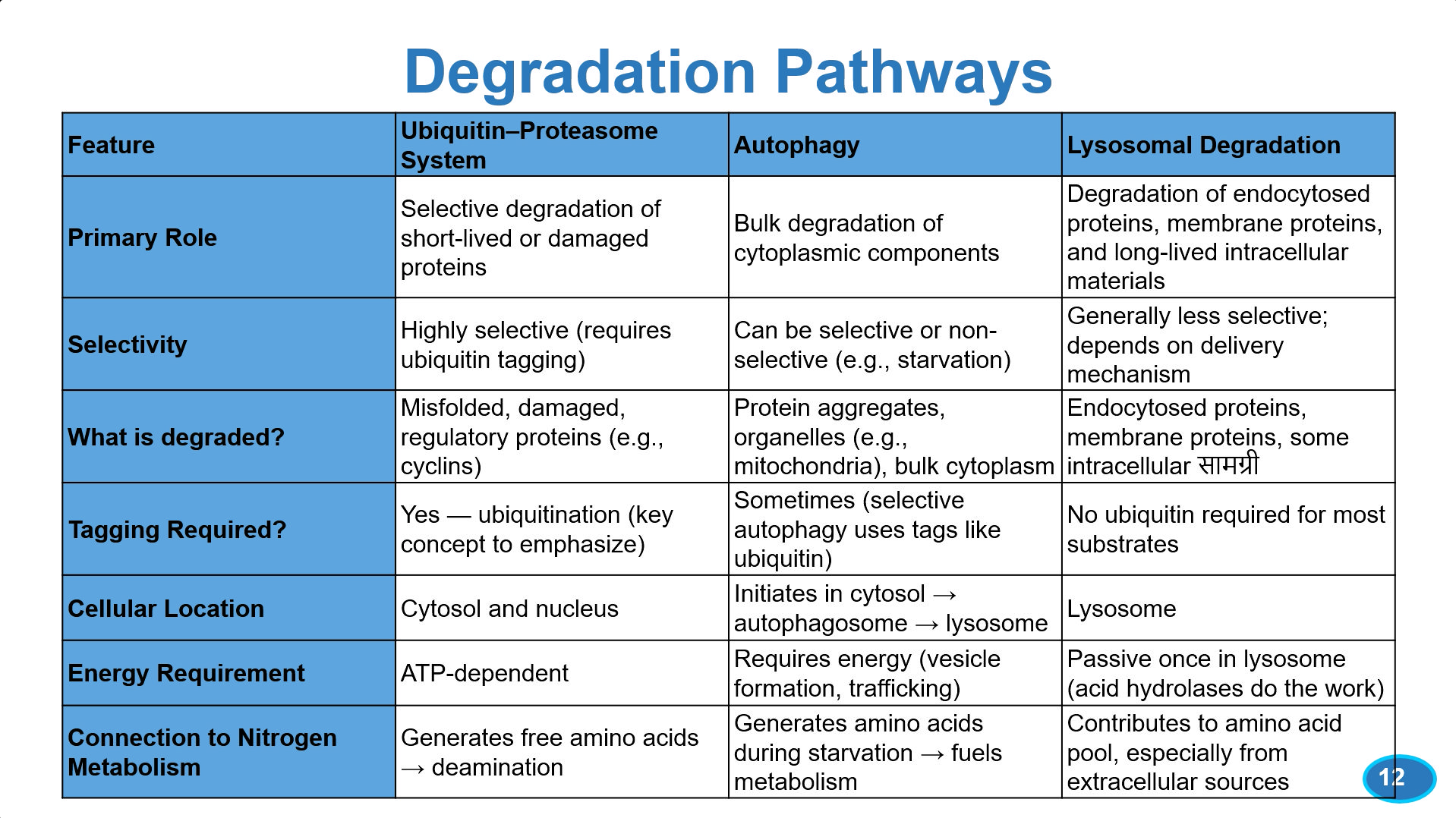
THREE PATHWAYS
Lysosome
proteasome
autophagic

Degradation pathways
Autohpagy: Cytosolic components in bulk; Engulfs them
Lysosomal breaks down proteins after endocytosis of protein
Ubiquitination
Ubiquitin is tagged onto a protein to target proteins for degradation.
Adds ubiquitin to target protein using a 3-step protein complex
REQUIRES ATP
polyubiquinated protein can enter proteasome which is acidic to break down only the protein

Digestion: Controlled proteolysis
Protease activation cascade
Degraded through sequential proteolysis: Stomach first with pepsin initially denaturing and cleaving. Then small intestine for bulk digestion
Enzymes released as zymogens (inactive form of the enzyme which are activated when they enter the right environment i.e. stomach)

Zymogens
Zymogens prevent self digestion
Pepsinogen becomes pepsin at low pH. Pepsin activates more pepsinoens in a cascade
Tryspinogen becomes trypsin in intestine which activates other zymogens

Absorption of proteins
AAs and Di and Tripeptides are absorbed in small intestine across intestinal epithelial cells (enterocytes)
AAs brought into the enterocytes via transporters then inside the cell peptides are broken down to AAs which enter portal circulation and go to the liver

Amino acid transporters
AAs brought in through secondary transport with sodium. Na/K pump keeps the gradient good enough for the cotransport.
Into the blood is passive diffusion

AA oxidation
AAs undergo oxidative degradation when protein turnover isn’t needed for new proteins
Ingested AAs exceed the bodys need for protein
Carbs are unavailable or not properly utilizes

Keto Acids and Amino Acids
Pyruvate
Oxaloacetate
Alpha ketoglutarate
Keto acid is replacement of amine in amino group with carbonyl

Transamination
Removal of amino group from AA
Necessary step in AA breakdown
promoted by enzymes called aminotransferases or transaminases
Basically alpha amine is swapped with alpha keto acid basically swapping both from AA to Keto acid and vice versa
NO NET DEAMINATION BECAUSE AMMONIA IS TOXIC

Pyeidoxal Phosphate (PLP)
Vitamin B 6 derivaive
Group that accepts NH2 onto aldehyde to make pyridoxamine phosphate
Then alpha keto glutamate takes the NH2 group to become glutamate

ALT and AST aminotransferases
Alanine and

Which AAs can’t undergo transamination
Secondary amines which cant undergo transamination: Proline and hydroxy Proline
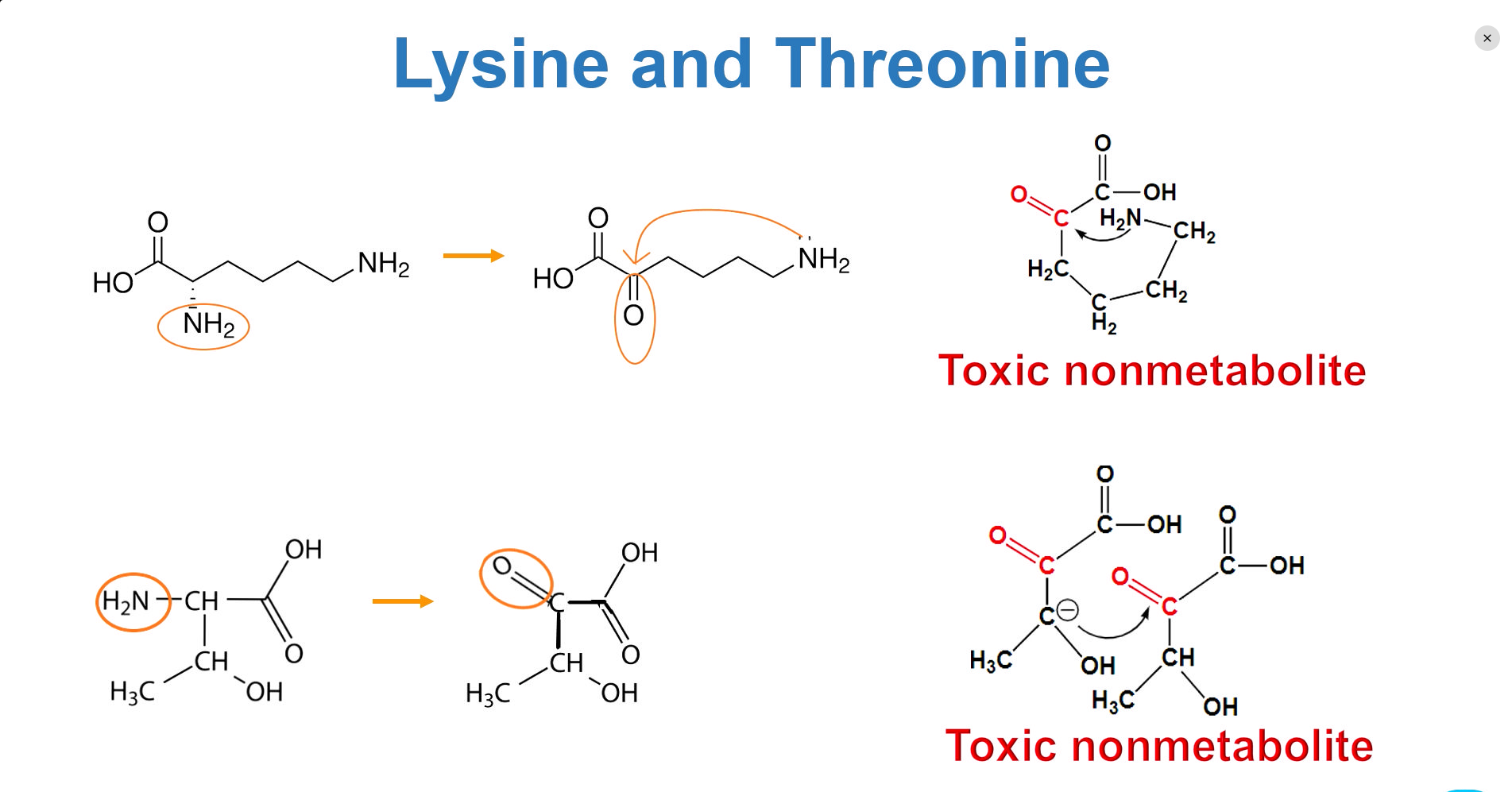
Lysine and threonine because their R would interact and form a toxic nonmetabolite
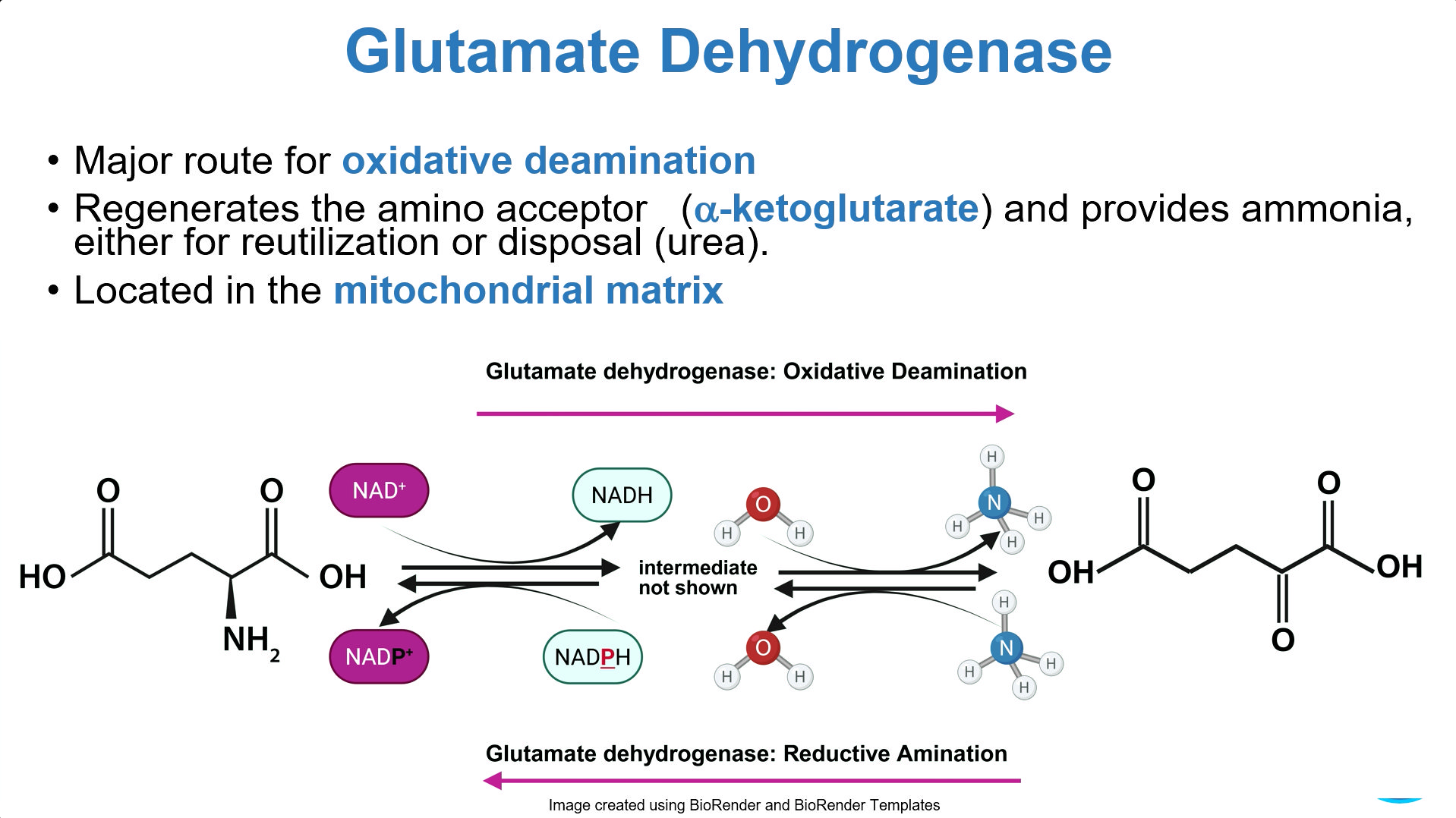
Glutamate dehydrogenase and deamination
Happens in mitochondria in liver
Major route for oxidative deamination
Regenerates alpha KG and provides ammonia to make urea
PRODUCES NADH AND NADPH
REVERSE IS SAME ENZYME JUST OPPOSITE
Coupling Reaction (Transdeamination)
No net deamination
Basically, aminotransferase makes glutamate which is reverted back to alpha kg to contnue through glutamate dehydrogenase

Regulation of Glutamate dehydrogenase
High energy (ATP GTP NADH) promotes protein synthesis to inhibit GDH
LOW energy (ADP GDP NAD free AA) promotes deamination and promotes GDH WANTS TO ENHANCE TRANS DEAMINATION TO MAKE TCA INTERMEDIATES

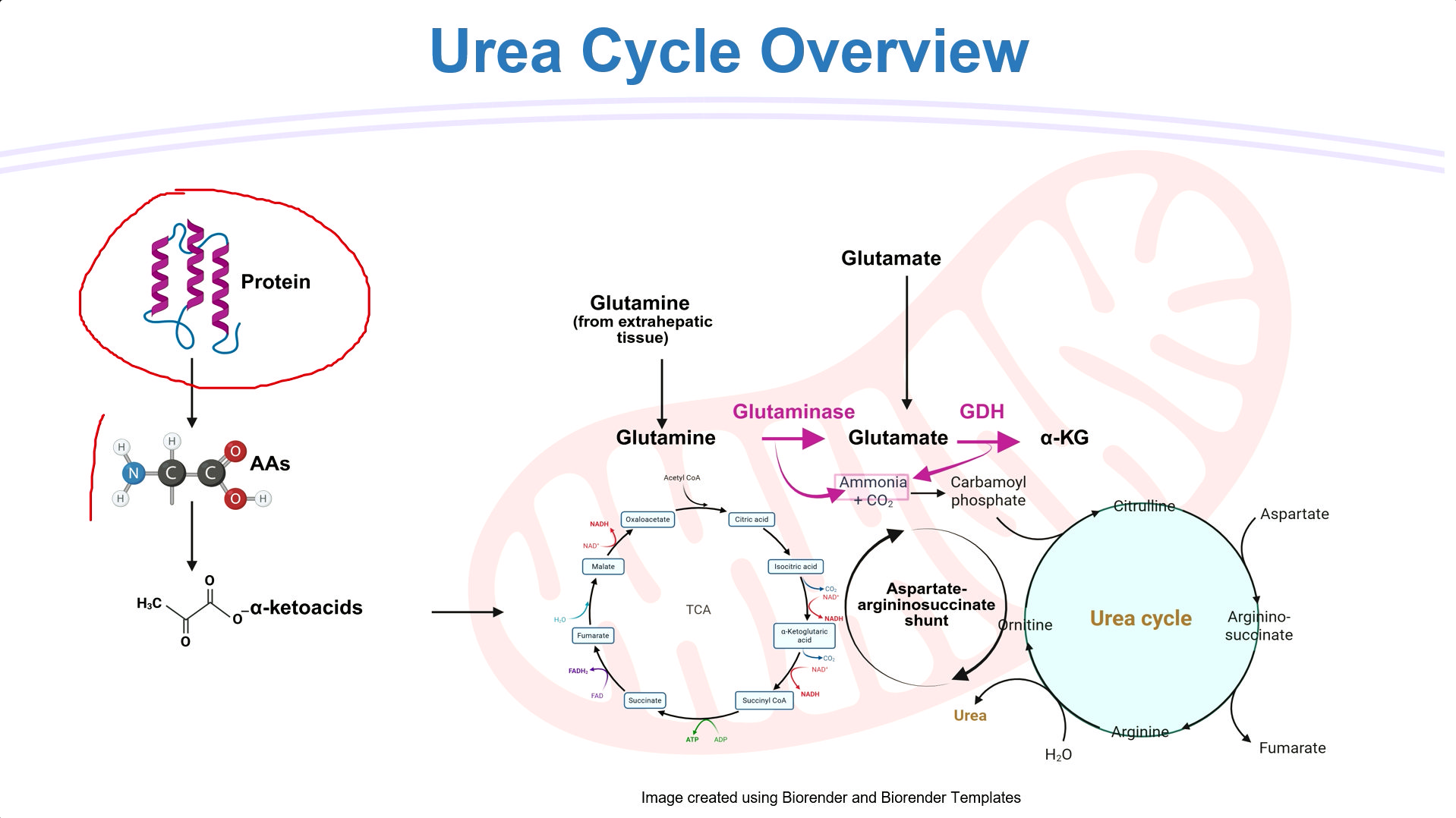
Glutaminase
A mitochondrial enzyme that catalyzes the breakdown of glutamine to form glutamate
All throughout body
Ammonia formed is consumed by urea cycle
Asparaginase
Breaks down asparagine
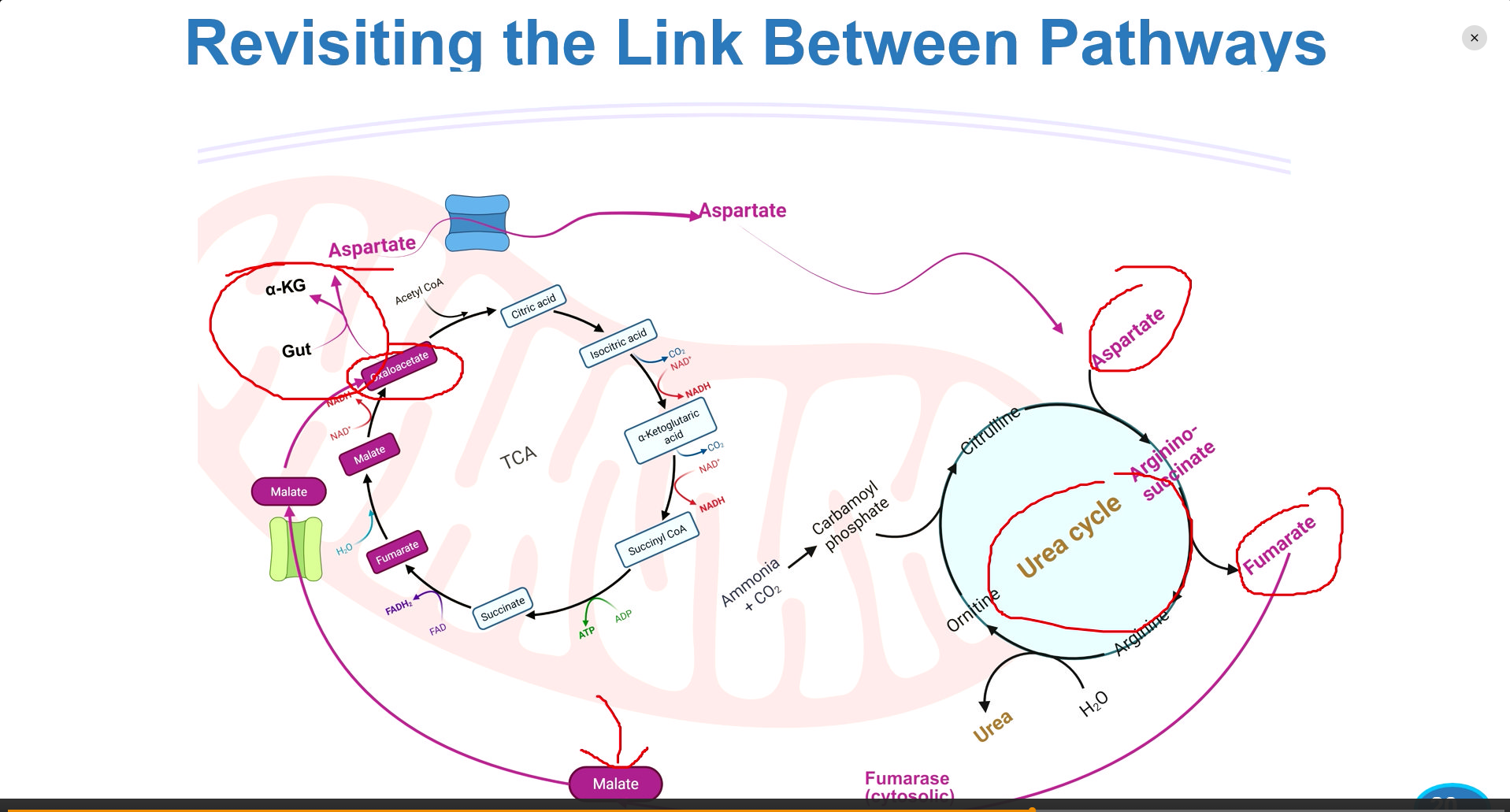
How is aspartate brought into cytosol for urea cycle
Aspartate is formed by Alpha KG and sent out through transporters to the cytosol
Malate also made by OAA and turned to fumarate for urea cycle
Urea cycle overview
Link between TCA and urea cycle through aspartate arginosuccinate shunt
Glutamine turned to glutamate through glutamate synthase
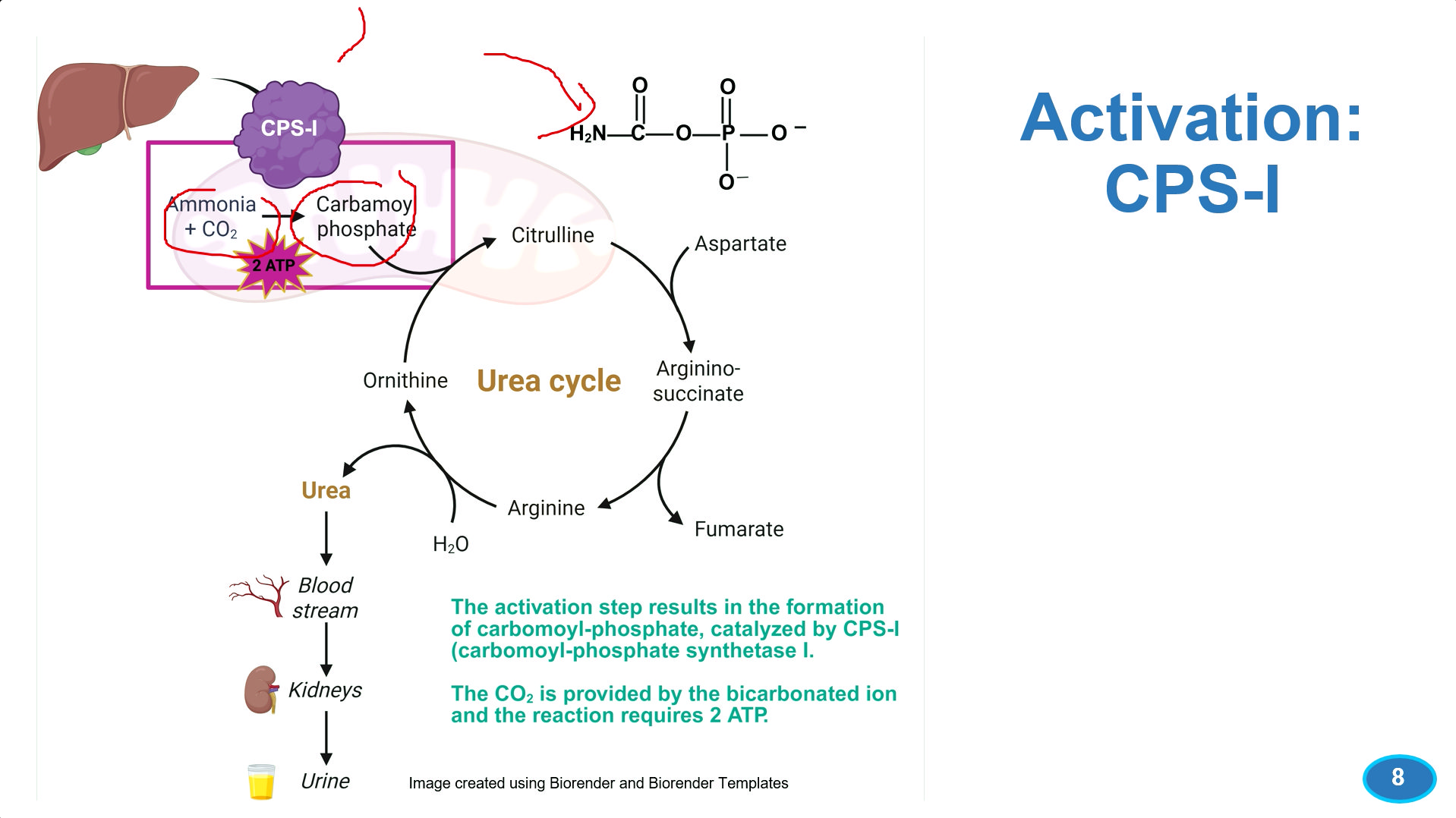
How is urea cycle activated
CPS-I (caraboyl phosphate synthetase 1) stimulates conversion of ammonia and co2 to carbamoyl phosphate
CO2 provided by HCO3-
Step 1 urea cycle
Formation of citrulline from carbamoyl phosphate
CATALYZZED BY OTC (ornithine)
Step 2 of urea cycle
Citrulline transported from mitochondria to cytosol where argininosuccinate synthease catalyzes its combination with arginine

Step 3 of urea cycle
Argininosuccinate is cleaved by argininosuccinate lyase to produce arginine and fumarase (fumarate leaves)

Step 4 of urea cycle
Arginine converted to ornithine, creating Urea through using water. Ornithine released back to the mitochondria to continue
Links between urea cycle and TCA
Alpha KG can be converted to aspartate which can create fumarate through argininosuccinate
Fumarate goes back and is integrated into the TCA by becoming Malate through malate synthase?

Regulation of Urea cycle and TCA balance
High protein diet induces urea cycle to dispose of excess nitrogen
GLUCAGON STIMULATES BIOSYNTHESIS OF ALL UREA CYCLE ENZYMES
AAs such as ALA, Gly, Met, and Cys are effective in stimulating glucagon release and trigger synth of NAG (N acetylglutamate)

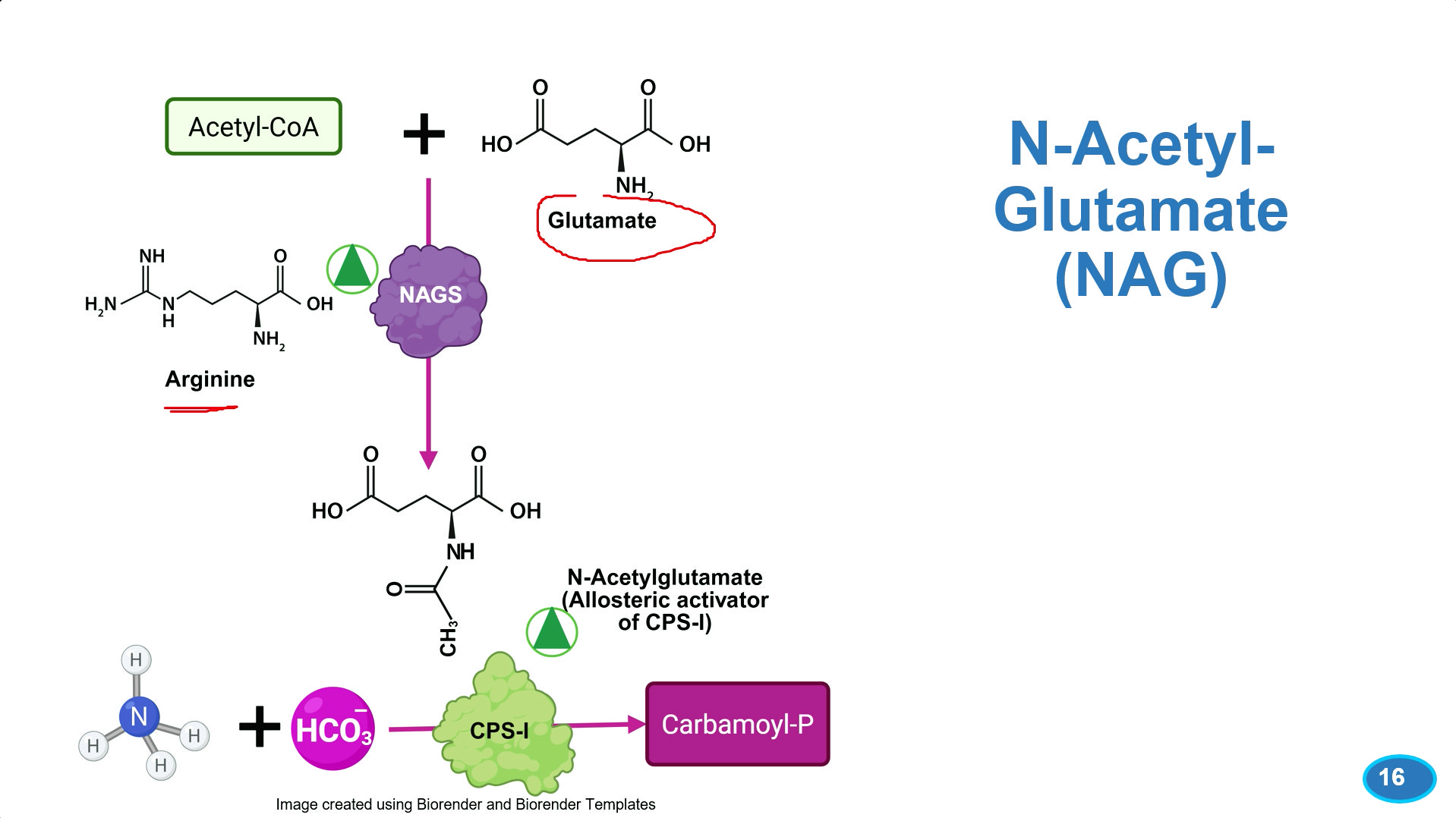
N acetylglutamte NAG
ARGININE ACTIVATES NAG SYNTHASE
NAG acts as allosteric activator of CPS-I which creates carbamoyl phosphate which is necessary for urea cycle (creation of carbamoyl phosphate)
Ammonia production
Occurs in all tissues through regular metabolism
Glutamate and glutamine provide main method of incorporation of NH4+
Ammonia assimilation is catalyzed by
GDH
Glutamine synthetase
carbamoyl phosphate synthetase I
Glycine Synthase

Hyperammonemia
Abouve 30 micromolar in adults, 80 micromol in infants, 55 micro in adolescent
Can be caused by bad liver as well as excessive protein turnover

Hyperammonemia causes
Urea cycle disorders
Deficiencies in NAGS can be treated with carbamoyl glutamate which is an analog of NAG
LIVER DISEASE ALSO
Aromic acid benzoate or phenylbutyrate can successfully assimilate excess ammonia

Double filter system for urea/ammonia cleanup
Liver portal triad towards central vein
Periportal zone (1) perivenous zone (3)
1: enzymes have high capacity to clean up ammonia through cycle
3: Mostly glutamine synthetase to remove ammonia through high affinity (lower capacity than zone 1)
Happens because vessels are fenestrated

Ornithine transcarbamoylase deficiency
Can’t combine Carbamoyl phosphate and ornitine to make citrulline for urea cycle.
Most common urea issue and can be treated by decrease protein intake
Causes hyperammonemia and buildup of carbamoyl phosphate in liver which can backup into cytosol which can cause a buildup of errodic acid (errodic acidria)

Arginase Deficiency (A UCD)
Can’t form ornitine which is bad
NOT AS BAD AS OTC DEFFICIENCY

GDH Reductive amination
Picks up ammonia, forming glutamate from alpha keto glutamate
NADPH is needed (GDH) is present in whole body
Glutamine synthetase
Cytosolic enzyme which assimilates ammonia to form glutamine from glutamate (USES ATP)
PRESENT IN ALL DISTANT ORGANS AND SHUTTLES STUFF TO LIVER

Glutamine synthetase Regulation
Glutamine end products inhibit glutamine synthetase
Glutamine importance
Transports ammonia to liver to be picked up.
VERY IMPORTANT FOR BRAIN

Ammonia scavenging in the brain
Converts alpha KG to glutamate to glutamine. Which must be turned back to alpha KG in liver

Disposition of the carbon skeleton
Glycogenic AAs can be converted to intermediats in TCA cycle and gluconeogenesis (Ala, Asp, Asn, Glu, Gln)
Ketogenic AAs converted to ketone bodies (Leu, Lys, Ala, Cys, Gly, Ser)
BOTH: Ile, Phe, Tyr, Trp, Thr
