arch test two part five
 Call Kai
 Learn
 Practice Test
 Spaced Repetition
 Match
 Flashcards
 Knowt Play
1/36

There's no tags or description
Looks like no tags are added yet.
37 Terms
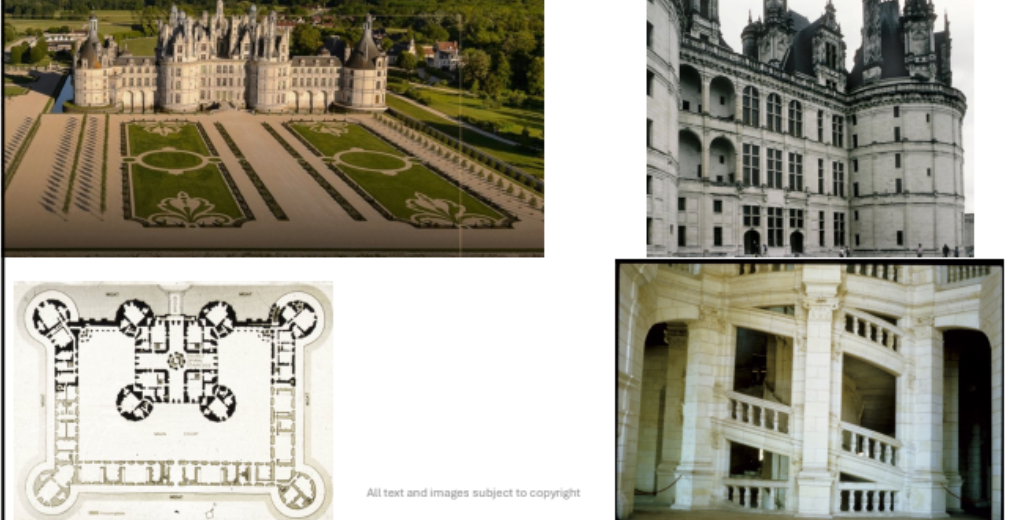
Image 21: Identify this building.
Château de Chambord, France.

Chambord: date, location, and function?
1519–1547; Loire Valley, France; royal hunting lodge and château.

Who commissioned Chambord and who completed later work?
King Francis I commissioned it; later French rulers continued work and additions.

How does Chambord admire medieval castles?
It has towers, steep roofs, turrets, and a castle-like silhouette.

How does Chambord show Italian Renaissance influence?
Its symmetry, central planning, classical details, and grand stair design reflect Renaissance ideas.

Image 21: What are the key facts about Château de Chambord?
1519–1547; later work in the 17th century; Loire Valley, France; Royal hunting lodge and château.

Château de Chambord: who commissioned or designed it?
Commissioned by King Francis I; later work continued under later rulers

Château de Chambord: what style and materials are important?
French Renaissance with medieval castle features; Moat-like setting, towers, steep roofs, ornate chimneys, symmetrical planning.

Château de Chambord: what does it teach us about its culture?
French monarchy blended medieval traditions with Italian Renaissance ideas

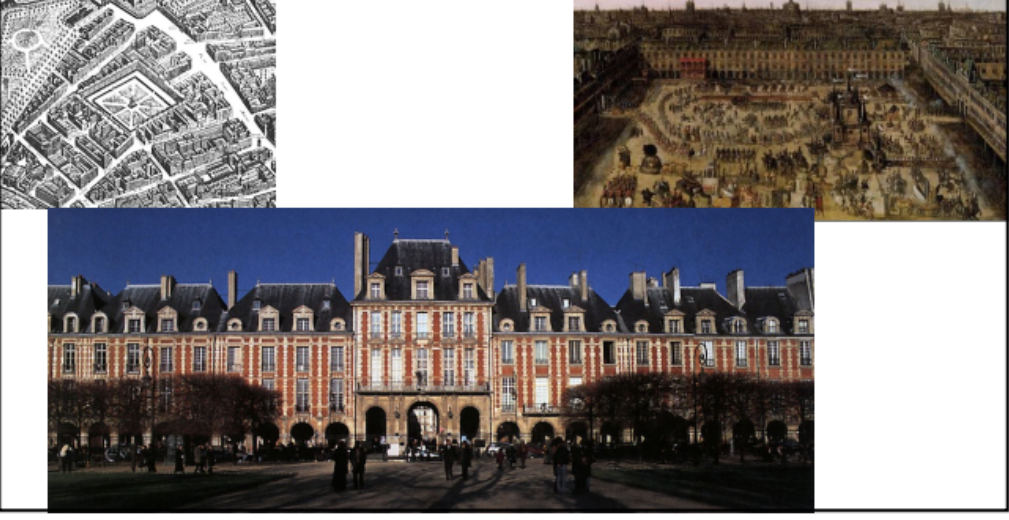
Image 22: Identify this place.
Place Royale (Place des Vosges), Paris, France.

Place des Vosges: date, location, and function?
1605–1612; Paris, France; planned public square surrounded by residences and shops.
Who commissioned Place Royale?
King Henry IV of France.

What buildings surround the central square, and what were they used for?
Uniform residential buildings with shops and arcades for living, trade, and walking.

What was innovative about Place Royale?
A unified, planned square with matching façades created an orderly urban space and promoted royal prestige.

Image 22: What are the key facts about Place Royale (Place des Vosges)?
1605–1612; Paris, France; Planned public square with residential and commercial buildings.

Place Royale (Place des Vosges): who commissioned or designed it?
Commissioned by King Henry IV
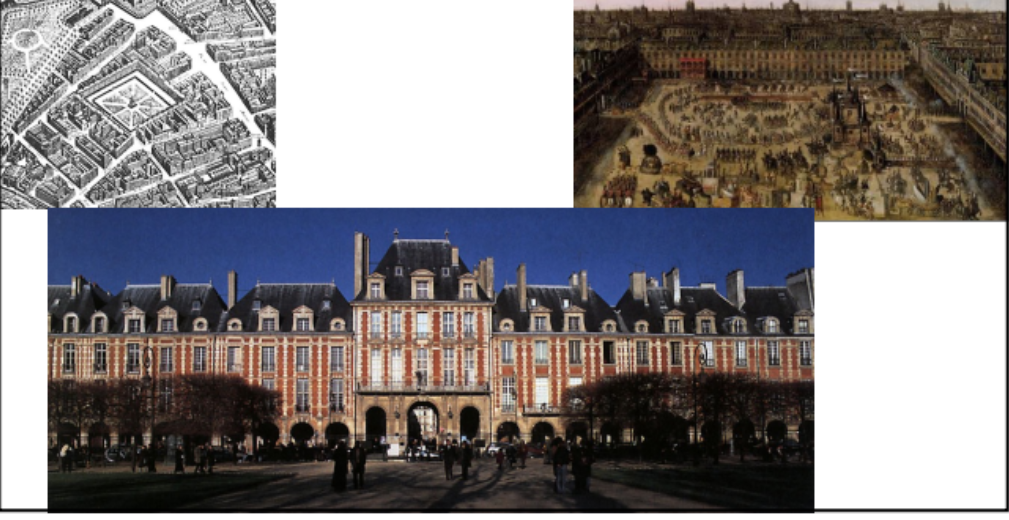
Place Royale (Place des Vosges): what style and materials are important?
Early French classical / urban planning; Regular square, uniform brick-and-stone façades, arcades.
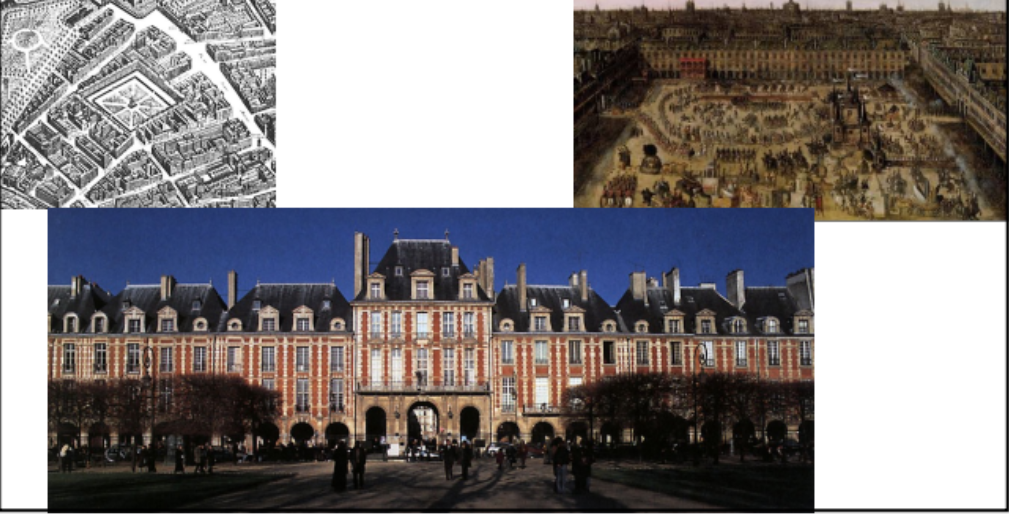
Place Royale (Place des Vosges): what does it teach us about its culture?
Urban design promoted order, commerce, and royal prestige

Image 23: Identify this building.
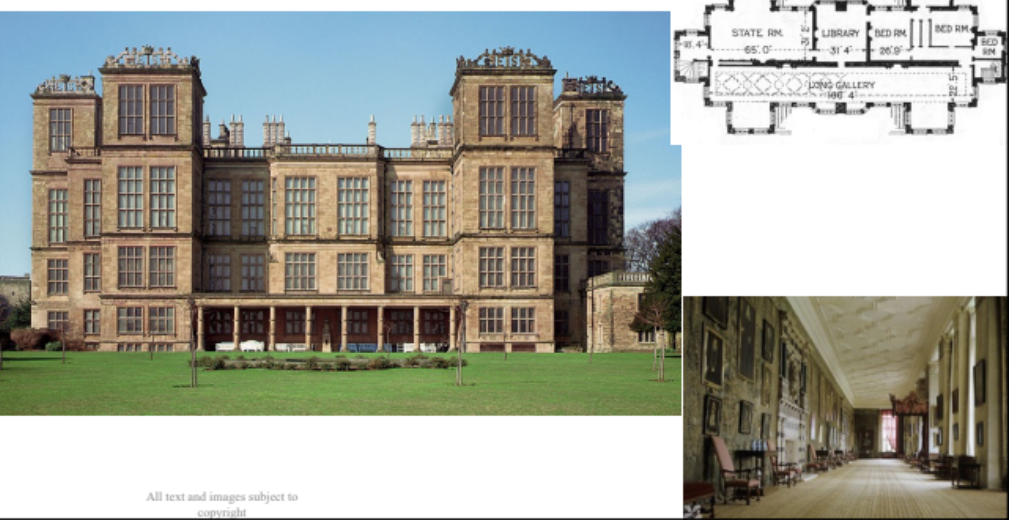
Hardwick Hall, Derbyshire, England.

Hardwick Hall: date, location, and function?
1590–1597; Derbyshire, England; aristocratic country house.

Who commissioned Hardwick Hall, and how is her status shown?
Bess of Hardwick; its huge windows, size, and prominent initials display her wealth and status.

What type of building is Hardwick Hall and what was its purpose?
An elite country house for living, entertaining, and displaying family power.
What features show Renaissance influence?
Symmetry, geometric planning, classical details, large windows, and balanced façades.

Image 23: What are the key facts about Hardwick Hall?
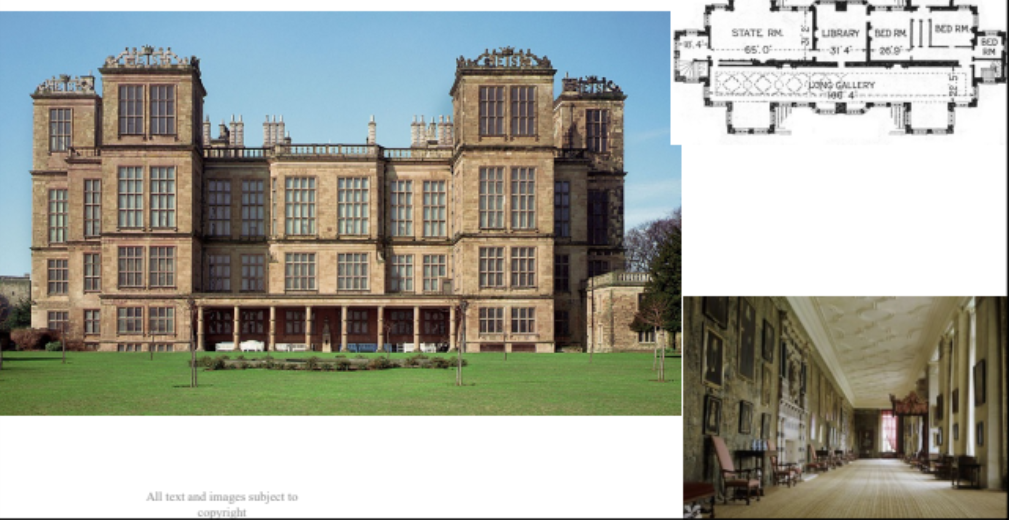
1590–1597; Derbyshire, England; Country house for an aristocratic family.
Hardwick Hall: who commissioned or designed it?
Commissioned by Bess of Hardwick; designed by Robert Smythson

Hardwick Hall: what style and materials are important?
Elizabethan Renaissance country-house architecture; Large windows, symmetrical layout, towers, stonework.

Hardwick Hall: what does it teach us about its culture?
Wealth and status displayed through size, light, and ornament

Image 24: Identify this building.
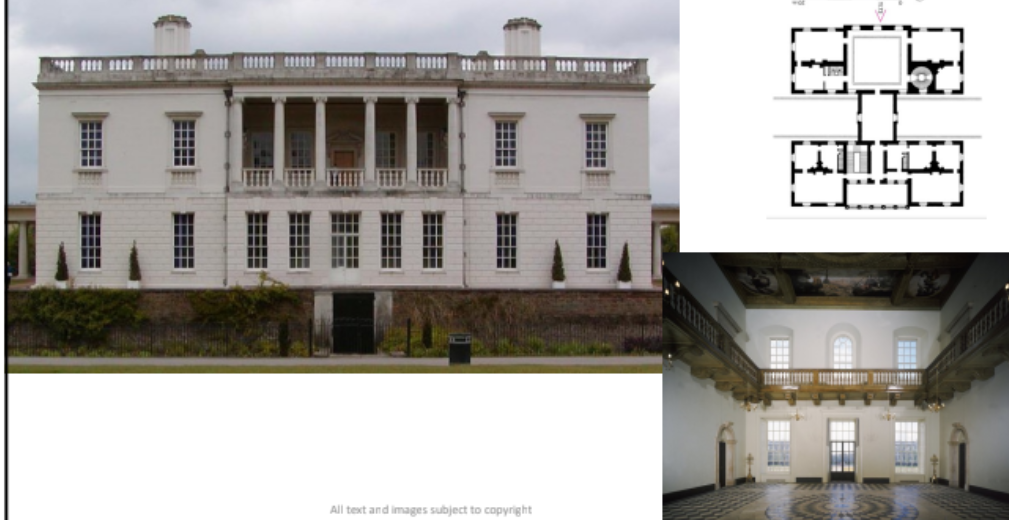
Queen's House, Greenwich, England.
Queen's House: date, location, and function?
1619–1622; Greenwich, England; royal residence.

Who was the Queen's House built for?
Designed by Inigo Jones for Queen Anne of Denmark; later completed for Queen Henrietta Maria.

What classical elements appear on the façade?
Symmetry, columns, simple geometric forms, and classical proportions.

How does its design reflect its purpose?
Its elegant, balanced design presents a refined royal residence.
What design principles reflect Palladio's ideas?
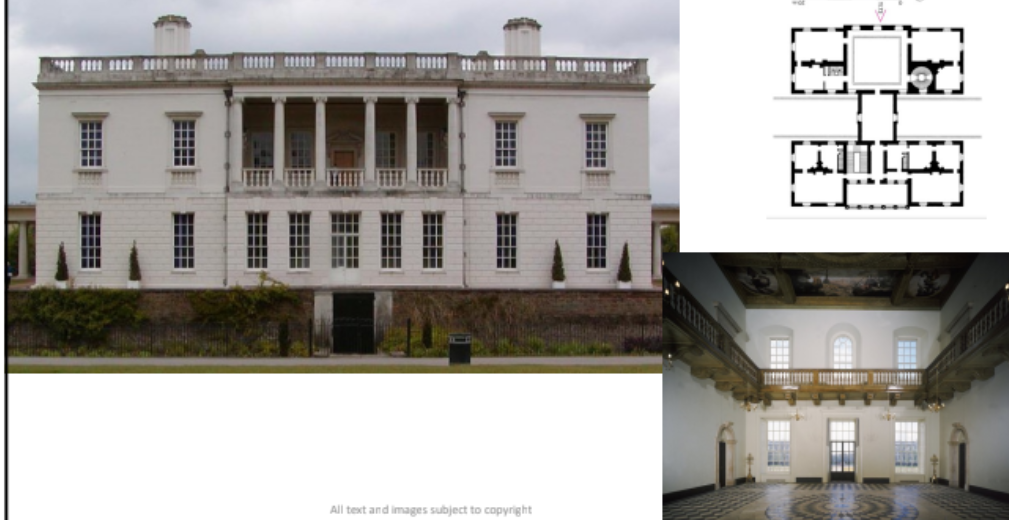
Symmetry, clear geometry, classical orders, and balanced proportions.

Image 24: What are the key facts about Queen's House?
1619–1622; Greenwich, England; Royal residence.

Queen's House: who commissioned or designed it?
Designed by Inigo Jones for Queen Anne of Denmark; completed for Queen Henrietta Maria

Queen's House: what style and materials are important?
English Palladian / Classical architecture; Symmetry, classical columns, geometric planning, balanced façades.
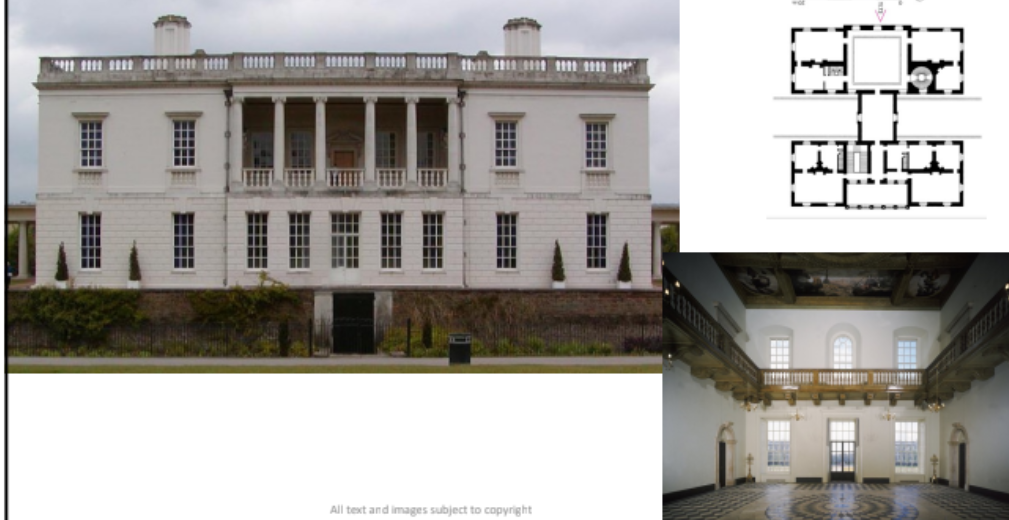
Queen's House: what does it teach us about its culture?
Classical Italian ideas introduced into English royal architecture