High Risk Pregnancy Complications
 Call Kai
 Learn
 Practice Test
 Spaced Repetition
 Match
 Flashcards
 Knowt Play
1/60

There's no tags or description
Looks like no tags are added yet.
61 Terms
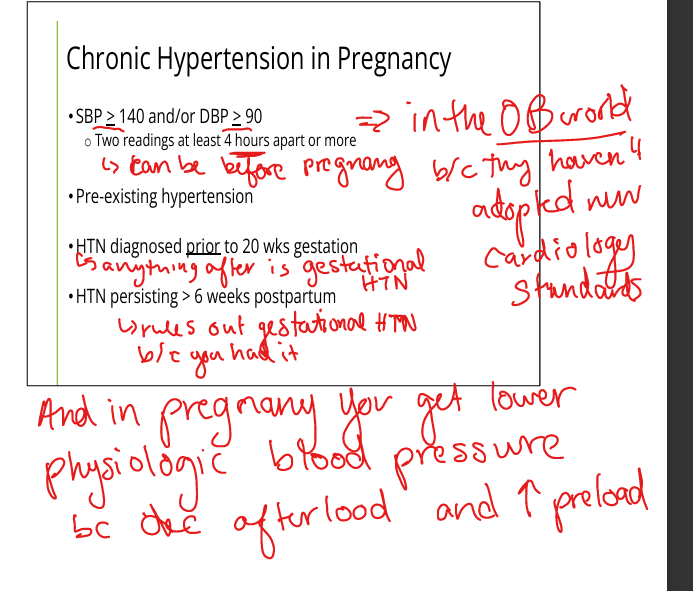
What BP defines hypertension in pregnancy? (How many readings and how far apart)
SBP ≥140 or DBP ≥90 on 2 readings 4+ hours apart

What is chronic hypertension in pregnancy?
HTN diagnosed before 20 weeks or persisting >6 weeks postpartum
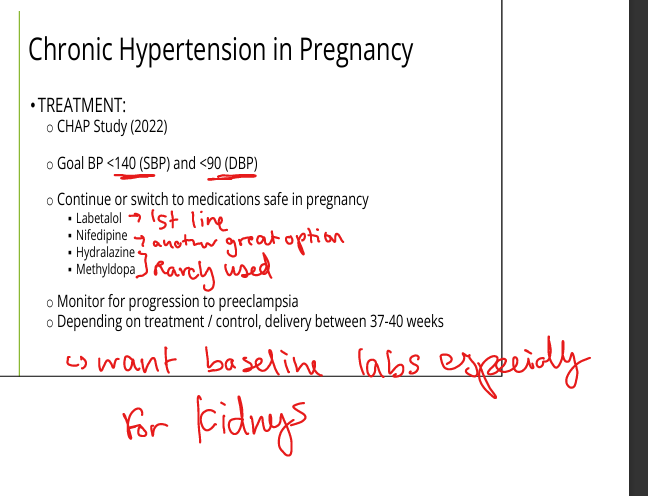
What medications are safe for chronic HTN in pregnancy?
Labetalol, nifedipine, hydralazine, methyldopa

What is the BP goal in chronic HTN pregnancy?
<140/<90
What is gestational hypertension?
New-onset HTN after 20 weeks gestation without proteinuria or end-organ damage

Gestational HTN treatment? Risks?
Deliver by 37 weeks bc HTN will only get worse causing preeclampsia. Only treat with meds if >160/110
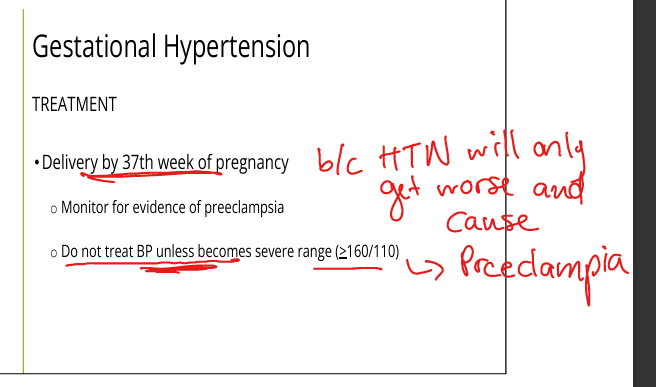
When is gestational hypertension treated with antihypertensives?
Only if severe-range BP (>160/110)

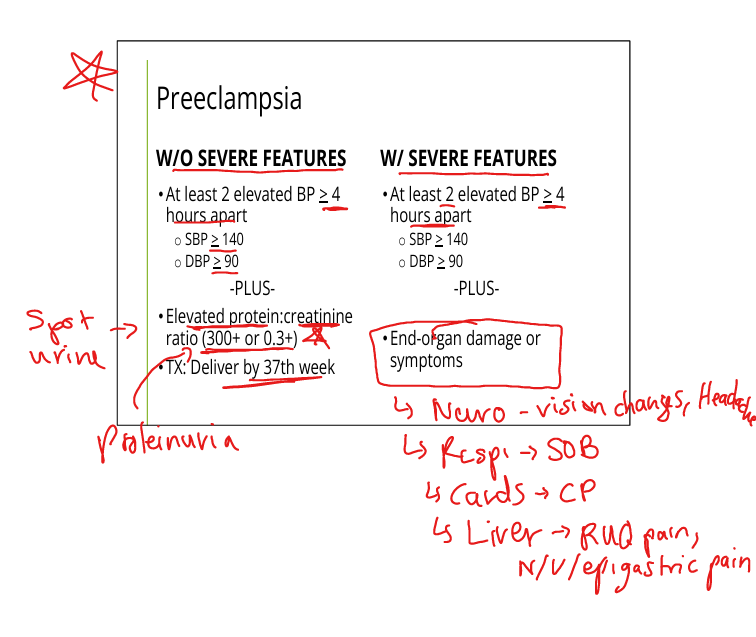
What is required for preeclampsia without severe features?
HTN + proteinuria (300+ or 0.3+)

What proteinuria defines preeclampsia?
Protein:creatinine ratio ≥0.3 (≥300 mg)
Treatment for preeclampsia without severe features?
Delivery by 37 weeks
What defines preeclampsia with severe features? Symptoms? Signs?
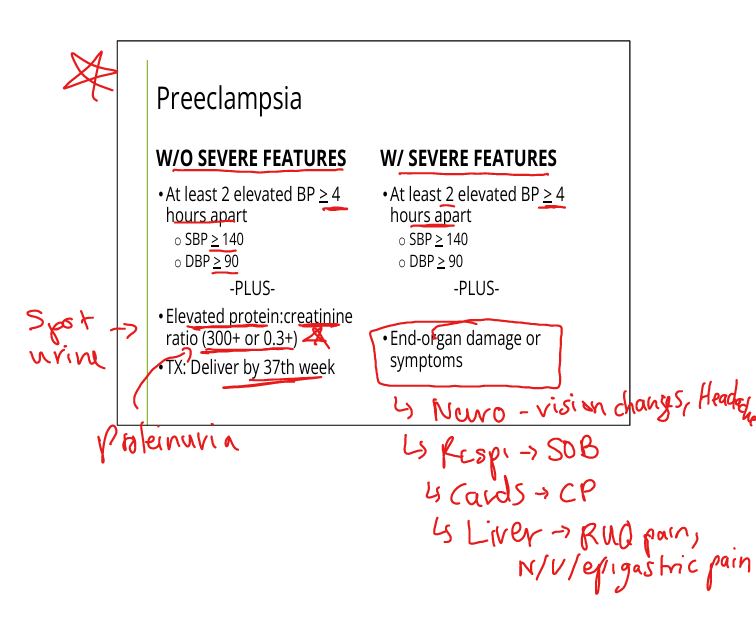
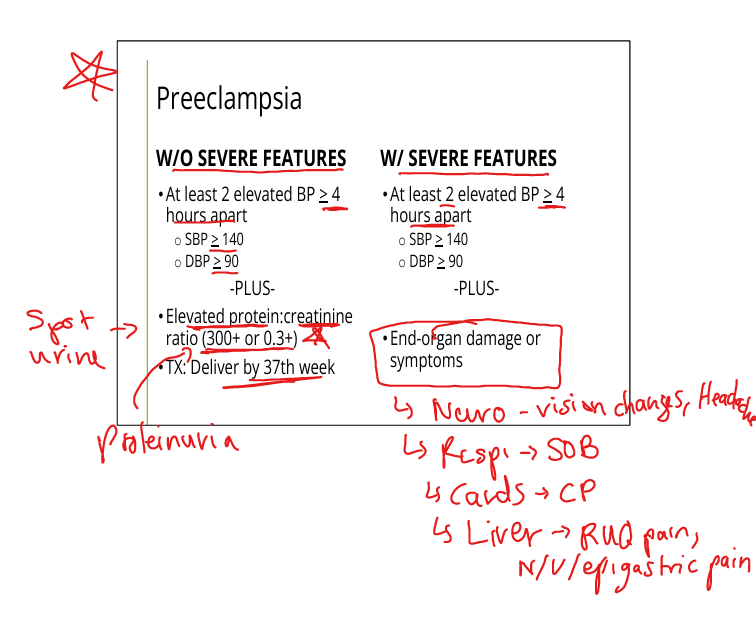
HTN + end-organ damage or severe symptoms
Sx:(neuro: vision changes, unresponsive HA; Resp: SOB; Cardio: CP; Liver (RUQ pain, persistent N/V)
Signs: Resp: Flash pulmonary edema, hypoxia; Cardio: EKG changes (MI), Severe BP 160/110; Liver: 2x ULN LFTs, low platelets (<100); Kidneys: Creatinine >1.01 or 2x baseline


What respiratory signs indicate severe preeclampsia?
Pulmonary edema, hypoxia

What BP qualifies as severe-range hypertension?
SBP ≥160 or DBP ≥110

What liver findings indicate severe preeclampsia?
LFTs >2× ULN, platelets <100,000

What renal findings indicate severe preeclampsia?
Creatinine >1.01 or 2× baseline

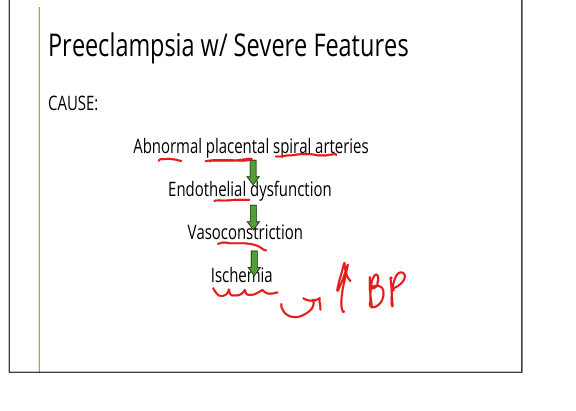
What causes preeclampsia?
Abnormal placental spiral arteries → endothelial dysfunction → vasoconstriction → ischemia»leading to inc BP
Risk factors for preeclampsia?
Chronic HTN, diabetes, renal disease, autoimmune disease, prior preeclampsia

Complications of preeclampsia?
Placental abruption, coagulopathy, renal failure, uteroplacental insufficiency, eclampsia, HELLP

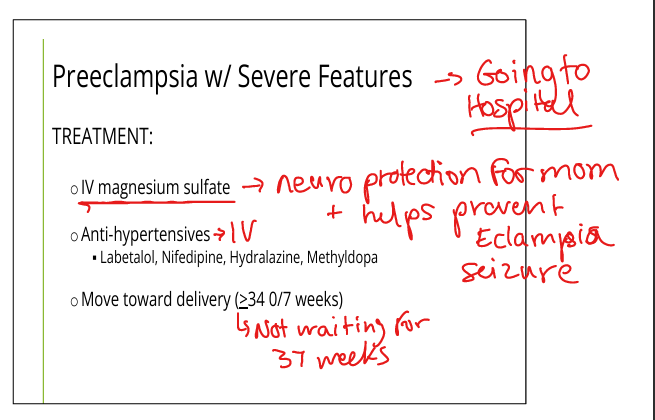
Treatment of severe preeclampsia?
IV magnesium sulfate(neuroprotective to prevent eclampsia seizures), IV antihypertensives, delivery (>34 weeks)
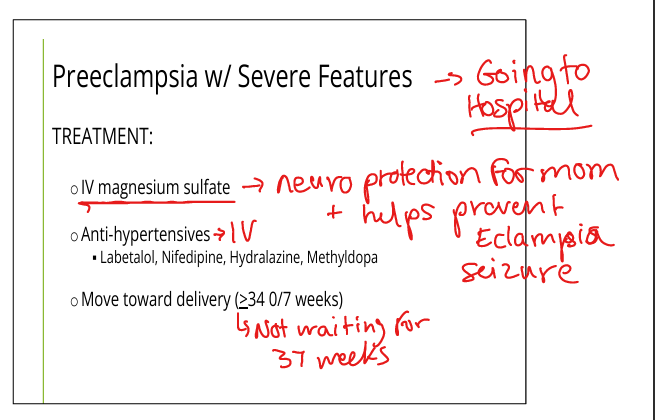
What medication prevents seizures in preeclampsia?
Magnesium sulfate
What is eclampsia?
Preeclampsia (HTN with organ damage) with seizures

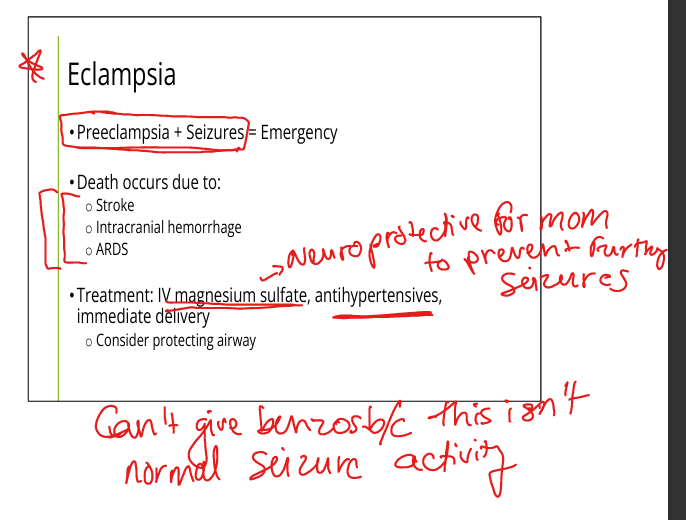
Major causes of death in eclampsia?
Stroke, intracranial hemorrhage, ARDS
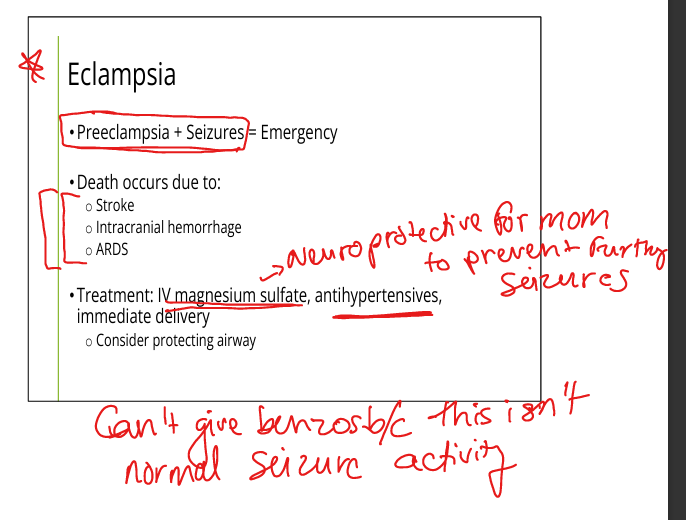
Treatment of eclampsia?
Magnesium sulfate, antihypertensives, immediate delivery
What does HELLP stand for?
Hemolysis, Elevated Liver enzymes, Low Platelets. Will have schistocytes on blood smear

Peripheral smear finding in HELLP?
Schistocytes

What type of disorder is HELLP?
Severe preeclampsia variant
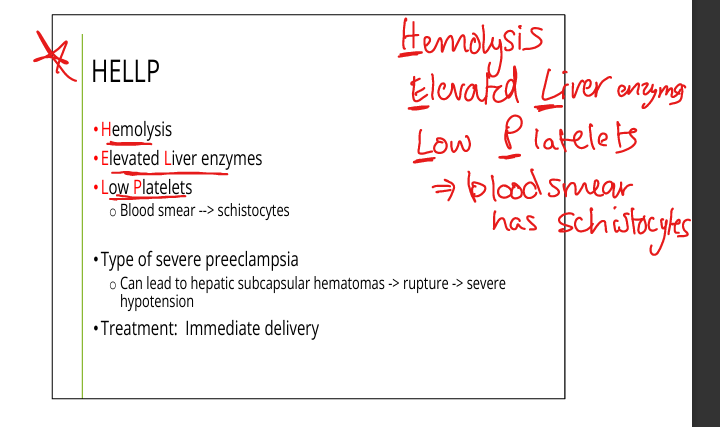
Treatment of HELLP?
Immediate delivery

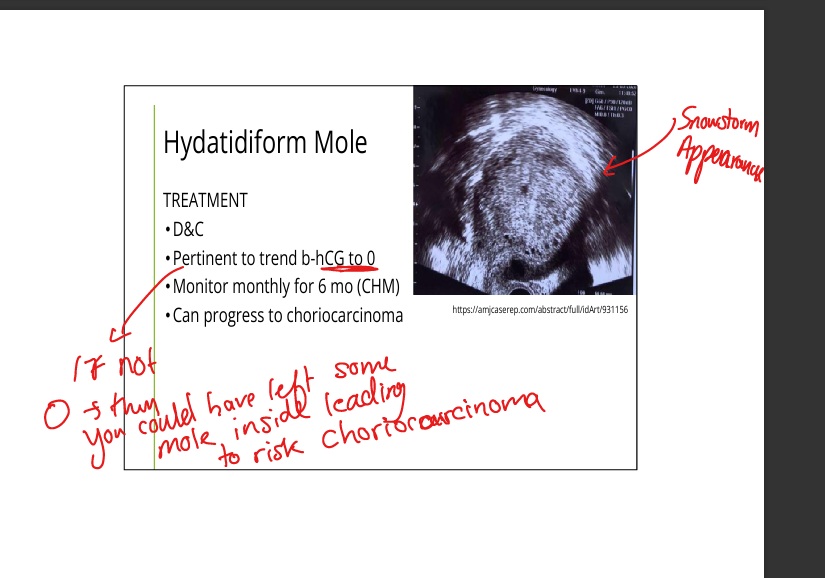
Hydatidiform mole (Cause, imaging,tx, unique monitoring)
Abnormal trophoblastic proliferation with swollen cystic chorionic villi occuring due to 1-2 sperm fertilizing empty or viable ovum
Imaging: presents with honeycomed uterus, cluster of grapes or snowstorm appearance
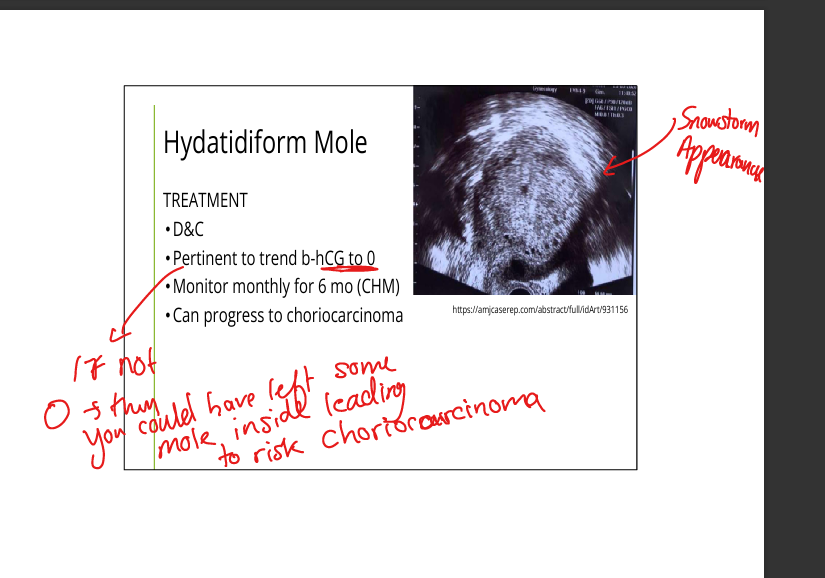
Tx: D&C, need to trend b-hCG to 0 because remnants could lead to choriocarcinoma


Important follow-up after molar pregnancy?
Trend β-hCG to zero to prevent choriocarcinoma from leftover remnant

Major malignant complication of molar pregnancy?
Choriocarcinoma
Most common ectopic pregnancy location?
Ampulla of the fallopian tube

Classic ectopic pregnancy presentation?
Amenorrhea + abdominal pain + abnormal β-hCG rise
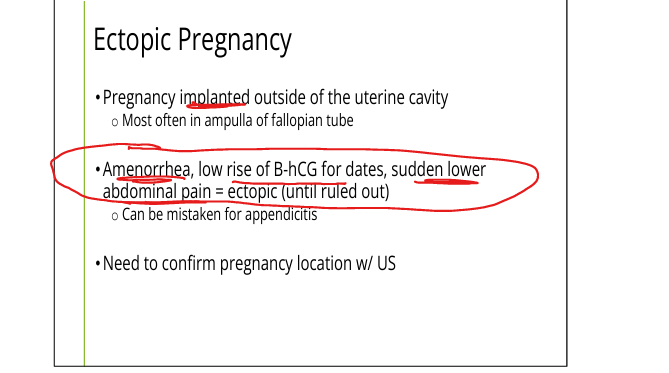
What confirms ectopic pregnancy location?
Ultrasound

Risk factors for ectopic pregnancy?
Prior ectopic, infertility, PID, ruptured appendix, tubal surgery, IUD

Treatment of stable ectopic pregnancy? Unstable?
Methotrexate for stable patient. Surgical removal for unstable.

Threatened spontaneous abortion (Bleeding, cervix, cardiac activity)
Vaginal bleeding + cramping, closed cervix, fetal cardiac activity present

Missed spontaneous abortion (Bleeding, cervix, fetal activity)
Closed cervix, no fetal cardiac activity or empty sac

Inevitable spontaneous abortion (Bleeding, cervix, fetal activity)
Bleeding + cramping with dilated cervix, rupture of membranes and products of conception

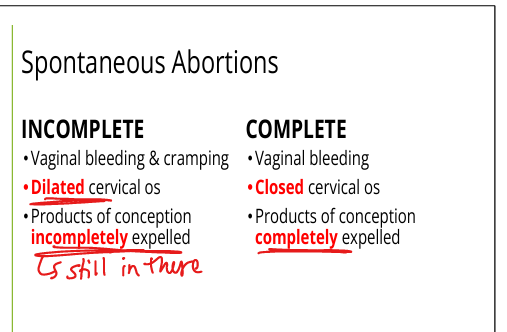
Incomplete vs Complete abortion
Incomplete: Dilated cervix with partially expelled products(still incomplete)
Complete: Closed cervix with completely expelled products
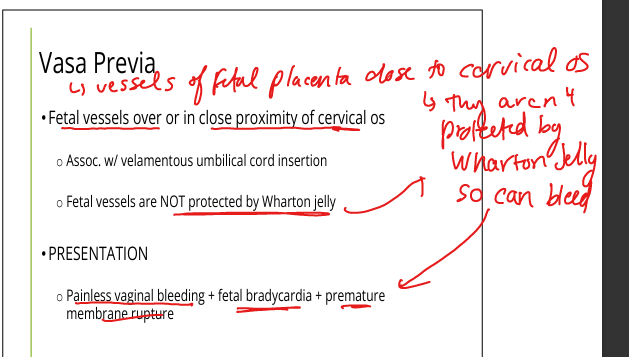
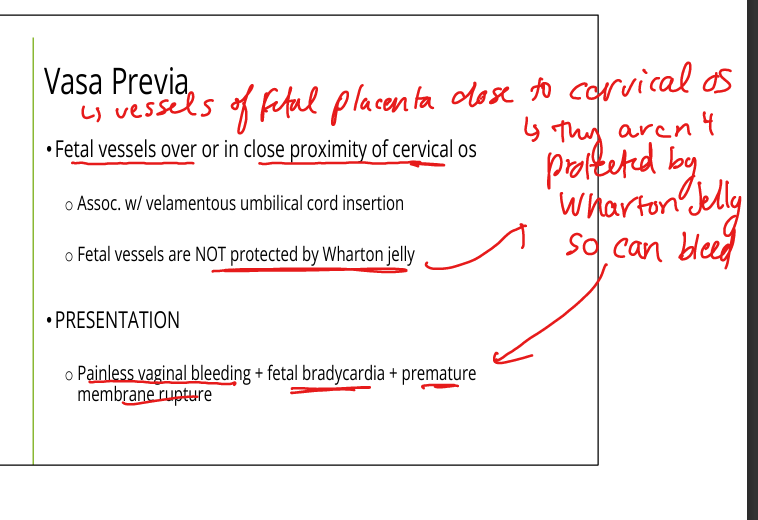
Vasa previa (Cause, presentation, complications, Tx)
Fetal vessels over/near the cervical os, not protected by wharton jelly so they can bleed if irritated» Presents with painless vaginal bleeding, fetal bradycardia, and premature membrane rupture
Complications: fetal HR decelerations, vessel rupture, exsanguination, death
Tx: Emergency C section
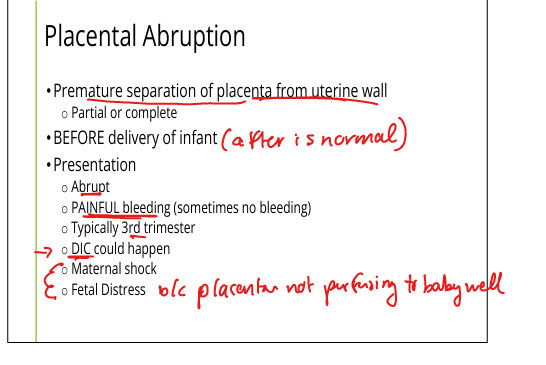
Placental abruption (cause, timing, presentation, risks, Tx)
Premature placental separation from uterine wall before delivery
Presentation: abrupt, painful bleeding typically in 3rd trimester, can lead to DIC and maternal shock, fetal distress
Risks: Trauma (fall, MVC), smoking, HTN, preeclampsia, cocaine
Tx: Monitor and maybe deliver depending on severity
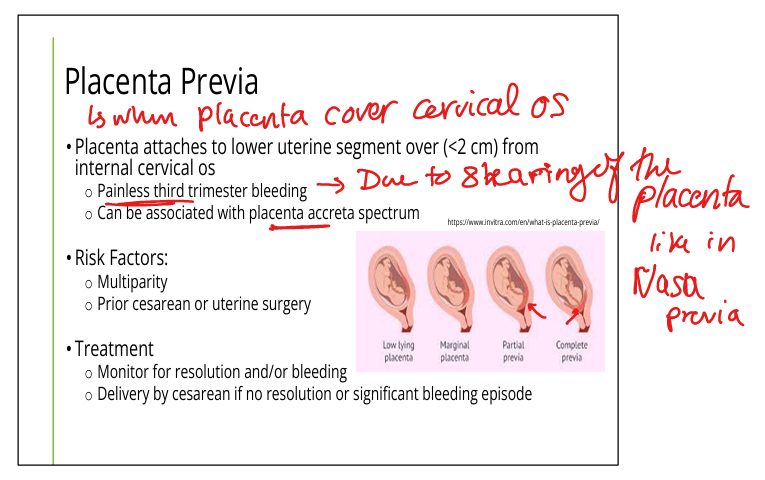
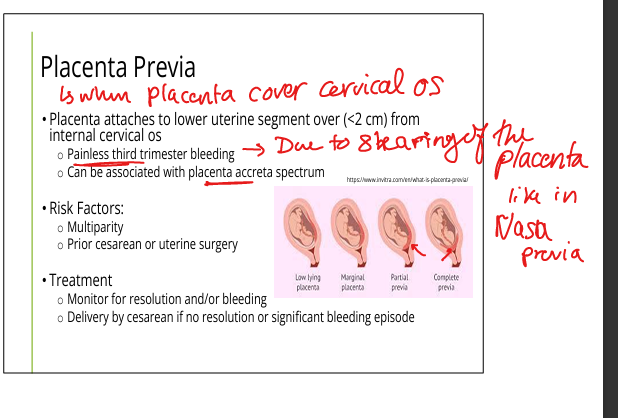
Placenta previa (Cause, presentation risks, Tx)
Placenta overlies or is within 2 cm of the internal cervical os blocking the cervix, can present with painless third trimester bleeding
Risks: multiparity, prior uterine surgery/C section
Tx: monitor and potential C section if bleeding continues
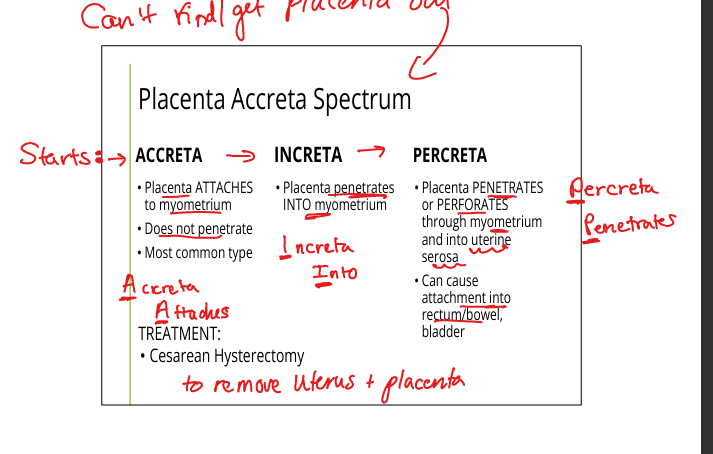
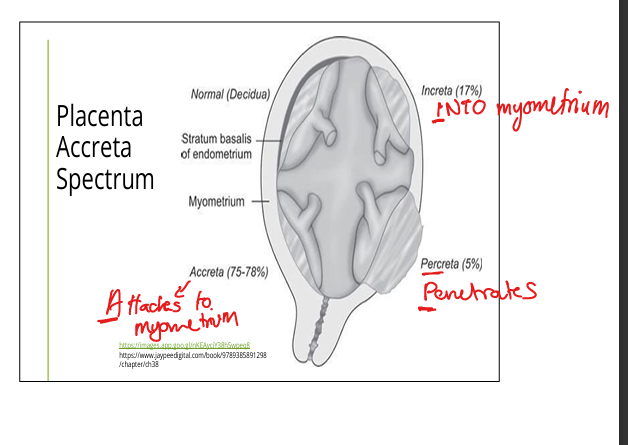
Placenta accreta spectrum (cause, presentation, types, Tx)
Defective decidual layer during embryology causing abnormal attachment of placenta to the uterus (placenta embedded in uterus to some degree and doesnt separate after delivery)
Presents with no separation of placenta, can be seen on ultrasound prior to delivery, can lead to post partum bleeding
Types: Accreta (Attaches to myometrium), Increta (Into myometrium), Percreta (Penetrates through myometrium into uterine serosa)
Tx: Cesaeran Hysterectomy


What is placenta accreta?
Placenta Attached to myometrium
What is placenta increta?
Placenta invades Into myometrium

What is placenta percreta?
Placenta Penetrates through myometrium and serosa

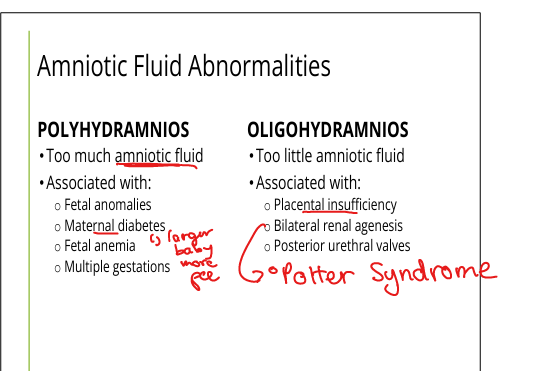
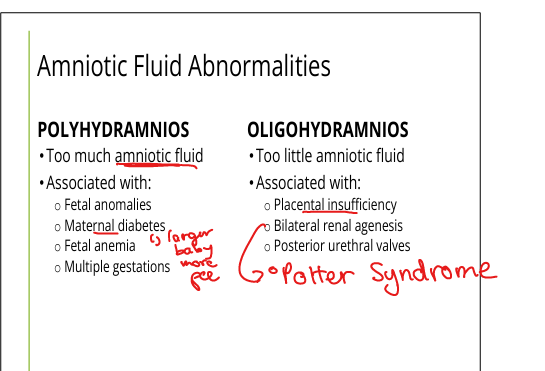
Associations with polyhydramnios?
Fetal anomalies, maternal diabetes, fetal anemia, multiple gestation
Complications of polyhydramnios?
Preterm labor, PPROM, cord prolapse, breech, uterine atony

Associations with oligohydramnios?
Placental insufficiency, bilateral renal agenesis, posterior urethral valves, POTTER syndrome
Complications of oligohydramnios?
Fetal growth restriction, stillbirth, deformities, infection, pulmonary hypoplasia

What defines low birth weight?
<2500 g (5.5 lb)

Main causes of low birth weight?
Prematurity and fetal growth restriction
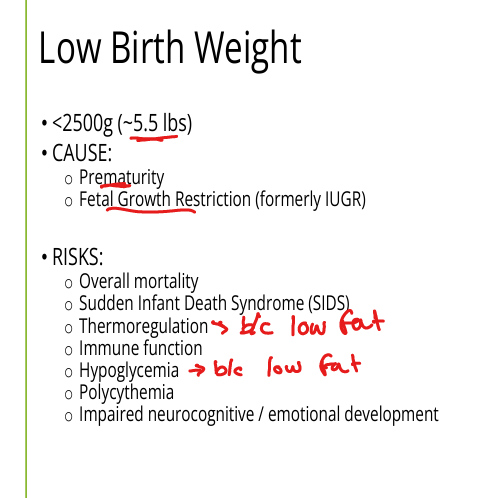
Complications of low birth weight?
Hypoglycemia, polycythemia, infection, RDS, NEC, IVH


What is postpartum hemorrhage (PPH) (def, causes>4 T’s, tx)
>1000ml of blood loss within 24 hrs, caused by Tone (atony), Trauma (lacerations), Thrombin (DIC), Tissue (retained, like placenta parts)
Tx: Pitocin/misoprostol to contract uterus and stop bleeding, uterine massage to deliver placenta, umbilical cord traction, urine catheterization


What are the 4 Ts of postpartum hemorrhage?
Tone, Trauma, Thrombin, Tissue

Painful 3rd-trimester bleeding
Placental abruption

Painless bleeding + fetal bradycardia after membrane rupture
Vasa previa
HTN + proteinuria
Preeclampsia

Preeclampsia + seizures
Eclampsia

Hemolysis + Elevated LFTs + Low Platelets
HELLP

Painless third trimester bleeding
Placenta previa