psych final
 Call Kai
 Learn
 Practice Test
 Spaced Repetition
 Match
 Flashcards
 Knowt Play
1/193

There's no tags or description
Looks like no tags are added yet.
194 Terms
Nervous system
electro-chemical communication system of the body
Nervous system functions?
send messages from the brain to the body movement
brings info to brain from senses
Neuron
Nerve cell; basic building block of the nervous system
what are the three basic tasks a neuron performs
receive info
carry info
pass info on to the next neuron
dendrite
branching extensions of a neuron that receive info and conduct impulses towards the cell body (AKA soma)
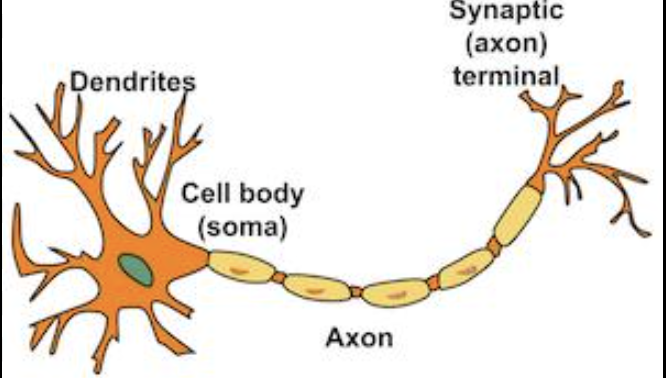
axon
extension of a neuron in which neural impulses are set
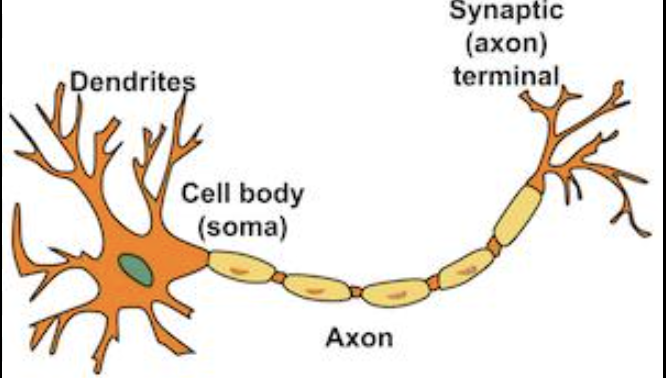
Axon terminal
end point of a neuron where neurotransmitters are stored
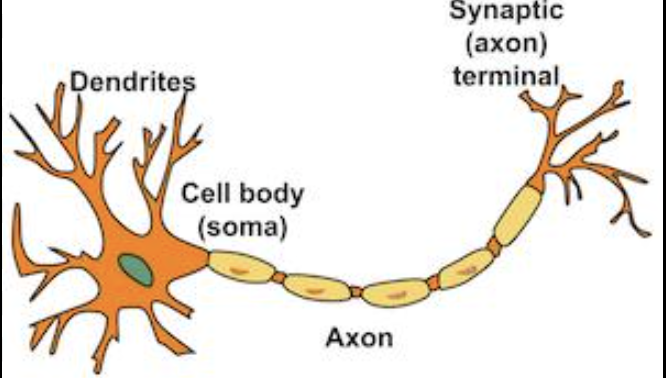
Action Potential
neural impulse; a brief electrical charge that travels down the axon of a neuron
how an action potential is created
when a neuron fires, impulse travels down from the dendrites down axon to the axon terminal
what an action potential compared and considered to
compared to “firing a cannon”
considered “on” condition of neuron
refractory period
“recharging” phase which after firing the neuron cannot generate another action potential, once finished the neuron can fire again
what can the refractory period be compared to
reloading a cannon
resting potential
state of a neuron when it is at rest and capable of generating an action potential, when the neuron is set and ready to fire
what can the resting potential be compared to
when a cannon is ready to fire
all or none principle
a neuron fires at the same intensity, all action potentials have the same strength, 100%
synapse
tiny fluid filled gap between the axon terminal of one neuron and the dendrite of another
what happens in the synapse
the action potential cannot jump the gap
neurotransmitter
chemical messenger that travels across the synapse from one neuron
what does the neurotransmitter influence
whether a neuron will generate an action potential
excitatory effect
neurotransmitter effect that makes it more likely that the receiving neuron will generate an action potential or fire
which neuron is more likely to fire in the excitatory effect
the second one
inhibitory effect
neurotransmitter effect that males it less likely that a receiving will generate an action potential or fire
which neuron is less likely to fire in the inhibitory effect
the second one
receptor cells
specialized cells in every sensory system of the body that can turn other kinds of energy into action potentials (AKA neural impulses) that the brain can process
example of the receptor cells
receptor cells in the eye turn light into a neural impulse that the brain understands
sensory nerves
nerves that carry info from the sense receptors to the spinal cord andbrain
what does the sensory nerves connect
sense organs to the brain and spinal cord
interneurons
nerve cells in the brain and spinal cord responsible for processing info
what are the interneurons related to
sensory input and more output
motor nerves
nerves that carry info from the brains and spinal cord to the muslces and glands
what does the motor nerves carry
messages
Central nervous system (CNS)
brain and spinal cord
what is the brain
location for most info processing
what is the spinal cord
main pathway to and from the brain
Peripheral nervous system (PNS)
sensory and motor nerves that connect the brain and the spinal cord to the rest of the body
what does peripheral mean
outer region
what is the peripheral system subdivied to
the somatic and autonomic systems
Somatic nervous system
controls the bodys skeletal muscles
what does the somatic contain
motor nerves needed for the voluntary muscles
autonomic nervous system
controls the glands and muscles of the internal organs
what are the subdivision of the autonomic nervous system
sympathetic (arousing) parasympathetic (calming)
sympathetic division
part of the system that arouses the body to deal with perceived threats
what does sympathetic control
the fight or flight response
parasympathetic division
division that calms the body
whats does the parasympathetic do
brings the body down to a relaxed state
endrocirne system
one of the two communication systems of the body; a set of glans thay produce hormones chemical messengernes that criculate in the blood
Hormone
chemical messenger that is produced by the endocrine glands anc circulated in the blood
what are hormones similar to
neurotransmitters as they are also messengers, although slower they have longer lasting effects
pituitary gland
controls the other endocrine glands in conjunction with an adjacent brain area
what is the pituitary gland called
master gland
where is the pituitary gland located
base of the brain and connects to the hypothalamus
hypothalamus
brain region controlling the pituitary gland
thyroid gland
endocrine gland which helps regulate the energy level in the body
where is the thyroid gland located
in the neck
adrenal gland
helps to arouse the body during times of stress
what do the adrenal glands release
epinephrine (adrenaline) and norepinephrine (noradrenaline)
where is the adrenal gland located
just above the kidneys
pancreatic gland
regulates the level of sugar in the blood
sex glands
ovaries (female) testes (male) are the glands that influence sexual behavior and physical development
primary male hormone
testosterone
female hormone
estrogen
Basic research
pure science that aimes to increase the scientific knowledge base
research w/ the explicit purpose of finding new info
applied research
scientific study that aims to solve practical problems
research w/ the purpose of using psychology to better the world
Wilhelm Wundt
Father of psychology; opening first lab in 1879 (considered the beginning of the science)
What did wundt do
used introspection, and was the first to use the scientific method to study consciousness
introspection
describing ones conscious experience
edward Titchner
founder of structuralism
what did titchner do
analyzed intensity clarity and quality of the parts of consciousness
what did titchner stress
that psychology was a despcriptive science
structuralism
the theory that the structure of the conscious experience could be understood by breaking down and analyzing the consciousness into its smallest parts
gestalt psychology
psychological perspective that emphasized our tendency to integrate pieces of info into meaningful wholes (whole is different from the sum of its parts)
William James
William James is the first American psychologist and
author of the first psychology textbook
what was james the founder of
Founder of functionalism
Functionalism
the theory that emphasized the
functions of consciousness or the ways consciousness
helps people adapt to their environment
Sigmund Freud
the founder
of psychoanalysis
psychoanalysis
controversial theory that believes that abnormal
behavior originated from
unconscious drives and
conflicts
freuds influences
psychodynamic theory
unconscious thoughts
significance of childhood experiences
Ivan Pavlov
russian psychologist, pavlovs dog, classical conditioning, emphasized the study of observable behaviors
John Watson
the founder of behaviorism, alberts rabbit study
behaviorism
the
theory that psychology should restrict its efforts to
studying observable behaviors, not mental processes
what did watson emphasize
Emphasized objective and
scientific methodology
what does behaviorism focus on today
learning through rewards and observation
B.F. Skinner
American behavioral psychologist
who developed the fundamental principles and
techniques of operant conditioning and devised ways to
apply them to the real world
Humanistic Psychology
a perspective that focuses on
the study of conscious experience, the individual's
freedom to choose, and the capacity for personal growth
• Stresses the study of conscious experience and an
individual’s free will
• Healthy individuals should strive to reach their full
potential
• Rejected idea that behavior is controlled by rewards
and punishments
Carl Rogers
a humanistic
psychologist who developed
client-centered therapy
what did rogers stress
the importance of
acceptance, genuineness, and
empathy in fostering human
growth
abraham maslow
a humanistic psychologist who proposed the
hierarchy of needs, with
self-actualization as one of
the ultimate psychological
needs
Jean Piaget
pioneer in the study of developmental
psychology
what did Piaget introduce
a stage theory of cognitive
development that led to a better understanding children’s
thought processes
• Interested in how thinking
develops
• Believed younger children
thought differently that older
children
G. Stanley Hall
the first American with a doctorate in
psychology
G. Stanley Hall
• Opened the first psychology lab in
the United States at John Hopkins
University
• First president of the American
Psychological Association
Mary Whiton Calkins
the first woman to complete
the requirements for a Ph.D. in psychology
• President of the APA in 1905
Margaret Floy Washburn
the first woman to receive
a Ph.D. in psychology in the United States
Francis Cecil Sumner
the first African-American to
receive a Ph.D. in psychology
Inez Beverly Prosser
the first African-American
woman to receive a Ph.D. in psychology
Kenneth and Mamie Philips Clark
researchers whose work
was used in the Brown vs. Board
of Education case that overturned
segregation in schools.
• Educational psychologists
• Studied institutional racism
Cognitive Perspective
a school of thought that focuses
on how people think – how we take in, process, store,
and retrieve information
• Emphasizes how people think about and interpret a
situation
Biological Perspective
a school of thought that focuses
on the physical structures and substance underlying a
particular behavior, thought, or emotion
• Behavior is explained by brain chemistry, genetics,
glands, etc.
Social-Cultural Perspective
a school of thought that
focuses on how thinking or behavior changes in different
situations or as a result of cultural influences
Humanistic Perspective
Behavior is explained as being motivated by satisfying
needs (safety, hunger, thirst, etc.), with the goal of
reaching one’s full potential once basic needs are met
• Focus: How healthy people strive to reach their full
potential
Psychodynamic Perspective
Behavior is explained through unconscious motivation
and unresolved inner conflict's from one’s childhood
• Focus: How behavior is affected by unconscious drives
and conflicts
• Modern version of psychoanalytic perspective