PSYC 360 Chapter 15 pptx
 Call Kai
 Learn
 Practice Test
 Spaced Repetition
 Match
 Flashcards
 Knowt Play
1/30

Earn XP
Description and Tags
PSYC 360 Drugs and Human Behavior
31 Terms

Chapter 15.
Cannabis.


The Cannabis Plant.
Marijuana is a preparation of leafy material from the Cannabis plant that
is usually smoked.
Three species:
Cannabis sativa: Used primarily for its fibers from which hemp rope is made.
Cannabis indica: Grown for its psychoactive potency.


Cannabis Preparations.
delta-9-tetrahydrocannabinol, or THC.
Primary psychoactive agent in Cannabis.
Concentrated in a resin.
Potency of Cannabis preparations depends on the amount of resin present.
Cigarettes made from flowering tops of some strains may contain up to around 30 percent THC.
Cigarettes made from leaves have as little as 1 percent THC.


Cannabis Preparations.
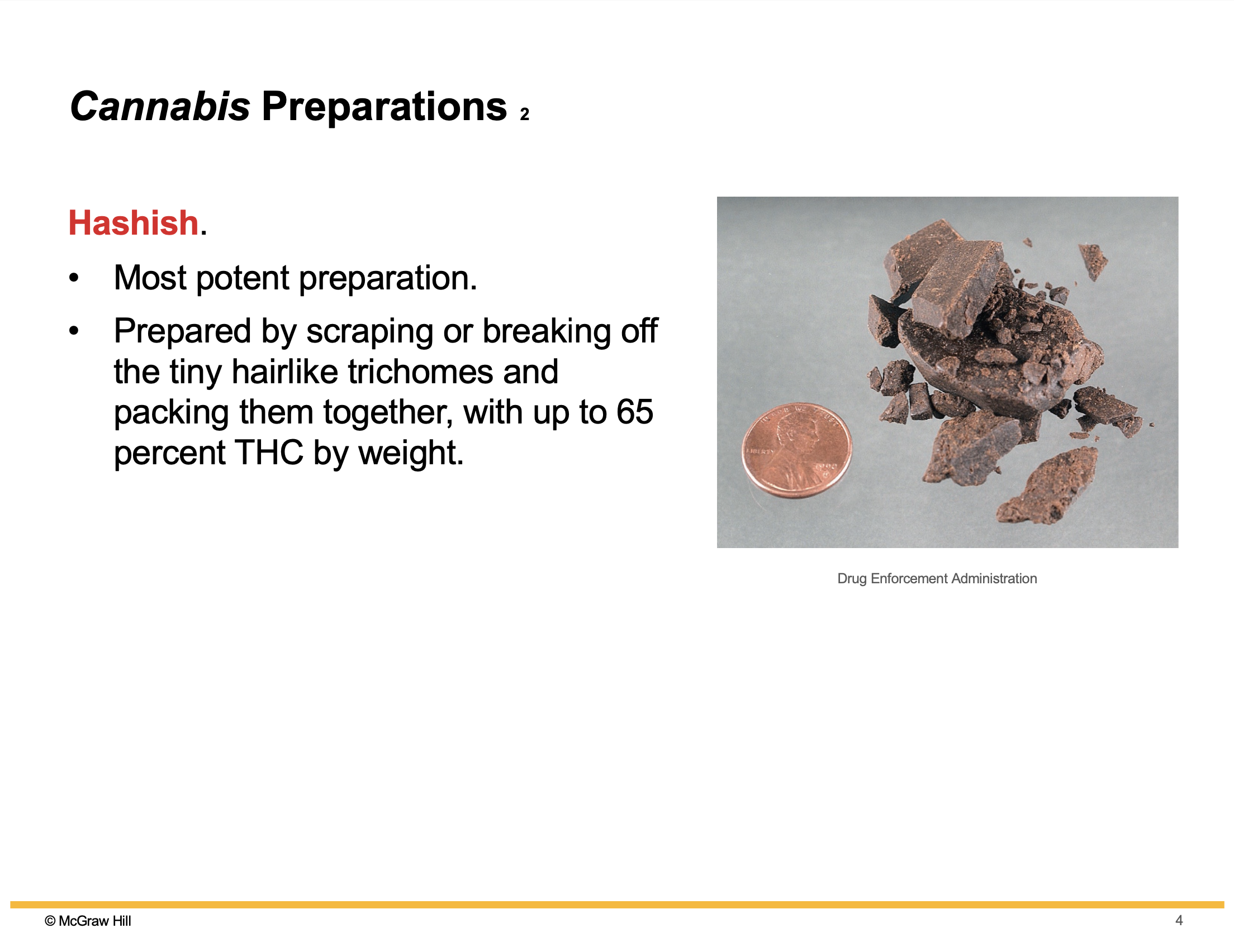
Hashish.
Most potent preparation.
Prepared by scraping or breaking off the tiny hairlike trichomes and packing them together, with up to 65 percent THC by weight.

Cannabis Preparations.
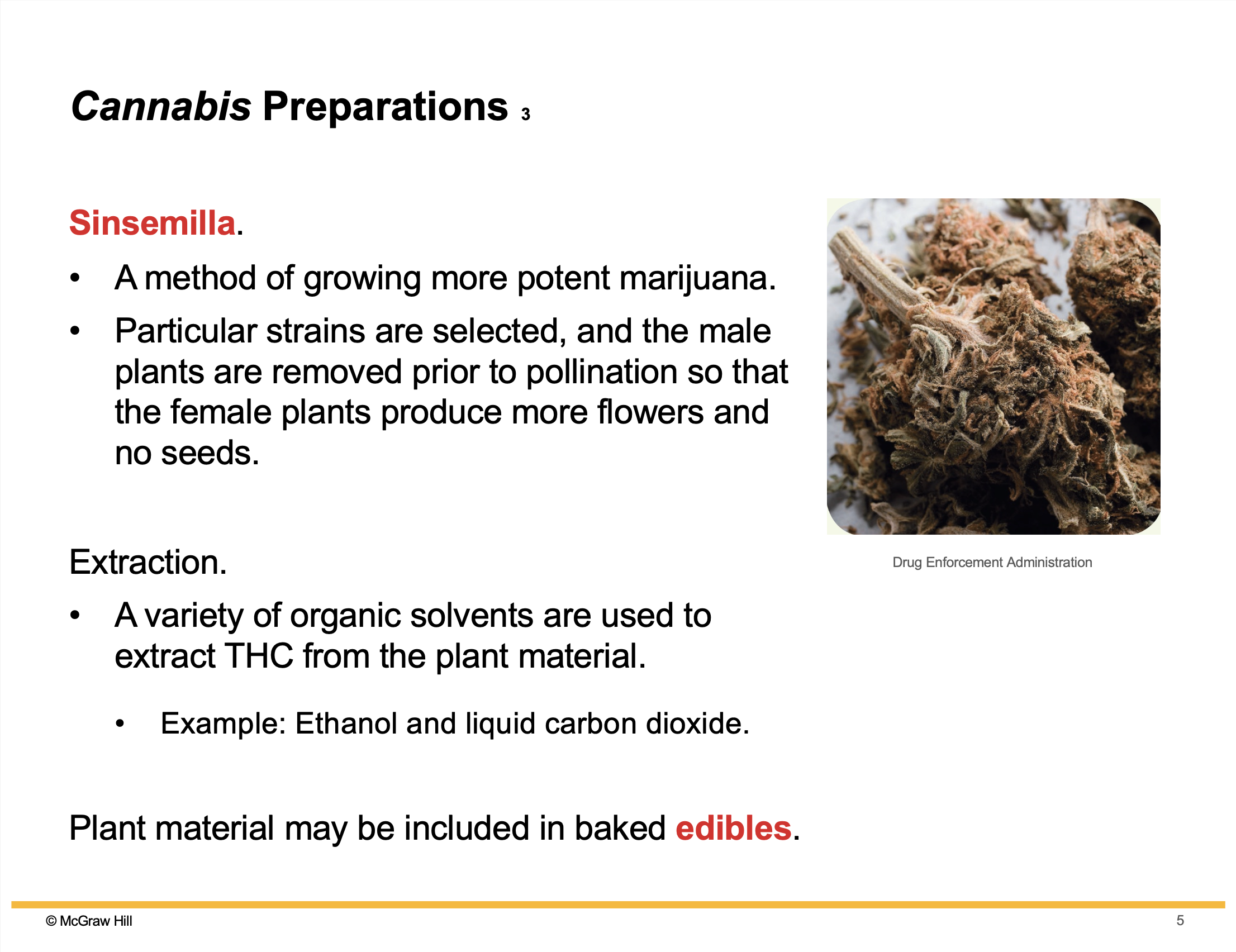
Sinsemilla.
A method of growing more potent marijuana.
Particular strains are selected, and the male plants are removed prior to pollination so that the female plants produce more flowers and no seeds.
Extraction.
• A variety of organic solvents are used to extract THC from the plant material.
• Example: Ethanol and liquid carbon dioxide. Plant material may be included in baked edibles.

Cannabis History.
Earliest mention is in 2737 BC in a Chinese pharmacy book.
• Recommended several medical uses.
1000 A D: Social use of the plant had spread to the Middle East and North Africa.
• “Hashishiyya” religious cult carried out political murders.
• The word "assassin" originated from this term.
• Hashish use is mentioned frequently in The Arabian Nights.

Marijuana History: United States Regulation.
1920s.
Series of newspaper articles linked marijuana and crime.
Public interest increased.
Most early regulation efforts.
Based on concerns about use and criminal behavior.
Concerns were not based on direct evidence.

Marijuana Tax Act of 1937.
Followed the regulation-by-taxation theme of the Harrison Act of 1914.
Grower, distributor, seller, and buyer were taxed.
Result: Administratively almost impossible to deal with Cannabis.
State laws made possession and use illegal.
1969: United States Supreme Court declared the Marijuana Tax Act unconstitutional.

After the Marijuana Tax Act.
Cost of marijuana increased significantly.
LaGuardia Report, 1944.
Concluded that marijuana use had less serious effects than commonly believed.
Strong negative reactions by some authorities were motivated by factors other than the actual data.
Use of marijuana increased throughout the 1950s to 1960s.
• Use peaked in 1970s.
Marijuana use decreased in the mid-1980s, but rose again in the mid- 1990s.


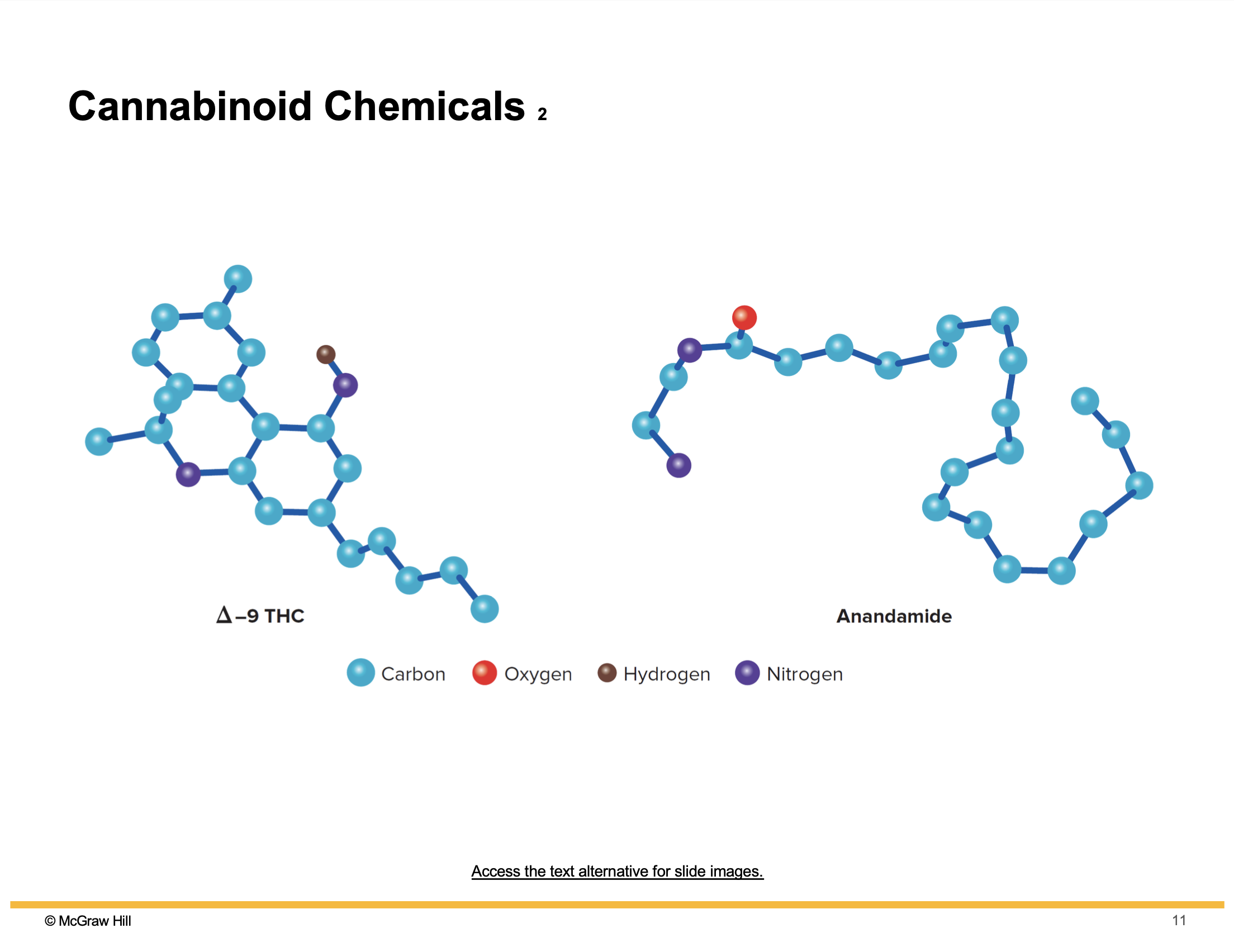
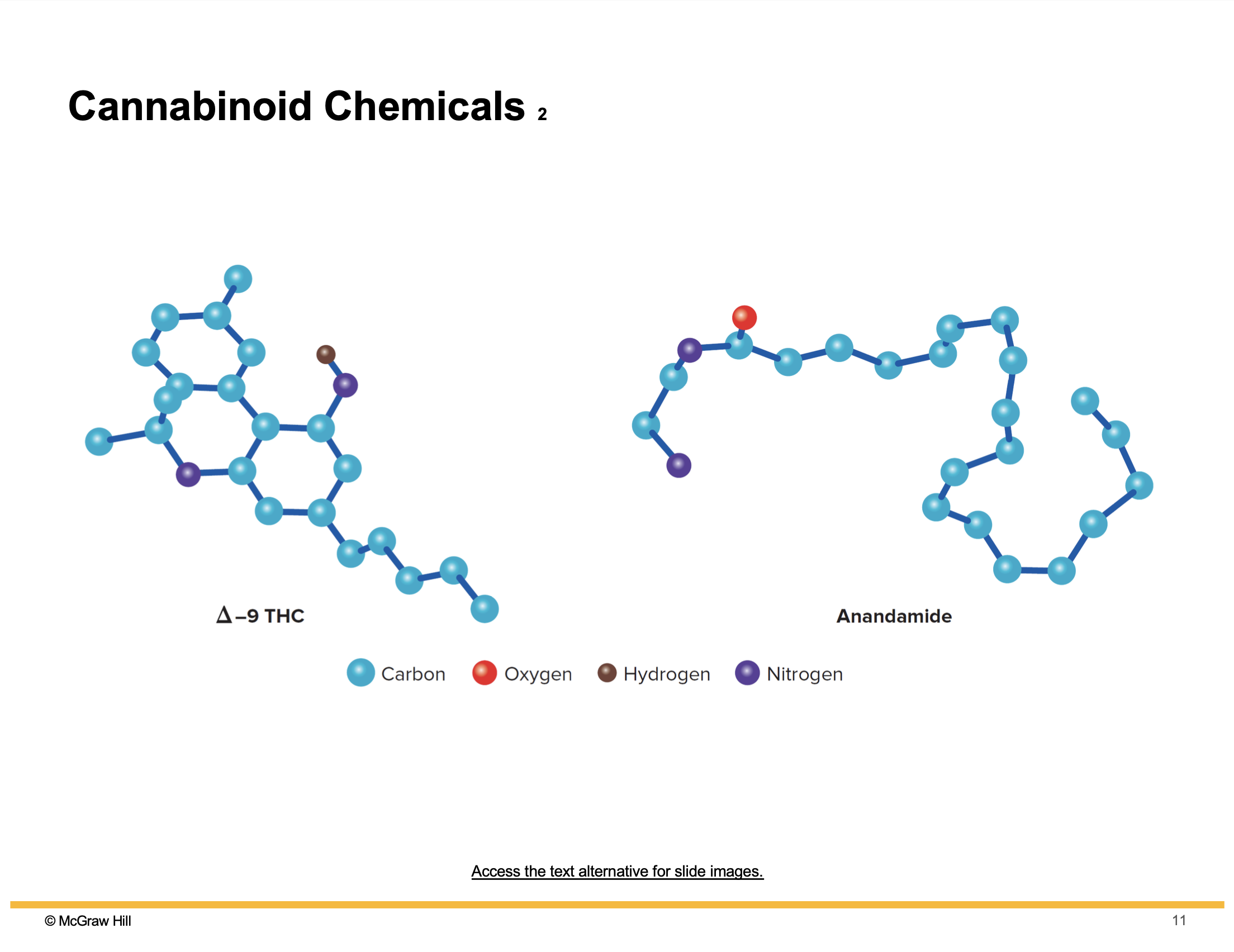
Cannabinoid Chemicals.
Chemistry of Cannabis is complex.
More than 500 chemicals are present in marijuana.
About 100 are cannabinoids.
delta-9-tetrahydrocannabinol, or THC.
The most pharmacologically active cannabinoid.
Synthesized in 1964.
One of its metabolites is 11-hydroxy-delta-9-THC.

Cannabinoid Chemicals.
Pharmacology.
After smoking.
THC is absorbed rapidly by the blood and travels to the brain and then to the rest of the body.
Peak mood-altering and cardiovascular effects occur together within 5 to 10 minutes.
After oral administration.
THC is absorbed more slowly.
Peak effects occur about 60 to 90 minutes following ingestion.


Pharmacology.
Metabolism.
THC has a half-life of 19 hours.
Complete elimination of THC and its metabolites may take 2 to 3 weeks.

Mechanism of Action.
THC binds to two receptors.
• CB1 receptors.
Found throughout the body, but primarily in the brain.
High density is found in specific brain regions.
Basal ganglia and cerebellum, which are involved in the movement coordination.
Hippocampus, which is involved in the memory storage.
Cerebral cortex, which regulates higher cognitive functions.
Nucleus accumbens, which is involved in reward.
Mechanism of Action.
• CB2 receptors.
• Found mainly outside the brain in immune cells.
• Suggests that the cannabinoids play a role in the modulation of the immune system.


Cardiovascular Effects.
Smoked marijuana and oral THC increase heart rate in a dose-dependent fashion.
• Time course differs depending on route of administration.


Other Physiological Effects.
Reddening of the eyes.
Dryness of the mouth and throat.
Pulmonary effects.
• Acute:
• Few effects on breathing.
• Chronic:
• Heavy marijuana smoking over a long period could lead to clinically significant impairment of pulmonary function.


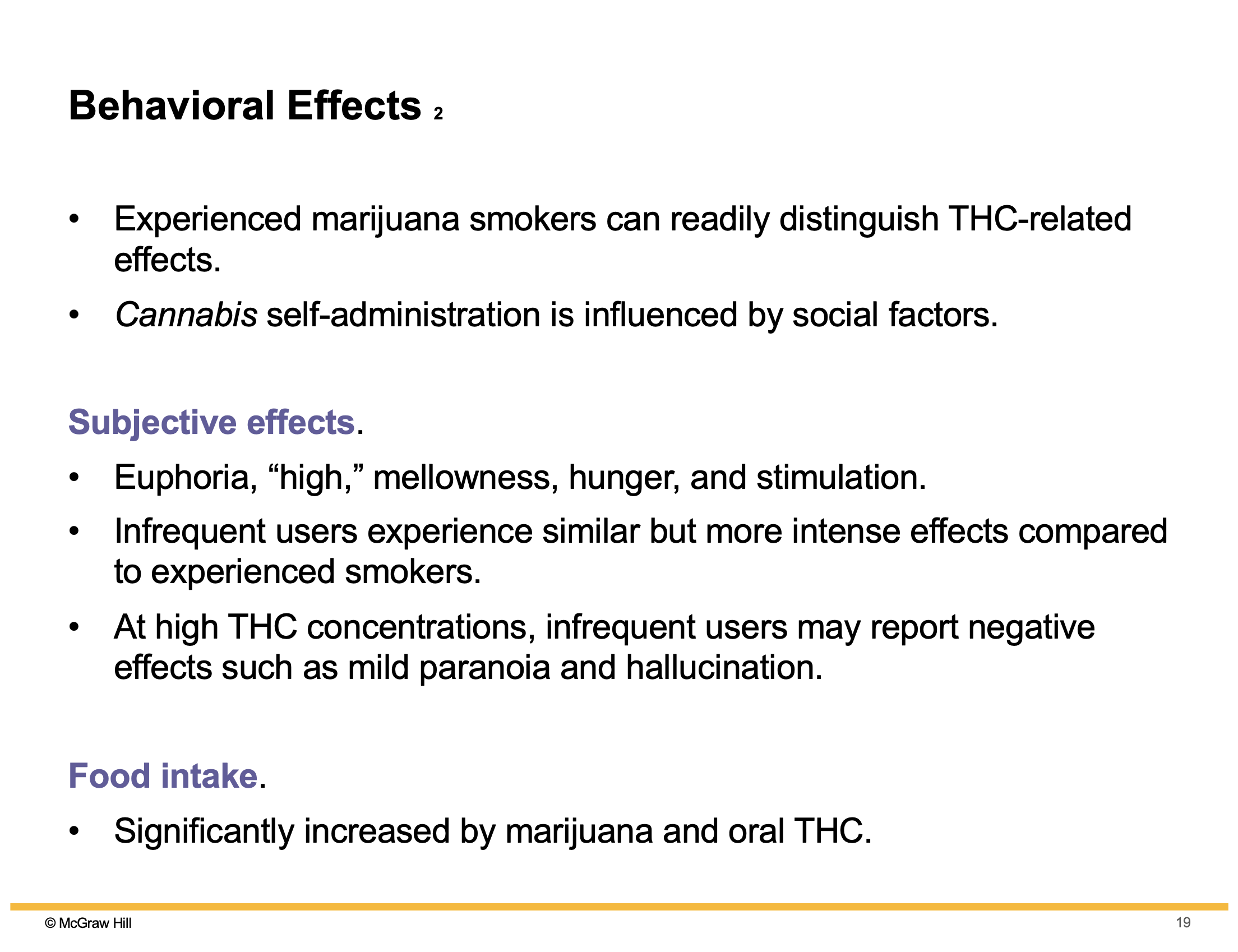
Behavioral Effects.
Self-administration.
• Studies show young adults self-administer smoked marijuana and oral
THC.
Under controlled laboratory conditions, participants prefer:
Marijuana cigarettes with higher THC content.
More oral THC during periods of social interaction.
Data indicate that:
• Abuse potential of oral THC is modest at best.

Behavioral Effects.
Experienced marijuana smokers can readily distinguish THC-related effects.
Cannabis self-administration is influenced by social factors.
Subjective effects.
Euphoria, “high,” mellowness, hunger, and stimulation.
Infrequent users experience similar but more intense effects compared to experienced smokers.
At high THC concentrations, infrequent users may report negative effects such as mild paranoia and hallucination.
Food intake.
• Significantly increased by marijuana and oral THC.

Behavioral Effects.
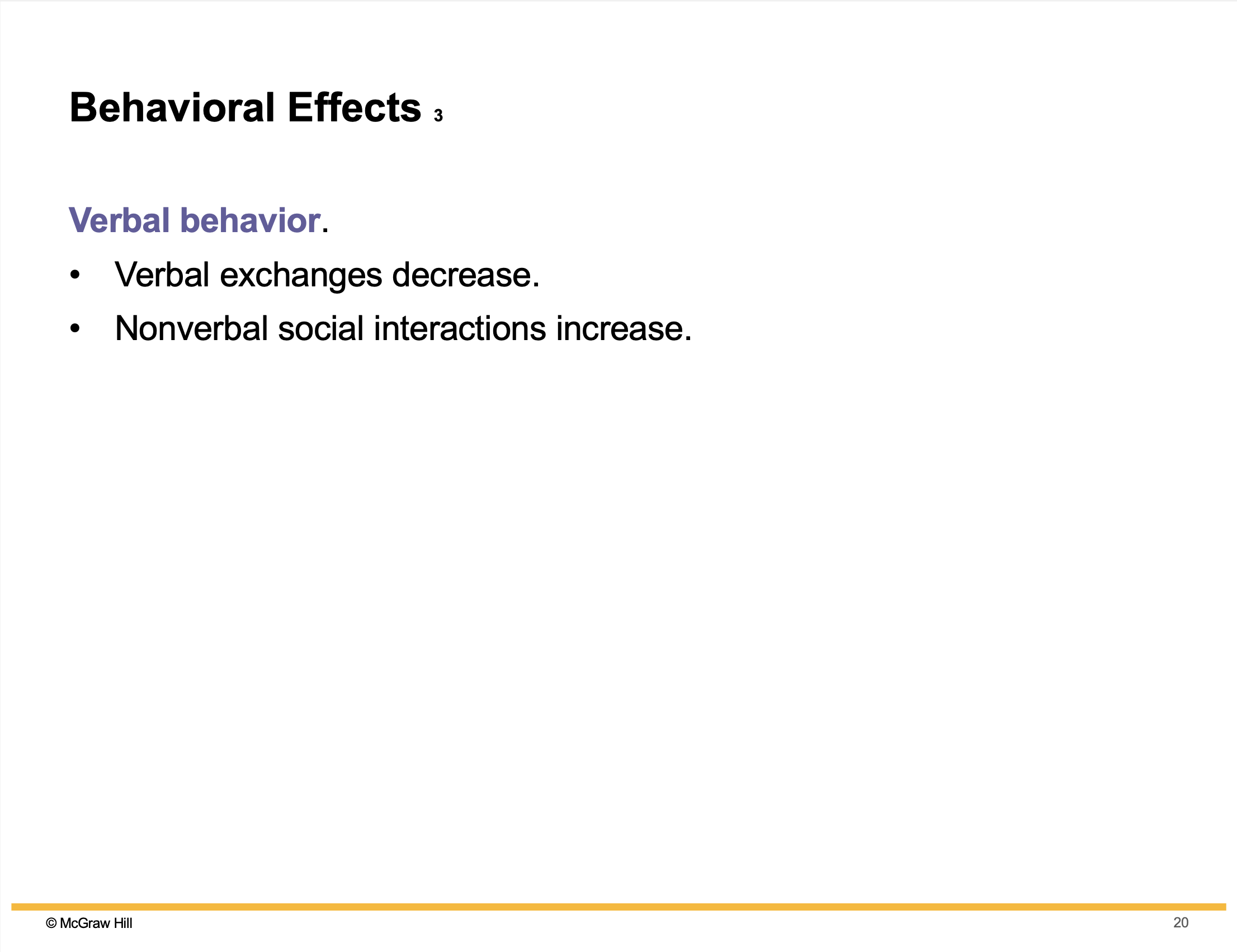
Verbal behavior.
Verbal exchanges decrease.
Nonverbal social interactions increase.
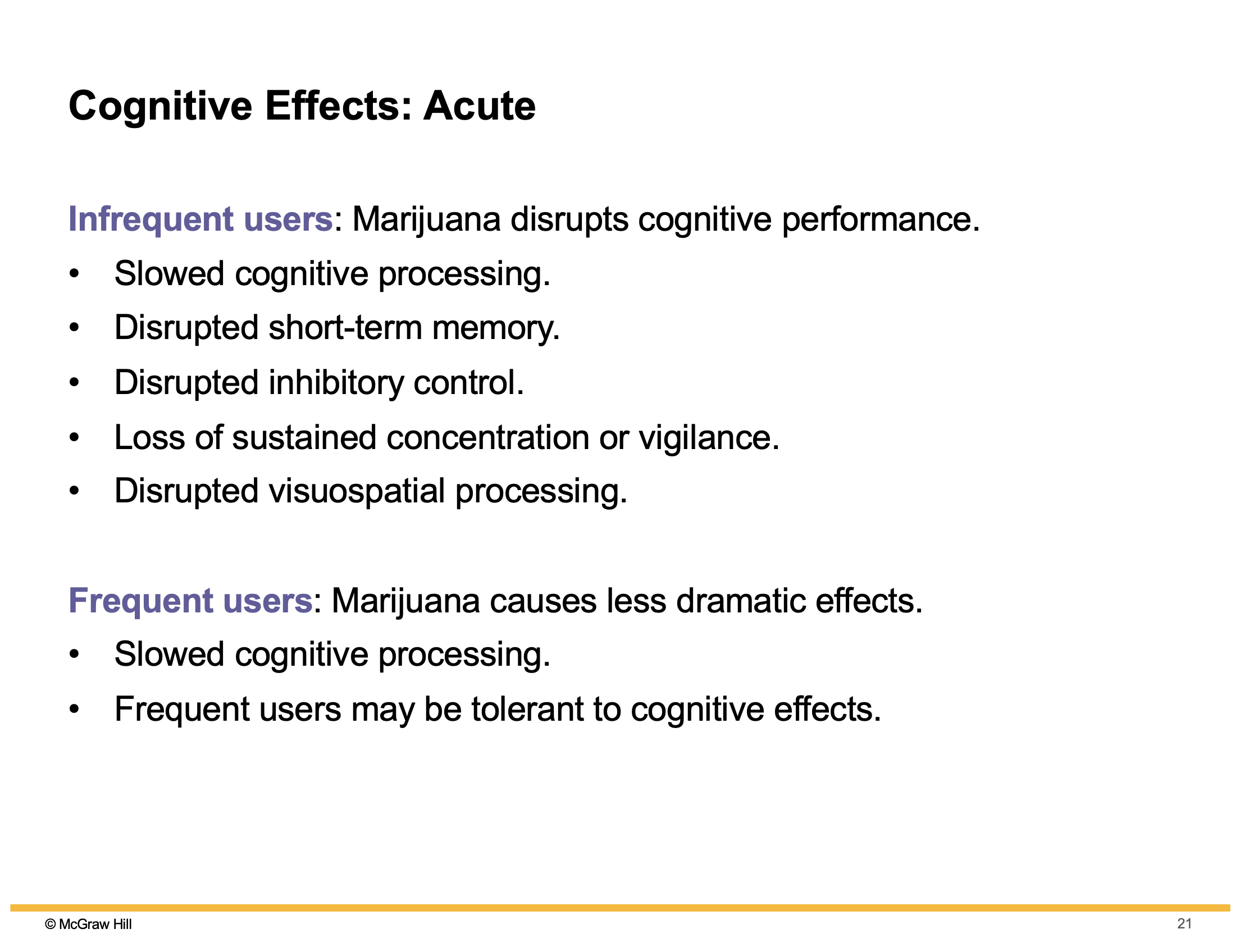
Cognitive Effects: Acute.
Infrequent users: Marijuana disrupts cognitive performance.
Slowed cognitive processing.
Disrupted short-term memory.
Disrupted inhibitory control.
Loss of sustained concentration or vigilance.
Disrupted visuospatial processing.
Frequent users: Marijuana causes less dramatic effects.
Slowed cognitive processing.
Frequent users may be tolerant to cognitive effects.


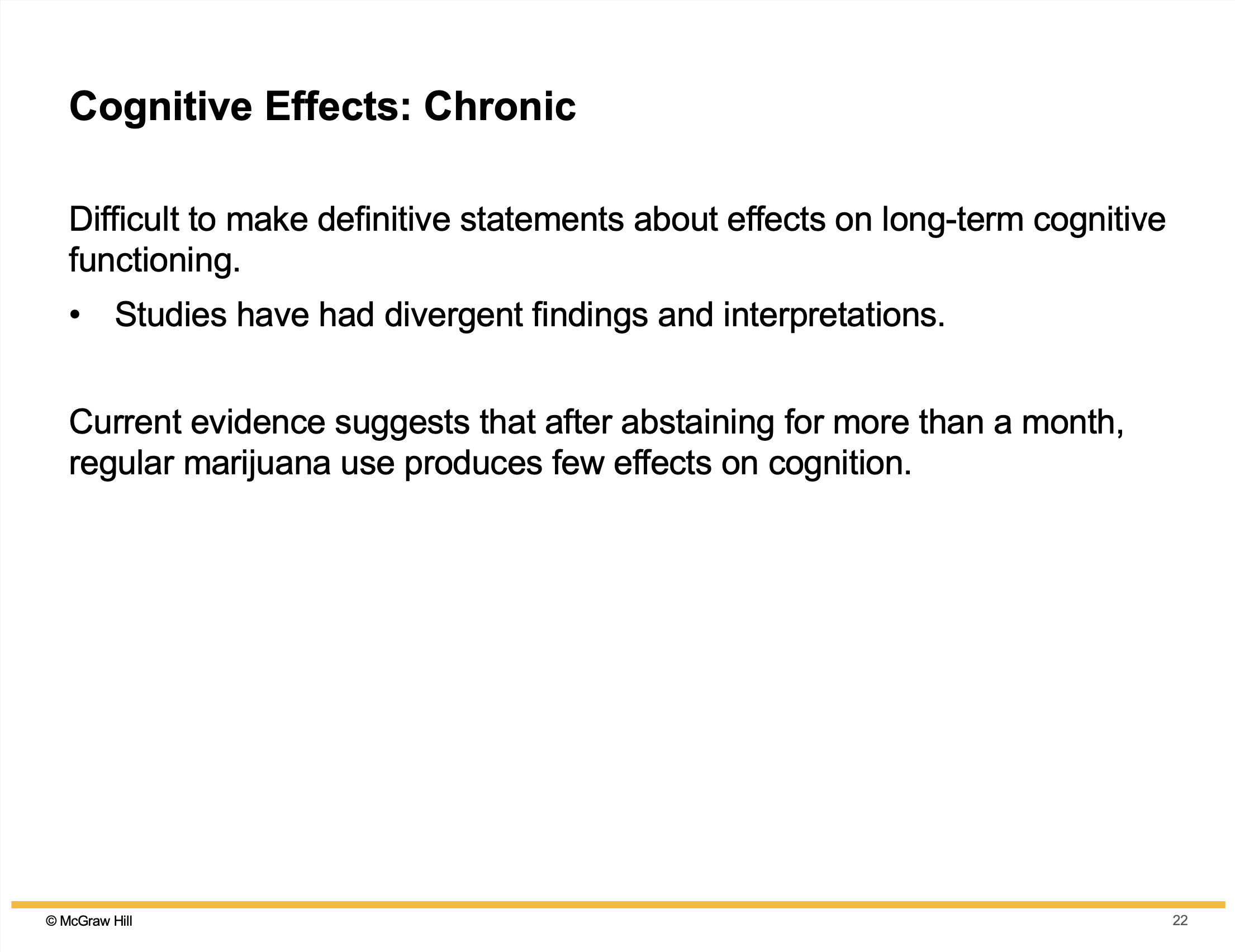
Cognitive Effects: Chronic.
Difficult to make definitive statements about effects on long-term cognitive functioning.
• Studies have had divergent findings and interpretations.
Current evidence suggests that after abstaining for more than a month, regular marijuana use produces few effects on cognition.

Medical Uses of Cannabis.
Medical use declined before the 1937 Marijuana Tax Act for several
reasons.
New and better drugs were developed to treat most illnesses.
Variability of the product.
Active ingredient is insoluble in water and thus cannot be injected.
Oral dose has delayed onset of action.
Renewed interest in medical uses.
To treat glaucoma.
To reduce the nausea in patients undergoing cancer chemotherapy.
To increase appetite in AIDS patients.


Dronabinol.
Brand name is Marinol. An oral THC.
Used as an antiemetic.
• Approved by FDA in 1985 for sale to cancer patients experiencing
nausea from chemotherapy.
Used to stimulate appetite.
• Approved by FDA in 1993 for sale to patients with AIDS.

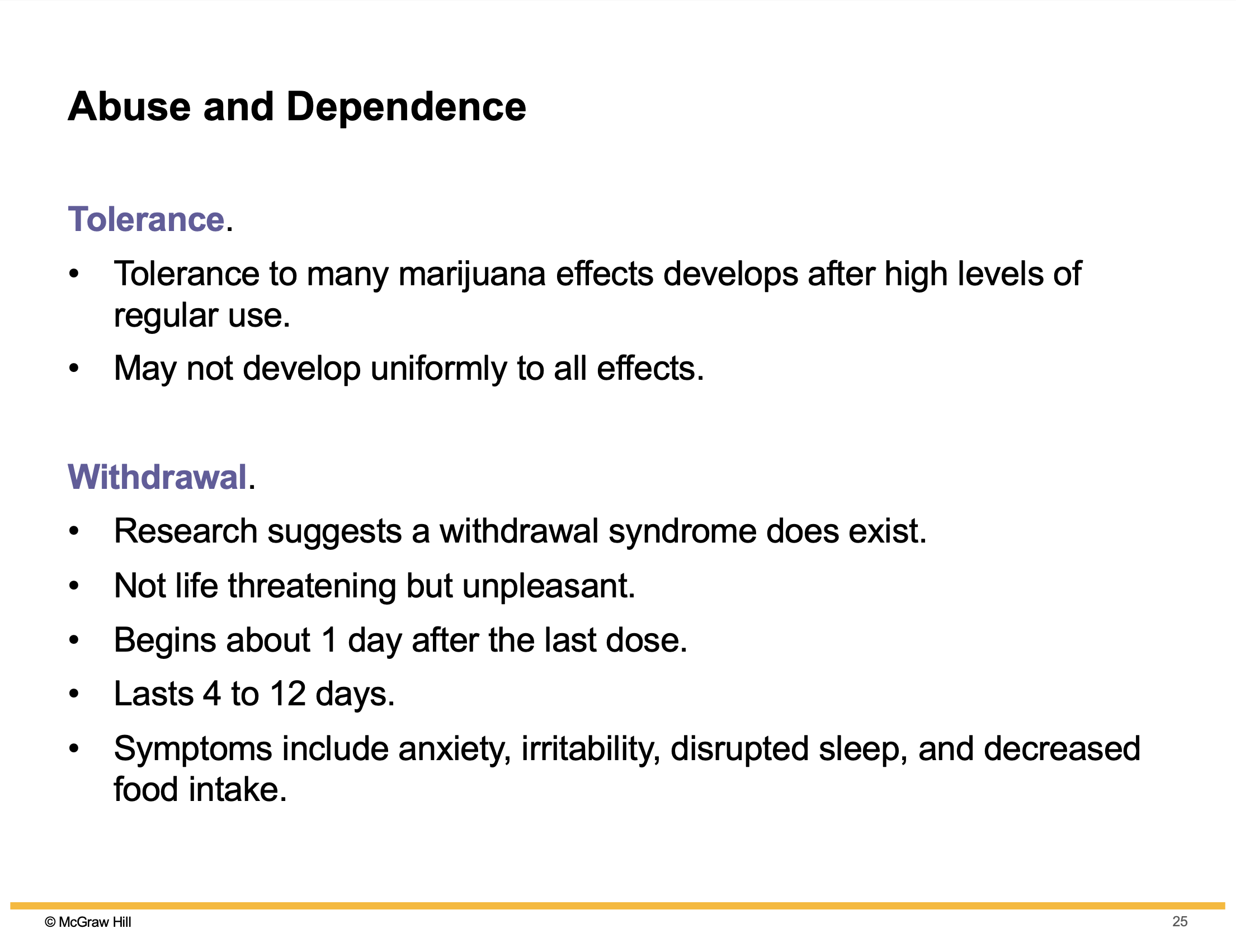
Abuse and Dependence.
Tolerance.
Tolerance to many marijuana effects develops after high levels of
regular use.
May not develop uniformly to all effects.
Withdrawal.
Research suggests a withdrawal syndrome does exist.
Not life threatening but unpleasant.
Begins about 1 day after the last dose.
Lasts 4 to 12 days.
Symptoms include anxiety, irritability, disrupted sleep, and decreased food intake.


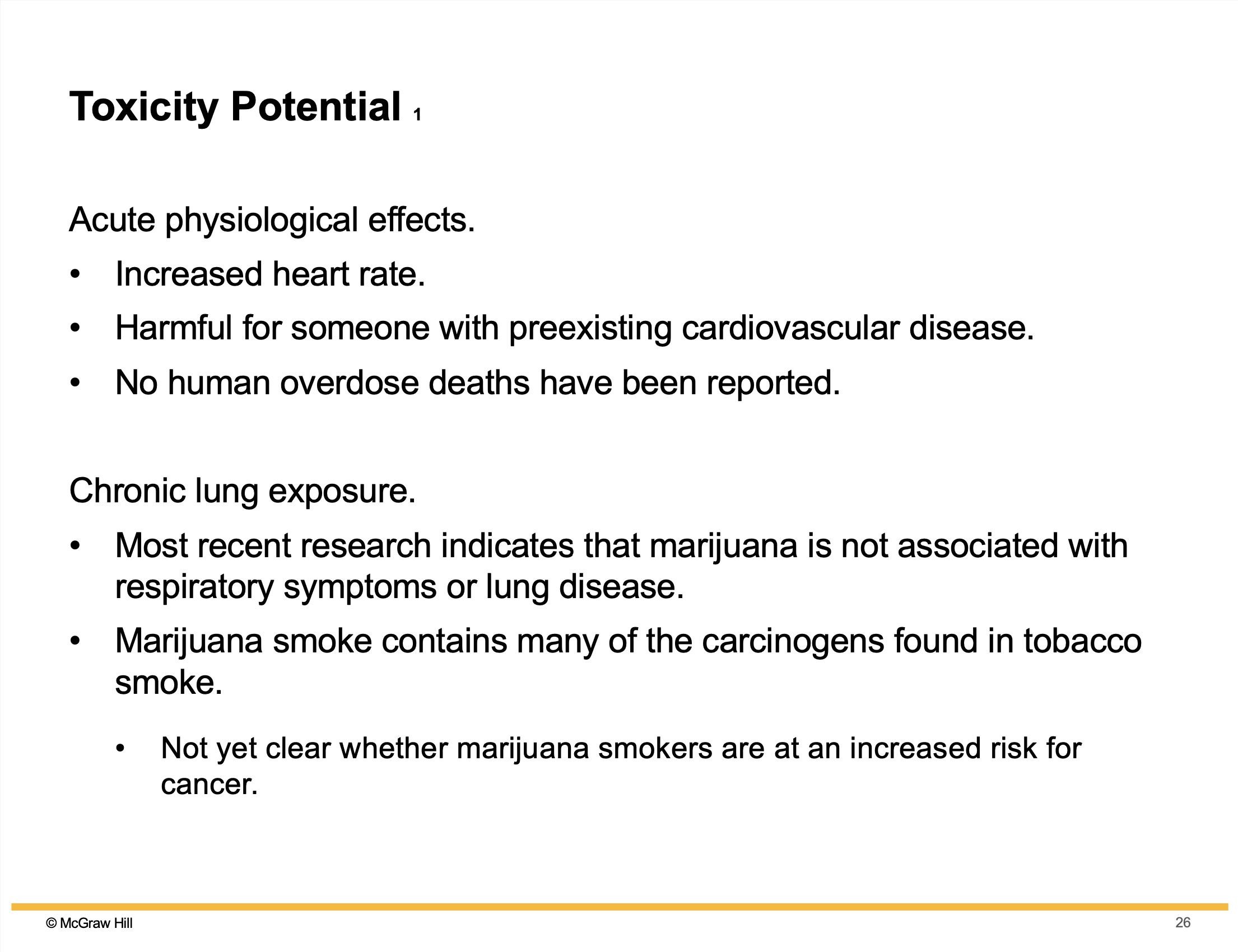
Toxicity Potential.
Acute physiological effects.
Increased heart rate.
Harmful for someone with preexisting cardiovascular disease.
No human overdose deaths have been reported.
Chronic lung exposure.
Most recent research indicates that marijuana is not associated with respiratory symptoms or lung disease.
Marijuana smoke contains many of the carcinogens found in tobacco smoke.
• Not yet clear whether marijuana smokers are at an increased risk for cancer.

Toxicity Potential.
Vaping to decrease toxicity.
Avoids combustion of the drug and the inhaling of smoke.
Associated with fewer reports of respiratory symptoms.
Anxiety.
Characterized by fear of loss of control.
Some people seek medical treatment.
• Example: Sedatives.
• The best treatment is likely “talking down.”


Toxicity Potential.
Immune system effects.
• Findings have been mixed.
• Some evidence suggests that marijuana use reduces immunity to infection.
• Mortality data do not show a relationship between marijuana use and overall death rates.
Marijuana madness.
• Some studies have found a correlation between marijuana use and psychotic symptoms.
• Causation.
Psychotic symptoms prior to using marijuana.
Influence of other drug use on the psychotic symptoms.

Toxicity Potential.
Driving ability.
• Laboratory studies: Significant impairment is found in infrequent users.

Marijuana and American Society.
Today, 36 states and Washington, D.C., have legalized medical marijuana, and this number continues to grow with each successive election.
Data from the annual Monitoring the Future survey indicate that the number of seniors who had ever smoked marijuana peaked at about 60 percent in the late 1970s.
Marijuana legalization.
During the 1970s, most Americans did not support marijuana legalization.
In 1978, only about 30 percent of Americans supported legalization.
Marijuana use remains a Schedule 1 drug in the United States.


Synthetic Marijuana.
The fastest growing and largest group of novel psychoactive substances.
The number of clandestine laboratories producing products containing synthetic cannabinoids for recreational use has dramatically increased.
