Horse breeds for Fall 2026 Breed Exam
 Call Kai
 Learn
 Practice Test
 Spaced Repetition
 Match
 Flashcards
 Knowt Play
1/48

There's no tags or description
Looks like no tags are added yet.
49 Terms
Quarter Horse (origin, colors, appearance, height, & use)
Colonial America
Many colors.
Small ears, deep chest & large hind-quarters
Average 14-16hh
English and western riding, reining, cow horse events and barrel racing

Thoroughbred (origin, colors, appearance, height, & use)
England
Many colors
Average 16hh
Racing, hunters, jumpers, eventing & barrel racing

Paint (origin, colors, appearance, height, & use)
North America
Many colors with characteristic white pattern
Average 14-16hh
english and western riding

Standardbred (origin, colors, appearance, height, & use)
Colonial America
Any coat color, most commonly bay.
Long body, narrow chest & refined head
Average 14.2-15.3hh
Gaited; harness racing

Arabian (origin, colors, appearance, height, & use)
Arabian Peninsula
Grey, chestnut, bay, black and rabicano in color.
Dished face & bulging forehead, large eyes and nostrils, and a high neck and tail carriage
14.2-15.2hh
Eventing, racing, endurance and trail riding

Appaloosa (origin, colors, appearance, height, & use)
Palouse region of Washington
Black, bay, chestnut and white in color with characteristic spots,
mottled skin around muzzle, eyes and genitalia, visible sclera and striped hooves.
Common coat patterns include blanket and leopard.
Average 14-16hh
English and western

Miniature Horse (origin, colors, appearance, height, & use)
Europe
Any coat color
Resemblance &
proportions to full-sized horses
Under 34in
Driving & in-hand shows
Morgan (origin, colors, appearance, height, & use)
New England
Bay, black, chestnut and grey in color.
Characterized by
well-muscled necks with a high neck carriage and short backs
Average 14.1-15.2hh
saddle-seat, harness racing, driving and hunters

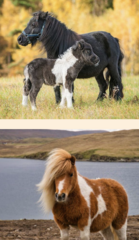
Shetland Pony (origin, colors, appearance, height, & use)
Shetland Isle, Scotland
Bay, chestnut, black, and grey with pinto patterns common,
characteristic thick double coats
Under 10.2hh
Driving and therapeutic animals
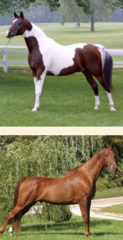
American Saddlebred (origin, colors, appearance, height, & use)
Colonial America
Any coat color.
Long, arched neck and round through the barrel
Average 15.1-16.3hh
saddle seat, pleasure and harness racing
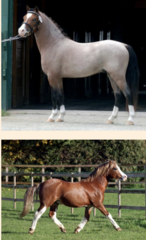
Welsh Pony & Cob (origin, colors, appearance, height, & use)
Wales
Black, grey, bay, roan, cream or chestnut in color
Small head, large eyes, short back and high set tail
Average 12-14hh
Dressage, eventing, hunters, driving and polo
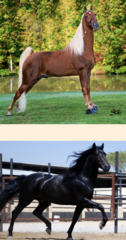
Tennessee Walking Horse (origin, colors, appearance, height, & use)
Tennessee
Black, bay and chestnut in color, pinto patterns present.
Long, high-set necks with large shoulders and large, accentuated stride
Average 15-17hh
Gaited; endurance and trail riding, saddle-seat
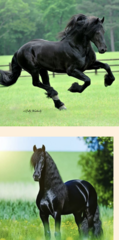
Friesian (origin, colors, appearance, height, & use)
Friesland, Netherlands
Black
High-set well-muscled necks with
full mane, tail and feathering
Average 15.2-16hh
Dressage, driving and entertainment/exhibition
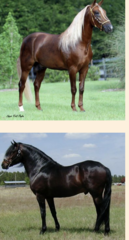
Paso Fino (origin, colors, appearance, height, & use)
Spain
Any color.
Yellow, amber or orange irises
(tiger eye).
Small stature, muscular neck with high head carriage. Long mane & tail
Average 13.3-14.2hh
Gaited
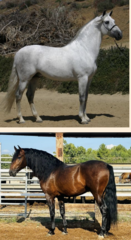
Andalusian (origin, colors, appearance, height, & use)
Andalusia, Spain
Any coat color, but most commonly grey and bay.
Substantial shoulders and neck with an abundant mane and tail. Well muscled
Average 15.2hh
Dressage, show jumping, eventing
Warmblood- category not a breed!! (origin, colors, appearance, height, & use)
Europe
Appearance: Vary by breed, most commonly bay, chestnut, grey and black.
Typically large frame and well muscled.
Average 16.2-17hh
Uses: dressage, driving, hunters, show jumping and eventing

List 3 common warmblood breeds
Hanoverian, Dutch Warmblood and Oldenburg
Draft Horse- category not a breed!! (origin, colors, appearance, height, & use)
Europe
Appearance: Varying by breed, commonly chestnut, bay, black or grey.
large, well-muscled neck, shoulder and hindquarter, thick legs often with feathers.
Average 16.2-18.3hh
Dressage, driving, pulling, mounted police and recreational riding

List 4 common draft breeds
Belgian, Clydesdale, Shire and Percheron
Miniature Mediterranean Donkey (origin, colors, appearance, height, & use)
Sicily and Sardinia, Italy
Small and compact.
Grey-dun with dark cross along back is the most common coloring, but can be white, sorrel, dark brown black or spotted.
Commonly have dark markings on tip of ear, tail and around feet., & dark rings around the legs.
Under 36inches tall
Companion

Mammoth Jack Donkey (origin, colors, appearance, height, & use)
Colonial America
Dark brown in color with white muzzle and underbelly.
verage 13-14hh
Draft work, often used in the production of mules

Abyssinian Donkey (origin, colors, appearance, height, & use)
Ethiopia
Slate-gray to chestnut in color. Short, upright mane and tail with
long hairs toward the end. Dark dorsal and shoulder stripes.
Average 8.4-10hh
Pack animal, herd guardian, companion
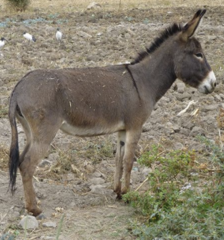
Mule and Hinny (origin, colors, appearance, height, & use)
Egypt
Mules have more donkey-like features, whereas
Hinnies have more horse-like features.
Coat colors vary, but often are brown or
bay.
12-17.5hh
draft animals, trail riding

Mule is a cross between a
male donkey x female horse
Hinny is a cross between a
male horse x female donkey
Mules are sterile due to an
odd number of chromosomes (63)
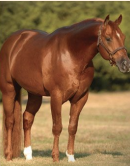
Chestnut
red coat with yellow-to-red mane & tail
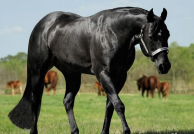
Black
black coat, skin, eyes & hoof
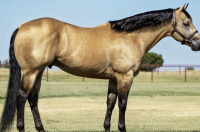
Buckskin
yellow-tan coat with
dark skin, and black points
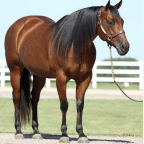
Bay
red-yellow with black
mane, tail, and points
Palomino
yellow coat with white mane and tail

Brown
Dark coat with areas of lighter
brown hair on muzzle and flanks

White
Born white, light skin, pure white coat

Roan
White hairs dispersed throughout a primary color

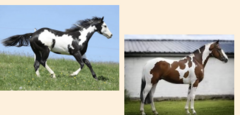
Pinto
pattern of white and primary coat color
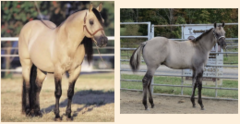
Dun
Diluted primary color. Dark
dorsal stripe through tail, dark
streaks on legs
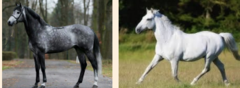
Grey
Born blue-black, more white hairs come as the horse ages
Star
white spot on forehead
above eye

Snip
White marking between the
nostrils, sometimes extending to the lips

Stripe
narrow star, strip, and snip connected

Blaze
wide star, strip, and snip
connected, but not including
nostrils
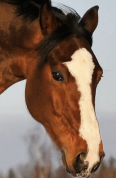
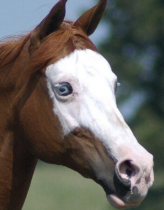
Bald
Very wide blaze, usually
including at least 1 eye and both
nostrils
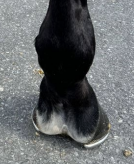
Heel
White covers heel
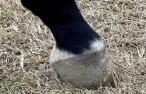
Coronet
White extends 1" or less above hoof
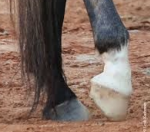
Pastern
White extends to top of pastern below the fetlock
Ankle
white extends to top of fetlock

Sock
White extends to include lower half of cannon bone
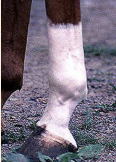
Stocking
white extends up to knee, but not past the knee
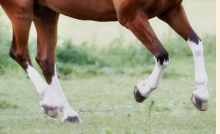
High White
white extends above knee or hock
