FNH 350: Proteins - absorption and intestinal amino acids metabolism
 Call Kai
 Learn
 Practice Test
 Spaced Repetition
 Match
 Flashcards
 Knowt Play
1/26

There's no tags or description
Looks like no tags are added yet.
27 Terms
what are the main mechanisms through which protein digestion products are absorbed in the small intestine?
peptide transport: absorption of dipeptides and tripeptides
amino acid transport: absorption of individual free amino acids
Explain how peptides are absorbed
peptides enter enterocytes using PEPT1 (a hydrogen transporter) at the brush border membrane, the main transporter responsible for absorbing peptides. PEPT1 transports hydrogen ions into the enterocyte, so to keep hydrogen concentrations in the enterocyte low to keep PEPT1 working, there is another transporter that pumps hydrogen out. After entry into enterocyte, peptides are broken down by peptidases in the cytosol
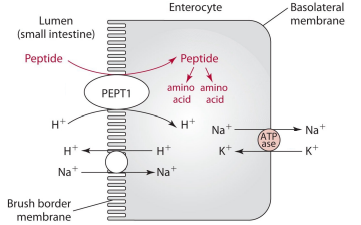
What is the maximum peptide size that PEPT1 effectively transports?
PEPT1 has reduced affinity for peptides containing more than three amino acids. It primarily transports dipeptides and tripeptides
What percentage of amino acids are absorbed in the form of dipeptides and tripeptides?
60% of AAs absorbed in the form of di- or tripeptides
how are individual amino acids absorbed into enterocytes?
there are numerous specific amino acid transport systems that exist in the brush border membrane of enterocytes. These transporters are specific for specific amino acids, so they selectively recognize particular amino acids or groups of amino acids. However, they can absorb other amino acids but prefer to transport their specific ones. Transport systems for essential amino acids are particularly well represented
What types of transport mechanisms are involved in amino acid absorption?
both passive and active transport (including sodium-dependent transporters)
how to amino acids move from enterocytes into the bloodstream?
some transport systems also exist on the basolateral membrane to transport amino acids from enterocytes and into blood circulation, thus amino acids are selectively brought in, and selectively shuttled out
How can polypeptides directly enter the blood stream without being fully digested?
Paracellular transport: passing through gaps between epithelial cell junctions
Vesicular transport: being taken up into vesicles by intestinal cells and transported across the cell into submucosa

what are the potential consequences of intact polypeptides entering the bloodstream?
acute immune reactions
development of sensitivity to polypeptides (food allergy, asthma, dermatitis)
idiosyncratic drug reactions
what populations are more vulnerable to absorption of intact polypeptides, and why?
Certain populations may have increased intestinal permeability (wider gap junctions), allowing larger molecules to cross the intestinal barrier more easily. These include:
inds. w/ certain GI tract diseases
inds. w/ atopic/eczema heredity (increased risk of developing allergy disease)
pre-term and full-term newborns who may have GI tract still developing
older inds. (chewing, less protein rich diet, etc)
how do hydrolyzed proteins help reduce the risk of immune reactions?
hydrolyzed proteins have been broken down into smaller protein fragments, thus they have less potential to trigger an immune reaction

what % of AAs are absorbed as di-/tripeptides? what happens to them?
approx. 60%
aminopeptidases break them down into free AAs
what % of AAs are absorbed as free AAs?
40%
what happens to absorbed AAs after they enter enterocytes?
50-70% of amino acids cross basolateral membrane, enter portal vein, travel to the liver before being distributed to other tissues
30-50% of AA are used by the intestine (enterocytes)
What are the main uses of amino acids retained by enterocytes?
protein synthesis: structural proteins for new intestinal cells, digestive enzymes, apolipoproteins for chylomicron formation, and hormones
nitrogen-containing compounds: nucleotide biosynthesis (e.g., glycine as an amide nitrogen donor), hormones
Energy: especially from glutamine and glutamate
which amino acids are mainly retained and metabolized by enterocytes?
glutamine
glutamate
aspartate
arginine
methionine
what are the main functions of glutamine in intestinal cells?
primary source of energy for intestinal cells
formation of alanine
supports intestinal cell growth and proliferation (trophic effects)
helps prevent atrophy of gut mucosa and creates barrier against bacterial translocation
needed for synthesis of mucin (found in GI tract mucus secretions)
where does intestinal glutamine come from?
glutamine is produced in skeletal muscles (and other organs), then taken up by intestinal cells
what % of absorbed glutamate is used by the intestine?
90%
what are the main functions of glutamate in intestinal cells?
source of energy
formation of alanine
formation of proline which is released into portal blood for delivery to the liver
used to form ornithine and glutathione (transported to portal vein)
what are the main functions of aspartate in intestinal cells?
mostly used in intestinal cell for energy
can be converted into oxaloacetate which enters TCA cycle
can be converted to ornithine which enters urea cycle

how much aspartate is found in portal blood?
very little
what % of arginine is oxidized in enterocytes? what does it yield?
40% oxidized in enterocytes yielding citrulline and urea. Enterocytes play a significant role in formation of citrulline
what happens to citrulline produced by enterocytes?
citrulline enters the blood stream and then is taken up by kidneys to produce arginine for the body. It can also travel to the liver and enter the urea cycle

Why does arginine become conditionally indispensable during intestinal injury?
The intestine normally contributes to citrulline production, which the kidneys use to produce arginine.
During intestinal injury, this process may be compromised, increasing the need for dietary arginine or citrulline.
what % of methionine is metabolized in the intestine?
50%
what are the roles of methionine in the intestine?
methionine is a precursor for S-adenosylmethionine (SAM) which is a primary one-carbon donor in human metabolism and is used for DNA methylation (epigenetics).
methionine can be transformed to cysteine which is used for formation of glutathione and formation of taurine (for bile salts)