BIOC3021 #1 - Molecules & Cell + Water, pH, and Buffers
 Call Kai
 Learn
Learn Practice Test
 Spaced Repetition
 Match
Match Flashcards
 Knowt Play
1/31

There's no tags or description
Looks like no tags are added yet.
Name | Mastery | Learn | Test | Matching | Spaced | Call with Kai | Chat |
|---|
No analytics yet
Send a link to your students to track their progress
32 Terms
Covalent Bond
hold atoms together to form molecules (share electrons to fill outer electron shell)
Particularly bonds between carbon atoms
Non-covalent Bonds
weak chemical forces that maintain biological structure and determine molecular interactions
Allow for changes in structure (Ex. DNA replication)
Types of Non-covalent Bonds
Ionic Interactions
Hydrogen Bonds
Hydrophobic Interactions
Van der Waals Interactions
Prokaryotic Cells
Small, single-celled organisms with a simple structure
Eukaryotic Cells
Complex cell containing a “true” nucleus and other organelles
Biomolecules
Amino Acids
Monosaccharides (carbohydrates)
Nucleotides
Lipids
Amino Acids Definition
Contain an amino group (-NH2) and a carboxylic acid group (-COOH)
Ionized groups are: (-NH3+) and (-COO-)

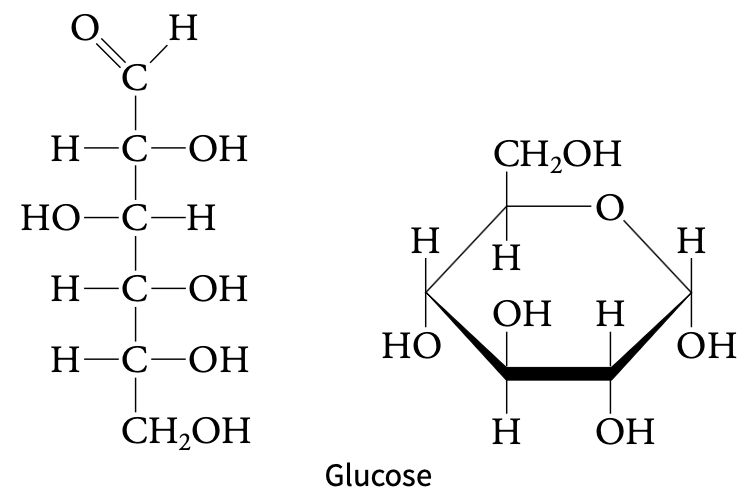
Carbohydrates Definition
Contain C, H, and O
Simple carbohydrates (monosaccharides) contain one sugar, following the formula (CH2O)n
Nucleotides Definition
Contain a five-carbon sugar (pentose), a nitrogenous ring (base), and a phosphate group

Lipids Definition
Group of insoluble, naturally occurring molecules (C, H, O)

Biopolymers
Proteins
Polysaccharides (carbohydrates)
Nucleic Acid
Proteins Definition
Polymers of amino acids linked by amide bonds (also called peptide bonds)
Nucleic Acids Definition
Polymers of nucleotides linked by phosphodiester bonds
Polysaccharides (carbohydrates)
Polymer of carbohydrates containing multiple monosaccharides linked by glycosidic bonds
Water has an unusually _ _ _
High boiling point
Properties of Water
Polar Molecule
Partial charges form a dipole (polar covalent bond)
Hydrogen-bonded Network
Molecules in liquid water interact to form rapidly changing, random hydrogen bonds
The average lifetime of a hydrogen bond between 2 H2O molecules is
9.5 picoseconds

H2O in liquid water forms an average of _ hydrogen bonds
3.4
H2O in solid ice forms _ hydrogen bonds
4
Solvent Properties of Water
Forms hydrogen-bonds with polar solutes
Forms hydration shells around charged ions
Forms clathrate (cage-like) structures around non-polar solute molecules (hydrophobic solutes)
Produces micelles with amphiphilic molecules
Micelle
Single-layer, spherical structures formed by amphiphilic molecules in water

Lipid Bilayer
Bilayers (two-layer sheets) formed by amphiphilic molecules in water

Colligative Properties of Water
Properties that depend only on the number of solute particles per unit volume, NOT on the chemical nature of the solute
Examples of Colligative Properties of Water
Osmotic pressure effects, freezing point depression, boiling point elevation, and vapor pressure lowering

High concentration of solutes could result in
Swelling and eventual rupture of the cell
pH
A measure of hydrogen ion concentration
pH Formulas
pH = -log10[H+] and [H+] = 10-pH
![<p><span><strong>pH = -log<sub>10</sub>[H<sup>+</sup>] </strong>and <strong>[H<sup>+</sup>] = 10<sup>-pH</sup></strong></span></p>](https://assets.knowt.com/user-attachments/dfc7ad97-8068-4276-8a46-0b626ec07186.png)
What relationship does [H+] and [OH-] have?
Inverse relationship

Ionization Constant Equation
Kw = [H+][OH-} = 10-14
Buffer Systems
Phosphate System: buffers the intracellular fluid of cells
Carbonate System: buffers the blood plasma
Phosphate System consists of:
H2PO4- ➡ dihydrogen phosphate ion that neutralizes excess hydroxide (OH-) ion
HPO42- ➡ monohydrogen phosphate ion that neutralizes excess hydrogen (H+) ion
Carbonate System consists of:
HCO3- ➡ bicarbonate ion that neutralizes excess hydrogen (H+) ion
H2CO3 ➡ carbonic acid that neutralizes excess hydroxide (OH-) ion