Chapter 5 - Milady Standard Esthetics: Fundamentals - Infection Control: Principles and Practices
 Call Kai
 Learn
Learn Practice Test
 Spaced Repetition
 Match
Match Flashcards
 Knowt Play
1/130

There's no tags or description
Looks like no tags are added yet.
Name | Mastery | Learn | Test | Matching | Spaced | Call with Kai | Chat |
|---|
No analytics yet
Send a link to your students to track their progress
131 Terms
Estheticians are allowed to recommend treatments for infections and certain diseases.
True
False
False
Cleaning and disinfecting mean the same thing.
True
False
False
Most bacteria are nonpathogenic.
True
False
True
Spores are not harmed by disinfectants, heat, or cold.
True
False
True
Conjunctivitis is a contagious disease.
True
False
True
Implements must be cleaned before they are disinfected.
True
False
True
Most salons and spas require estheticians to sterilize all of their instruments.
True
False
False
A person can be infected with HIV for many years and show no symptoms.
True
False
True
Spirilla are the most common type of bacteria.
True
False
False
Scabies is caused by the itch mite.
True
False
True
Cocci
Cocci

Staphylococci

Streptococci

Diplococci
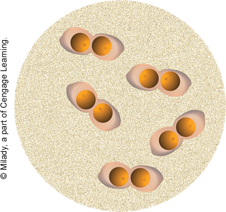
Bacilli

Spirilla

Fungi
Plant parasites that can cause contagious diseases
Common cold
An example of a virus
Mildew
An example of a fungus
Bacteria
Can be pathogenic or nonpathogenic
Germs
Nonscientific synonym for disease-producing organisms
Parasites
Organisms that cannot live on their own
Toxins
Poisonous substances produced by some bacteria and viruses
Viruses
Submicroscopic particle that infects the cells of an organism
Head lice
An example of a parasite
Material Safety Data Sheets (MSDS) are available only through OSHA.
True
False
False
Bacteria can exist almost anywhere.
True
False
True
Most bacteria are pathogenic or harmful.
True
False
False
A systemic infection is an infection where the pathogen has distributed throughout the body or a system of the body rather than staying in one body area or organ.
True
False
True
Hepatitis is a blood-borne virus.
True
False
True
Spirilla are the most common type of bacteria.
True
False
False
Natural immunity is immunity that the body develops after overcoming a disease.
True
False
False
The invasion of body tissues by disease-causing pathogens is called a (an) _______.
a.inflammation
b.parasite
c.infection
d.virus
c.infection
Bacteria grow and reproduce during the _____ stage.
a.inactive
b.active
c.biological
d.spore-forming
b.active
Methicillin-resistant staphylococcus aureus, or MRSA, initially appears as a ________ that can be difficult to cure.
a.skin infection
b.fever
c.eye infection
d.persistent cough
a.skin infection
A _____ is a colony of microorganisms that adhere to environmental surfaces, as well as the human body, and secrete a sticky, protective coating that cements them together, making them hard to penetrate.
a.bacterial spore
b.biofilm
c.fungus
d.toxin
b.biofilm
Head lice are a type of ______ infection.
a.bacterial
b.viral
c.fungal
d.parasitic
d.parasitic
Bacteria that are _____ are harmless organisms that may perform useful functions.
a.nonpathogenic
b.pathogenic
c.nonactive
d.systemic
a.nonpathogenic
A(n) _____ can only live and reproduce by taking over other cells and becoming part of them.
a.virus
b.mold
c.bacteria
d.infection
a.virus
A(n) _____ is a single-cell organism that grows in irregular masses that include molds, mildews, and yeasts.
a.pathogen
b.virus
c.allergy
d.fungus
d.fungus
A local infection is one that is _______ to a particular part of the body.
a.spread
b.confined
c.open
d.attached
b.confined
Historically, MRSA occurred most frequently in people who have _______immune systems or who had undergone medical procedures.
a.contaminated
b.disrupted
c.weakened
d.acquired
c.weakened
Phenolics
Powerful tuberculocidal disinfectants
Sodium hypochlorite (bleach)
be corrosive to metals and plastics and can cause skin irritation and eye damage
Cleaning
Removing visible dirt and debris and many disease-causing germs with soap and water or detergent and water
Efficacy
The ability to produce an effect
Decontamination
Removal of blood and all other potentially infectious materials on an item's surface
Disinfectants
Pesticides and can be harmful if absorbed through the skin
Bioburden
the number of variable organisms in or on an object or surface before decontamination or sterilization
What is the term for short rod-shaped bacteria?
a.cocci
b.flagella
c.spirilla
d.bacilli
d.bacilli
What is the term for pus-forming bacteria that grow in clusters like a bunch of grapes?
a.streptococci
b.staphylococci
c.flagella
d.diplococci
b.staphylococci
What is the term for slender, hair-like extensions used by bacilli and spirilla for locomotion?
a.staphylococci
b.mycobacterium fortuitum
c.diplococci
d.flagella
d.flagella
What is mycobacterium fortuitum?
a.a microscopic germ that normally exists in tap water in small numbers
b.round-shaped bacteria that appear singly (alone) or in groups
c.spherical bacteria that grow in pairs and cause diseases
d.spiral or corkscrew-shaped bacteria that cause diseases
a.a microscopic germ that normally exists in tap water in small numbers
What is a type of infectious bacteria that is highly resistant to conventional treatments such as antibiotics?
a.mycobacterium fortuitum
b.human papilloma virus
c.human immunodeficiency virus
d.methicillin-resistant staphylococcus aureus
d.methicillin-resistant staphylococcus aureus
Why is it important to know the difference between rules and laws?
a.you are only required to obey laws, rules are simply guidelines
b.laws only matter to manufacturers, you only deal with rules
c.rules are general guidelines, whereas laws are much more specific
d.rules and regulations are more specific than laws
d.rules and regulations are more specific than laws
What is the main function of the Occupational Safety and Health Administration (OSHA)?
a.generate income for makers of workplace safety equipment
b.regulate and enforce safety standards to protect employees at work
c.generate Material Safety Data Sheets for new products
d.administrate unemployment reporting and payments
b.regulate and enforce safety standards to protect employees at work
What are the 4 organisims that Estheticians need to know about?
Bacteria, Viruses, Fungi, and Parasites
Where do you find information about the possible hazards and safe use of products?
a.Product Safety Data Sheets
b.Material Use Instructions Lists
c.Product Use Instructions Lists
d.Material Safety Data Sheets
d.Material Safety Data Sheets
Who in the salon is required to read all Material Safety Data Sheets (MSDS) and verify having done so?
a.all employees
b.only estheticians
c.only managers
d.only janitorial workers
a.all employees
What agency registers all types of disinfectants sold and used in the United States?
a.OSHA
b.EPA
c.USDA
d.FDA
b.EPA
Which federal agency studies diseases and provides guidance to prevent their spread?
a.CDC
b.OSHA
c.EPA
d.FDA
a.CDC
What did the CDC introduce in 1985 as a response to the major public health crisis of AIDS?
a.Universal Precautions
b.Standard Precautions
c.Universal Preventions
d.Standard Preventions
a.Universal Precautions
What replaced the Universal Precautions in 1996?
a.Universal Provisions
b.Global Provisions
c.Standard Precautions
d.Global Precautions
c.Standard Precautions
What is the basic assumption underlying Standard Precautions (SP)?
a.estheticians with common sense need take no further precautions
b.it is only necessary to use precautions around sick people
c.washing thoroughly after every client is all the precaution you need
d.all body fluids are potential sources of infection
d.all body fluids are potential sources of infection
What system requires that personal protective equipment (PPE) be worn for contact with all body fluids, even if blood is not visible?
a.body fluid avoidance (BFA)
b.internal fluid isolation (IFI)
c.body substance isolation (BSI)
d.internal fluid avoidance (IFA)
c.body substance isolation (BSI)
What is the most common method of spreading infection?
a.touching
b.kissing
c.coughing
d.sneezing
a.touching
Standard Precautions (SP) apply to all body fluids and secretions except what?
a.breast milk
b.excretions
c.blood
d.sweat
d.sweat
What is required by Standard Precautions (SP) if the splashing of body fluids is likely?
a.apply a mask, eyewear, or gown
b.wear a containment suit
c.angle yourself away from the client
d.avoid services with possible splashing
a.apply a mask, eyewear, or gown
What is the first step in responding to an exposure incident?
a.stop the service
b.stop the bleeding
c.bandage the cut
d.remove your gloves
a.stop the service
What is the last step in responding to an exposure incident?
a.stopping the bleeding
b.discarding instruments
c.removing your gloves
d.recommending the client see a physician if symptoms develop
d.recommending the client see a physician if symptoms develop
What sort of bandage should you use after the bleeding has stopped when responding to an exposure incident?
a.gauze
b.adhesive
c.cloth
d.paper
b.adhesive
What is a basic element of first aid that every esthetician should know?
a.cardiopulmonary resuscitation (CPR)
b.how to use a defibrillator
c.how to sew an incision closed
d.how to apply a neck brace
a.cardiopulmonary resuscitation (CPR)
Who should you call as soon as possible after any accident has occurred?
a.the salon owner
b.your lawyer
c.the police
d.EMTs
d.EMTs
How many levels of burns are there?
a.three
b.four
c.five
d.six
b.four
What type of burn always requires medical attention?
a.first degree
b.second degree
c.third degree
d.fourth degree
d.fourth degree
What is a virus?
a.illness resulting from conditions associated with employment
b.a type of fungus that affects plants or grows on inanimate objects
c.disease that affects the body as a whole
d.a parasitic particle that infects and resides in body cells
d.a parasitic particle that infects and resides in body cells
What are toxins?
a.spiral or corkscrew-shaped bacteria that causes diseases such as syphilis
b.any organisms of microscopic or submicroscopic size
c.diseases produced by organisms
d.various poisonous substances produced by some microorganisms
d.various poisonous substances produced by some microorganisms
What is tinea barbae?
a.superficial fungal infection that commonly affects the skin
b.fungus of the foot
c.fluid created by infection
d.parasitic particle that resides in the cells of biological organisms
a.superficial fungal infection that commonly affects the skin
What is the term for a disease that affects the body as a whole?
a.body disease
b.overall disease
c.systemic disease
d.total disease
c.systemic disease
Natural immunity is resistance to disease that is
a.only inherited
b.solely the result of healthy living
c.partly inherited and partly developed through healthy living
d.acquired through immunizations
c.partly inherited and partly developed through healthy living
What is a contagious disease caused by the itch mite?
a.scabies
b.pus
c.mildew
d.folliculitis barbae
a.scabies
What term refers to items made or constructed of a material that has openings?
a.hypoallergenic
b.porous
c.nonabsorbent
d.nonporous
b.porous
What is the chemical process for reducing the number of disease-causing germs on cleaned surfaces called?
a.scrubbing
b.disinfection
c.sanitation
d.sterilization
c.sanitation
What is a microorganism?
a.any organism that you need to look closely to see
b.a very small part of a larger organism
c.any organism of microscopic or submicroscopic size
d.an organism that is incomplete unless joined to other organisms
c.any organism of microscopic or submicroscopic size
What term refers to the ability of the body to destroy and resist infection?
a.immunity
b.integrity
c.resilience
d.strength
a.immunity
What is infection?
a.the ability of the body to destroy and resist disease
b.the invasion of body tissues by disease-causing pathogens
c.the process that completely destroys all microbial life
d.resistance to disease that is partly inherited
b.the invasion of body tissues by disease-causing pathogens
What is inflammation?
a.a fluid created by infection
b.superficial fungal infection that commonly affects the skin
c.a contagious disease caused by the itch mite
d.condition in which the body reacts to injury, irritation, or infection
d.condition in which the body reacts to injury, irritation, or infection
What is the term for the process that completely destroys all microbial life?
a.cleaning
b.disinfection
c.sanitation
d.sterilization
d.sterilization
What is mildew?
a.fungus of the foot
b.invasion of body tissues by disease-causing pathogens
c.fluid created by infection
d.type of fungus that affects plants or grows on inanimate objects
d.type of fungus that affects plants or grows on inanimate objects
What is the term for a disease produced by organisms?
a.organism disease
b.pathogenic disease
c.pathological disease
d.physical disease
b.pathogenic disease
What is pus?
a.fungus of the foot
b.parasitic particle that infects the cells of biological organisms
c.fluid created by infection
d.type of fungus that affects plants or grows on inanimate objects
c.fluid created by infection
What is occupational disease?
a.disease that occupies the body
b.disease that occupies the organs
c.illness related to occupying an enclosed space
d.illness related to conditions associated with employment
d.illness related to conditions associated with employment
What is the term for a fungus of the foot?
a.scabies
b.spirilla
c.folliculitis barbae
d.tinea pedis
d.tinea pedis
What is tuberculosis?
a.fungus of the foot
b.superficial fungal infection that commonly affects the skin
c.type of fungus that affects plants
d.disease transmitted through coughing or sneezing
d.disease transmitted through coughing or sneezing
What does virucidal mean?
a.capable of carrying viruses
b.capable of destroying viruses
c.capable of detecting viruses
d.capable of infection by viruses
b.capable of destroying viruses
Where do bacteria multiply best?
a.bright places
b.cool places
c.dirty places
d.dry places
c.dirty places
What is an example of a contagious disease?
a.cancer
b.diabetes
c.leukemia
d.ringworm
d.ringworm
What does asymptomatic mean?
a.having an acquired immunity to certain symptoms
b.having a natural immunity to certain symptoms
c.showing new signs or symptoms of infection
d.showing no signs or symptoms of infection
d.showing no signs or symptoms of infection
What is an allergy?
a.presence of blood or other potentially hazardous material
b.disease-causing microorganism carried in the body by blood
c.reaction due to extreme sensitivity to certain substances
d.number of viable organisms in or on an object or surface
c.reaction due to extreme sensitivity to certain substances
What is bioburden?
a.the number of viable organisms in or on an object or surface
b.an extreme reaction to a normally harmless substance
c.the presence of blood or other potentially hazardous material
d.disease-causing microorganisms carried in the body by blood
a.the number of viable organisms in or on an object or surface