PHYS 3 midterm review
 Call Kai
 Learn
 Practice Test
 Spaced Repetition
 Match
 Flashcards
 Knowt Play
1/19

There's no tags or description
Looks like no tags are added yet.
20 Terms
Define a telescope & 3 main func.
Device that gathers and focuses light (photons) from objects at a difference
light gathering
resolution
magnify
Relate a telescopes aperture to its light collecting area and angular resolution and compare the light gathered by apertures of different diameters
Aperture collects light: a larger apt. collects more light
doubling the diameter collects more factor of ((pi)d²)/4 light more
angular resolution: larger apt. induce more angular resolution (enchanced res)
magnification cannot create on its own - it needs angular resolution
Refracting Telescope
uses 2 lenses and a detector or eye piece
needs to float by the edges - the rest of the lens is free floating
easy to clean
warps
Reflecting Telescope
mirrors; amount varies
will need eye piece
Adv: easier to manage - (easier to build of a large size)
hard to clean
When light refracts
wave speed (the wavelength) changes when refracted
frequency stays the same
Placement of Ground observatories
Higher base because there is less atmosphere above (atmospheric turbulence)
dry air - less moisture - less refracting of light)
Remote - light pollution
dark sites - also light pollution
stable air - atmospheric turbulance (atmospheric absorption)
Electomagnetic spectrum
some things are on visble in different physical processes and temperatures emit different types of radiation
high enregy process for high energy photons, vice versa for low energy photons
visble, radio waves, & infared - reach earth surface
x-rays and gamma rays are completelu blocked by the upper atmosphere and magnetosphere - requiring soace based telescopes to observe
Describe 3 atmospheric limiations on ground based astonomy and the benefits of space telescopes
ground limitations
absorption
distortion
light pollution
Space telescope: put in space to remove atmospheric turbluance
full spectrum access
crystal clear resolution
uninterrupped/dark observations
Adaptive optics
a machine manipulating mirrors to accompansate for atmospheric turbulance - primary and secondary concave : Adaptive ocatives
Proposed telescope by wavelength range, physical location, and primary target directly against its science goal
Ground-Based Sites: Work well for radio and optical wavelengths. High, dry mountaintops (like Mauna Kea or the Atacama Desert) minimize atmospheric distortion and water vapor for near-infrared observations.
Airborne or Balloon Platforms: Fly above 99% of atmospheric water vapor, offering a middle-ground cost for far-infrared observations.
Space-Based Orbits: Mandatory for X-ray, gamma-ray, ultraviolet, and mid-to-far infrared astronomy because the atmosphere completely blocks these wavelengths.
Identify the components of the Solar System.
Sun
8 Planets
Terrestrial: mercury, venus, earth, mars
smaller
Jovian: Jupiter, Saturn, Uranus, Neptune
Big, dominated by gas
Oort clouds: outer most edge of the solar system - water, carbon monoxide, hydrogen, cyanide
Kuiper Belt: beyond neptune - ice methane, water, rock
Asteriod belt: between mars and jupiter - rock and metal
Terrestrial planets
Inner solar system, sitting closer to the sun,
4879km - 12,756km
4 to 5.5 g/cm³ : High density - tightly packed with solid rock and metal
composed of solid sillicate and metallic elements
Jovian planets
Massive giant - 4-11 times larger than the earth
low density - meaning they are mostly gas and lighter elements; saturn is so light it’d float in water
composition: predominantly of hydrigen and helium gas, slushy heavier ice/liquid layers deeper down, and rocky/icy cores with no true solid surface
Stages of Gravitational Collapse
Inital cloud core: a cold dense pocket inside a giant molecular cloud becomes gravitationally unstable. When its inward gravitational pull overcomes its outward thermal pressure, the core begins to collapse inward
Isothermal Free-Fall: During the early collaspe, the cloud remains thin enough for heat to escape as infared radiation. The gas stays at a roughly constant low temperature while its density increases rapidly toward the center
Protostar Formation and Accretion: As the core grows denser it traps radiation and becomes opaque. The risinf internal pressure slows the collapse in the center, forming a hot, dense object called a protostar
Disk Formation and Accertion: surrounf material continues to fall inward toward the protostar. Instead of plunging straight into the center, this infalling gas and dust settles into an orbiting protoplanetary disk that gradually feeds mass onto the growing star

Solar system formed
a large ball of cold gas and gravity condensed it & caused it to heat up + protoplanets
gases & rock & ice become part of the planet & add to the mass and pull in more
Conservation: spin faster
Flattening: evening out of up and down collisions - like a pizza dough
Looking down from the north pole
planets orbit counter clockwise
Pudding model 1904
JJ thompson
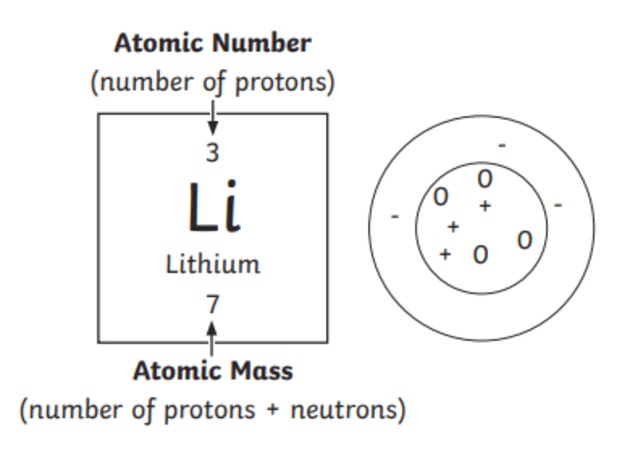
Periodic Table

Classify common substances as hydrogen compounds or rocks/metals and relate their relative abundance to planet formation.
water
methane
ammonia
sillicate minerals
iron, nickel, aluminum
Frost Line
insde the frost line waterized generally doesnt exisit
gas giants