Bio 109 Lab Quizes
 Call Kai
 Learn
Learn Practice Test
 Spaced Repetition
 Match
Match Flashcards
 Knowt Play
1/46

There's no tags or description
Looks like no tags are added yet.
Name | Mastery | Learn | Test | Matching | Spaced | Call with Kai | Chat |
|---|
No analytics yet
Send a link to your students to track their progress
47 Terms
Quiz 1: Organisms that float on the surface of a body of water are called
a. algae
b. protozoa
c. plankton
d. protists
Plankton
Quiz 1: The term "protist" is NOT a taxonomical category.
True/Flase?
True
Quiz 1: Using a microscope, if a letter e slide is moved to the right, in what direction does the image in the ocular move?
a. left
b. right
c. up
d. down
Left
Quiz 1: What is the most common component of bacterial cell walls?
a. plasmids
b. prokaryotes
c. peptidoglycans
d. organelles
Peptidoglycans
Quiz 1: The stain responsible for giving certain bacteria a red color is
a. crystal violet
b. iodine
c. alcohol/acetone
d. safranin
Safranin
Quiz 1: The most important step in the Gram stain is the application of
a. crystal violet
b. iodine
c. alcohol/acetone
d. safranin
Alcohol/Acetone
Quiz 1: The bacteria shown below are Gram-
a. positive cocci
b positive bacilli
c. negative cocci
d. negative bacilli
Negative bacilli

Quiz 2: Protists are a ________ group.
a. monophyletic
b. polyphyletic
c. Paraphyletic
Polyphyletic
Quiz 2: Which ecological category contains the plant-like protists?
a. protozoa
b. algae
c. slime molds
d. all of the above
Algae
Quiz 2: Diatoms belong to the clade
a. Euglenozoans
b. Stramenophiles
c. Alveolates
d. Rhizarians
Stramenophiles
Quiz 2: The complex of organelles that some protists possess for penetrating into host cells is called a(n)
a. kinetoplast
b. pellicle
c. trichocyst
d. apex
apex
Quiz 2: Which protist has a holdfast, stipe and blades?
a. diatom
b. dinoflagellate
c. brown algae
d. slime mold
Brown Algae
Quiz 2: The purpose of the contractile vacuole in Paramecium is to
a. ingest food
b. digest food
c. regulate water balance
d. all of the above
Regulate Water Balance
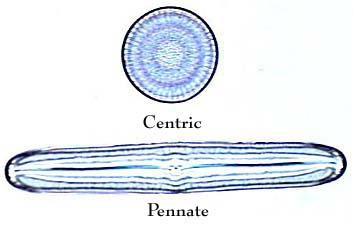
Quiz 2: Which protist may be centric or pennate?
a. diatom
b. dinoflagellate
c. brown algae
d. slime mold
Diatom
Quiz 2: Which of the following protists is known to "bloom?"
a. Euglena
b. radiolarians
c. amoeba
d. dinoflagellates
Dinoflagellates
Quiz 2: Fungal hyphae separated by walls are called ______ hyphae.
a. septate
b. coenocytic
c. monokaryotic
d. multinucleate
septate
Quiz 2: Fungi are more closely related to animals than to plants
True/Flase?
True
Quiz 3: Multicellular filaments of fungi are called
a. hyphae
b. conidia
c. mycelia
d. spores.
Hyphae
Quiz 3: Fungi that feed on dead material are
a. parasitic
b. saprophytic
c. mutualistic
d. heterotrophic
Saprophytic
Quiz 3: The mutualistic relationship with plant roots and fungi is called a
a. mycorrhiza
b. lichen
c. sporangium
d. stolon
Mycorrhiza
Quiz 3: In fungi, the fusion of the cytoplasm is called
a. karyogamy
b. plasmogamy
c. septation
d. symbiosis
Plasmogamy
Quiz 3: Ascospores are formed in
a. sexual reproduction
b. asexual reproduction
Sexual
Quiz 3: Fungal zygotes are diploid.
True/False
True
Quiz 3: Flagellated spores are a characteristic of the phylum
a. Ascomycota
b. Basidiomycota
c. Chytridiomycota
d. Glomeromycota
e. Zygomycota
Chytridiomycota
Quiz 3: The filamentous green algae that contain corkscrew-shaped chloroplasts are the
a. Porphyra
b. Chlamydomonas
c. Spirogyra
d. Ulva
Spirogyra
Quiz 3: The reproductive life cycle of land plants is called
a. alternation of generations
b. pollination
c. fertilization
d. symbiosis
Alternation of Generations
Quiz 3: The lichen pictured is
a. crustose
b. foliose
c fruticose
d. lactose
Crustose

Quiz 4: In plants, the openings for gas exchange are called
a. stroma
b. stomata
c. sporangia
d. gemmae
Stomata
Quiz 4: In ferns, clusters of sporangia under the fronds are called
a. sori.
b. strobili.
c. rhizomes.
d. rhizoids.
Sori
Quiz 4: Which of the following is NOT a challenge land plants had to overcome, as compared to algae?
a. moisture
b. gravity
c. temperature
d. access to light
Access to Light
Quiz 4: Archegonia produce
a. Eggs
b. Sperm
c. Sporophtes
d. Gametophytes
Eggs
Quiz 4: Xylem and phloem are NOT found in ______ plants.
a. non-vascular
b. seedless vascular
c. seed-bearing vascular.
Non-vascular
Quiz 4: Which of the following is a seed-bearing vascular plant?
a. fern
b. pine tree
c. liverwort
d. moss
Pine Tree
Quiz 4: A homosporous plant has both megasporangia and microsporangia.
True/False
False
Quiz 4: In the alternation of generation life cycle, spores are produced by
a. mitosis
b. meiosis
Meiosis
Quiz 4: Heterospory is primarily found in ______ plants.
a. Non-vascular
b. seedless vascular
c. seed-bearing vascular
d. All of the above.
Seed-bearing vascular
Quiz 4: The style of a flower is a ______ structure.
a. Male
b. Female
Female
Quiz 5: Which of the following is another name for a male cone?
a. seed cone
b. staminate cone
c. ovulate cone
Staminate cone
Quiz 5: Which of the following is common to both gymnosperms and angiosperms?
a. flowers
b. fruit
c. endosperm
d. pollen grain
Pollen grain
Quiz 5: In angiosperms, the ____ contains the male gametophyte, and the ____ contains the female gametophyte.
a. embryo sac; pollen grain
b. pollen grain; embryo sac
c. pollen grain; endosperm
d. endosperm; micropyle
Pollen grain; embryo sac
Quiz 5: The transfer of pollen to the stigma is known as
a. fertilization
b. pollination
c. Both terms refer to the same process.
Pollination
Quiz 5: In a flower, the overall female reproductive structure is the ____, and the overall male reproductive structure is the ____.
a. anther; ovary
b. stamen; stigma
c. stigma; carpel
d. filament; style
e. carpel; anther
f. style; stigma
g. carpel; stamen
h. ovary; filament
Carpel; Stamen
Quiz 5: In an angiosperm's seed, which of the following structures is triploid?
a. endosperm
b. embryo
c. seed coat
d. micropyle
Endosperm
Quiz 5: Which of the following is NOT a characteristic of a monocot?
a. leaf veins are netlike
b. stem vascular tissue is scattered
c. fibrous system
d. floral organs in multiples of 3
Leaf Veins are Netlike
Quiz 5: Which of the following increases the width of a plant?
a. pith
b. apical meristems
c. vascular cambium
d. vascular cylinders
Vascular Cambium
Quiz 5: Which cells in a leaf carry out photosynthesis?
a. xylem
b. phloem
c. mesophyll
d. stomata
Mesophyll
Quiz 5: ____ microsporocytes divide by ____ to produce ____ microspores.
a. Diploid; mitosis; haploid
b. Haploid; meiosis; diploid
c. Diploid; mitosis; diploid
d. Haploid; meiosis; diploid
e. Diploid; meiosis; haploid
f. Haploid; mitosis; haploid
Diploid; Meiosis; Haploid