LECTURE 31- Angiosperm classifications

0.0(0)
Studied by 0 people
call kaiCall Kai
learnLearn
examPractice Test
spaced repetitionSpaced Repetition
heart puzzleMatch
flashcardsFlashcards
GameKnowt Play
Card Sorting

1/17

encourage image

There's no tags or description

Looks like no tags are added yet.

18 Terms

1
New cards

what is a phylogeny

a hypothesis of the evolutionary history of a group of organisms

2
New cards

what are the 4 angiosperm classifications

  • ANA grade

  • Magnoliids

  • Monocots

  • Eudicots


3
New cards

Magnoliaceae (magnolia family)

  • magnoliid classification

  • Trees of shrubs

  • Flowers are bisexual (both male + female parts)

  • Parts are unfused

  • Radial symmetry (actinomorphic)

  • Hypogynous

  • tepals

  • Centre has a receptacle with both stamens and carpels

  • Fruits are follicles


<ul><li><p>magnoliid classification</p></li><li><p><span style="background-color: transparent;">Trees of shrubs</span></p></li><li><p><span style="background-color: transparent;">Flowers are<strong> bisexual</strong> (both male + female parts)</span></p></li><li><p><span style="background-color: transparent;">Parts are <strong>unfused</strong></span></p></li><li><p><span style="background-color: transparent;"><strong>Radial symmetry </strong>(actinomorphic)</span></p></li><li><p><span style="background-color: transparent;"><strong>Hypogynous</strong></span></p></li><li><p><span style="background-color: transparent;"><strong>tepals</strong></span></p></li><li><p><span style="background-color: transparent;">Centre has a <strong>receptacle with both stamens and carpels</strong></span></p></li><li><p><span style="background-color: transparent;">Fruits are follicles</span></p></li></ul><p></p>
4
New cards

monocot characteristics

  • All have just one cotyledon

  • Most have parallel leaf venation

  • Floral parts are in multiples of 3


5
New cards

Asparagales: Orchidaeceae (orchid family)

  • monocot classification

  • Largest angiosperm family

  • Usually perennial herbs

  • Complex flower structure

  • Bisexual, zygomorphic (bilateral symmetry), epigynous

  • Most are epiphytic (grow on other plants).

  • Association with mycorrhizal fungi for seed gemination


6
New cards

what’s the structure of Orchidaeceae

  • 3 inner and outer tepals

  • Bottom inner tepals forms a lip for pollinators to land on

  • All stamens and carpels are fused to form a column


<ul><li><p><span style="background-color: transparent;">3 inner and outer tepals</span></p></li><li><p><span style="background-color: transparent;">Bottom inner tepals forms a lip for pollinators to land on</span></p></li><li><p><span style="background-color: transparent;">All stamens and carpels are fused to form a column</span></p></li></ul><p></p>
7
New cards

Liliales: Liliaceae (lily family)

  • monocot classification

  • Perennial herbs with bulbs/corms for storage

  • Flowers are bisexual, actinomorphic and hypogynous

  • tepals

  • E.g. lily, tulip, onion, garlic


8
New cards

Poales: Poeceae (grass family)

  • monocot classification

  • Herbs with hollow stems and solid at the nodes

  • Leaves have open sheath, distichous(alternate) with ligule

  • Inflorescence: spikelet with individual flowers

  • Flowers are unisexual or bisexual, reduced perianth (no petal/sepals), and superior ovary

  • Fruit is a grain or caryopsis

  • E.g. oat, wheat, maize, rice


9
New cards

structure of eudicots

  • 2 cotyledons

  • Differentiated sepals and petals

  • Flowers parts are in multiples of 4 or 5


10
New cards

Ranunculales: ranunculaceae (buttercup family)

  • eudicot

  • Perennial annual herbs, shrubs and vines

  • Either actinomorphic or zygomorphic

  • Petal-like sepals or tepals

  • Anthers and carpels are often free

  • E.g. caltha, clematis, ranunculus, delphinium


<ul><li><p>eudicot</p></li><li><p><span style="background-color: transparent;">Perennial annual herbs, shrubs and vines</span></p></li><li><p><span style="background-color: transparent;">Either <strong>actinomorphic or zygomorphic</strong></span></p></li><li><p><span style="background-color: transparent;"><strong>Petal-like</strong> sepals or tepals</span></p></li><li><p><span style="background-color: transparent;"><strong>Anthers and carpels</strong> are often<strong> free</strong></span></p></li><li><p><span style="background-color: transparent;">E.g. caltha, clematis, ranunculus, delphinium</span></p></li></ul><p></p>
11
New cards

Fabales: Fabaceae (legume family)

  • eudicot

  • Trees, shrubs, vines or herbs

  • Leaves are stipulate and compound

  • Flowers are pentamorous (5-parted), and either zygomorphic or actinomorphic

  • Fruits are legumes

  • E.g. beans, peas, kakabeak, kōwhai, acacia


<ul><li><p>eudicot</p></li><li><p><span style="background-color: transparent;">Trees, shrubs, vines or herbs</span></p></li><li><p><span style="background-color: transparent;">Leaves are<strong> stipulate </strong>and <strong>compound</strong></span></p></li><li><p><span style="background-color: transparent;">Flowers are<strong> pentamorous (5-parted</strong>), and either<strong> zygomorphic or actinomorphic</strong></span></p></li><li><p><span style="background-color: transparent;">Fruits are <strong>legumes</strong></span></p></li><li><p><span style="background-color: transparent;">E.g. beans, peas, kakabeak, kōwhai, acacia</span></p></li></ul><p></p>
12
New cards

whats a pentamorous flower structure

  • 1 banner petal (top)

  • 2 wing petals (side)

  • 2 petals fused into keel (bottom)


<ul><li><p><span style="background-color: transparent;">1 banner petal (top)</span></p></li><li><p><span style="background-color: transparent;">2 wing petals (side)</span></p></li><li><p><span style="background-color: transparent;">2 petals fused into keel (bottom)</span></p></li></ul><p></p>
13
New cards

Rosales: Rosaceae (rose family)

  • eudicot

  • Trees, shrubs, herbs and vines

  • Flowers are bisexual, actinomorphic and pentamorous

  • Flowers are either hypogynous or perigynous with hypanthium

  • E.g. rose, apple, plum, cherry, pear


<ul><li><p>eudicot</p></li></ul><ul><li><p><span style="background-color: transparent;">Trees, shrubs, herbs and vines</span></p></li><li><p><span style="background-color: transparent;">Flowers are <strong>bisexual, actinomorphic and pentamorous</strong></span></p></li><li><p><span style="background-color: transparent;">Flowers are either <strong>hypogynous or perigynous with hypanthium</strong></span></p></li><li><p><span style="background-color: transparent;">E.g. rose, apple, plum, cherry, pear</span></p></li></ul><p></p>
14
New cards

Brassicales: Brassicae (mustard family)

  • eudicot

  • Herbs with glucosinolates (spicy compounds)

  • Perienth is cross-shaped and 4 parted

  • tetradynamous stamens (2 are shorter and 4 are longer)

  • Flower is hypogynous with 2 carpellate ovaries

  • Fruit is a silicle or silique (dry, dehiscent fruits with papery pericarp)

Silique: sleek and skinny

Silicle: wider


<ul><li><p>eudicot </p></li><li><p><span style="background-color: transparent;"><strong>Herbs with glucosinolates (</strong>spicy compounds)</span></p></li><li><p><span style="background-color: transparent;">Perienth is <strong>cross-shaped and 4 parted</strong></span></p></li><li><p><span style="background-color: transparent;"><strong>tetradynamous stamens</strong> (2 are shorter and 4 are longer)</span></p></li><li><p><span style="background-color: transparent;">Flower is<strong> hypogynous with 2 carpellate ovaries</strong></span></p></li><li><p><span style="background-color: transparent;"><strong>Fruit is a silicle or silique</strong> (dry, dehiscent fruits with papery pericarp)</span></p></li></ul><p><span style="background-color: transparent;">Silique: sleek and skinny</span></p><p><span style="background-color: transparent;">Silicle: wider</span></p><p></p>
15
New cards

Lamiales: Lamiaceae (mint family)

  • eudicot

  • Herbs or shrubs that produce aromatic oils

  • Squares stems

  • Opposite arranged leaves

  • Flowers are bisexual, zygomorphic, bilabiate (2-lipped) corolla, and hypogynous

  • E.g mint, rosemary, lavender, basil, etc.
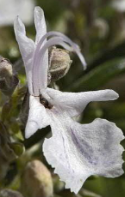

<ul><li><p>eudicot</p></li></ul><ul><li><p><span style="background-color: transparent;">Herbs or shrubs that produce <strong>aromatic oils</strong></span></p></li><li><p><span style="background-color: transparent;"><strong>Squares stems</strong></span></p></li><li><p><span style="background-color: transparent;"><strong>Opposite arranged leaves</strong></span></p></li><li><p><span style="background-color: transparent;">Flowers are <strong>bisexual, zygomorphic, bilabiate</strong> (2-lipped) corolla, and <strong>hypogynous</strong></span></p></li><li><p><span style="background-color: transparent;">E.g mint, rosemary, lavender, basil, etc.</span></p></li></ul><p></p>
16
New cards

Solanales: Solanaeceae (tomato/potato family)

  • eudicot

  • Herbs or shrubs

  • Flowers are bisexual, actinomorphic and hypogynous

  • 5 petals fuse to form a tube

  • E.g datura, tomatoes, potatoes, poroporo, tobacco (the drug fam??)


<ul><li><p>eudicot</p></li></ul><ul><li><p><span style="background-color: transparent;">Herbs or shrubs</span></p></li><li><p><span style="background-color: transparent;">Flowers are bisexual, actinomorphic and hypogynous</span></p></li><li><p><span style="background-color: transparent;">5 petals fuse to form a tube</span></p></li><li><p><span style="background-color: transparent;">E.g datura, tomatoes, potatoes, poroporo, tobacco (the drug fam??)</span></p></li></ul><p></p>
17
New cards

Apiales: Apiaceae (carrot/dill family)

  • eudicot

  • Herbs, some shrubs and trees

  • Compound umbel is diagnostic feature

  • Flowers are small, bisexual, actinomorphic, and inferior ovary

  • E.g. carrot, dill, fennel, cilantro, coriander

  • diverse fruits


18
New cards

Asterales: Asteraceae (sunflower family)

  • eudicot

  • herbs, shrubs, trees and vines

  • Capitulum is diagnostic feature

  • Capitulum features ray flowers (zygomorphic) and disk flowers (actinomorphic)

  • flowers are bisexual and epigynous

  • inferior ovary

  • E.g. daisy, sunflower, lettuce, thistle, artichoke