kurouski carbs

0.0(0)
Studied by 5 people
call kaiCall Kai
learnLearn
examPractice Test
spaced repetitionSpaced Repetition
heart puzzleMatch
flashcardsFlashcards
GameKnowt Play
Card Sorting

1/226

encourage image

There's no tags or description

Looks like no tags are added yet.

227 Terms

1
New cards

D- Glyceraldehyde

Just 1 R

<p>Just 1 R</p>
2
New cards

D- Erythrose

RR

<p>RR</p>
3
New cards

D- Ribose

RRR

<p>RRR</p>
4
New cards

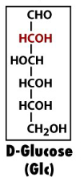
D- Glucose

RLRR

<p>RLRR</p>
5
New cards

D- Mannose

LLRR

<p>LLRR</p>
6
New cards

D- Xylose

RLR

<p>RLR</p>
7
New cards

D- Galactose

RLLR

<p>RLLR</p>
8
New cards

Dihydroxyactone

Ketose

<p>Ketose</p>
9
New cards

D-Erythrulose

Ketone, R

<p>Ketone, R</p>
10
New cards

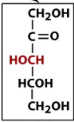
D- Ribulose

Ketone, 2R

<p>Ketone, 2R</p>
11
New cards

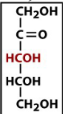
D- Fructose

Ketone, LRR

<p>Ketone, LRR</p>
12
New cards

D- Xylulose

Ketone, LR

<p>Ketone, LR</p>
13
New cards
<p>What is this Disaccharide, what is the linkage it has, and what are its monomers?</p>

What is this Disaccharide, what is the linkage it has, and what are its monomers?

Lactose, β(1→4), Gal + Glc

14
New cards
<p>What is this Disaccharide, what is the linkage it has, and what are its monomers?</p>

What is this Disaccharide, what is the linkage it has, and what are its monomers?

Sucrose, Glc + Fru, α(1→2)β
15
New cards
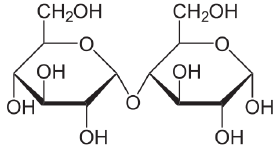
<p>What is this Disaccharide, what is the linkage it has, and what are its monomers?</p>

What is this Disaccharide, what is the linkage it has, and what are its monomers?

Maltose, α(1→4), Glc + Glc

16
New cards

What is cellulose made up of and what are the linkages that build it?

Glucose, β(1→4)

17
New cards

What is chitin made up of and what are the linkages that build it

N-Acetylglucosamine (GlcNAc), β(1→4)

<p>N-Acetylglucosamine (GlcNAc), β(1→4)</p>
18
New cards

What is the same about glycogen and amylopectin, and what makes them different

Both are made up of glucose and have the same linkages (a1→4, a1→6), but glycogen branches more frequently
19
New cards
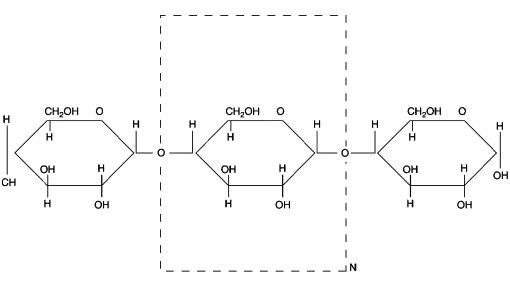
<p>What is this compound, what is it made up of, and what is its linkage?</p>

What is this compound, what is it made up of, and what is its linkage?

α-Amylose, Glucose, a(1→4)

<p>α-Amylose, Glucose, a(1→4)</p>
20
New cards

When glucose is oxidized at C1 what is the product

Gluconic Acid

21
New cards

When glucose is oxidized at C6 what is the product

Glucuronic Acid

22
New cards

When Glucose is oxidized at both C1 and C6 what is the product?

Glucaric Acid

23
New cards

When Glucose is reduced at C1 what is the product?

D-sorbitol (also called D-Glucitol)

24
New cards
<p>What is this lipid called?</p>

What is this lipid called?

Triacylglycerol

25
New cards
<p>What is this lipid called</p>

What is this lipid called

Glycerophospholipid

26
New cards
<p>What is this lipid called</p>

What is this lipid called

Sphingomyelin

27
New cards
<p>What is this lipid called</p>

What is this lipid called

Glycosphingolipid

28
New cards

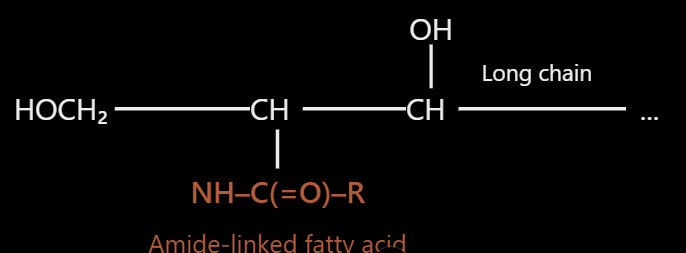
How many carbons does sphingosine have and what kind of compound is it?

It is a 18 carbon amino alcohol.

29
New cards
<p>What is this compound</p>

What is this compound

Sphingosine

30
New cards
<p>What is this compound</p>

What is this compound

Ceramide

31
New cards
<p>What vitamin is this</p>

What vitamin is this

Vitamin A

32
New cards

What’s the difference between retinol and retinal

Retinol ends in CH₂OH; retinal ends in CHO.

33
New cards
<p>What vitamin is this</p>

What vitamin is this

Vitamin D

34
New cards
<p>What vitamin is this</p>

What vitamin is this

Vitamin K

35
New cards
<p>What vitamin is this </p>

What vitamin is this

Vitamin E

36
New cards
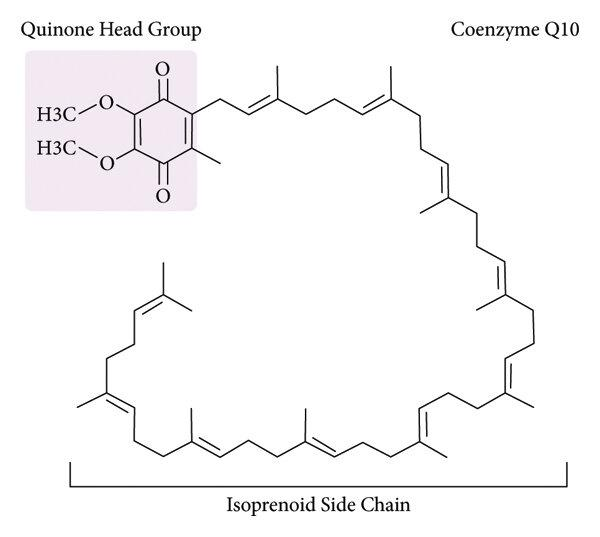
<p>What compound is this</p>

What compound is this

Ubiquinone

37
New cards

What is the common carbohydrate backbone of the ABO antigens

Glucose → Galactose → N-acetylglucosamine → Galactose.

38
New cards

What is the carbohydrate structure associated with type O blood?

Common backbone with fucose attached to the terminal galactose; no additional A or B sugar.

39
New cards

What is the carbohydrate structure of the A antigen?

Common backbone with fucose and N-acetylgalactosamine attached to the terminal galactose.

40
New cards

What is the carbohydrate structure of the B antigen?

Common backbone with fucose and an additional galactose attached to the terminal galactose.

41
New cards

Which sugar distinguishes the A antigen from the B antigen?

A has N-acetylgalactosamine (GalNAc); B has galactose (Gal).

42
New cards

What is present on RBCs and in plasma of type AB blood?

Both A and B antigens; neither anti-A nor anti-B antibodies.

43
New cards

What is present on RBCs and in plasma of type O blood?

Neither A nor B antigen; both anti-A and anti-B antibodies.

44
New cards

Why can group O whole blood agglutinate group B recipient RBCs?

Anti-B antibodies in donor plasma bind B antigens on recipient RBCs.

45
New cards
What forms when ribose is reduced?
Ribitol, a component of flavin coenzymes.
46
New cards
What forms when xylose is reduced?
Xylitol, a sweetener used in sugarless gum and candies.
47
New cards
What forms when glyceraldehyde is reduced?
Glycerol, an important component of lipids.
48
New cards
Is myo-inositol formed by simple reduction of an aldose?
No. It is a cyclic polyalcohol and an important component of certain lipids.
49
New cards
What is the difference between glucuronic acid and iduronic acid?
They are C5 epimers.
50
New cards
What is formed when the C2 hydroxyl of glucose is replaced with an amino group?
Glucosamine.
51
New cards
What is reducing status of lactose?
Reducing sugar found in milk.
52
New cards

What is reducing status of sucrose?

Nonreducing

53
New cards
Why is sucrose nonreducing?
Both anomeric carbons participate in the glycosidic bond.
54
New cards

What is reducing status of maltose?

Reducing

55
New cards
What two polysaccharides compose starch?
α-Amylose and amylopectin.
56
New cards
Which glycosidic bonds are hydrolyzed by α-amylase?
Internal α(1→4) glycosidic bonds.
57
New cards
Which glycosidic bonds does glycogen phosphorylase cleave?
α(1→4) bonds at nonreducing ends.
58
New cards
Which glycogen linkages require debranching activity?
α(1→6) branch-point linkages.
59
New cards
Which activated glucose donors are used to synthesize amylopectin and glycogen?
Amylopectin uses ADP-glucose; glycogen uses UDP-glucose.
60
New cards
What two sugars form hyaluronate?
D-Glucuronate and N-acetylglucosamine; unsulfated.
61
New cards
What two sugars form chondroitin-6-sulfate?
D-Glucuronate and N-acetylgalactosamine-6-sulfate.
62
New cards
What two sugars form keratan sulfate?
D-Galactose and N-acetylglucosamine-6-sulfate.
63
New cards
What sugars are present in the representative heparin repeating unit?
L-Iduronate-2-sulfate and N-sulfated glucosamine-6-sulfate.
64
New cards
Which Glycosaminoglycans lacks a uronic acid?
Keratan sulfate.
65
New cards
Which Glycosaminoglycans is unsulfated?
Hyaluronate.
66
New cards
Which Glycosaminoglycans contains extensive O-sulfation and N-sulfation?
Heparin.
67
New cards
What are lectins?
Carbohydrate-binding proteins involved in recognition and cellular adhesion.
68
New cards
What are the C2 and C4 epimers of D-glucose?
D-Mannose is the C2 epimer; D-galactose is the C4 epimer.
69
New cards
What is the enzyme deficiency in Tay–Sachs disease?
Hexosaminidase A deficiency.
70
New cards
Which lipid accumulates in Tay–Sachs disease?
GM2 ganglioside.
71
New cards
Which glycerophospholipids are net-neutral zwitterions at physiological pH?
Phosphatidylcholine and phosphatidylethanolamine.
72
New cards
What is the net charge of phosphatidylserine at physiological pH?
−1.
73
New cards
What is the characteristic structural feature of choline?
A positively charged nitrogen attached to three methyl groups.
74
New cards
What is the characteristic structural feature of phosphatidylserine?
An ammonium group and a carboxylate group in the head group.
75
New cards
What is phosphatidic acid?
Glycerol with two fatty acyl chains and phosphate, without an additional organic head group.
76
New cards
What is the characteristic steroid nucleus?
Three fused six-membered rings and one five-membered ring.
77
New cards
At which position does cholesterol contain its hydroxyl group?
C3.
78
New cards
How is a cholesteryl ester formed?
Esterification of cholesterol's C3 hydroxyl group with a fatty acid.
79
New cards
What is a glucocorticoid example and function?
Cortisol; regulates carbohydrate, protein and lipid metabolism.
80
New cards
What is a mineralocorticoid example and function?
Aldosterone; regulates salt and water balance.
81
New cards
What are the general functions of androgens and estrogens?
Sexual development and reproductive function.
82
New cards
What hormonal abnormality characterizes Addison's disease?
Adrenal hormone deficiency.
83
New cards
What hormonal abnormality characterizes Cushing's syndrome?
Excess glucocorticoid activity.
84
New cards
What is the precursor of vitamin D3?
7-Dehydrocholesterol.
85
New cards
What is the precursor of vitamin D2?
Ergosterol.
86
New cards
What structural change occurs during vitamin D synthesis?
The steroid B ring opens between C9 and C10.
87
New cards
What is the primary function of vitamin D?
Promotes intestinal calcium absorption.
88
New cards
What can excessive vitamin D cause?
Hypercalcemia, kidney stones and kidney damage.
89
New cards
What is the structural difference between retinol and retinal?
Retinol has a terminal CH₂OH; retinal has a terminal CHO.
90
New cards
Why are vitamin A compounds colored?
Extended conjugated double bonds allow light absorption at longer wavelengths.
91
New cards
What is the primary function of retinal?
Participation in vision.
92
New cards
What biochemical reaction requires vitamin K?
γ-Carboxylation of glutamate residues in blood-clotting proteins.
93
New cards
What is the most abundant member of the vitamin E family emphasized in lecture?
α-Tocopherol.
94
New cards
What is the biological function of vitamin E?
Lipid-soluble antioxidant protecting membrane lipids and proteins.
95
New cards
How many carbons are in an isoprene unit?
Five.
96
New cards
How many isoprenoid units are in the CoQ10 side chain?
Ten.
97
New cards
What is the function of ubiquinone?
Mobile electron carrier in the electron transport chain.
98
New cards
Which enzyme releases arachidonic acid from membrane phospholipids?
Phospholipase A₂.
99
New cards
Which products are associated with the cyclooxygenase pathway?
Prostaglandins and thromboxanes.
100
New cards
Which products are associated with the lipoxygenase pathway?
Leukotrienes.