Fronts
 Call Kai
 Learn
 Practice Test
 Spaced Repetition
 Match
 Flashcards
 Knowt Play
1/16

There's no tags or description
Looks like no tags are added yet.
17 Terms
what is a front?
transition zone between 2 different airmasses
temperature changes over a 50-100 mile distance
factors that affect characteristics of fronts
Moisture
without enough no clouds will form
Stability
dictates cloud type, precip and turbulence
frontal slope
the steeper the slope, the narrower the transition, and the more severe the weather
speed
the faster the front, the more violent and short lived weather
contrast in temperature & moisture content
greater the contrast, greater intensity of weather
how are fronts named?
based on the colder air mass
difference between occluded front and trowal
a trowal is an occluded front at altitude
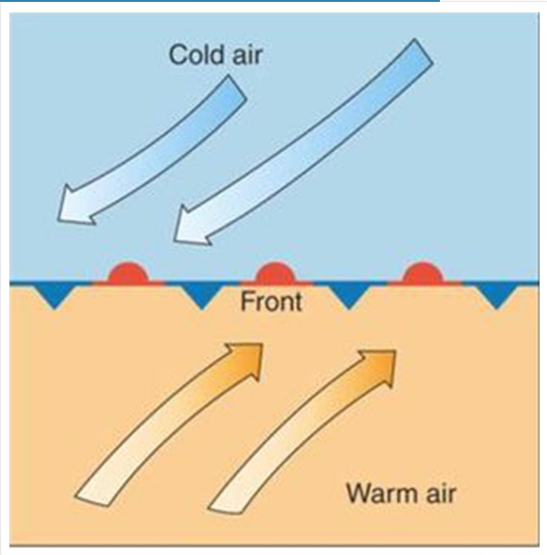
characteristics of a stationary front
warm and cold air mass butt up against each other
neither is advancing or retreating
cold air mass sinks to surface creating a bulge of cold air
warmer air mass rides up slightly
leads to low ceilings, low vis, fogordrizzle if warm air mass is moist
can last for days
Cold front characteristics
advances and undercuts warm air mass
steep frontal slope
advances more quickly than warm front (stronger pressure gradient)
generally leads to: showery precipitation, convective clouds, thunderstorms

low pressure system pic

what happens as a cold front approaches?
wind speed increases due to an increased PGF
leads to veering winds
temperature drops as a cold front passes
faster the cold front the more severe the weather
as a cold front undercuts a warm front what clouds form
cumulus → altocumulus → cumulonimbus → cirrostratus → cirrus
warm front characteristics
more gradual than a cold front
shallow frontal slope
warm front overruns retreating cold air
generally leads to: milder weather than cold fronts, extensive stratiform clouds and steady precipitation

do warm fronts’ winds veer as it approaches a cold front?
yes, but more gradually. Also the temperature will gradually increase
as a warm front overrides a cold front what clouds form?
nimbostratus → stratus → altostratus → cirrostratus → cirrus
How does an occluded front form and what properties does it produce?
forms by a cold front catching up to a warm front and undercutting it
leads to properties of a cold and warm front
what marks an occluded front?
heavy rain
picture of stationary front
winter warm front diagram
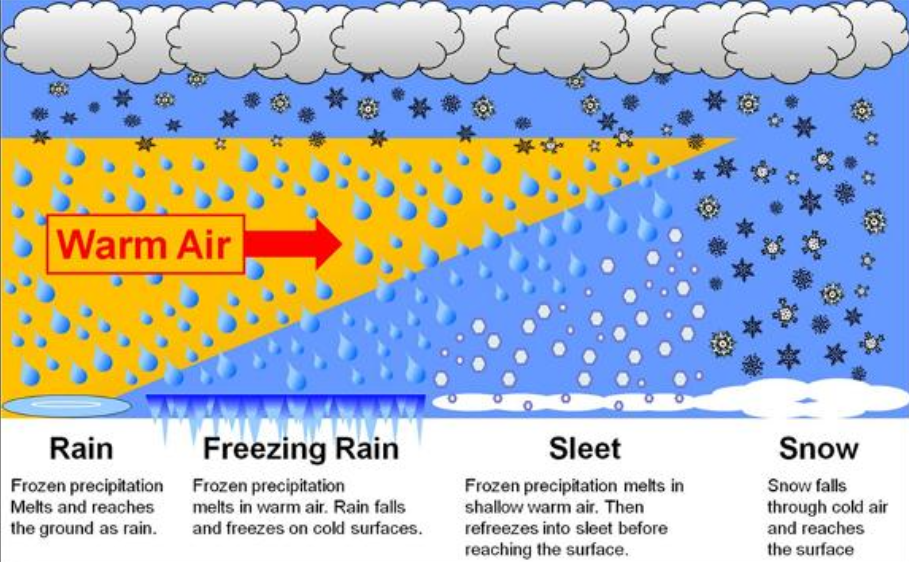
from the warm air side what is the order of weather phenomenas
rain → freezing rain → sleet/ice pellets → snow