tca cycle rxns
 Call Kai
 Learn
 Practice Test
 Spaced Repetition
 Match
 Flashcards
 Knowt Play
1/14

There's no tags or description
Looks like no tags are added yet.
15 Terms
tca cycle
oxidation of acetyl coA that releases energy, occurs in mitochondrial matrix
every turn: 3 NADH, 1 FADH2, 1 GTP/ATP, 2 CO2

step 1
citrate synthase condenses oxaloacetate and acetyl coA using H2O into citrate
CONDENSATION RXN (irreversible)
highly regulated
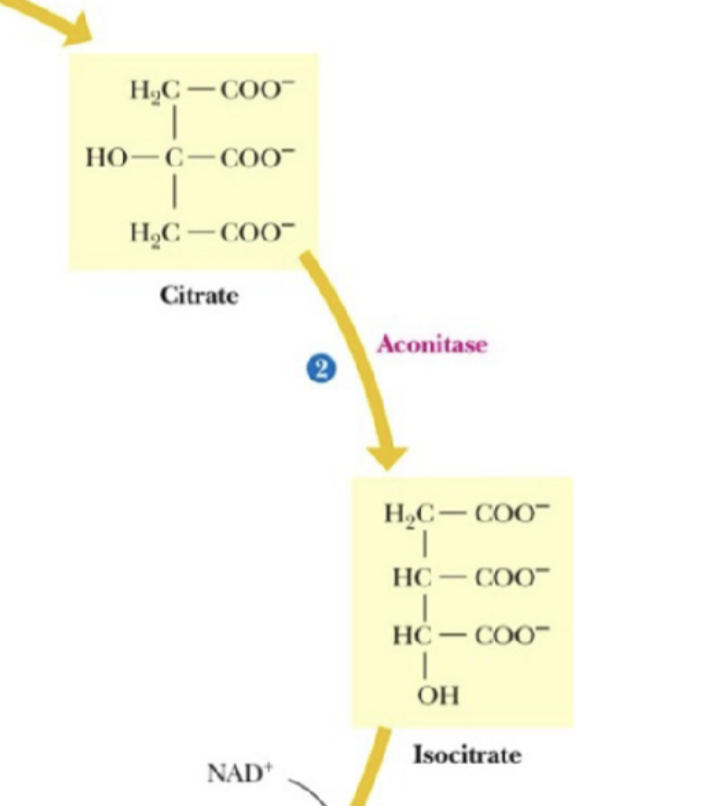
step 2
ISOMERIZATION rxn of citrate into isocitrate, makes a non-chiral molecule chiral

step 3
REDOX AND DECARBOXYLATION (removes COOH+releases CO2), reduces NAD to NADH isocitrate to alpha ketogluterate
irreversible
highly regulated

step 4
REDOX AND DECARBOXYLATION (with addition of CoA), releases CO2 and reduces NAD into NADH
irreversible
regulated

step 5
SUBSTRATE LEVEL PHOSPHORYLATION, generates one GTP/ATP

step 6
REDOX, FAD is reduced to FADH2

step 7
HYDRATION, addition of h2o across double bond of fumerate
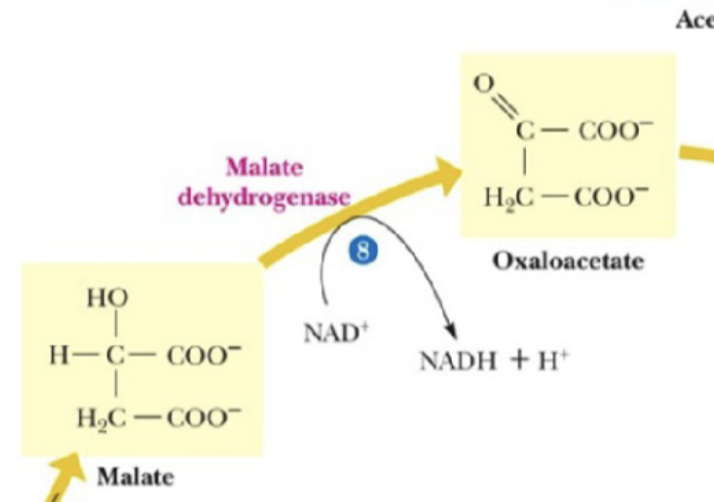
step 8
REDOX, NAD is reduced to NADH, oxaloacetate is reformed (through ox) ›
regulation of step 1
inhibited by ATP, NADH, citrate, and succinyl coA
activated by ADP
regulation of step 3
inhibited by ATP and NADH
activated by ADP and Ca2+ ions
regulation of step 4
inhibited by NADH and succinyl CoA
activated by Ca2+
cataplerotic vs anaplerotic rxns
anaplerotic: add more intermediates to replenish (ex. pyruvate decarboxylase converts CO2 and pyruvate into oxaloacetate in mitochon)
cataplerotic: remove intermediates to do further biosynthesis elsewhere (ex. gluconeogenesis pulls oxaloacetate out of pathway to synthesize glucose)
From which molecule do the carbons that get released as CO2 come?
in one turn—> isocitrate and alpha ketogluterate (not the acetyl coA that was added in on that turn,
OVER LATER TURNS, carbons get shuffled in and are eventually released as CO2
two halves of tca
carbon loss phase (oxidative decarboxylation) breaks 6 carbons into 4 carbon
regeneration phase oxidizes 4 carbon intermediate into oxaloacetate so cycle can continue