Bio 1406 - Exam 4
 Call Kai
 Learn
 Practice Test
 Spaced Repetition
 Match
 Flashcards
 Knowt Play
1/54

There's no tags or description
Looks like no tags are added yet.
55 Terms
When was Earth formed?
4.6 billion years ago
Hypotheses for origins of life:
Conditions on early Earth made the origin of life possible
The four stages of producing simple cells through chemical and physical processes?
1.) Abiotic synthesis of small organic molecules
2.) Joining of these small molecules into macromolecules
3.) Packaging of molecules into protocells, droplets with membranes that maintain an internal chemistry different from the environment
4.) Origin of self-replicating molecules
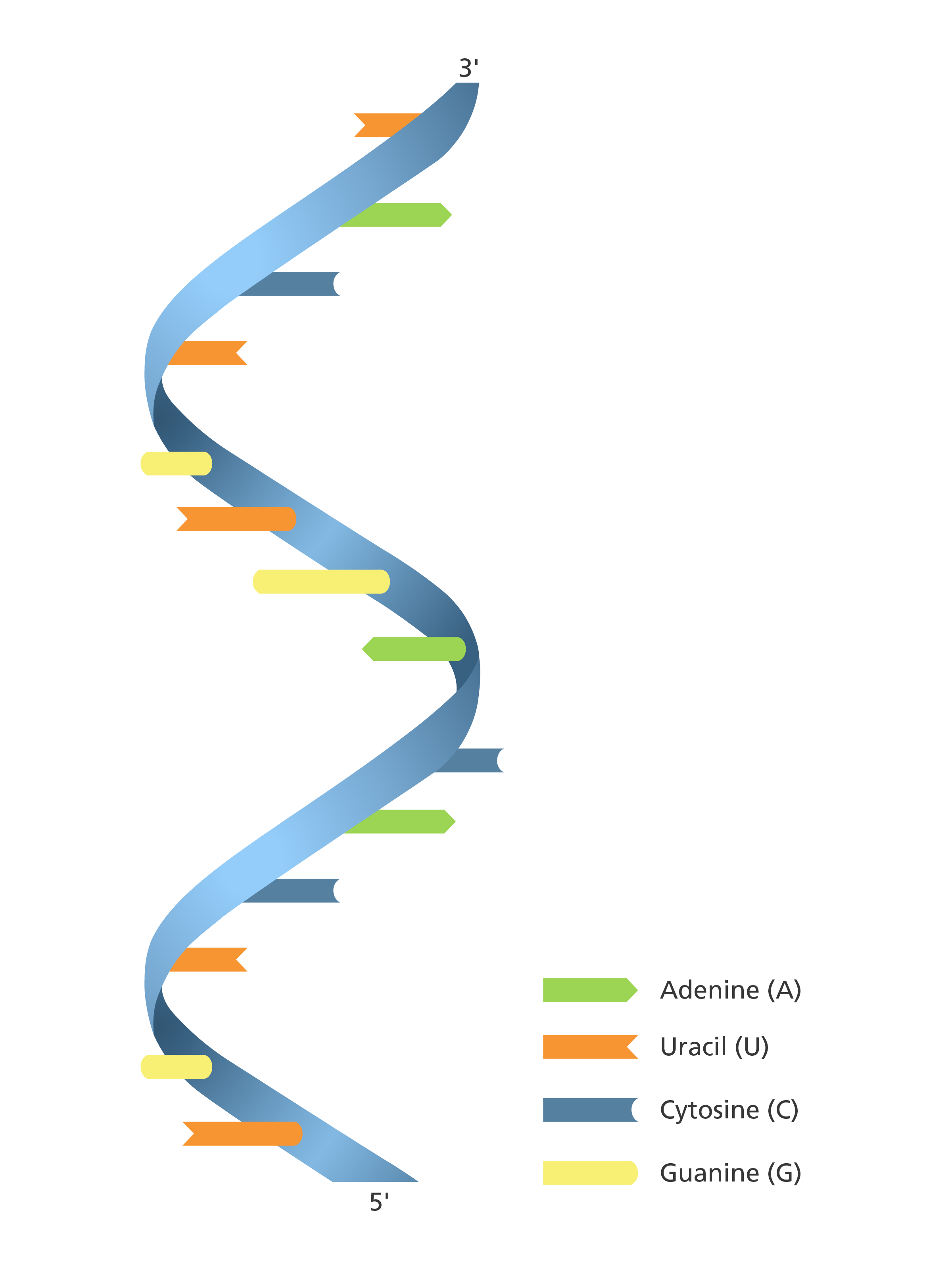
The first genetic material was likely ____.
RNA (not DNA)
RNA could have provided the template for the assembly of DNA nucleotides.
RNA plays a central role in protein synthesis
• RNA molecules called ribozymes have been found
to catalyze many different reactions
– ex) ribozymes can make complementary
copies of short stretches of RNA from nucleotides
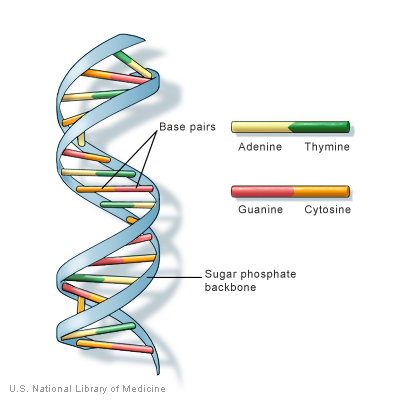
Once ____ appeared, it set the stage for many new life forms
DNA (more chemically stable and can be replicated more accurately than RNA)

Fossil records
reveals changes in the history of life on Earth
The study of fossils is used to establish the geologic record: a standard time scale dividing Earth’s history into four eons and further subdivisions

Geologic Record
divided into 4 eons
Hadean → Earliest eon in Earth's history, 4.6 to 4 billion years ago
Archaean → Second eon, characterized by the emergence of prokaryotes
Proterozoic → Third eon, marked by the appearance of eukaryotes
Phanerozoic → Current eon, known for abundant fossil records
Major boundaries between these eras correspond to major extinction events in the fossil record
Eons are divided into eras which are divided into periods. Some periods are divided into epochs
ex.) eon → era → period → epoch
Know the eons and be able to put them in order from oldest to most recent. Also know the three eras of the Phanerozoic and be able to put them in order from oldest to most recent.

The Hadean, Archaean, and Proterozoic eras together are called the "________ ______,” and together lasted __ billion years.
pre-Cambrian times; 4
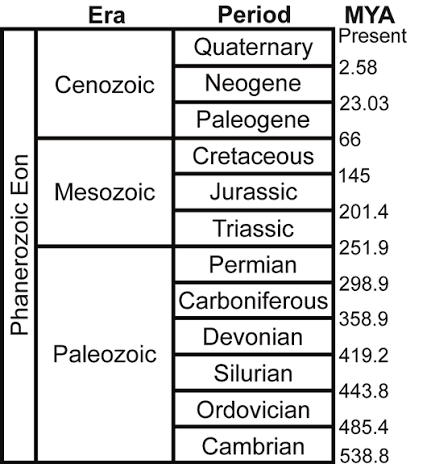
What is the most recent/current eon?
the Phanerozoic, which is divided into three eras → the Paleozoic, Mesozoic, and Cenozoic
lasted around half a billion years

The analogy of a 1-hour countdown timer can be used to relate geologic time to a familiar time scale:
For example, on a 1-hour time scale, animals originated about 9 minutes ago, while humans appeared less than 0.2 second ago

Stromatolites
layered rocks that form when prokaryotes bind thin films of sediment together

Major Events in Geological History
The First Single Celled Organism - 3.5 billion years ago: Stromatolites are the earliest evidence of life on Earth (during Archean era)
Prokaryotes were the sole inhabitants of Earth for 1.5 billion years
The Oxygen Revolution - 2.7 billion years ago: O2 levels begin to increase. After 2.4 billion years ago, atmospheric O2 spiked quickly to about 1-10% of today's levels. (late Archean era)
Most atmospheric oxygen (O2 ) is of biological origin
On early Earth, O2 produced by photosynthesis
This large increase drove many prokaryotic groups to extinction, but it also allowed for the rise in aerobic respiration; (Some survivors found refuge in anaerobic habitats; others adapted to use O2 for cellular respiration)
The First Eukaryotes - 1.8 billion years ago: Eukaryotes likely originated by endosymbiosis (Mid Proterozoic era)
The oldest eukaryote fossils are from single-celled organisms that lived 1.8 billion years ago
Early Multicellular Eukaryotes - 1.2 billion years ago: The oldest fossils of multicellular eukaryotes are small red algae (Later Proterozoic)
The origin of eukaryotic cells sparked the evolution of greater morphological diversity of unicellular forms
drove the diversification of algae, plants, fungi, and animals
First Animals - 700 million years ago: Early animals remained small until the Cambrian explosion (sudden diversification of complex life, esp. hard bony parts)
DNA analyses suggest the common ancestor of animal phyla lived about 670 million years ago
The Colonization of Land - 500 MYA: Fungi, plants, (first) and animals (later) began to colonize land at this time. This time also saw the rise in adaptions for reproduction on land and prevention for dehydration.
Arthropods were among the first animals to colonize land, then tetrapods almost 100 years later.
The primate lineage from which human diverged appeared 6-7 million years ago
Modern Humans - 195,000 years ago
If the analogy of a 1-hour countdown timer is used to relate geologic time to a familiar time scale, humans appeared less than 0.2 second ago

Endosymbiosis
idea that a prokaryotic cell engulfed a small cell that later developed into a mitochondrion (an endosymbiont because it lives w/in the host cell). As O2 levels continued to rise, anaerobic cells would benefit from a way to perform aerobic respiration.
Over time, the host and endosymbiont would become interdependent, forming a single organism
Evidence:
Mitochondria/chloroplasts have their own circular DNA
Their ribosomes are similar to bacteria ribosome, RNA sequence, and antibiotic sensitivity
Some of their membrane proteins are homologous to those found in bacterial membranes
Replication is similar to bacterial cell division
Chromosome and DNA structure is similar to bacteria
Both transcribe and translate their own DNA

Serial endosymbiosis
explains how chloroplasts evolved before plastids and after mitochondria through endosymbiotic events. (Think serial = happening in sequence)
The process would involve:
the first endosymbiotic event where a cell gained a mitochondria
that same cell would engulf a photosynthetic cyanobacterium which became a chloroplast.
Both mitochondria and plastids are thought to have descended from bacterial cells
The original host cell is thought to be an Archaean or close relative of the archaea

Cambrian Explosion
Many animal phyla suddenly appearing in the fossils of the Cambrian period (535–525 million years ago)
Beginning of Cambrian period (541 million years ago) marks the beginning of the Paleozoic era.
Mass Extinction Events
occur when large numbers of species rapidly become extinct worldwide; the major transitions in the geologic record correspond with major extinction events evidenced in the fossil record (triggered by disruptive change to the global environment)
5 major mass extinction have been documented over the past 500 million years
Permian extinction - 252 million years ago: 96% of marine species and 70% of terrestrial species become extinct after an extreme episode of volcanism
divides the Paleozoic from the Mesozoic era
Cretaceous Mass Extinction - 66 million years ago: More than 50% of marine species, many plants and animals, and all dinosaurs (except birds) went extinct because of a meteorite collision.
divides the Mesozoic from the Cenozoic era
Know the relative order in which these majors events occurred (be able to put some of them in the correct order if asked on the exam). You do not have to memorize the dates
*BYA = billion years ago and MYA = million years ago
Earth formed (4.6 BYA)
First Single-Celled Organisms (3.5 BYA)
Oxygen Revolution (2.7BYA)
The First Eukaryotes (1.8 BYA)
Early Multicellular Eukaryotes (1.2 BYA)
First Animals (700 MYA)
The Cambrian Explosion (530 MYA)
The Colonization of Land by Fungi, plants, and animals (500 MYA) [Prokaryotes lived on land long before
that (3.2 BYA)]
The Permian mass extinction (252 MYA)
The Cretaceous mass extinction (66 MYA)

What is believed to be the first genetic material?
RNA
What eon is the third eon that is marked by the appearance of eukaryotes?
Proterozoic Eon
What term describes layered rocks formed by prokaryotic sediment binding?
Stromatolites
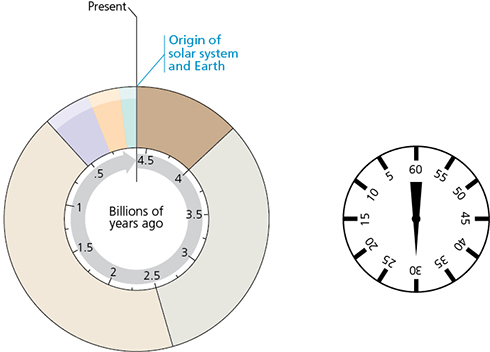
The timer starts from the top at Earth’s origin (4.6 billion years ago) and moves clockwise to the present, making one full circle. In this analogy, one hour represents 4.6 billion years, one minute represents roughly 76.67 million years, and one second represents roughly 1.28 million years.
Using the analogy of a one-hour countdown timer, what is Earth’s age at 30 minutes ago?
2.3 billion years old
You might arrive at this answer in two different ways.
1.) 30 minutes represents half of one hour. If you apply the same ratio, half of Earth’s age (4.6 billion years) is 2.3 billion years.
2.) If you superimpose a timer with minutes on the figure, the location of the 30-minute mark is equivalent to 2.3 billion years ago.
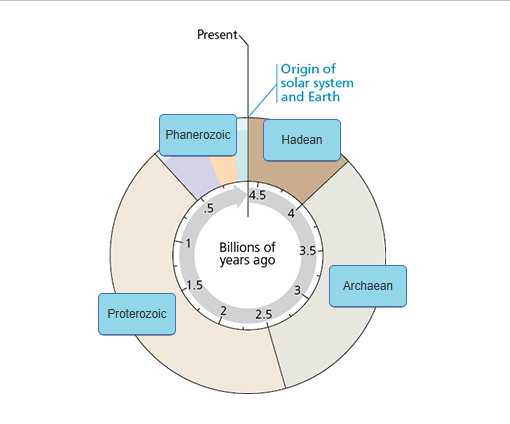
Label the figure with the names of Earth’s four eons.
1.) Hadean
2.) Archaean
3.) Proterozoic
4.) Phanerozoic

Use the figure to determine which eon has lasted the longest to date.
Proterozoic
The Proterozoic eon lasted about 2 billion years, stretching from 2.5 billion years ago to roughly 0.5 billion years ago.
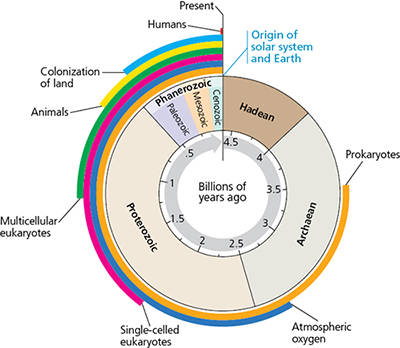
Surrounding the clock are colored bars denoting the start and duration of major events in Earth’s history.
What major events mark the Proterozoic eon?
origin of multicellular eukaryotes
origin of animals
origin of single-celled eukaryotes
According to the fossil record, and as seen in the figure, three key events mark the Proterozoic eon: the origin of single-celled eukaryotes, the origin of multicellular eukaryotes, and the origin of animals. The preceding eon, the Archaean, marks the origin of prokaryotes; the subsequent eon, the Phanerozoic, marks the colonization of land and the origin of humans.
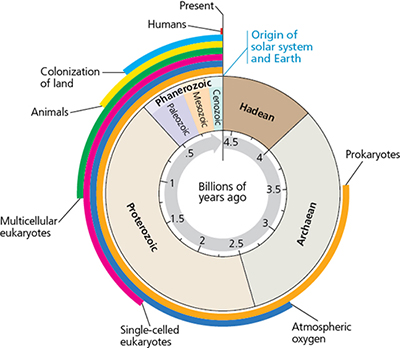
Many present-day animal phyla appeared suddenly in fossils formed 535-525 million years ago, during the Paleozoic era of the Phanerozoic eon. This period is referred to as the Cambrian explosion. Does this period mark the beginning of animal life?
No, animals originated about 700 million years ago during the Proterozoic eon.

Use the figure to complete the paragraph about human origins.
Cenozoic
Phanerozoic
short
9 minutes
0.2 seconds

Why do some scientists believe that RNA, rather than DNA, was the first genetic material?
RNA has both information storage and catalytic properties.
Earth probably formed __________ years ago, and the first life evolved as early as __________ years ago.
4.6 billion, 3.9 billion
Because fossils of bacterial communities have been discovered that are 3.5 billion years old, it is reasonable to assume life originated around 3.9 billion years ago.
Which of the following sets represents the most likely sequence of events in the origin of life?
synthesis of organic monomers; synthesis of organic polymers; formation of protocells; formation of DNA-based genetic systems

Reptiles first appeared during the _____ era.
Paleozoic

We are living during the _____era.
Cenozoic

Dinosaurs went extinct during the _____.
Mesozoic
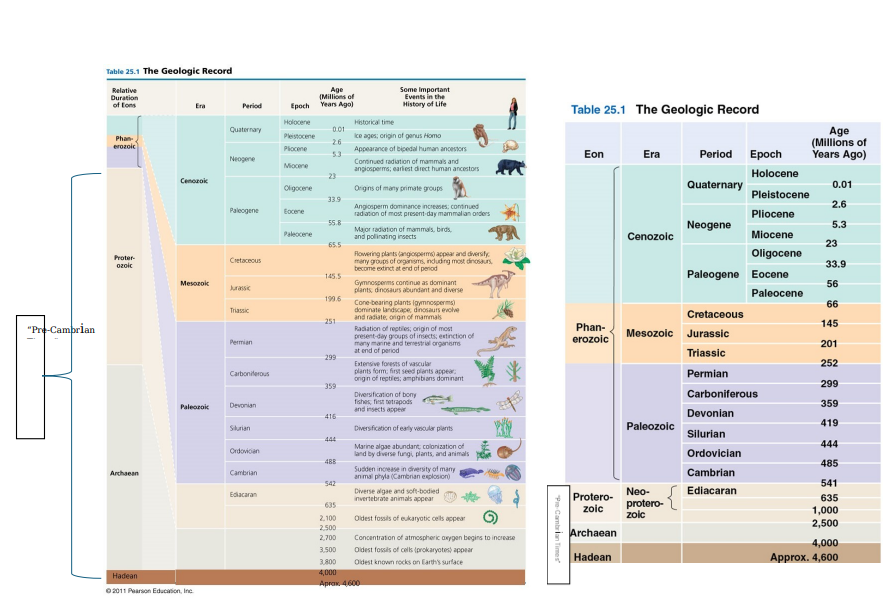
_____ were the dominant vertebrate life form during the Paleozoic era.
Amphibians
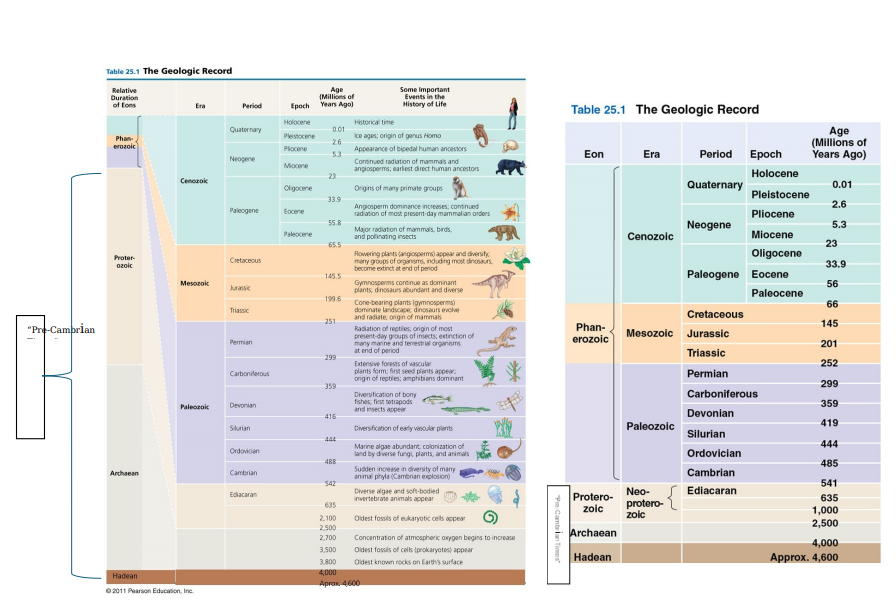
Life arose during the _____.
Precambrian

Flowering plants (angiosperms) first appeared during the _____.
Mesozoic

The Mesozoic era began approximately _____ million years ago.
251
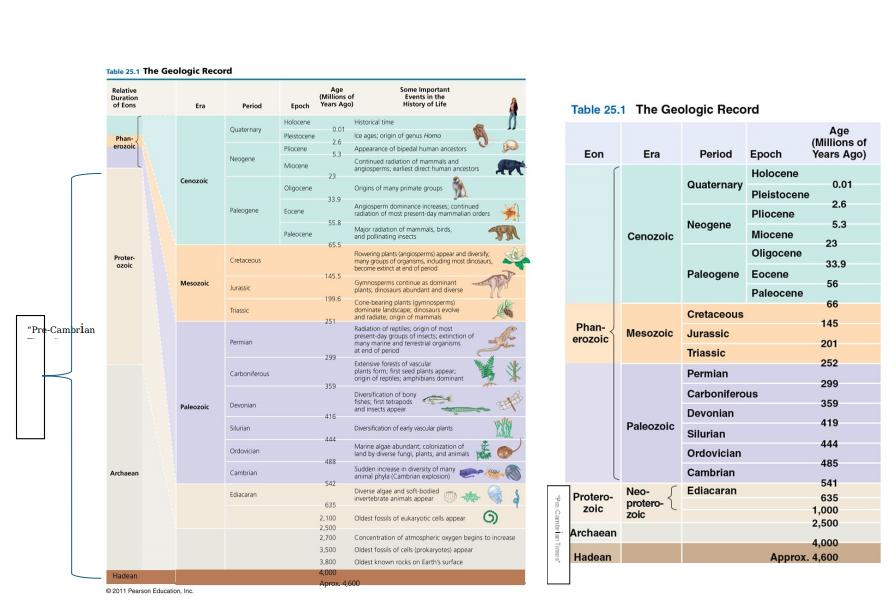
The Precambrian time began at least _____ million years ago.
4,600

Seed plants first appeared during the _____.
Paleozoic

The first prokaryotic cells appeared during the _____.
Precambrian

Animals first appeared during the _____.
Precambrian

The Cenozoic era began approximately _____ million years ago.
65

_____ were the dominant vertebrate life form during the Mesozoic era.
Dinosaurs

Most modern animal phyla evolved during the _____ era.
Paleozoic
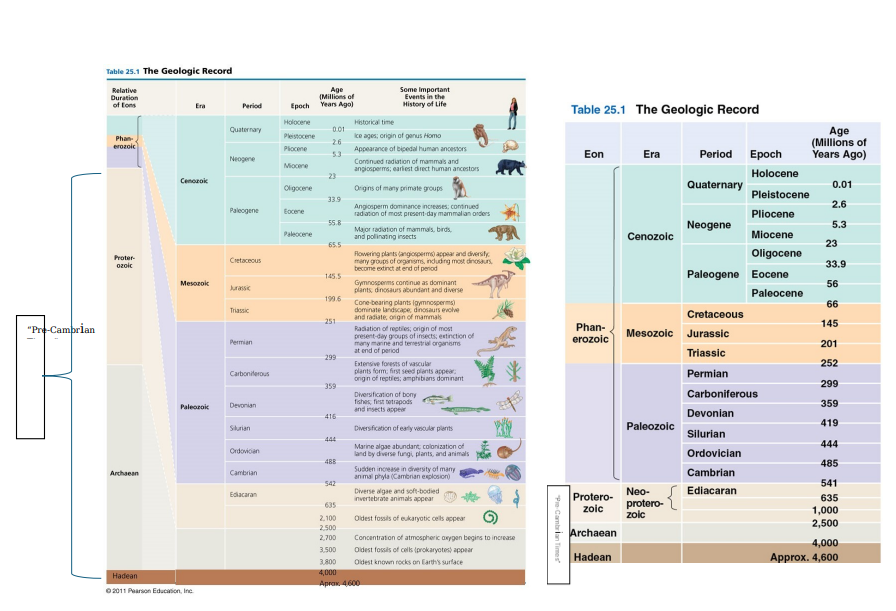
Bony fish first evolved during the _____ .
Paleozoic
The earliest organisms were most likely __________.
Prokaryotic
Prokaryotes originated a few hundred million years after Earth's crust cooled and solidified.
The atmosphere of early Earth probably contained no O2 until the emergence of organisms that __________.
used water as an electron source for photosynthesis
Oxygen began to accumulate in the atmosphere due to the action of photosynthetic cyanobacteria.
Fossilized stromatolites
resemble structures formed by bacterial communities that are found today in some shallow marine bays.
Which listing of geological periods is in the correct order, from oldest to most recent?
Cambrian, Devonian, Permian, Cretaceous
Taxonomy
system of classification of organisms by means of similarities and differences
Aristotle: first to organize animals by hierarchy
Carolus Linnaeus
father of modern taxonomy; Swedish

Traditional Hierarchical Levels of Classification
7 groups or taxa
Kingdom
Phylum
Class
Order
Family
Genus
Species (now known as Domain)

Traditional 5 kingdom system (only focus on 3)
Plantae
Fungi → kingdoms of multicellular eukaryotes
Animalia
How to write Scientific Names:
Genus = capitalized, species = lowercase
Both are italicized or underlined
Ex.) Rana clamitans or Rana clamitans, R. clamitans, Rana sp., Rana spp.
Why bother with scientific names → Latin does not evolve; universal
Phylogenetic Systematics
classification on basis of evolutionary ties; involves reconstructing phylogeny (evolutionary trees) based on Darwin’s “common descent”
Evidence from evolutionary ties has led to the creation of a new level, Domain, which has 3 parts: Bacteria, Archaea, and Eukarya
Eliminates Kingdoms Monera and Protista (2/5
Monera → Archaea and Bacteria
Protista → several new groups under Eukarya (no single kingdom for former Protista)
Animalia, Plantae, and Fungi still exist.