Ren Art
 Call Kai
 Learn
 Practice Test
 Spaced Repetition
 Match
 Flashcards
 Knowt Play
1/114

There's no tags or description
Looks like no tags are added yet.
115 Terms
iconography
the subject in the way the story is told.
the “writing of images.” The term refers both to the content, or subject, of an artwork and to the study of content in art.
It also includes the study of the symbolic, often religious, meaning of objects, persons, or events depicted in works of art.
shading
in early christian style: no gradation, very bold lines
the process of adding varying levels of darkness to a drawing or painting to create the illusion of depth, volume, and three-dimensional form
pictorial space
indicates the space represented in the painting. the overall space on a flat plane with no depth
naturalism
a natural way of representing our world in a realistic way
Trecento
the fourteenth century (1300s), the beginning of the Renaissance
Proto-Renaissance
the transitional period in art of going from medieval style to renaissance style
drapery
representation of how clothing naturally hangs and is texturized
altarpiece
a work of art placed above and behind the altar in a church
illusionistic space
the representation of the 3D world on a 2D surface (pictorial space), creating an illusion that the subject is 3D

Duccio, Maestà Altarpiece, 1308-11. Tempera on wood. Sienna (Italy). Front panel
Maestà and back pane Entry into Jerusalem.
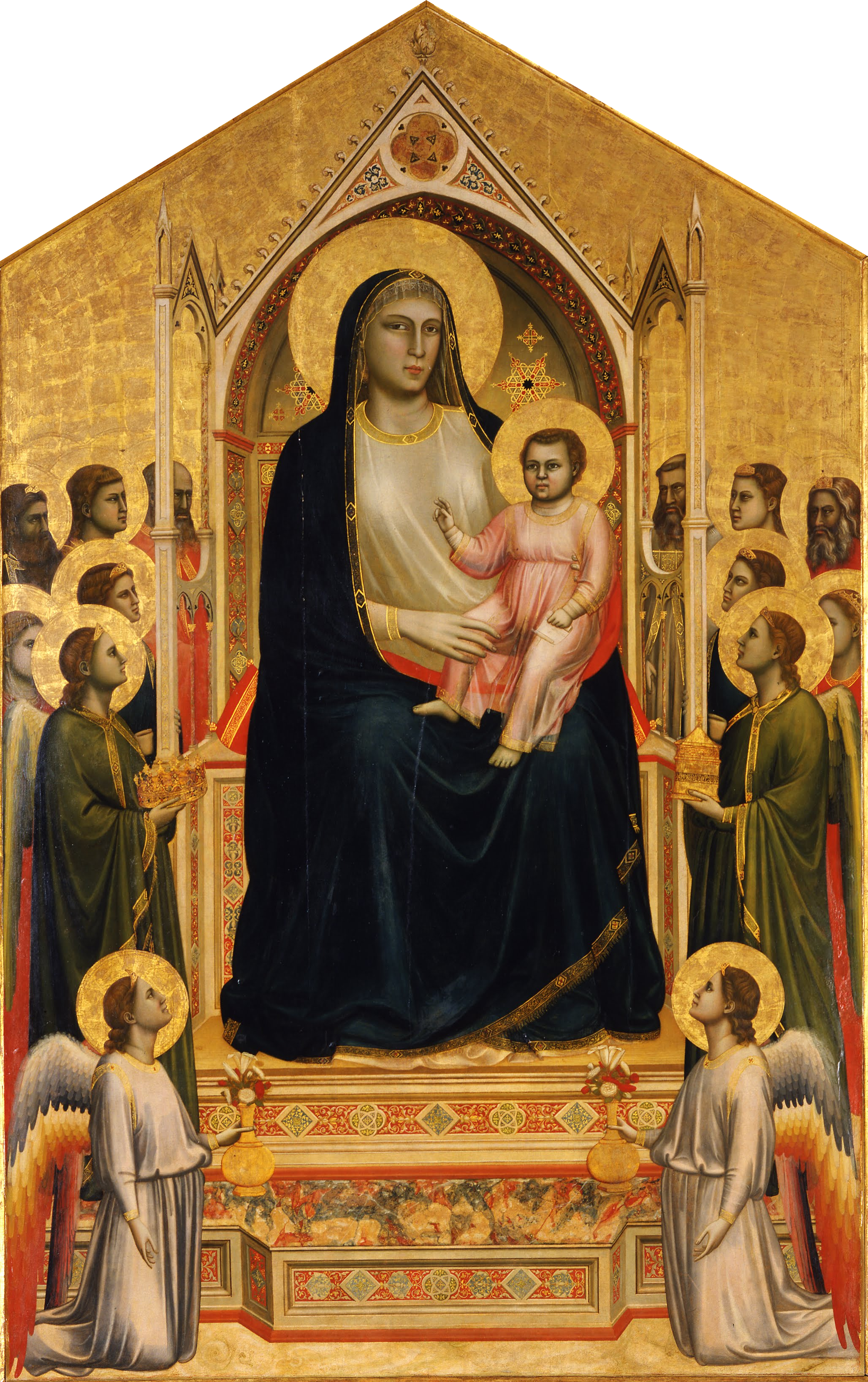
Giotto, Madonna and Child Enthroned, ca. 1310. Tempera on wood. Florence (Italy)

Giotto, Arena (or Scrovegni), Chapel, Entry into Jerusalem, 1305-06. Fresco pain`ng.
Padua (Italy)
modeling
The depiction of three-dimensional form through light and shadow
linear perspective
mathematical science in art where the sizes of figures and architecture decrease systematically with increasing distance of the viewer
coffered barrel vault
barrel shaped ceiling with square indentations that are decorative and removes weight from the ceilings.
basilical plan/style
a cross shape, in the middle lies a dome. think the duomo
double shell dome
dome has 2 layers of material that allow for a hollow space in the middle. made by sandstone, marble, and brick, the inner layer is thicker than the outer.
central plan
distance to the corners is the same on all sides when one standings in the very center of the building
module/ratio
a module is a cube or rectangle, like a tile that helps create a mathematical system. this creates visual harmony, balance, and a direct link to human scale (ratio)
pietra serena
sandstone and white plaster mix that is used in architecture for a simple and clean look to make decor pop. it also molds systemic proportions.
foreshortening
sharp, deep perspective using a perpendicular angle to the picture plane which makes an object project out and give depth
atmospheric perspective
an art and photography technique that uses changes in color, detail, and contrast to show distance and depth. for example a window shedding light on a nearby fresco, or a dark, unused room casting shadows and dust on a painting

Filippo Brunelleschi, Dome of Florence Cathedral, 1420-30.

Brunelleschi, Pazzi Chapel, in Santa Croce, Florence, 1440.

Masaccio, Madonna and Child Enthroned, 1426. Altarpiece, central panel.
Tempera on wood. Pisa. National Gallery, London.

Masaccio, Holy Trinity with the Virgin, Saint John, and Two Donors, ca. 1428.
Fresco painting. Santa Maria Novella, Florence.

Masaccio, The Tribute Money, 1424-27. Fresco painting. Brancacci Chapel,
Santa Maria del Carmine, Florence.
oil painting
oil mixed with pigment, giving a more glowy and luminous look
cartoon
a preparatory, unfinished artwork, made to be covered with fresco or other techniques
disengo
the intellectual spark and meaning behind an artist making a work of art
suggests that idea and practice are intertwined
rejected by Venetian high renaissance painters because it wasn’t spontaneous and they didn’t make frescos
sfumato
“smoky” makes the blurring of lines between the subject and the landscape
not a technique of atmospheric perspective because it’s goal is not naturalism
Neo-Platonism
philosophical concept, follows Plato’s theories on what is reality, but in a Christian context. a way to admire beauty in an idealized representation and form, from spiritual contemplation
contrapposto
an asymmetrical stance where a figure places most weight on one foot for naturalism
heroic nude
from Greco-Roman antiquity, god-like to show strength and boldness
wall tomb
a monument structure against a wall as a tomb
terribiltà
depicting terrible anger. symbolic of an artist’s ability to perceive passion and represent moral judgement
igundi/igundo
naked. refers to the 20 idealized male nudes in the figures painted on the ceiling of Michelango’s Sistine Chapel

Jan van Eyck, Giovanni Arnolfini and His Bride, 1434.

Leonardo, The Last Supper, 1495-97/98.

Leonardo, Virgin and Child with Saint Anne and the Infant St. John, ca. 1505-07

Leonardo da Vinci, Mona Lisa (or La Gioconda), started 1503-06.

Michelangelo, The Awakening Slave, 1520-23.

Michelangelo, David, 1501-04.

Michelangelo, Moses, Tomb of Pope Julius II, 1513-15.

Michelangelo, Sistine Chapel, ceiling, 1508-12.
linear painting
everything clearly separated, like a drawing. lacks motion as lines have precise edges and figures are sharply isolated from the background.
poesia
painting operates like poetry. focused on sensual, suggestive topics to allow for multiple interpretations
pastoral
non-urban life (peasants) depicted in harmony with nature, idealizing it
colorito
color employed for expressive purposes. popular during the high renaissance in northern italy where disengo and frescos were rejected

Raphael, Madonna of the Meadow, 1505-06.

Raphael, Philosophy (School of Athens), 1509-11.

Raphael, The Triumph of Galatea, 1514

Giovanni Bellini, San Zaccaria Altarpiece, 1505

Giorgione, The Tempest, ca.1510
impasto
an oil painting technique that develops from reworking a canvas and adding multiple layers of paint.
important in venetian art as a creative process
reclining female nude
compositional standard for a woman subject
mannerism
means “in the modern style” encompasses several unique styles. it abandons colorito and impasto
catholicism and protestantism
divisions of the christian church.
c: pope, tradition +scripture, work for salvation
p: movement against errors of christian church. no pope, scripture and bible only, salvation is a gift. happened after Martin Luther released the 95 Thesis of 1517 and translated the bible from latin to german for accessibility
hierarchy of genres
history (anything of prominence, bible, mythology)
portrait
genre painting (depicts everyday life)
landscape and cityscape art
animal painting
still life (depicts everyday life in inanimate objects)

Titian (Tiziano Vecelli), Assumption of the Virgin, 1516-18

Titian, Venus of Urbino, 1538.

Titian, Flaying of Marsyas, ca. 1570–1576.
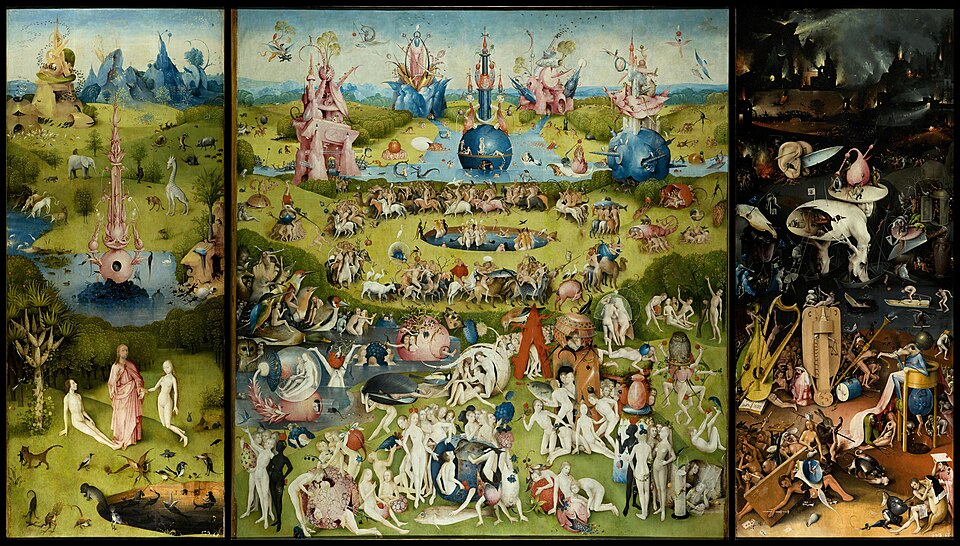
Hieronymus Bosch, The Garden of Earthly Delights, 1505-10.

Pieter Brueghel the Elder, Fall of Icarus, ca. 1554-55.

Brueghel the Elder, Netherlandish Proverbs, 1559
polyptych
many variations of openings, multiple panels
predella
the horizontal, low-lying base or step at the bottom of an altarpiece
diptych
2 panels/openings
counter-reformation
how the catholics countered protestant reformation.
wanted art images in a religious context to:
be true to scripture
stimulate piety (engage with viewer)
be simple and have clarity
Council of Trent
In italy in 1545-63, but became prominent iin 1600s
said that physical connection with Christian images is important. you must let the church form your faith (catholicism)
quadro riportato
“transported paintings” looks as if the paintings were transported into the ceiling because of the painted frames around each scene

Matthias Grünewald, Isenheim Altarpiece, 1510-15.
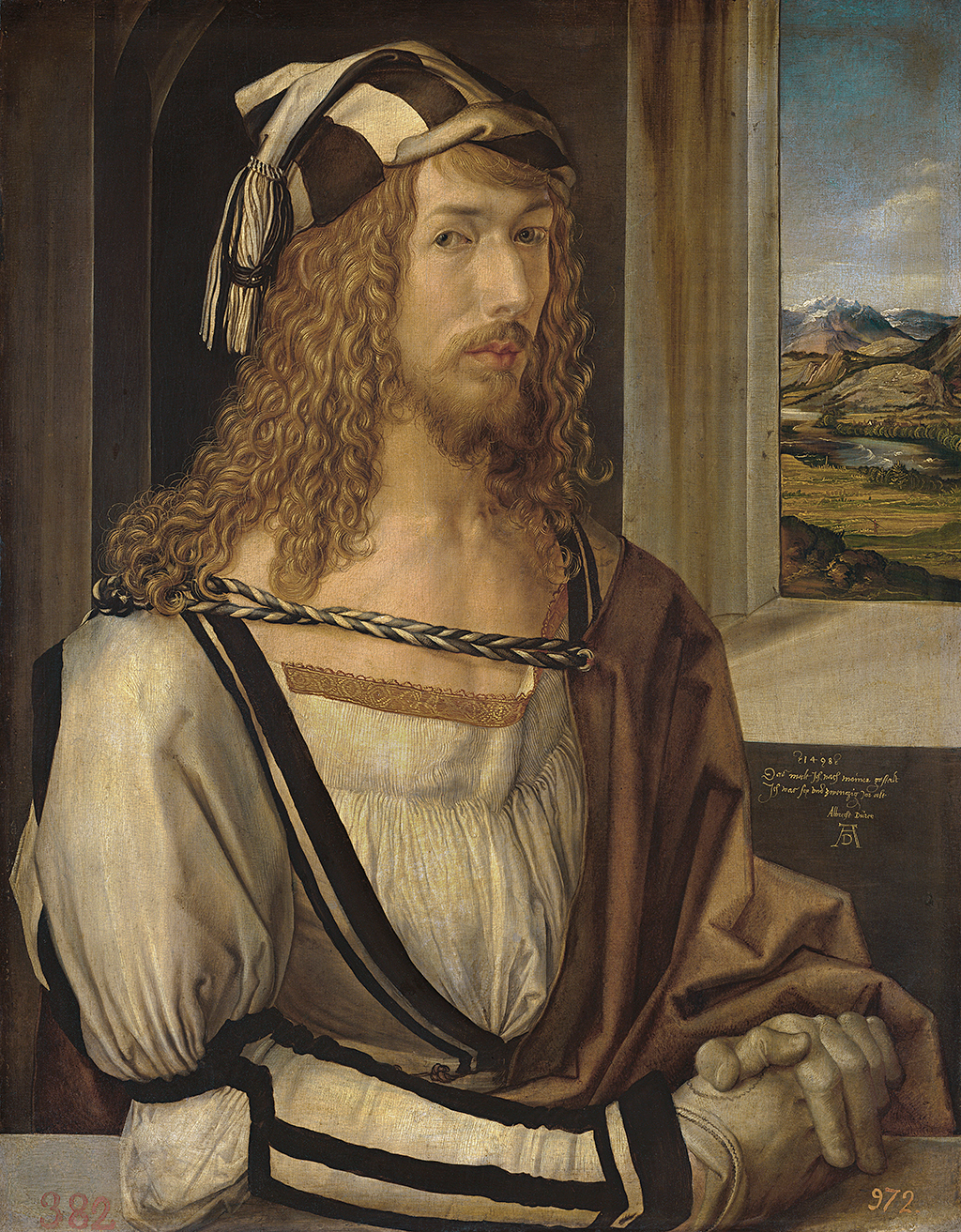
Albrecht Dürer, Self-Portrait, 1498

Albrecht Dürer, The Four Apostles, 1526

Annibale Carracci, Pietà, 1600

Annibale Carracci, The Loves of the Gods, Ceiling of the Farnese Gallery, 1597-
1600.

Caravaggio, The Calling of Saint Matthew, 1599-1600.
chiaroscuro
strong contrast between light and shadow, contributes to visualize form
tenebrism
some areas are kept black to negate form, prominent in Baroque paintings
caraviggisti
emulating Carravaggio's style, especially with tenebrism and chiaroscuro
sotto in su
from below to above. illusionism creating an intense sense of foreshortening, making figures seem to float.
bel composto
the idea of creating an ensemble and environment from multiple methods of art. mosaics, paintings, sculptures, etc
catholic flanders
flanders was under spain’s rule, causing catholicism to be widespread and pushed upon citizens
dutch golden age
the netherlands was extremely prosperous after escaping spain’s rule and reforming to prostantism. they began a global trade route, causing economic success.
calvinism
a branch of protestantism by John Calvin. enforces the idea that God is the sovereign over everything.
says that commissioning religious art pieces for places of worship is wrong

Bernini, Ecstasy of St. Theresa, 1645-52

Rubens, The Elevation of the Cross, 1610.

Rubens, Abduction (or Rape) of the Daughters of Leucippus, 1615-18.

Rubens, Arrival of Marie de’ Medici at Marseilles, 1622-25.

Rembrandt van Rijn, The Company of Frans Banning Cocq (The Nightwatch),
1642.

Rembrandt, The Return of the Prodigal Son, ca. 1665.

Rembrandt, Self-portrait with Two Circles, 1665
Vermeer, Woman Holding a Balance, 1664
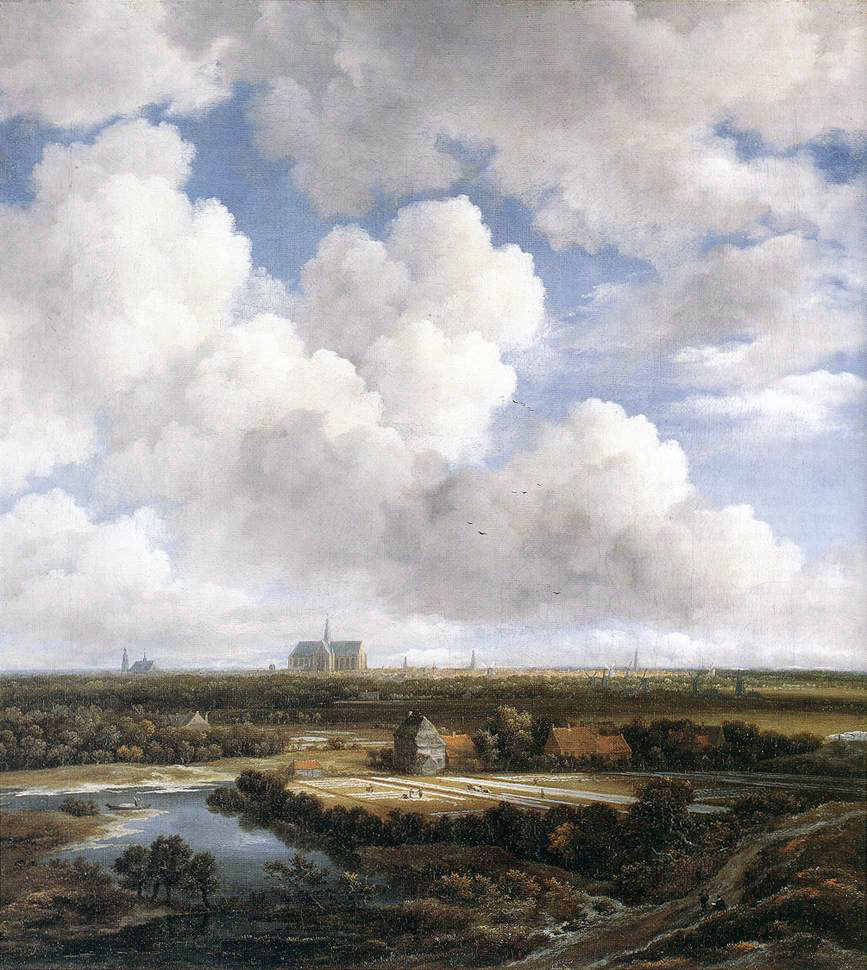
Van Ruisdael, View of Haarlem from the Dunes at Overveen, 1670
siglo de oro
The Spanish Golden Age 1492-1659
counter-reformation in spain
artwork showed clarity and piety, evoking viewers to feel intense emotions when looking at religious images. the spanish rule was catholic.
genre painting in baroque spain
characters were displayed with character and dignity, capturing an empohemeral moment in their lives
landscape painting in baroque spain
nicolas poussin popularized a specific background, middleground, foreground structure that had a very balanced composition.
poussinistes-rubénistes
divided the French Royal Academy.
Poussinistes said that form was most important, and developed a specific, clarifying landscape.
Rubénisies said that color was most important, and was the preferred overall style in Rococo
rococo
a style that developed after Louis XIV’s rule in Paris. the aristocracy developed it, as they controlled over 90% of France’s wealth at the time
was focused on pastel colors and lighthearted subjects