Silk Road Vocabulary
 Call Kai
 Learn
 Practice Test
 Spaced Repetition
 Match
 Flashcards
 Knowt Play
1/19

Earn XP
Description and Tags
Vocabulary flashcards covering key terms, historical figures, and empires related to the Silk Road.
20 Terms
Silk Road
A network of trade routes that connected China, the Middle East, and Europe.
(中国、中東、ヨーロッパを結んだ貿易ルートの網)
Caravan
A group of travelers (often with camels) moving together for safety.(安全のために、ラクダなどと一緒に移動する旅行者・商人のグループ)
Oasis
A green, watered spot in the desert where people and animals can drink.(砂漠の中で、人と動物が水分補給できる水と緑の場所)
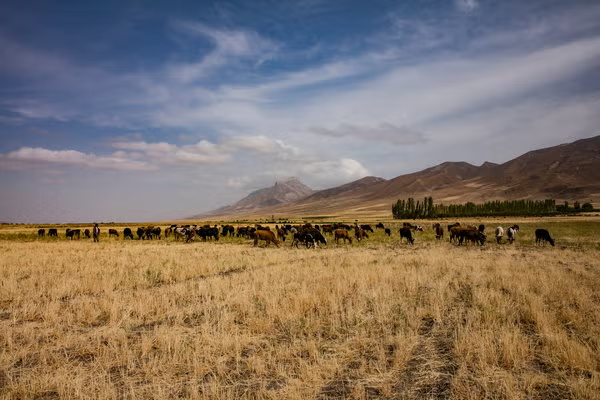
Steppe
A large, grassy plain with few trees.(木が少なく、草が広がっている広い平原)
Merchant
A person who buys and sells goods to make money.(商人)
Trade route
A path used by traders to move goods from one place to another.(貿易ルート)
Barter
Trading goods for other goods without using money.(物々交換)
Tariff
A tax on goods brought into a place.(ある場所に入ってくる品物にかかる税金)
Middleman
A person who helps trade by connecting sellers and buyers..(売り手と買い手をつないで貿易を助ける仲買人)
Cultural diffusion
The spread of ideas, customs, and goods from one culture to another.(アイディア、習慣、品物が、ある文化から別の文化へと広がること)
Diplomacy
Managing relationships between countries or empires.(国や帝国のあいだの関係をうまく管理する外交)
Envoy
A messenger or representative sent by a ruler or government.(支配者や政府から送らたメッセンジャーや代表)
Tribute
Gifts or payments given to a stronger power to keep peace.(平和を保つために、より強い力を持つ国に送る贈り物や支払い)
Han Dynasty
Ancient Chinese dynasty that helped open the Silk Road.(シルクロードを開くきっかけを作った、古代中国の王朝)
Zhang Qian
Han explorer whose trips helped start Silk Road trade.(シルクロードの貿易を始める手助けをした、漢の探検家)
Roman Empire
A powerful empire in Europe and the Mediterranean that bought Silk Road goods.(ヨーロッパと地中海に広がり、シルクロードの品物を買った強力な帝国)
Byzantine Empire
The eastern part of the Roman Empire that lasted longer and kept trading.(ローマ帝国の東側で、より長く続き、貿易を続けた帝国)
Mongol Empire
A huge empire across Asia that made long-distance travel safer for a time.(アジア中に広がり、
一時期長旅をとても安全にした巨大な帝国)
Genghis Khan
Founder of the Mongol Empire.(モンゴル帝国の創始者)
Gunpowder
Chinese invention that later spread west; first used for fireworks and weapons.(火薬)